
Game review
AstroScaper Review
7.5 / 10
- Developer
- Fun Fortress
- Publisher
- Fun Fortress
- Released
- 27 August 2026
- Platforms
- ["Windows"]
- Genre
- Strategy
A Barren Rock, Turned Into a Puzzle
AstroScaper launched August 27, 2026 from two-person Swedish studio Fun Fortress, and it belongs to a small but well-loved lineage of "zen city builder" games where the point isn't managing a sprawling metropolis so much as solving a tightly-bounded placement puzzle one building at a time. Here that puzzle is literalized: every level is a single procedurally generated asteroid, a fixed and often awkwardly-shaped chunk of rock, and the job is to fit an efficient little colony onto it before moving on to the next one. At review time the game held a perfect record across the board: 24 all-language reviews and a 12-review English subset, both 100% positive, a tiny but completely unblemished pool for a three-week-old release.
The Pitch: Dorfromantik and Islanders, Filtered Through Resource Synergies
Reviewers reach for the same handful of comparisons almost without exception. "If you liked dorfromantik or islander, you are definitely gonna like astroscaper," one wrote, while another traced a more specific lineage: "This game was an insta-buy once I saw the devs list it on the reddit page for Islander's: New Shores... It's visually appealing (vibes mixed of Sierra's Outpost series with Cyberpunk designs)." That's an accurate three-way blend: the score-chasing building-adjacency puzzle of Islanders, the meditative tile-by-tile pacing of Dorfromantik, and a sci-fi colony-management skin borrowed loosely from classics like Outpost. The twist that reviewers single out as AstroScaper's own is a resource layer sitting underneath the placement puzzle, three resources, described by one reviewer as "a simple but engaging 3-resource system that requires just enough light management without being overwhelming." Buildings cost and reward differently depending on what's adjacent to them, so score-maximizing placement and resource sustainability pull against each other just enough to keep sessions from feeling purely rote.
Recurring Praise: Confined Spaces, Unconfined Relaxation
The single most repeated word across the review pool is some variant of "chill" or "relaxing," but reviewers are careful to distinguish this from mindless. "Very chill and relaxing game... when I want to chat with the audience without having to sweat and focus on the gameplay," one streamer-minded reviewer wrote, while another pushed back gently on the idea that relaxing means shallow: "Biiiiig chill game that still asks you to put your brain to work. It's kind of like freeform legos with a scoring system." A third reviewer credited the asteroid's small, fixed footprint specifically for keeping the puzzle engaging rather than becoming busywork: "the small space actually makes it more fun, you gotta think a while about where stuff goes instead of just spamming buildings everywhere." The presentation draws consistent praise too, clean low-poly sci-fi visuals and an ambient soundtrack that multiple reviewers called "cozy" and well-matched to the pace, alongside more depth than expected for players who'd only tried the pre-launch demo: "The game has way more depth than I expected after playing the demo a while back."
What's Missing: No Conflict, No Stakes, by Design
Where a typical colony-builder generates tension from threats, one reviewer's list of what AstroScaper deliberately omits reads almost like a mission statement for the whole genre it's sidestepping: "No aliens blasting your colony, no zombies to gobble your citizens' brains, no tragic collapses of the air scrubbers because you failed to secure the supply chain for polymers." That's presented as a selling point by every reviewer who mentions it, this is explicitly a low-pressure alternative to survival-colony builders like Frostpunk or Surviving Mars, not a lighter version of the same tension. Whether that reads as a strength or a gap depends entirely on what a given buyer wants from the genre; nobody in the review pool wished for more difficulty, but nobody described the game as especially replayable past its procedurally generated puzzle loop, either, since a solved colony doesn't leave behind much reason to revisit that specific asteroid.
The One Consistent Nitpick: Camera Handling
For a review pool this small and this positive, there's remarkably little friction to report, but the one recurring technical gripe is camera control. "A few minor QoL improvements and some camera tweaks would be nice, sometimes I had trouble getting back to my previous camera settings after zooming," one reviewer wrote, a specific and narrow complaint that didn't stop them from rating the overall experience highly. No reviewer reported crashes, save issues, or missing content; at this review count that's a genuinely clean technical record for a fresh indie launch, though it should be read with the appropriate caveat that a 12-review sample can't rule out issues a larger pool would eventually surface.
A Small Team, Visibly Present
Fun Fortress is a two-person studio, and while the review pool doesn't dwell on developer communication the way some Early Access-adjacent launches do, a few reviewers noted the demo-to-release gap directly, tracking how much the game grew between the pre-launch playtest builds and the finished release. "The game has way more depth than I expected after playing the demo a while back," one wrote, echoing a broader pattern in the pool of players who'd followed the game since its Steam Next Fest showing and came away satisfied that the extra development time paid off in mechanical depth rather than just polish. It's a small signal, but a useful one for a studio this size: the finished game didn't just ship on schedule, it visibly outgrew its early pitch.
Verdict
AstroScaper takes a well-worn zen-builder template, Islanders' adjacency scoring crossed with Dorfromantik's unhurried pace, and gives it just enough of its own identity through a light resource-synergy layer and a genuinely clever conceit: your city has to fit on a rock, and the rock doesn't care about your plans. Reviewers describe exactly the kind of game its marketing promises, a low-stakes, high-craft puzzle-builder for unwinding rather than grinding, backed by clean visuals, a fitting soundtrack, and (camera quirks aside) a technically solid launch. At $9.99 it's an easy recommendation for fans of the Dorfromantik/Islanders school of city building looking for a new asteroid to fill, with the reasonable caveat that anyone hoping for survival-builder stakes or long-term base management should look elsewhere.
Screenshots
-
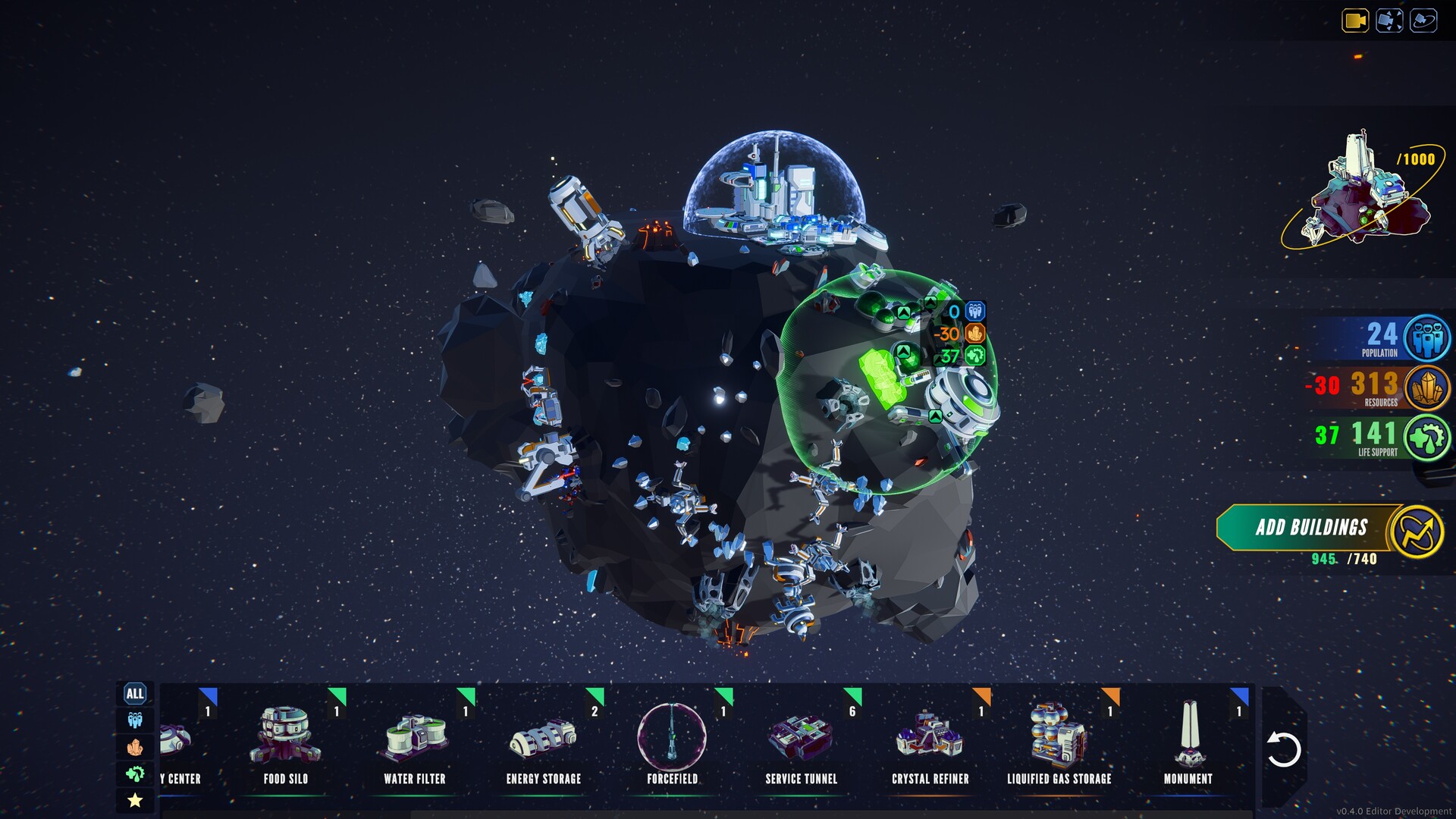
An early colony, still working within the asteroid's cramped, awkward shape, one of the traits reviewers cited as central to the puzzle's appeal.Image: Fun Fortress via Steam -
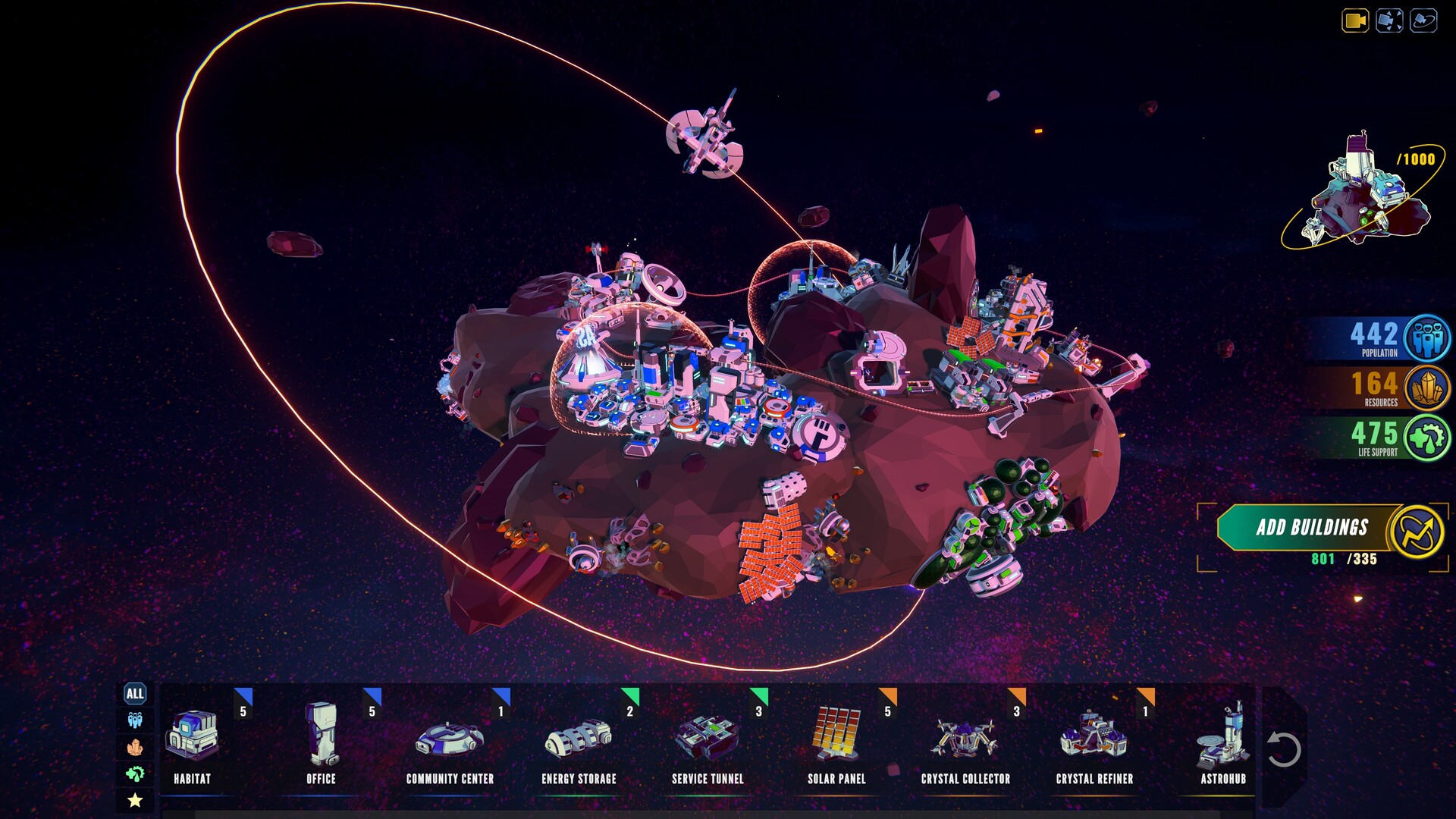
A late-game colony showing how far a single asteroid can be built out once its resource loop is dialed in.Image: Fun Fortress via Steam -
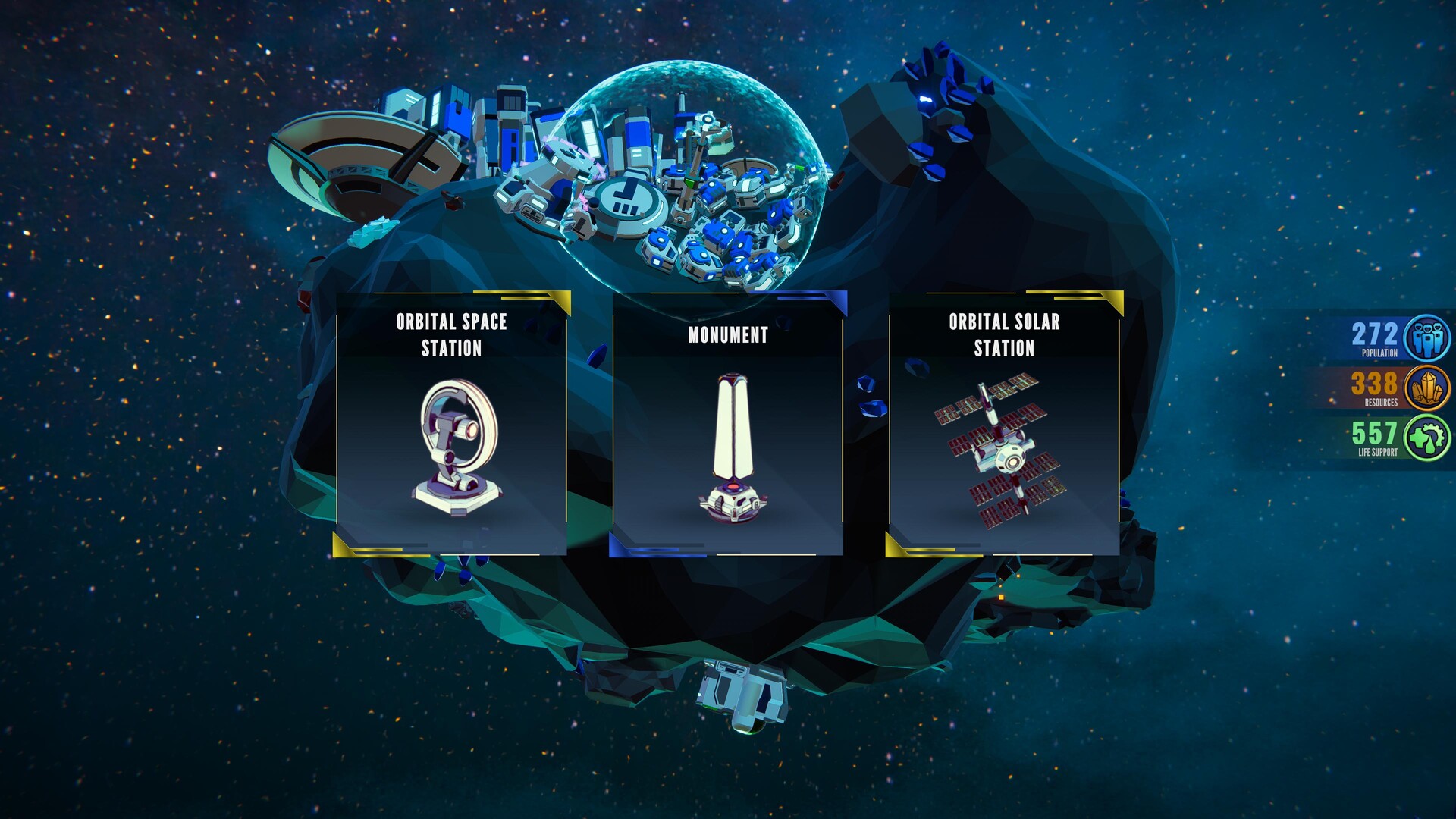
One of the game's milestone building choices, part of the score-chasing synergy system reviewers compared to Islanders.Image: Fun Fortress via Steam