
Game review
MOLDRISE Review
7.1 / 10
- Developer
- Raffaele Picca
- Publisher
- Raffaele Picca
- Released
- 20 July 2026
- Platforms
- ["Windows", "Linux"]
- Genre
- Adventure
It Started in Your Foot. Now You Have to Go Up.
MOLDRISE opens on the smallest possible scale — a splinter, a scratch, something wrong with your foot — and turns it into the entire game. You wake up in a crumbling, cordyceps-infected apartment block with an infection spreading up your leg and a single, absurd, unshakeable compulsion: get to the roof. Between you and it are thirty-odd floors of squatters, cultists, black-market medicine dealers, and neighbors who are all dealing with the same fungal rot in their own ways, none of them healthy. Solo developer Raffaele Picca, working with composer Mike Klubnika (credited for the score, though reviewers note the collaboration runs deeper than the credits suggest) on sound, has built a two-to-four-hour experience that reviewers keep reaching for the same handful of comparisons to describe: No, I'm Not a Human, Look Outside, Mouthwashing, Obenseuer, and, most tellingly, Outer Wilds.
That last comparison is the one that matters most, because MOLDRISE isn't a survival horror game in the traditional sense — it's a knowledge game. You will die, or run out of time, or simply fail to reach the roof, over and over, and each failure hands you information rather than punishment. A code to a keypad. A neighbor's schedule. Which item to barter for which favor. The building itself never changes; only your understanding of it does, and once you know the route, a run that took forty minutes the first time can be finished in five. Of 507 all-language Steam reviews at time of writing, 492 are positive — a 97% rate that puts MOLDRISE comfortably in Very Positive territory for a launch this recent, and the praise clusters overwhelmingly around exactly this loop.
A Blue Prince-Style Loop Wrapped in Squelching, Disgusting Horror
What separates MOLDRISE from a dry puzzle-box is how committed it is to making the process of learning feel unpleasant in the right ways. You're not just tracking clues in a notebook; you're managing survival meters tied to the infection itself, deciding whether to spend scarce medicine now or hoard it for later, and negotiating with neighbors who are, as one reviewer put it, "typical slavic neighbours (♥♥♥♥♥♥♥ insane with quirks)." The dialogue swings hard between bleak and absurd — reviewers repeatedly cite running jokes about pineapple pizza and a Backrooms reference sitting a few lines away from genuinely upsetting body-horror imagery, and while a handful of players found that tonal whiplash undercut the atmosphere, most describe it as the game's biggest asset. One review called the writing "diabolical," and it fits: the game oozes tension without leaning on a single jump scare, relying instead on the slow, grinding dread of watching your own foot dissolve into something that isn't a foot anymore.
The structural comparison players reach for most often after Outer Wilds is The Blue Prince — both games gate real progress behind information rather than skill, and both keep runs short enough that repetition never becomes a grind. A run here can take twenty minutes for a player who's mastered the map, and multiple reviewers specifically praised how good the game is at making a restart feel like forward motion rather than a punishment, since every failed attempt trims time off the next one. Achievements are built around this same idea — several reviewers note the achievement list functions almost as a guided tour of everything MOLDRISE has to offer, rather than arbitrary busywork, which is an unusually generous way to design a completion list for a horror game this grim.
Gorgeous, Cheap-Looking on Purpose, and Barely Ever Broken
MOLDRISE's presentation punches well above its runtime. Reviewers consistently single out the art direction — a grimy, lo-fi, PS2-adjacent look that multiple players compared favorably to Mouthwashing's aesthetic — paired with sound design strong enough that several reviewers called out the score and ambient audio as the single best thing in the game. One review described the visual technique bluntly: "The way they wrapped stock photos around a 3d model and added a speckle of light to their eyes is uncanny at times," and meant it as a compliment. For a solo-developed game shipping day one at this scope, the technical polish reviewers report is notable — repeated mentions of zero bugs encountered, smooth Steam Deck performance, and a genuinely tiny install size. Not every account was spotless: one player described persistent audio static that turned out to be a real engine issue rather than a hardware problem, and it went unresolved for that reviewer even after developer contact, which stands out precisely because it's one of the only technical complaints in an otherwise clean launch.
The one recurring nitpick with real substance is a design choice rather than a bug: your feet, the literal site of the infection driving the entire plot, are never shown on screen. A few reviewers flagged this as a missed opportunity for a game so centered on watching a body slowly fail, though most treated it as a minor omission rather than a flaw worth marking down for.
Reviewers Flag Undisclosed AI Audio in a Decompiled Build
Not every negative review is about pacing or price. At least one detailed, downvoted review states that the reviewer decompiled MOLDRISE's shipped build using GDRE Tools and found 17 MP3 files the reviewer attributes to ElevenLabs, an AI voice-generation service, embedded in the game's audio assets — and alleges that the developer denied using generative AI when asked about it directly, then pushed back on players who raised the issue publicly. The review is explicit that its objection isn't purely about AI use itself but about an alleged lack of disclosure: "I just can't support a game written with GenAI (especially when the developer lies about it blatantly)," with a later edit reiterating the complaint after what the reviewer describes as further denials from the developer. This is a claim made by a reviewer examining the game's files, not a verified finding independent of that review, and it sits alongside hundreds of reviews that make no mention of the issue at all — but it's a serious enough accusation, and specific enough in its methodology, that anyone weighing a purchase on trust in a solo developer should know it's out there.
Verdict
MOLDRISE is a tight, confident piece of design from a developer who clearly understood exactly what he wanted to build and didn't pad it out to look bigger than it is. The knowledge-loop structure is genuinely well-tuned, the atmosphere is doing more with a lo-fi budget aesthetic than most horror games manage with photorealism, and the near-universal praise from a 507-review sample this early isn't an accident. Where it falls short of essential is length and price working against each other — most players finish everything the game has to offer in two to four hours, and while nobody disputes the quality of what's there, a meaningful minority of reviewers think $11.99 is a stretch for a single sitting's worth of content, however well-crafted. Add the unresolved AI-disclosure allegation hanging over the audio assets, and MOLDRISE earns a strong recommendation with an asterisk: play it for the atmosphere and the loop, but go in aware of both how short it is and what at least one reviewer claims to have found inside it.
Screenshots
-
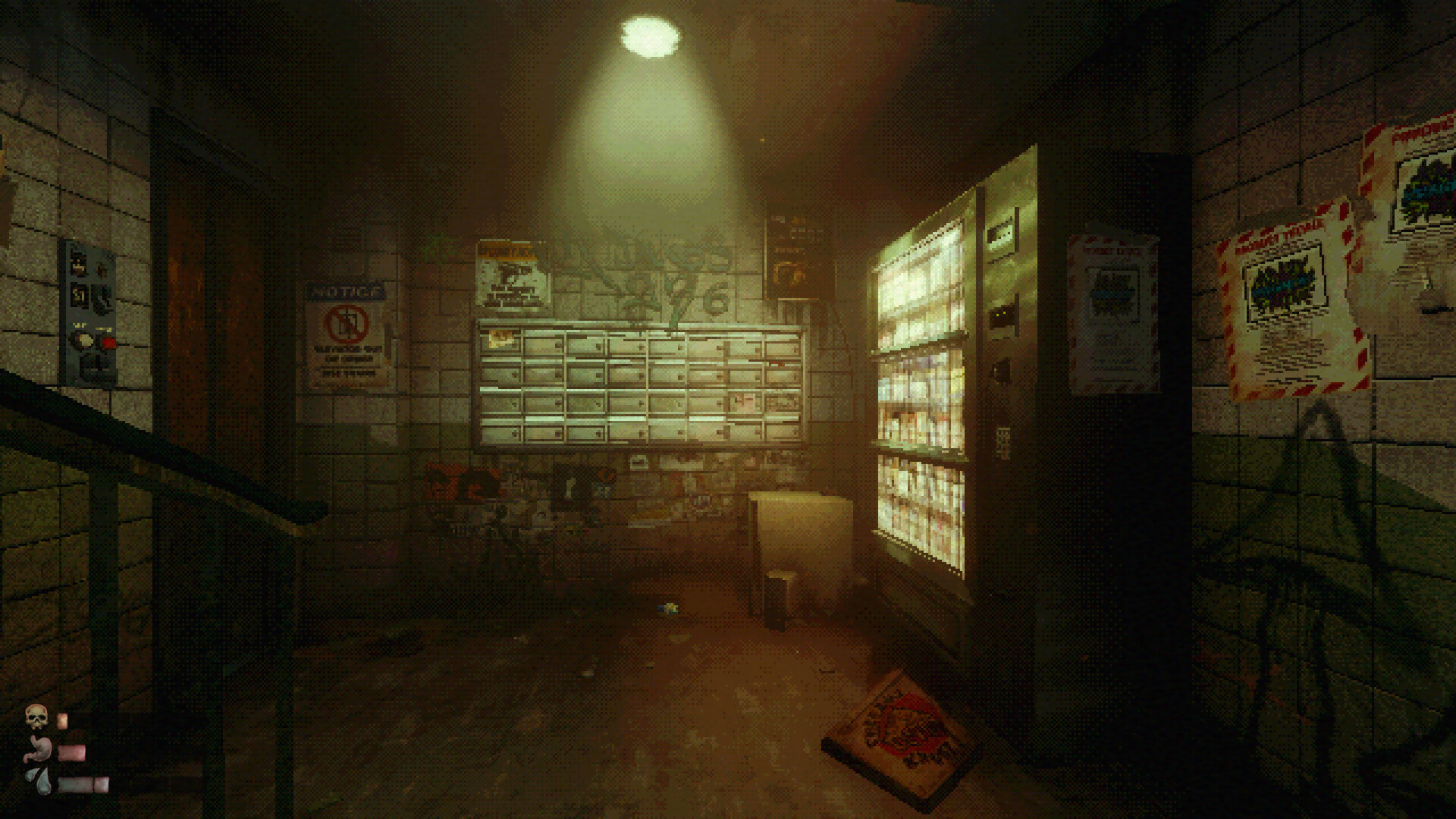
The building's mailroom, one of the many small, lived-in spaces you'll learn to navigate by heart.Image: Raffaele Picca via Steam -
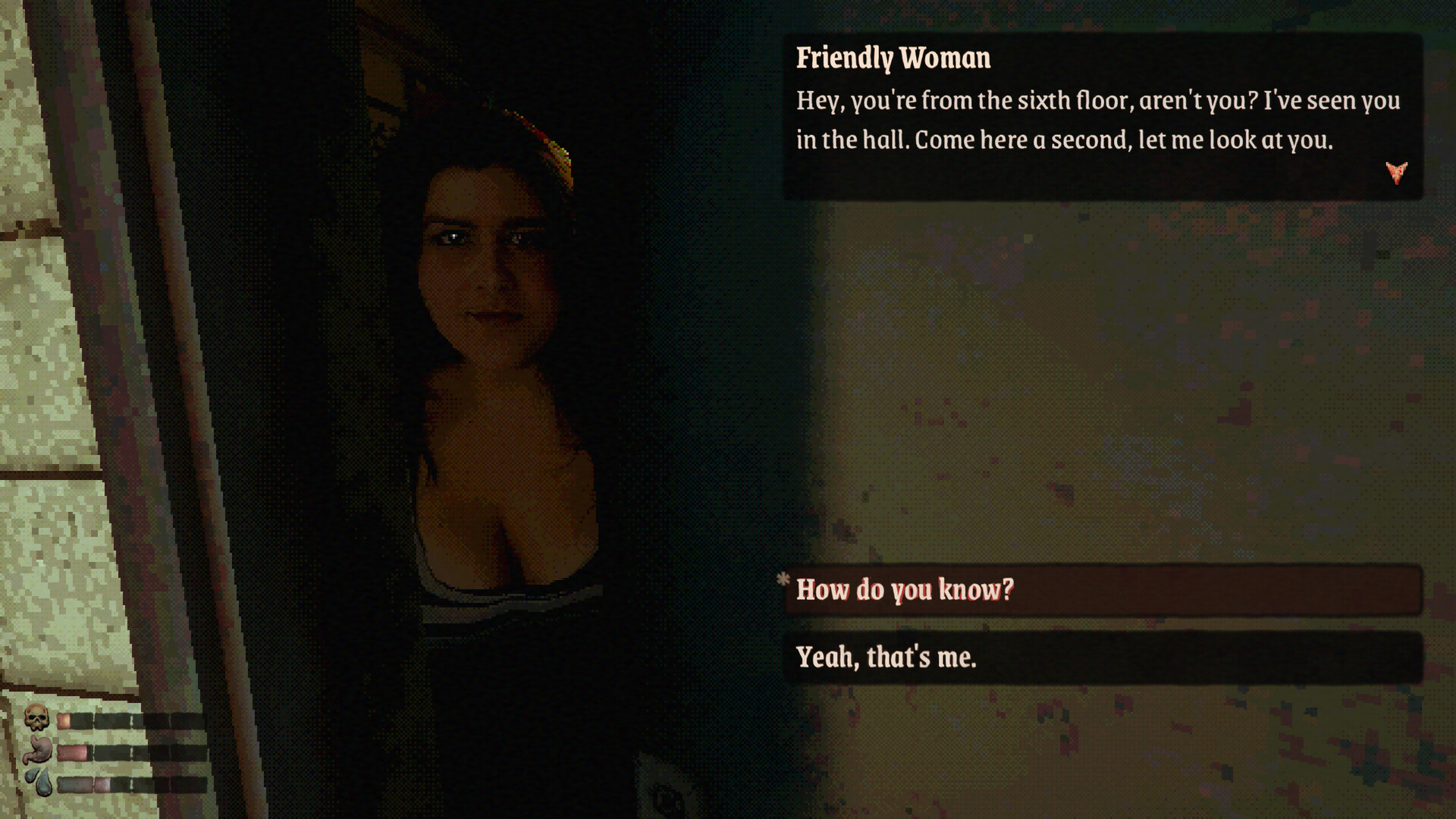
One of the building's many neighbors, mid-conversation — information here is the real currency.Image: Raffaele Picca via Steam -
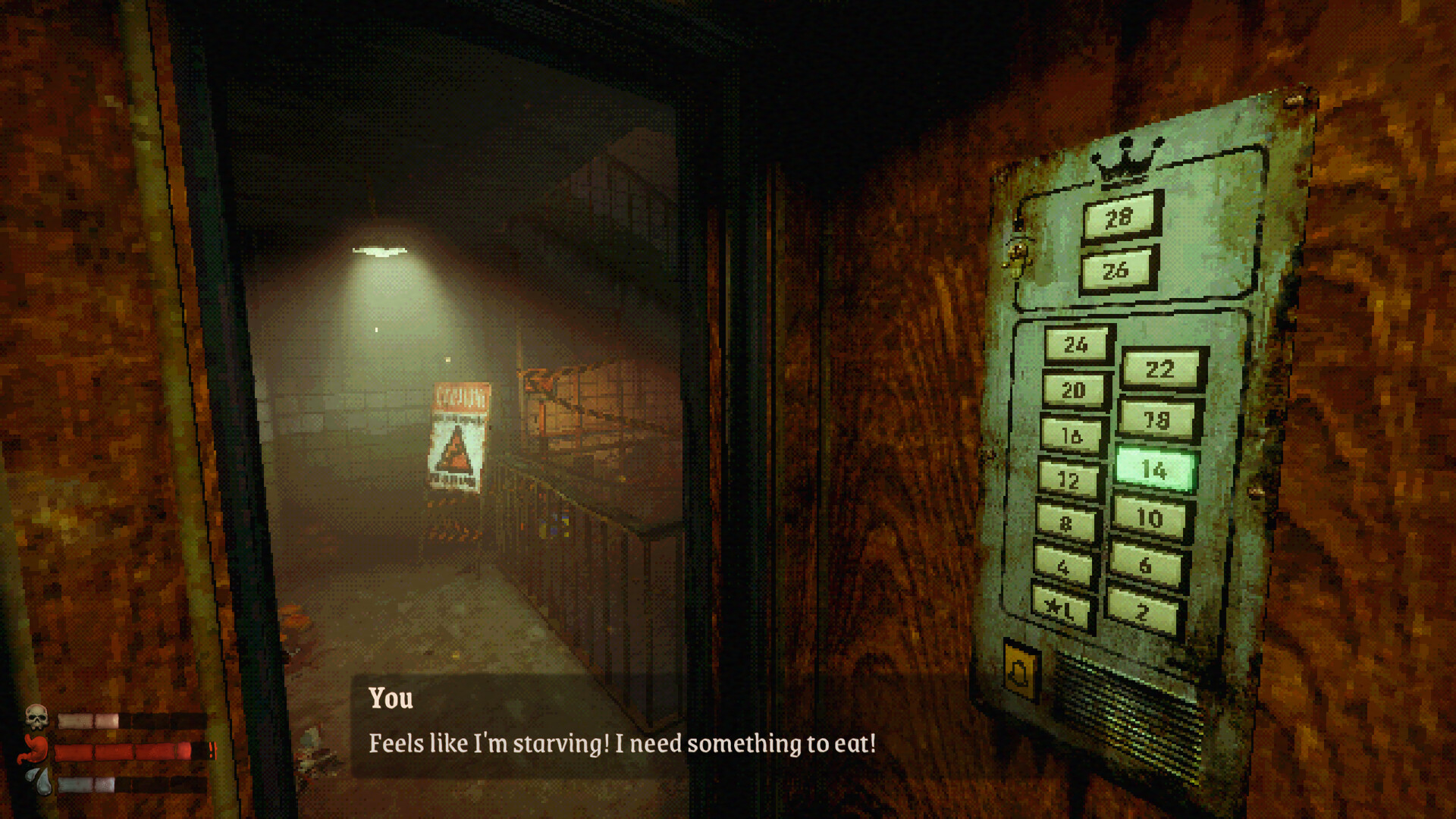
An elevator panel and a status line that doubles as a reminder of the clock always running against you.Image: Raffaele Picca via Steam