Game review
Infinitevania Review
7 / 10
- Developer
- JHT Games
- Publisher
- JHT Games
- Released
- 24 July 2026
- Platforms
- ["Windows"]
- Genre
- Metroidvania
A Love Letter To Symphony Of The Night, Not A Replica Of It
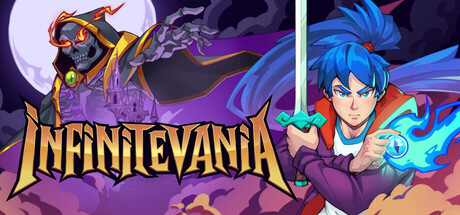
Infinitevania, developed and published by JHT Games, released on Steam on July 24, 2026, at $14.99. It's a 2D metroidvania that follows a young Metroidvania fan who gets pulled into a strange world called Infinitevania while his real-world mother lies in a coma, absorbing the powers of the creatures he defeats to grow stronger and fight his way home. Across all 62 English reviews read in full here, comfortably past this review's minimum sample, the pool skews strongly positive, 52 recommending it against 10 who don't, matching an all-language pool of 294 reviews sitting at 92% positive, "Very Positive" on Steam's own scale. What stands out most in reading through this pool, though, isn't the raw score, it's how consistently reviewers, even the ones recommending it, describe the game in almost identical, carefully qualified terms.
Reviewers Widely Agree: This Is A Tribute To Castlevania's Themes And Characters, Not Its Gameplay
One reviewer's framing captured a distinction that runs through nearly every review in this pool: "It seems that a lot of people have mistakenly thought that this is an igavania. It is not, and is not intended to be one. It is a love letter to the THEMES and CHARACTERS of Symphony of the night, NOT the gameplay... it is a generic but well made modern metroidvania that thankfully does not have a corpse run." A negative reviewer made almost the identical observation from the opposite direction, treating it as a flaw rather than a clarification: "this game is not a metroidvania despite claiming to be 'heavily inspired by Castlevania: Symphony of the Night'... for anyone who's played Symphony of the Night or any of the 'igavanias'," the gameplay comparison falls short. Both reviewers are describing the same gap between the store page's marketing and the actual feel of play, they just land on opposite sides of whether that gap matters. Several other reviewers also mention the game's heavy use of meta-commentary and fourth-wall-breaking dialogue referencing the wider genre, with reactions split similarly: some call it charming ("Love all of the meta references and fourth wall breaking, which actually makes sense in the context of"), others find it excessive ("Constantly breaking the 4-th wall... The references to genre cliches were a bit much").
"Decent," "Solid," "By The Numbers": A Pool That Praises Competence More Than Ambition
Reading across the positive side of this pool, the single most repeated word, in one form or another, is "decent." "Combat is decent, bosses are decent, platforming is decent, story is decent. Nothing to write home about, but I enjoyed my time with it, and it was made with a lot of love for the genre," wrote one reviewer. Another arrived at nearly the same conclusion: "It's a decent metroidvania. Overall I do like the art, story is passable and the exploration does its job... it's by the numbers and does nothing spectacular." A third called it "good but not great. But I honestly think that's fine as not every game needs to be (or can be) exceptional." This isn't damning with faint praise so much as a genuinely consistent read: reviewers across dozens of separate write-ups independently converge on the same verdict, competently assembled, clearly made with care, but not bringing much new to a genre already stacked with ambitious entries.
A Real, Specific Complaint: Unfair Hits, Input Delay, And Combat That Doesn't Always Feel Fair
Beyond the "solid but unambitious" consensus, this pool also contains a smaller but specific and credible thread of technical combat complaints. "I made it to Tenroh. Died twice. It would be an easy fight, except all of your moves have a horrible delay between the button press and the execution. Since responsive controls are the #1 requirement for a game of this genre being fun, it's a no from me," wrote one reviewer. Another described a related issue with enemy design: "Enemies have a huge range of attack, which guarantee constant hits, down attack+jump... requires a presicion and speed which would make you to do dozens of tries." A third simply called movement and combat "clunky." These complaints sit specifically at odds with several positive reviews that praise the controls directly ("the controls are great," "movement feels smooth and agile"), suggesting the game's feel may vary meaningfully depending on which fights or areas a given player hits first, rather than being uniformly tight or uniformly clunky throughout.
Short, And Reviewers Are Split On Whether That's A Feature Or A Flaw
Length comes up constantly, and opinion splits cleanly on whether that's a strength or a weakness. "It's a decent game but far too short. I beat it in under 4 hours," wrote one dissatisfied reviewer. Several positive reviewers frame the same runtime as a selling point instead: "Experienced players can easily clear within 10 hours at 100% completion in one playthrough. Good stuff," and another who "100%'d it in a little over 8 hours" called it "pretty simplistic. Not really bringing anything new to the table but a fun quick game to play through if you got the itch." At $14.99 for what most reviewers converge on as a 4-to-10-hour experience depending on completion goals, this is a real value consideration worth naming plainly for anyone comparing it against longer genre staples like Hollow Knight, which several reviewers invoke directly, usually to note that Infinitevania is smaller in scope rather than lesser in quality.
The Real-World Frame, A Sick Mother And A Fan Pulled Into His Own Favorite Genre, Adds Genuine Emotional Weight
Several reviewers single out the story's real-world framing, a kid who is a fan of Metroidvania games learning his mother has just woken from a coma, right before he's pulled into the fictional world of Infinitevania, as more affecting than the by-the-numbers gameplay around it. "I don't know JHT Games' mom, but I bet she's a wonderful lady if the Boy is willing to go through all of this for his own mother," wrote one reviewer, only half-joking. Another described the writing as "engaging enough without getting convoluted," while a Portuguese-language reviewer called the story and dialogue "bem escritos" (well written) and said they already wanted a sequel. This personal, specific framing device is one of the few elements in this pool that draws consistently positive comment without the "decent, but" qualifier attached to nearly everything else.
Verdict
Infinitevania is an honest, competently made metroidvania that wears its Symphony of the Night influence proudly on its sleeve, more as a tribute to that game's themes and cast than as a mechanical clone of its gameplay, a distinction this review pool debates but never really disagrees on. Reviewers converge overwhelmingly on the same read: solid, decent, well-made, but not pushing the genre forward, undercut in places by real, specific complaints about input delay and unfair enemy ranges that don't match the tight, responsive controls other reviewers praise in the very same fights. At $14.99 for a 4-to-10-hour campaign depending on how thoroughly you explore it, this lands as a reasonable, likeable pickup for metroidvania fans working through the genre's back catalog, rather than an essential new entry to seek out ahead of the bigger names it's clearly paying tribute to.
Screenshots
-
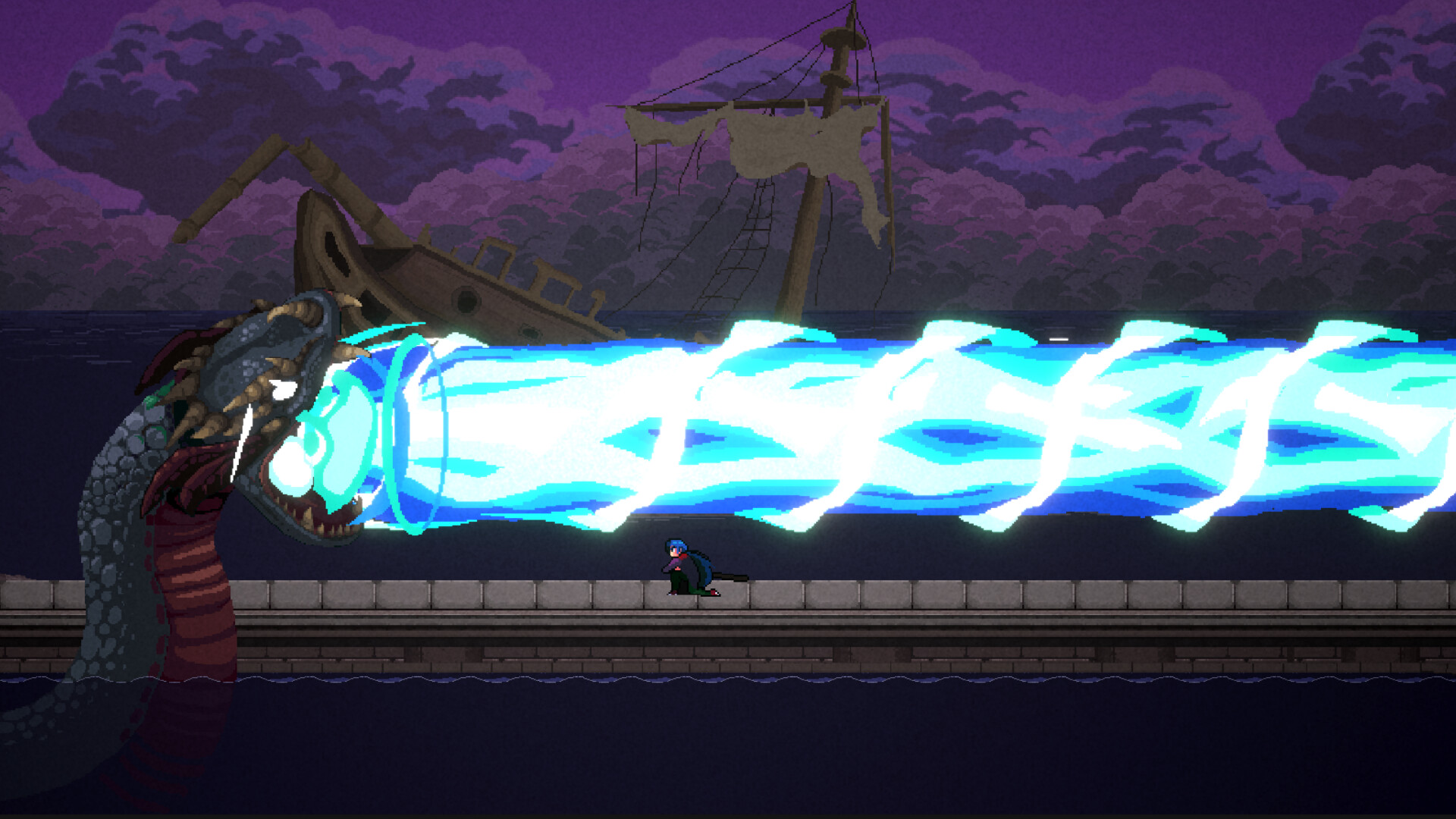
A coastal boss encounter, with a shipwreck looming in the storm-lit background.Image: JHT Games via Steam -
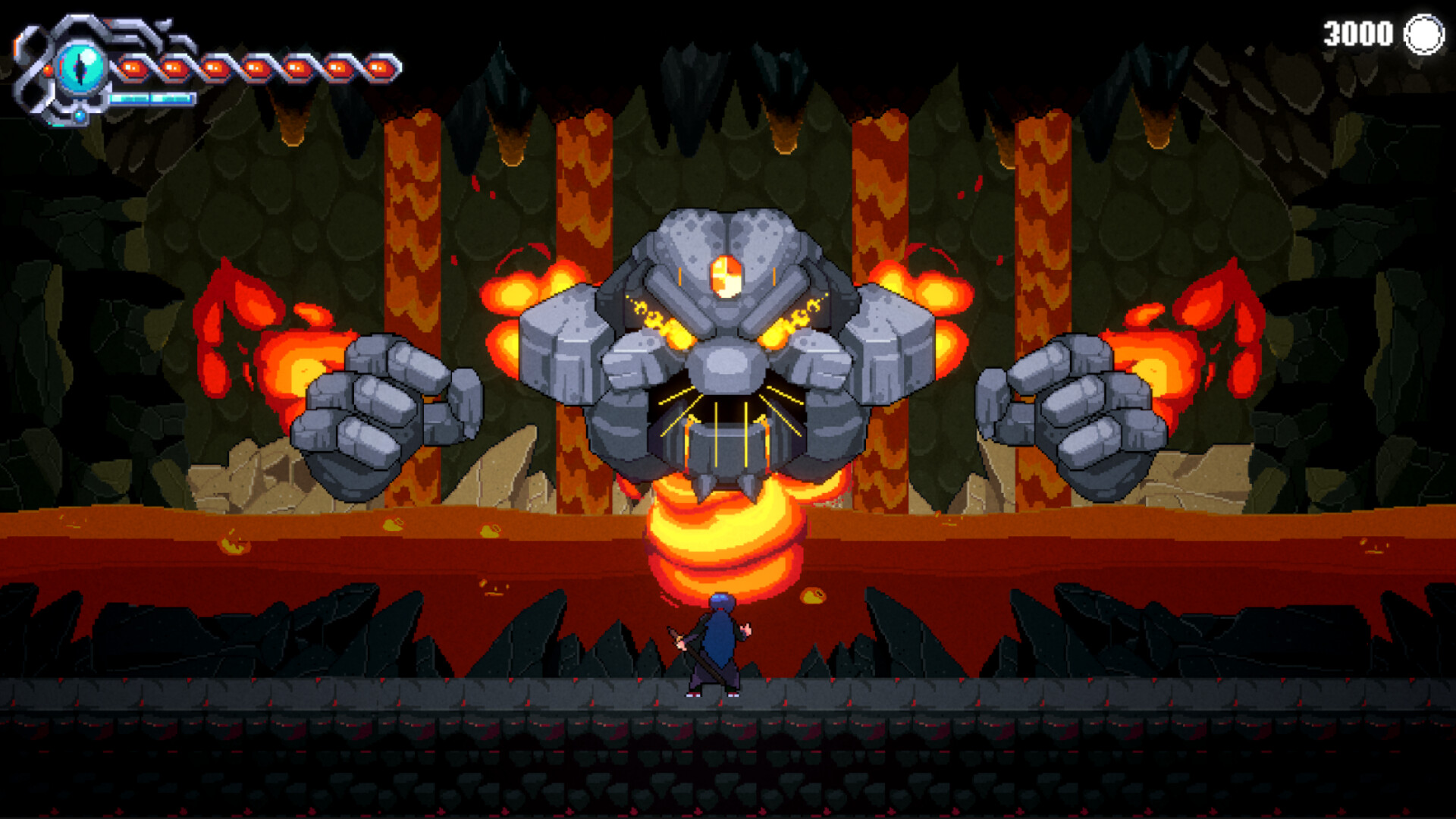
A lava-cavern boss fight against a hulking stone golem.Image: JHT Games via Steam -
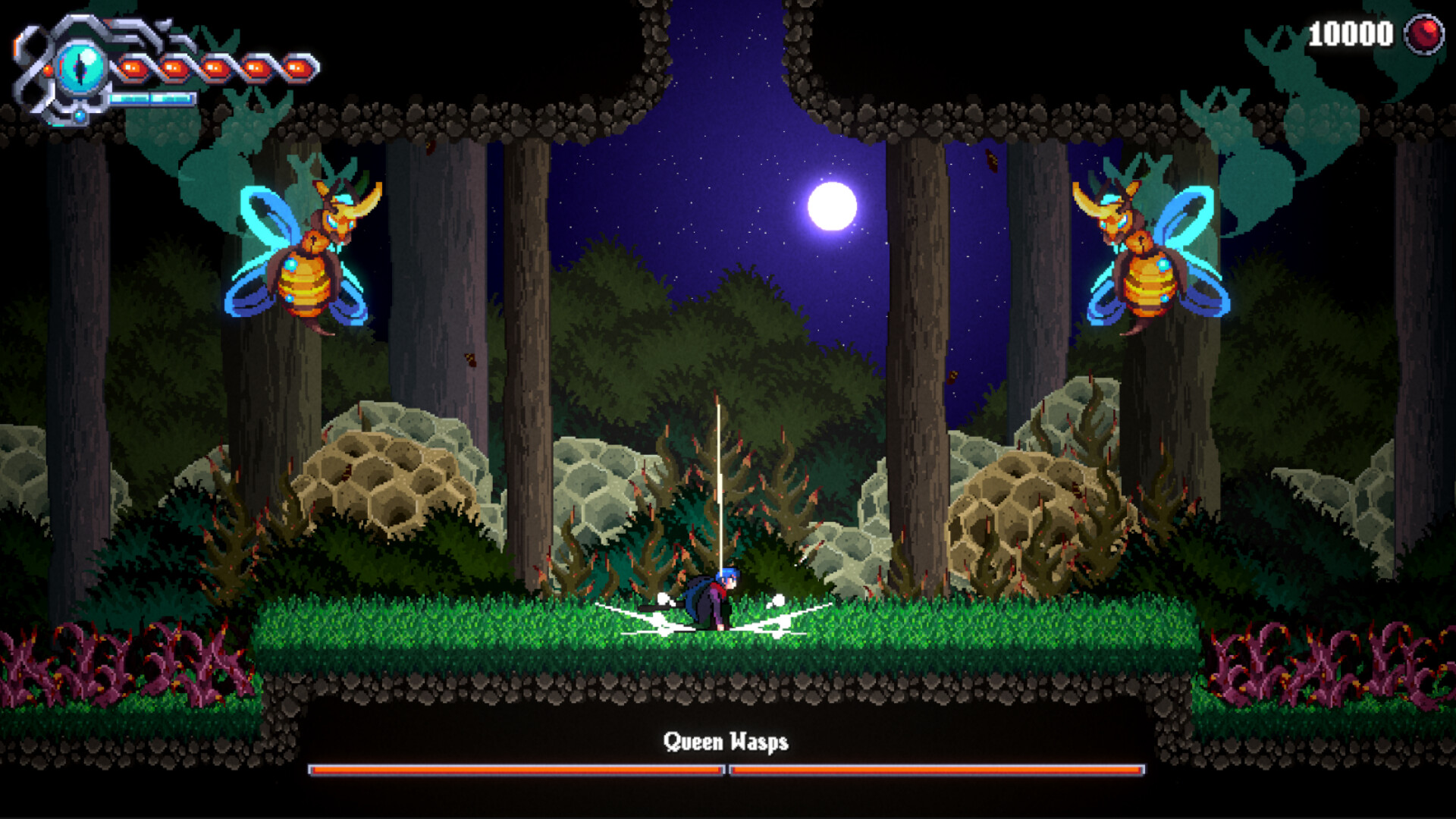
Facing the Queen Wasps in a moonlit forest arena.Image: JHT Games via Steam