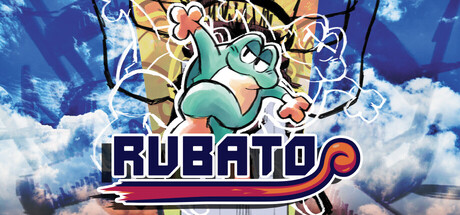
Game review
RUBATO Review
8 / 10
- Developer
- dconn
- Publisher
- dconn
- Released
- 20 March 2026
- Platforms
- ["Windows"]
- Genre
- Action
A Kickstarter-Backed Collect-A-Thon Four Years In The Making
RUBATO, a mostly-solo project from developer dconn built with a small team of contributing artists, released on Steam on March 20, 2026, after a public demo period stretching back as far as 2022 and a November 2022 Kickstarter campaign several reviewers mention having personally backed. Billed on its own store page as "an experimental, 2D physics-based take on the collect-a-thon genre," it's drawn one of the most lopsided review pools this lane has seen: 100-plus English reviews sampled here out of a 535-review all-language pool sitting at 98% positive, "Overwhelmingly Positive," comfortably clearing this review's minimum threshold many times over. At $19.99, this is a small game that has clearly found an intensely devoted audience, even if, as several of its own reviewers are quick to admit, that audience is a specific and self-selecting one.
An Overwhelming, Near-Unanimous Plea To "Go In Blind"
The single most repeated instruction across this entire review pool isn't praise for a specific mechanic, it's a plea: don't look anything up, don't read spoilers, just play it. "Please play it...!!" "go in blind! the hero of the stars and the sky." "I highly recommend anyone playing this game to go in blind." Reviewer after reviewer frames RUBATO as a game whose impact depends on genuine surprise, describing a story that starts as a whimsical, silly frog-platformer premise and gradually, deliberately reveals something considerably more heartfelt and strange underneath. "It's charming, its presentation and execution push all the right buttons for me," wrote one reviewer, while another called it "a piece of art that uses the medium of video games to tell a unique story impossible to replicate in any other form of media." This isn't a small or isolated sentiment, it's the dominant, load-bearing thread of the entire pool, and it makes the game unusually difficult to review without either spoiling the thing reviewers most want protected or being frustratingly vague.
A Genre-Blending Identity That Refuses To Sit Still
Underneath the secrecy, reviewers consistently describe a game that treats "collect-a-thon platformer" as a starting point rather than a destination, swapping gameplay styles and tones with a restlessness several reviewers compared to Pizza Tower, Undertale, Kirby: Planet Robobot, and Pikuniku, with others invoking Metal Gear Solid and even Silent Hill for its late-game tonal swings. "RUBATO rapid fires gameplay styles and unique gimmicks at you non stop while having a solid foundation as a 2D collect-a-thon," wrote one reviewer, while another praised its visual identity specifically: "The art in this game blew me away. The blending of pixel art, sketched drawings, 3d animation, and low resolution photos is beautiful." The soundtrack draws similarly strong, specific praise across nearly every review sampled, frequently singled out as one of the best reviewers have heard in years, "an amazing and diverse soundtrack, satisfying sound design," in the words of one, with even several critical reviewers conceding the music is the game's strongest element regardless of their other complaints.
The Platforming Itself Draws Real, Specific Praise
Separate from the story and presentation, reviewers who focus on the moment-to-moment platforming describe tight, responsive movement and a genuinely well-built core toolkit. "The controls are tight and earning new abilities throughout the story was a lot of fun," wrote one reviewer, who specifically praised the game's challenge-door side content for constantly experimenting with new ideas in short bursts. Another called it "probably what I'd consider to be the best example of a 2d collectathon I've personally experienced," pointing to the level design and difficulty curve as fully realized rather than an afterthought to the narrative. This thread matters because it pushes back against any assumption that RUBATO is purely a novelty held together by its writing, several reviewers are explicit that the platforming would stand on its own even without the story wrapped around it.
A Vocal, Detailed Minority Finds The Humor Grating And The Gameplay Thin
Set against that enthusiasm, this pool's negative reviews are unusually long, specific, and self-aware, several openly acknowledging they're outliers and encouraging prospective buyers to read them anyway. "Nearly everything about RUBATO feels like a joke that's overstayed its welcome, and wasn't even all that funny the first time," wrote one reviewer, who conceded the game would likely be someone's favorite of all time while insisting they couldn't recommend it in good conscience to an average player. A second detailed negative review argued the core gameplay is "understated" by design, noting that outside of boss fights, exploration itself is essentially the entire loop, with regular enemies posing little threat. A third raised a specific structural complaint, accusing the game of "ludonarrative dissonance," a mismatch between its serious emotional themes and its comedic, internet-humor tone, though other reviewers pushed back directly on that exact criticism as missing the point of a story about being unapologetically yourself. A handful of reviewers who liked the game overall still flagged uneven pacing, with the story taking a while to "kick in" before dropping a large amount of plot at once.
An Intensely Personal Project Whose Future Direction Worries Some Fans
A smaller, more particular thread of concern involves the game's post-launch trajectory: several reviewers who loved the original release expressed unease about an announced "Director's Cut" update reworking parts of the experience, with one writing that the game "is being changed into something different than the game I fell in love with," while still declining to withdraw their positive review. Others were more optimistic, framing continued revision as evidence of a still-invested solo developer rather than abandonment. Either way, it's a reminder that RUBATO, even after its full 1.0 release, remains an actively evolving work whose exact shape has shifted meaningfully since launch.
Verdict
RUBATO earns its "Overwhelmingly Positive" standing the hard way: not through a safe, broadly appealing package, but through a genuinely strange, genre-refusing collect-a-thon that most of its reviewers are actively protective of, urging newcomers to go in blind and let its tonal swings land unspoiled. The core platforming is tight and inventive, the soundtrack draws some of the strongest praise in this lane's history, and its willingness to lurch between silly internet humor and real emotional weight is precisely what its fans love about it. But it's not a universal recommendation, a detailed and self-aware minority found the humor exhausting, the gameplay thin outside boss encounters, and the tonal whiplash a genuine flaw rather than a feature, and even some fans are nervous about where its ongoing updates are taking it. At $19.99 for a multi-year, crowdfunded passion project, it's an easy recommendation for players drawn to genre-bending indie curiosities, and a reasonable pass for anyone who reads "go in blind" as a red flag rather than an invitation.
Screenshots
-
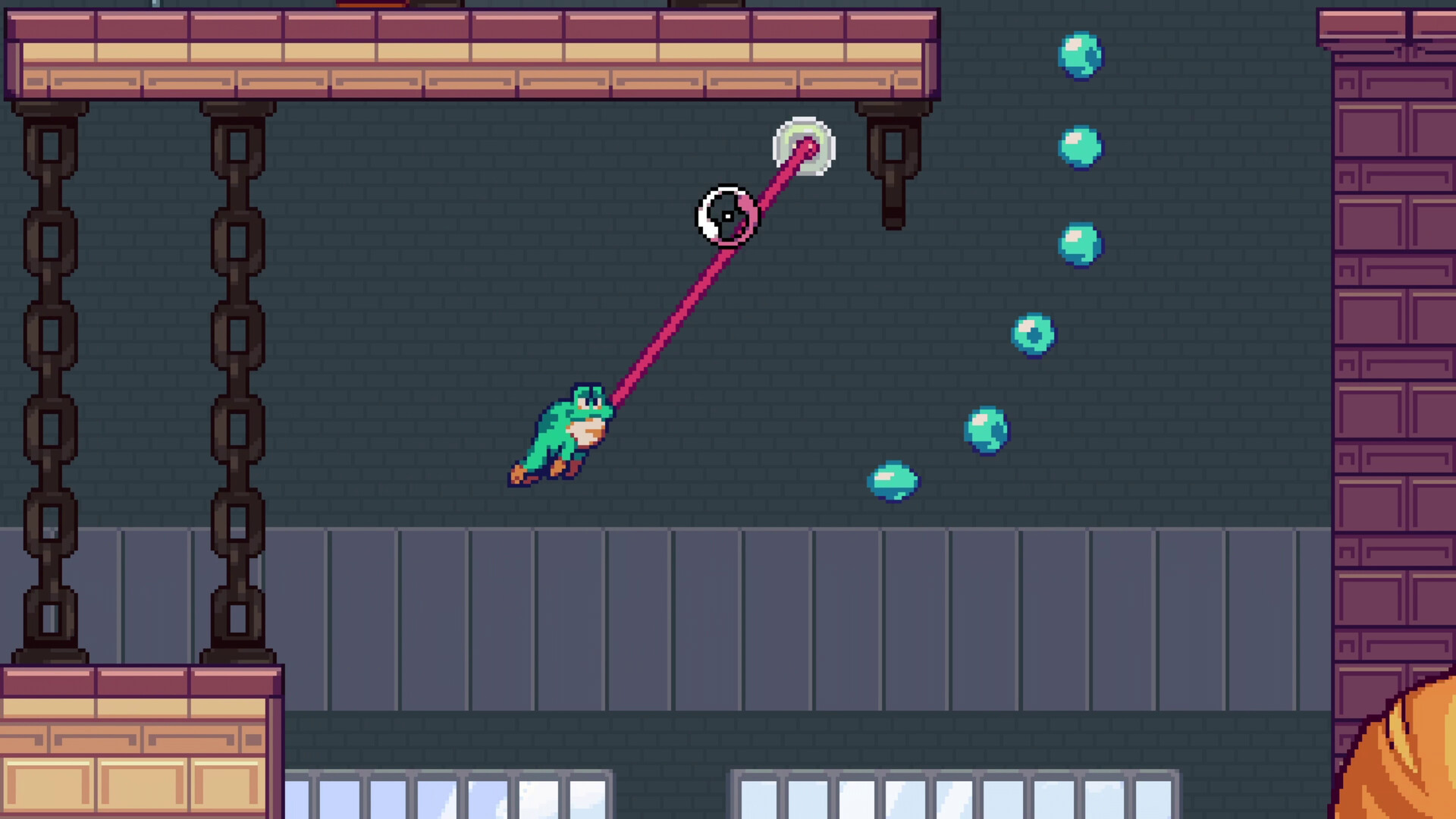
The frog protagonist swings between platforms using a grapple-point mechanic, chasing down a trail of collectible orbs.Image: dconn via Steam -
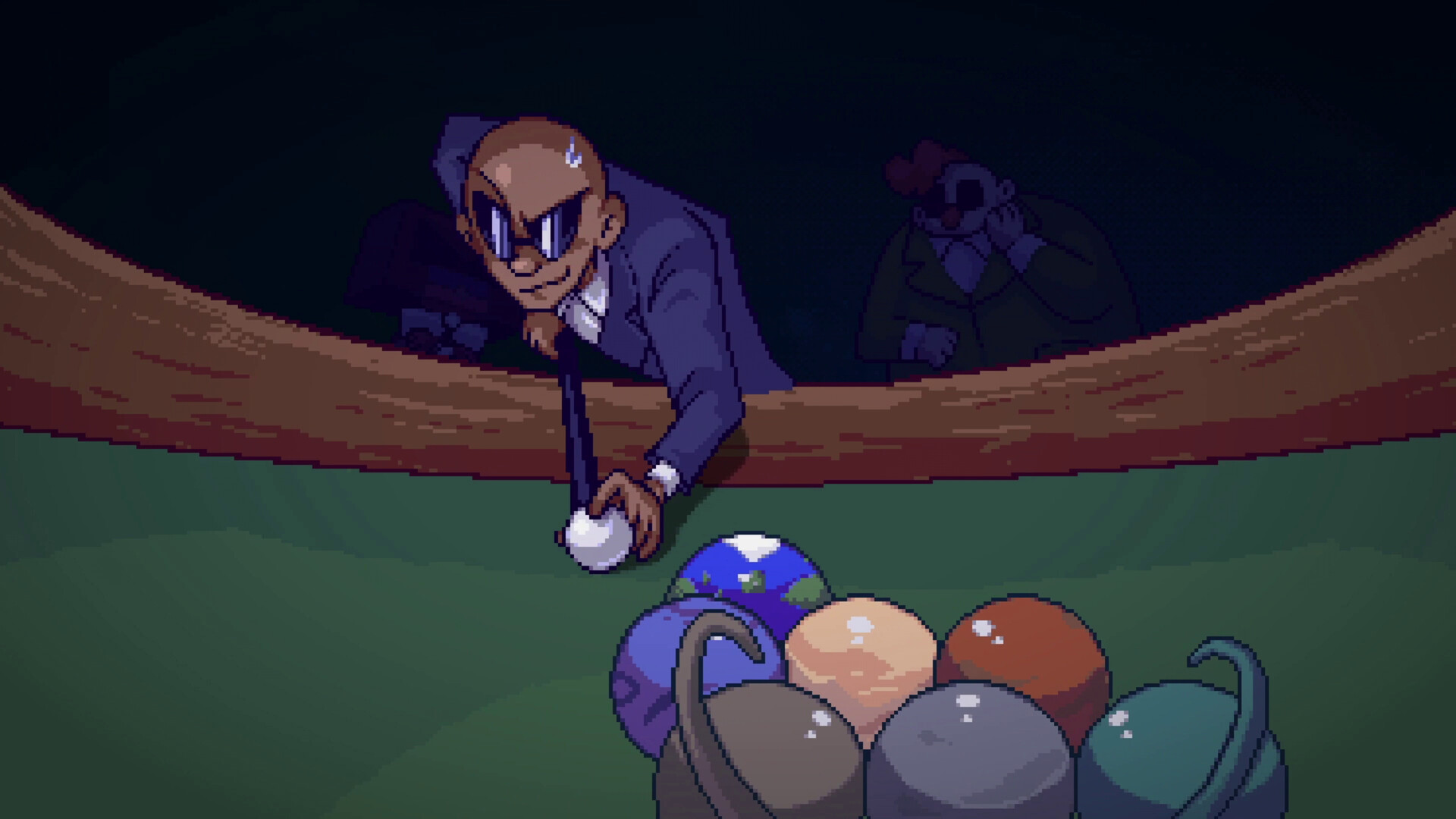
One of the story's tonal detours, a shadowy pool-hall scene that hints at the darker turns reviewers repeatedly warn newcomers not to spoil for themselves.Image: dconn via Steam -
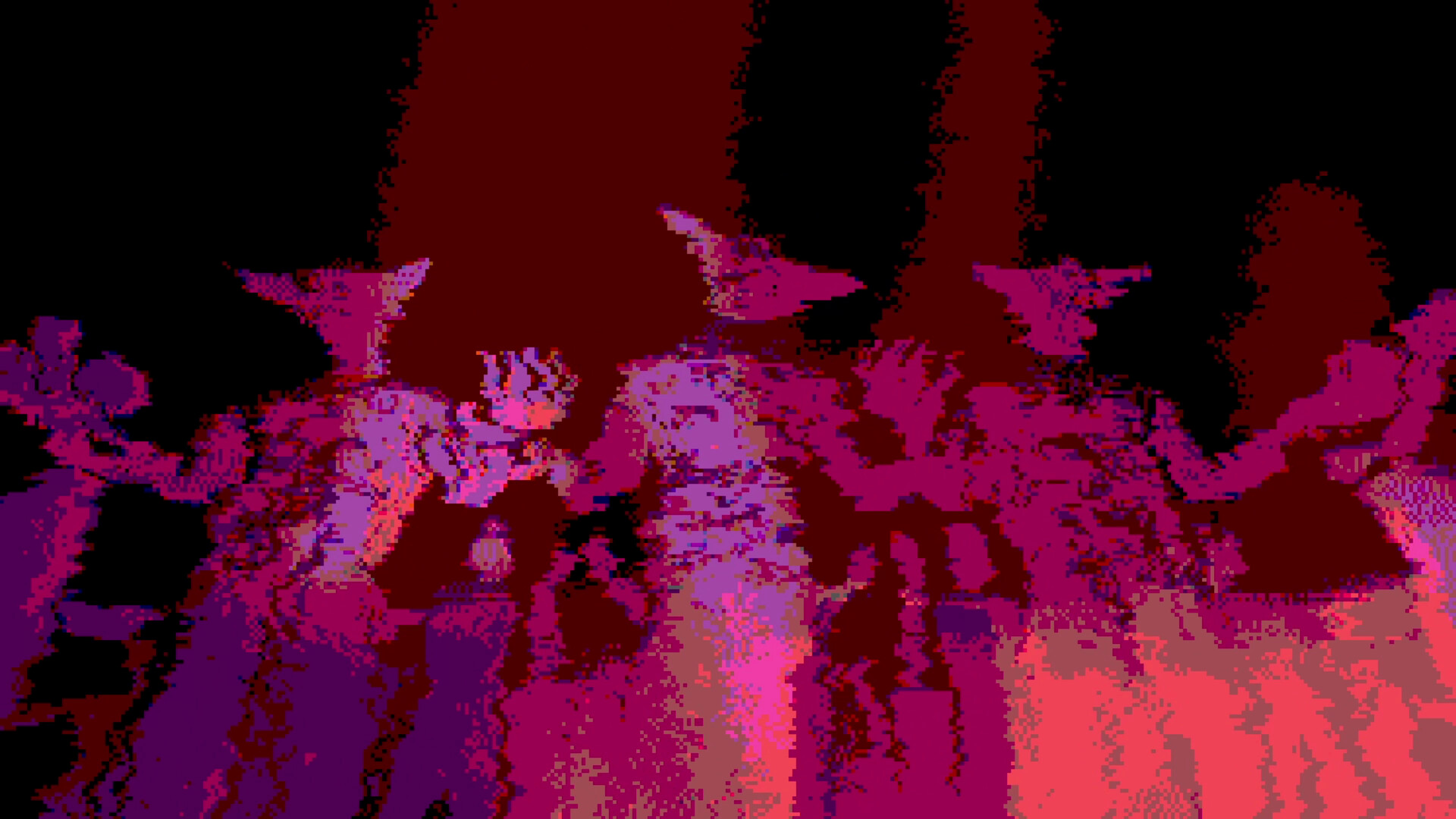
A glitch-heavy, horror-tinged sequence, one of several moments reviewers cite as evidence the game refuses to stay in one register for long.Image: dconn via Steam