Game review
DAMON and BABY Review
7 / 10
- Developer
- Arc System Works
- Publisher
- Arc System Works
- Released
- 26 March 2026
- Platforms
- ["Windows"]
- Genre
- Action
A Fighting-Game Studio's Detour Into Isometric Action-Adventure
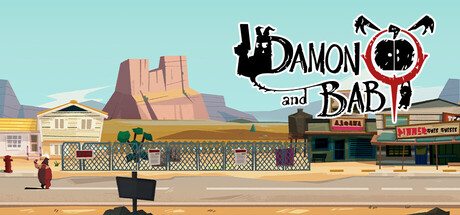
DAMON and BABY, from Arc System Works, the studio best known for Guilty Gear and BlazBlue, released on Steam on March 26, 2026 after a public demo period stretching back to February. It's an isometric action-adventure that fuses twin-stick shooting, Zelda-style exploration, and light RPG systems, built around a mute drifter named Damon who fights his way across a demon-infested version of Arizona while carrying a literal baby on his back. At $19.99, it has drawn a modest but strongly favorable English review pool of 54 reviews, comfortably clearing this review's minimum threshold, and an even more lopsided all-language pool of 96 reviews sitting at 90% positive, "Very Positive." For a lower-budget side project from a studio whose bread and butter is 2D fighters, that's a genuinely strong reception.
A Genre Mashup That Reviewers Keep Comparing To A PS2-Era Curiosity
The single most consistent thread across this pool is reviewers struggling, happily, to categorize what they're playing. "This is a strange, funny, large, and wholly unique thing that seems like it was beamed to us straight from the PS2 era," wrote one reviewer with just under two hours logged, describing it as part twin-stick shooter, part puzzle platformer, part open-world sandbox, part dark comedy RPG. Others reached for more specific touchpoints: "Very classic Zelda action-adventure type of game," "gives you that same kind of discovery" as a PS3-era hidden gem, and repeated direct comparisons to metroidvania structure and pacing. One reviewer summed up the appeal bluntly: "Elements of zeldalikes, twin sticks, rpgs, and of Diablo... come together to create a unique experience." Reviewers are near-unanimous that the mashup, however unlikely on paper, actually works, crediting director Daisuke Ishiwatari's design sensibility (Ishiwatari is credited by reviewers as the driving creative force and character designer behind the project, distinct from Arc System Works' broader catalog) with tying disparate mechanics into something coherent rather than a scattershot tech demo.
Guilty Gear And BlazBlue Fans Get A Distinct Layer Of Fan Service
A second, closely related thread runs through nearly every positive review: this is explicitly a passion project for Arc System Works' existing fighting-game audience, and it delivers accordingly. Reviewers repeatedly called out cameos from Guilty Gear and BlazBlue characters (I-No and Ragna both get specific mentions), lore connections to the broader "Guilty Gear universe" hinted at in-game, and a bestiary system, the "Demonpedia," that multiple reviewers praised for its personalized, characterful writing. "If you're a fan of both Guilty Gear and BlazBlue, you'll find the Easter eggs and references very charming," wrote one reviewer, while another, more blunt about their bias, admitted being "pretty biased" as a longtime Guilty Gear fan but still found the game "really fun" on its own terms. This fan-service layer is clearly a major driver of the pool's enthusiasm, though several reviewers were careful to note the core gameplay holds up independently of that connection.
Inventory Management, Healing, And Navigation Are The Pool's Recurring Friction Points
Set against that enthusiasm is a consistent, specific set of mechanical complaints that shows up across reviews of every playtime length. "Inventory management is a huge pain... it's a big waste of time in this game," wrote one reviewer, who separately called the healing system "the worst" they'd encountered, a sentiment echoed by others frustrated with resource scarcity during exploration. Navigation drew similar criticism: several reviewers described the large, open, isometric-camera maps as confusing, with maps for individual areas sometimes introduced too late into a stage to be useful, and combat dashing described as "clunky at times." One critical review focused entirely on this friction, arguing the fixed isometric camera makes areas "way too damn big and obnoxious to navigate" without a default map. None of these complaints describe the game as broken, but they recur often enough, across otherwise glowing reviews, to read as a real rough edge rather than isolated nitpicking.
Balance Swings And A Handful Of Sharply Negative Reviews
A smaller but pointed complaint concerns build balance: multiple reviewers noted that certain weapon or ability combinations, the machine gun in particular, trivialize the back half of the game, with one writing that they ended up "deleting enemies in seconds, even bosses" once their build came online, undercutting the difficulty curve the earlier hours had established. The pool's minority of negative reviews go considerably further, with one describing the game as devolving into "mashing the punch and shoot buttons while you stumble through large open samey-looking environments with little to no direction," and another arguing bluntly that a lower-profile developer's identical game "would still be 'positive'" only because of the Arc System Works name attached to it. These aren't the dominant view in this pool, but they're substantive enough, and specific enough about shallow combat and repetitive environments, to weigh against the otherwise strong consensus.
An Ambitious, Rough-Edged Passion Project That Mostly Delivers
Running underneath both the praise and the criticism is a shared observation: this is a comparatively low-budget side project for a studio capable of much bigger productions, and reviewers judge it accordingly. "The devs clearly have so many ideas they want to execute that aren't typical for them to do," wrote one reviewer who also flagged the game's roughly 20-hour length as longer than expected for its scope, while several others explicitly framed their recommendation around tempered expectations, "don't expect a super polished experience," "not without its minor flaws, but the positives outweigh them all." The developer's own post-launch cadence, several patch rounds and a larger version 2.00 update by late June, plus an active public roadmap, reinforces that framing as ongoing support rather than a one-and-done release.
Verdict
DAMON and BABY is an unlikely, mostly successful experiment: a fighting-game studio's detour into isometric action-adventure that reviewers consistently praise for its genre-blending ambition, its Guilty Gear and BlazBlue fan service, and a scrappy, PS2-era charm that several reviewers compare favorably to hidden gems from consoles past. It's held back by real, recurring friction, tedious inventory management, a disliked healing system, confusing large-scale navigation, and balance swings that can flatten the challenge curve, and a vocal minority of reviewers found the whole package shallow rather than charming. At $19.99 with active post-launch support, it's an easy recommendation for genre-mashup and Arc System Works fans willing to tolerate some rough edges, and a more cautious one for anyone allergic to inventory-management busywork.
Screenshots
-
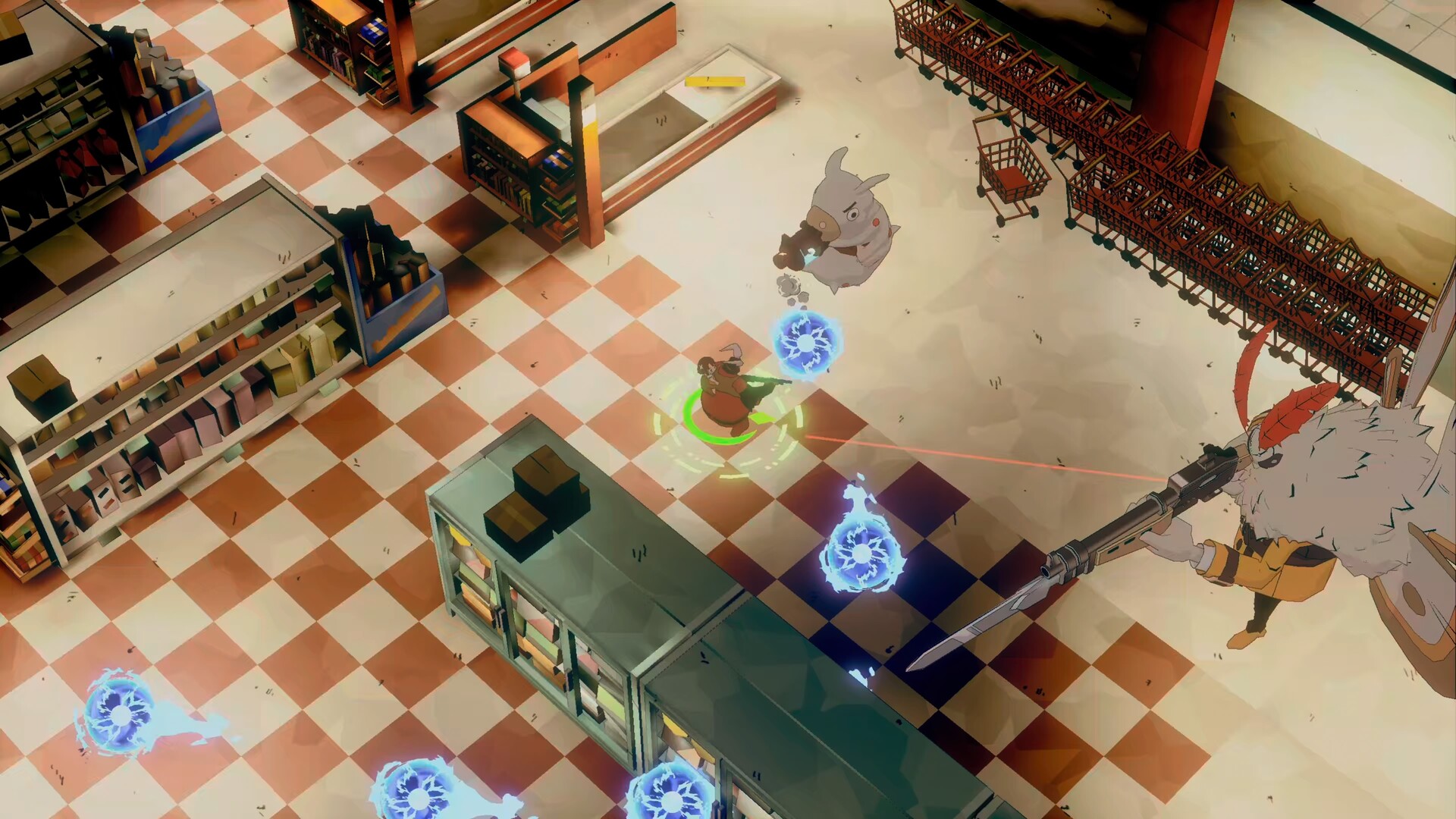
A gunfight breaks out inside a ransacked grocery store, one of the game's many isometric shooting-and-exploration setpieces.Image: Arc System Works via Steam -
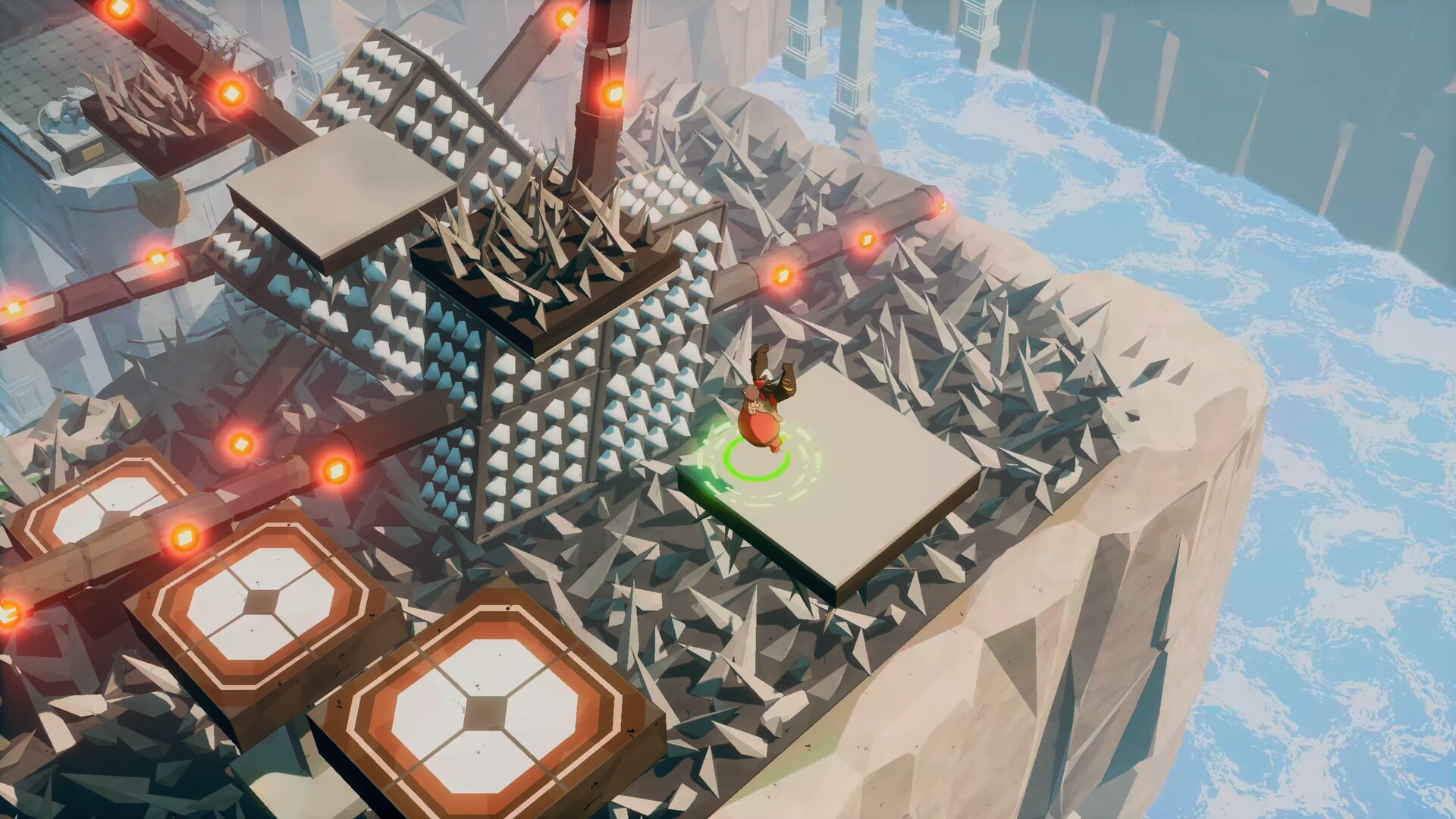
A platforming section over spike-covered walkways, part of the game's Zelda-flavored exploration and puzzle-platforming.Image: Arc System Works via Steam -
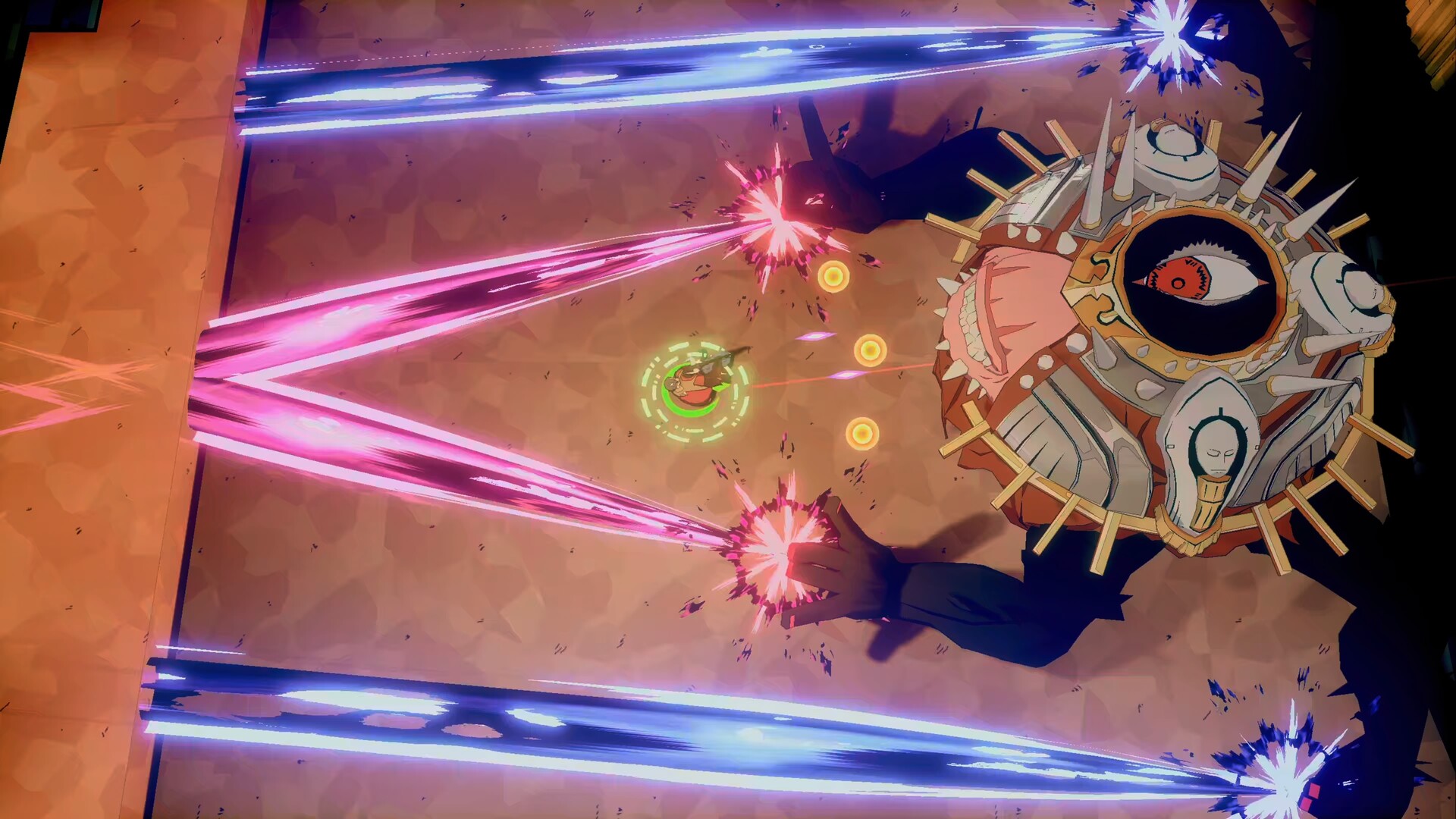
A boss encounter against one of the game's elaborate multi-faced demons, dodging converging beam attacks.Image: Arc System Works via Steam