Game review
Zombasite
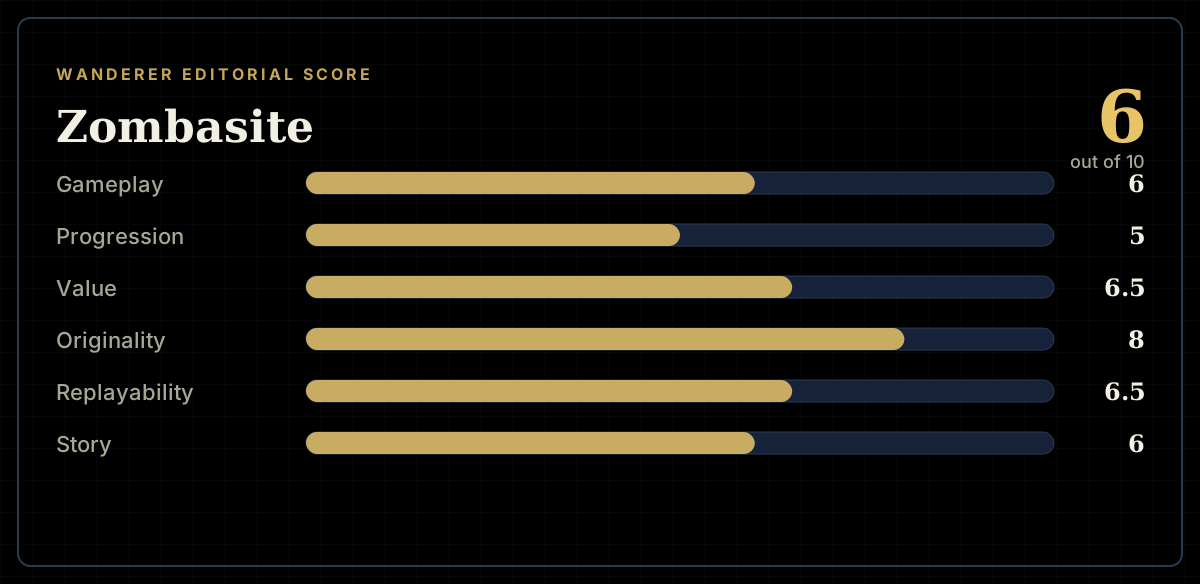
6 / 10
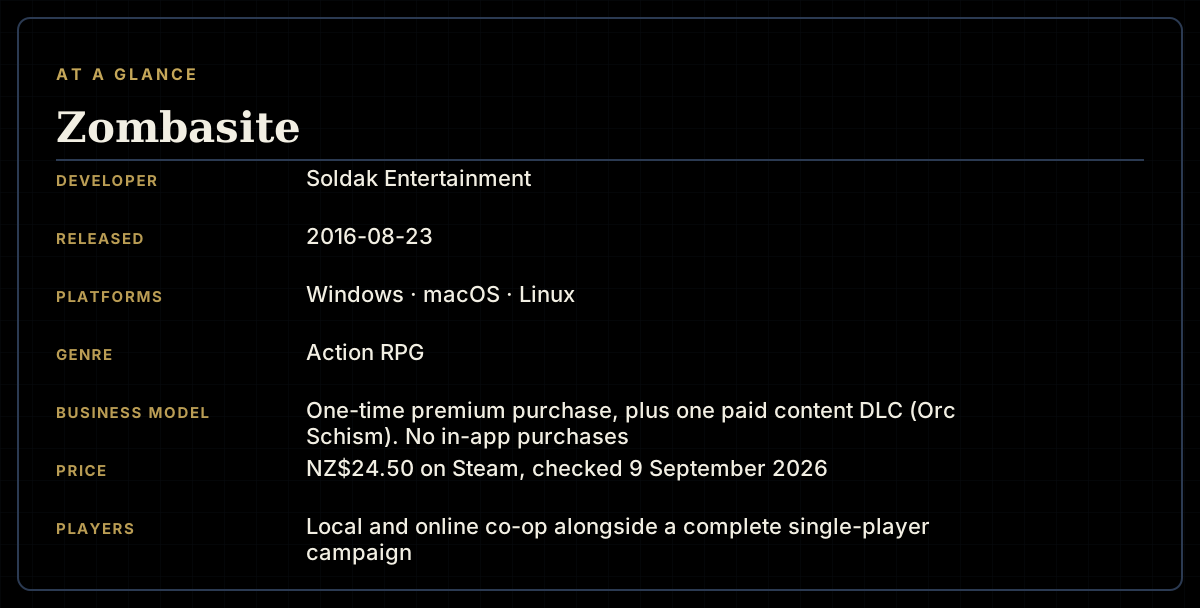
- Developer
- Soldak Entertainment
- Publisher
- Soldak Entertainment
- Released
- 23 August 2016
- Platforms
- Windows, macOS, Linux
- Genre
- Action RPG
- Monetisation
- One-time premium purchase, plus one paid content DLC (Orc Schism). No in-app purchases
- Players
- Local and online co-op alongside a complete single-player campaign
The short version
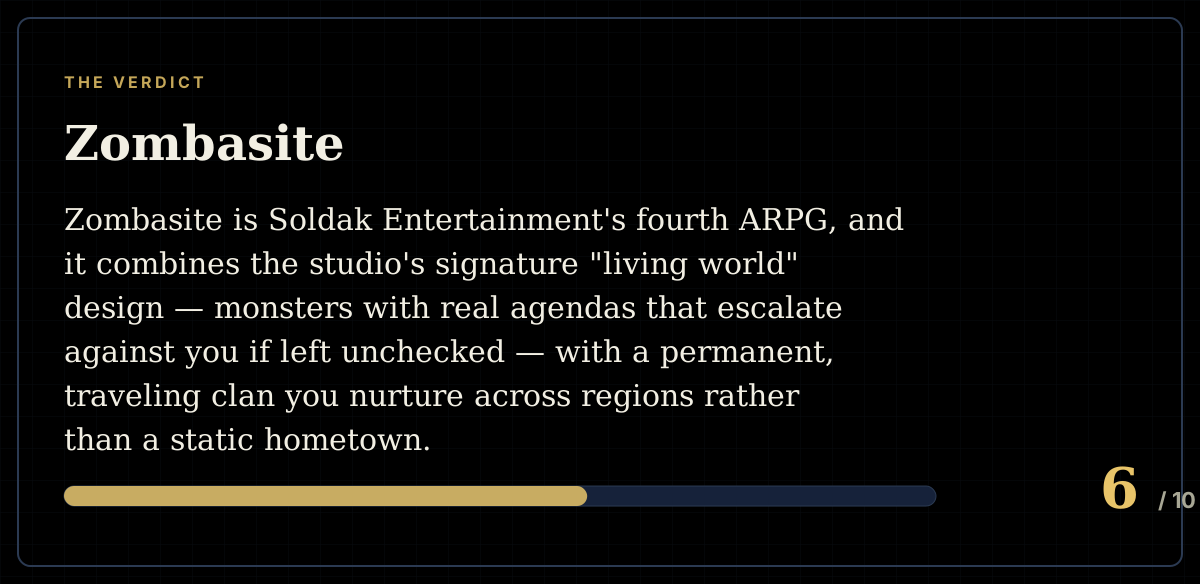
Zombasite is Soldak Entertainment's fourth ARPG, and it combines the studio's signature "living world" design — monsters with real agendas that escalate against you if left unchecked — with a permanent, traveling clan you nurture across regions rather than a static hometown. Reviewers with deep history in the studio's earlier games (Din's Curse, Depths of Peril, Drox Operative) describe it as a genuine culmination of everything those games built toward.
This game's single most-upvoted review is also its harshest: a detailed, mechanically precise account from an equally longtime Soldak fan arguing the game regularly spawns encounters with no real counterplay — no mobility skills to escape, a stamina system that only penalizes the player's own retreat, and permanent, non-respawning ally deaths from fights a skilled player couldn't have avoided. That review predates most of the game's subsequent multi-year patch history, and this review could not confirm whether those specific complaints were later addressed.
Biggest strengths
- A genuinely distinctive "living world" simulation where monsters pursue their own escalating agendas against the player's clan, described by longtime fans as deeper and better realized here than in the studio's earlier games
- Deep character customization: each class is built from three combinable specializations, with dynamic skill-point pricing that rewards diversifying builds rather than maxing a single skill
- A permanent, traveling clan system that gives recruited allies real personality and stakes, replacing the more passive hometown structure of the studio's earlier games
Biggest weaknesses
- A highly detailed, mechanically precise critique from an equally longtime Soldak fan argues the game regularly spawns encounters with effectively no counterplay — no mobility skills to escape a chase, and a stamina system that only penalizes the player's own retreat while pursuing enemies face no such limit
- The same review reports that recruited allies can die permanently, with no respawn, in fights a careful player couldn't reasonably have avoided or won — a harsher consequence than the studio's earlier games attached to similar bad-luck encounters
- That reviewer specifically observes that the most popular character classes are popular because they let players route around the game's own balance flaws (a healer to offset ally deaths, a summoner whose expendable minions absorb unfair damage) rather than because they're simply the most enjoyable to play
Who it's for: ARPG fans who want genuinely emergent, simulated world systems and don't mind real, sometimes harsh difficulty spikes. Less suited to players who want difficulty that always feels earned, or who'd be frustrated by permanently losing recruited allies to bad luck.
Our recommendation: A genuinely distinctive ARPG worth trying for fans of Soldak's earlier work or emergent systemic design generally — just go in aware of the specific, credible fairness concerns raised by an equally invested longtime fan of the studio.
6 / 10
Zombasite is Soldak Entertainment's culmination of a design philosophy the small studio has been refining since Depths of Peril and Din's Curse: a "living world" where monsters don't just wait to be fought, they actively pursue agendas against the player's own settlement, escalating into real threats if left unchecked too long. This entry adds a zombie-apocalypse framing and, more significantly, replaces the earlier games' relatively passive hometown with a permanent clan the player recruits, nurtures, and carries with them from region to region. Reviewers with deep history in the studio's catalogue describe it as everything those earlier games were building toward — and the game's own most-upvoted review is a detailed argument for why that ambition didn't fully land.
A genuinely distinctive simulation, and reviewers who know the lineage say so
The praise here comes from people who clearly know exactly what they're comparing this to. Reviewers describe Zombasite as combining "the overworld and clan system from Depths of Peril, the dungeon delving and classes from Din's Curse and the quest system and diplomacy of Drox Operative," resulting in what one calls "a very unique ARPG to play with plenty going on and to do." The class system draws specific praise too: each "class" is actually three combinable specializations, with dynamic skill-point pricing that makes each additional point in a given skill cost more, actively encouraging build diversity rather than single-skill maxing. Recruited clan members carry real, mechanical personality — a detailed positive review describes an alchemist ally whose curse-induced incapacitation directly hurts colony morale, giving the player genuine reason to protect her beyond abstract stat value.
A detailed, credible fairness critique from an equally invested fan
Set against that praise is this game's single most-upvoted review by a wide margin, and it isn't generic disappointment — it's a mechanically precise argument from someone who states plainly they have hundreds of hours in the studio's earlier games. The core complaint: the game regularly spawns encounters with no real counterplay. There are no mobility skills to escape a fight going wrong, and the game's stamina system only penalizes the player's own movement while chasing enemies face no such limit — meaning "running" really means slowly crawling toward an escape point while draining potions and hoping to survive. Worse, the reviewer reports that recruited clan allies can die permanently with no respawn in fights that weren't survivable regardless of skill — a harsher consequence than similar bad-luck deaths carried in the studio's earlier games, where only recoverable experience was lost. Most tellingly, the same reviewer observes that the two classes widely considered strongest, Healer and Conjurer, are popular specifically because they let players route around these exact flaws — keeping allies alive through direct healing, or absorbing unfair damage with replaceable summoned monsters rather than the player's own irreplaceable clan. That's a sharp, specific observation: the community's own optimal-build consensus doubles as an indirect admission of where the design breaks down.
What happened after, and what this review can't confirm
Zombasite's own patch history shows real, sustained investment well beyond launch — numbered patches continuing through 2019, a paid content expansion (Orc Schism) in 2017, and the studio remaining active enough to release an entirely new game, Din's Champion, as recently as August
- The detailed fairness critique above was posted in January 2017, only months after launch and
before the majority of that patch history — meaning this review cannot confirm whether the specific issues it raises (the stamina/mobility imbalance, permanent ally death from unfair encounters) were ever directly addressed in the years of updates that followed. That's worth stating plainly rather than assuming either that the complaints remain exactly as described today, or that years of patches must have quietly fixed them.
A veteran defender's counterpoint, and real customization options
A separate, differently experienced reviewer — with over 50 hours and describing themselves as "holding my own" against the difficulty — pushes back specifically on treating difficulty complaints as an automatic quality flaw, while still welcoming genuine critique. That reviewer details real customization options this game offers that a first playthrough might not surface: scalable challenge from "fairly easy to nightmare hard," the ability to remove clans and zombies entirely, control over starting enemy levels, and three distinct paths to victory (diplomacy, quests, or military conquest). They're explicit that the game isn't for everyone, listing what kind of player it does and doesn't suit rather than issuing a blanket recommendation. This is a useful complement to the fairness critique above — it doesn't refute the specific claims about unfair encounters and stamina imbalance, but it does suggest some of that difficulty may be more adjustable, or avoidable through different playstyle and settings choices, than the harshest critical account alone would imply.
Where it lands
Zombasite represents a genuinely distinctive, well-regarded design lineage that longtime ARPG fans recognize and respect, and its Mostly Positive reception reflects real enthusiasm from players who know exactly what they're getting. But its own most detailed, most-upvoted critical review makes a specific, credible case that the game's difficulty crosses from "hard but fair" into moments with no real player agency at all — backed up by the pointed observation that the community's favorite classes are the ones that dodge the problem rather than engage with it. Achievement data confirms a genuinely steep difficulty ceiling consistent with that account. Anyone drawn in by the studio's reputation for deep, emergent systems should weigh that specific critique seriously, alongside the real uncertainty over whether years of subsequent patches ultimately addressed it.
Pros and cons
Pros
- A genuinely distinctive "living world" simulation where monsters pursue their own escalating agendas against the player's clan, described by longtime fans as deeper and better realized here than in the studio's earlier games
- Deep character customization: each class is built from three combinable specializations, with dynamic skill-point pricing that rewards diversifying builds rather than maxing a single skill
- A permanent, traveling clan system that gives recruited allies real personality and stakes, replacing the more passive hometown structure of the studio's earlier games
- Real, sustained multi-year post-launch support, including a paid content expansion (Orc Schism) and patches continuing years after release
- The developer remains active as a studio, having released a new game as recently as August 2026, evidence of continued commercial viability rather than a one-off, abandoned project
Cons
- A highly detailed, mechanically precise critique from an equally longtime Soldak fan argues the game regularly spawns encounters with effectively no counterplay — no mobility skills to escape a chase, and a stamina system that only penalizes the player's own retreat while pursuing enemies face no such limit
- The same review reports that recruited allies can die permanently, with no respawn, in fights a careful player couldn't reasonably have avoided or won — a harsher consequence than the studio's earlier games attached to similar bad-luck encounters
- That reviewer specifically observes that the most popular character classes are popular because they let players route around the game's own balance flaws (a healer to offset ally deaths, a summoner whose expendable minions absorb unfair damage) rather than because they're simply the most enjoyable to play
- Achievement data confirms a genuinely steep difficulty ceiling, with the hardest win-condition achievements sitting under 1% of the tracked playerbase
- This review could not confirm whether the specific fairness complaints above were addressed in the several years of patches that followed the original detailed critique, since it predates most of that patch history
Screenshots
-
ZombasiteImage: Soldak Entertainment via Steam -
ZombasiteImage: Soldak Entertainment via Steam -
ZombasiteImage: Soldak Entertainment via Steam -
How the review scores each part of the gameWanderer Editorial -
The specsWanderer Editorial -
The short versionWanderer Editorial