Game review
The Rangers In The South
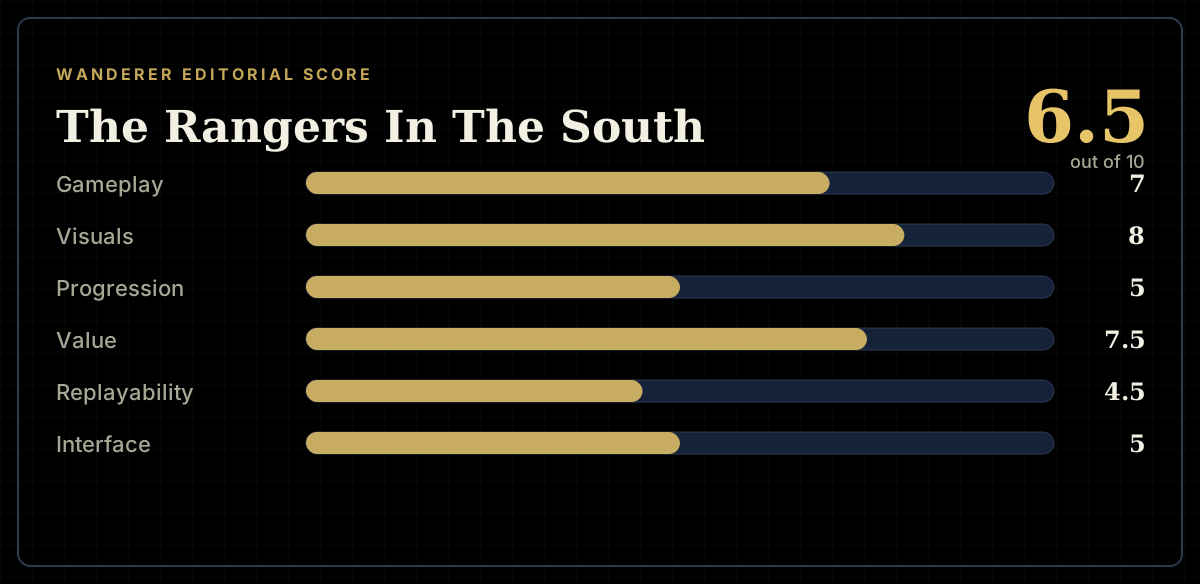
6.5 / 10
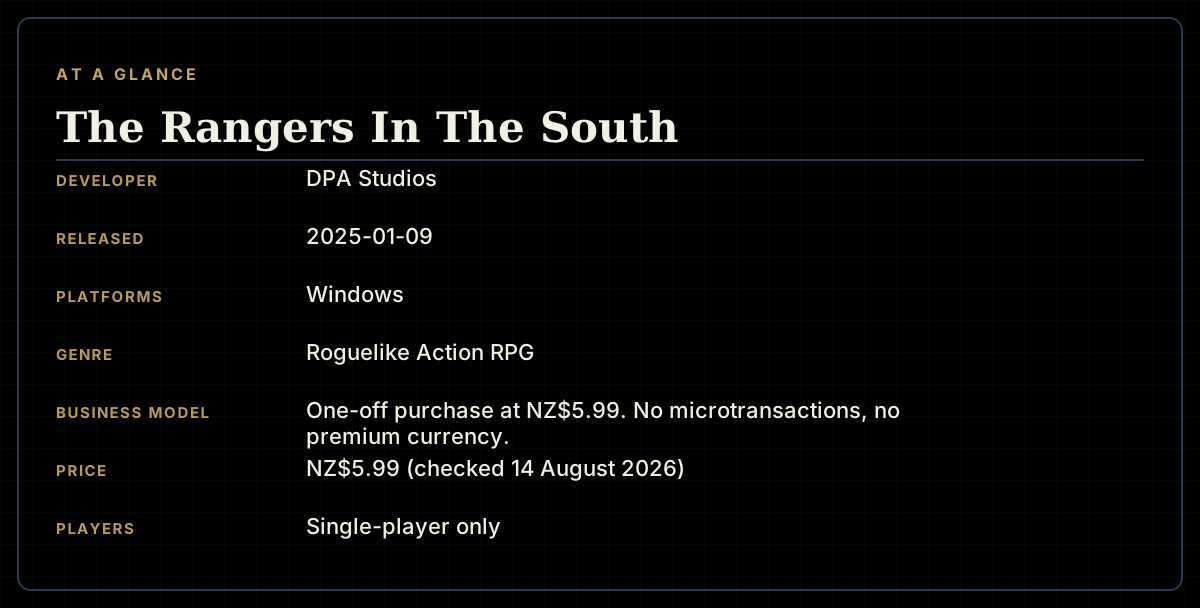
- Developer
- DPA Studios
- Publisher
- DPA Studios
- Released
- 9 January 2025
- Platforms
- Windows
- Genre
- Roguelike Action RPG
- Monetisation
- One-off purchase at NZ$5.99. No microtransactions, no premium currency.
- Players
- Single-player only
The short version
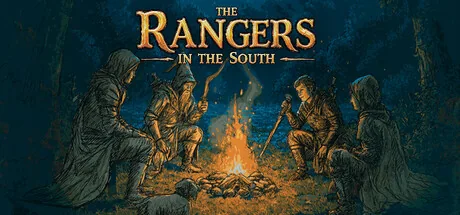
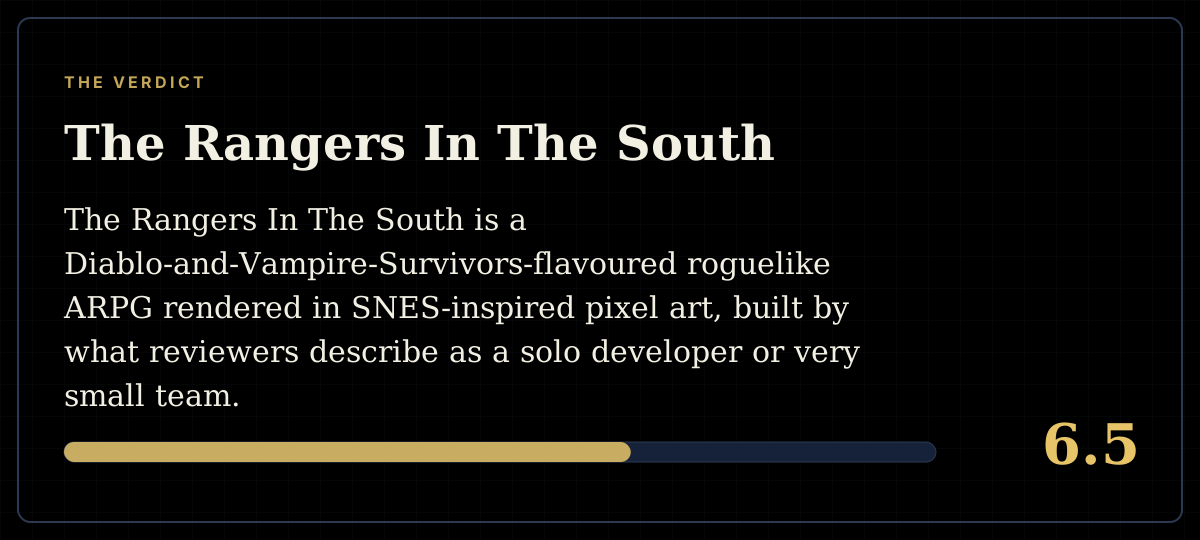
The Rangers In The South is a Diablo-and-Vampire-Survivors-flavoured roguelike ARPG rendered in SNES-inspired pixel art, built by what reviewers describe as a solo developer or very small team. It launched on 9 January 2025 to an unusually warm reception for a debut this rough around the edges, largely because the developer spent its opening weeks fixing reported bugs within hours -- reviewers describe controller support and key remapping arriving the same day they were requested. That goodwill, plus genuinely striking visuals that draw repeated comparisons to Octopath Traveler and Ragnarok Online, carried the game to Very Positive across 454 English-language reviews.
What it hasn't outrun is its own thin scope. Five biomes, fifteen dungeons that reviewers describe as functionally interchangeable, a level cap of 20, and a specific, widely corroborated design flaw -- killing the final boss can also kill you, wiping the gear you farmed to get there -- keep showing up across reviews from launch week through mid-2026. Substantial content updates continued for nine months, but the news feed goes silent after an October 2025 patch, and a rising number of more recent reviews describe a project that looks abandoned.
Biggest strengths
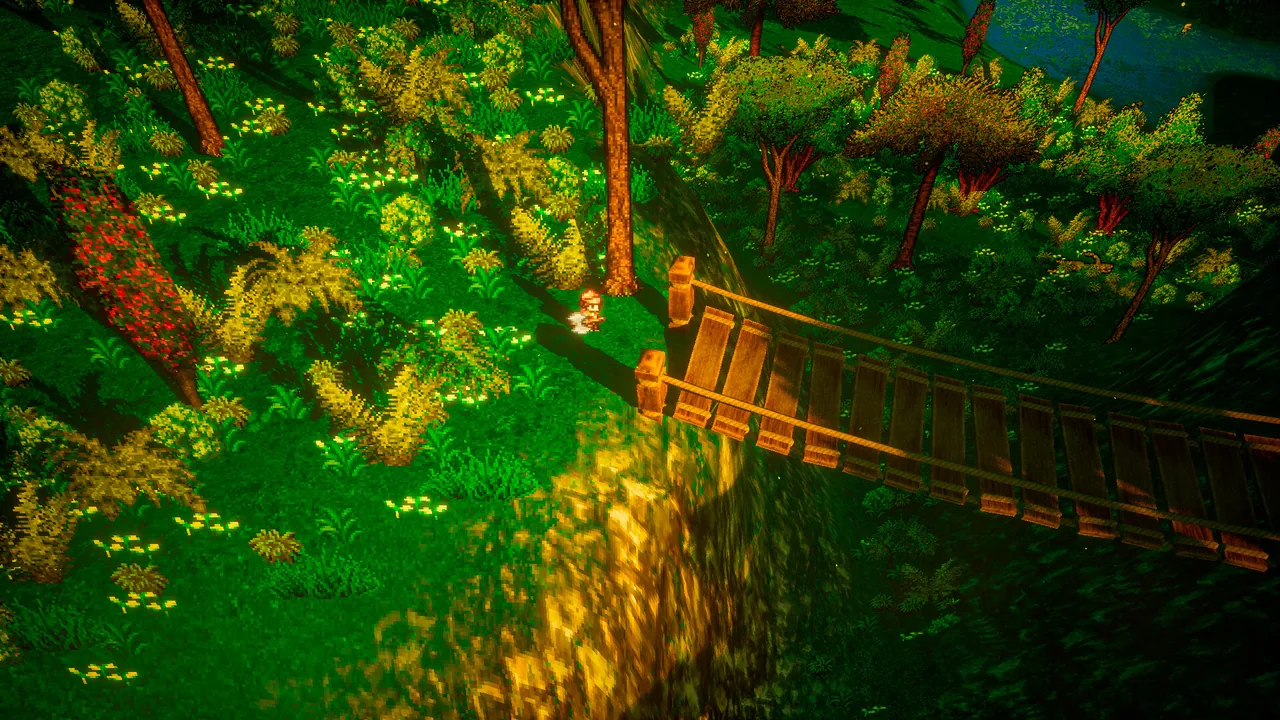
- A distinctive, widely praised visual identity -- SNES-inspired pixel art with 2.5D depth that reviewers repeatedly compare to Octopath Traveler and Ragnarok Online
- An unusually responsive launch window: reviewers describe specific bugs and missing features (controller remapping, auto-attack) being patched within a day of being reported
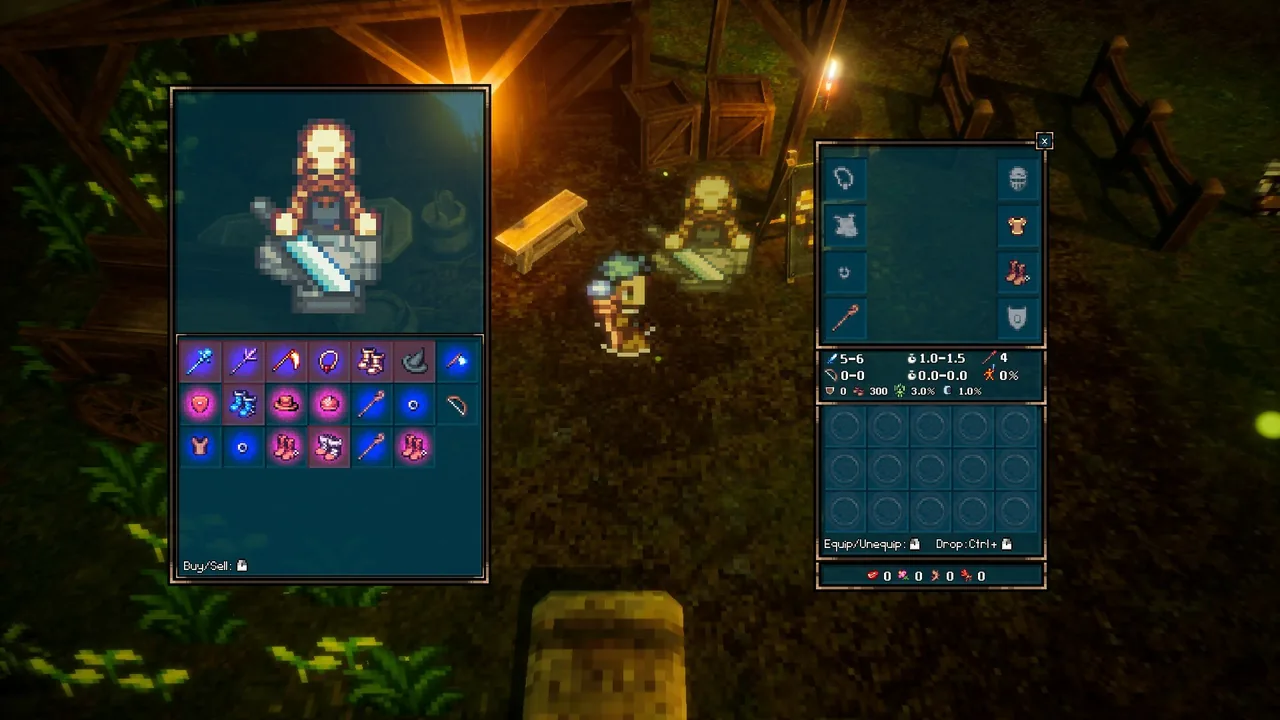
- Hundreds of procedurally generated ability, trait and equipment combinations give genuine build-crafting variety within each run, praised even by reviewers frustrated with other aspects
Biggest weaknesses
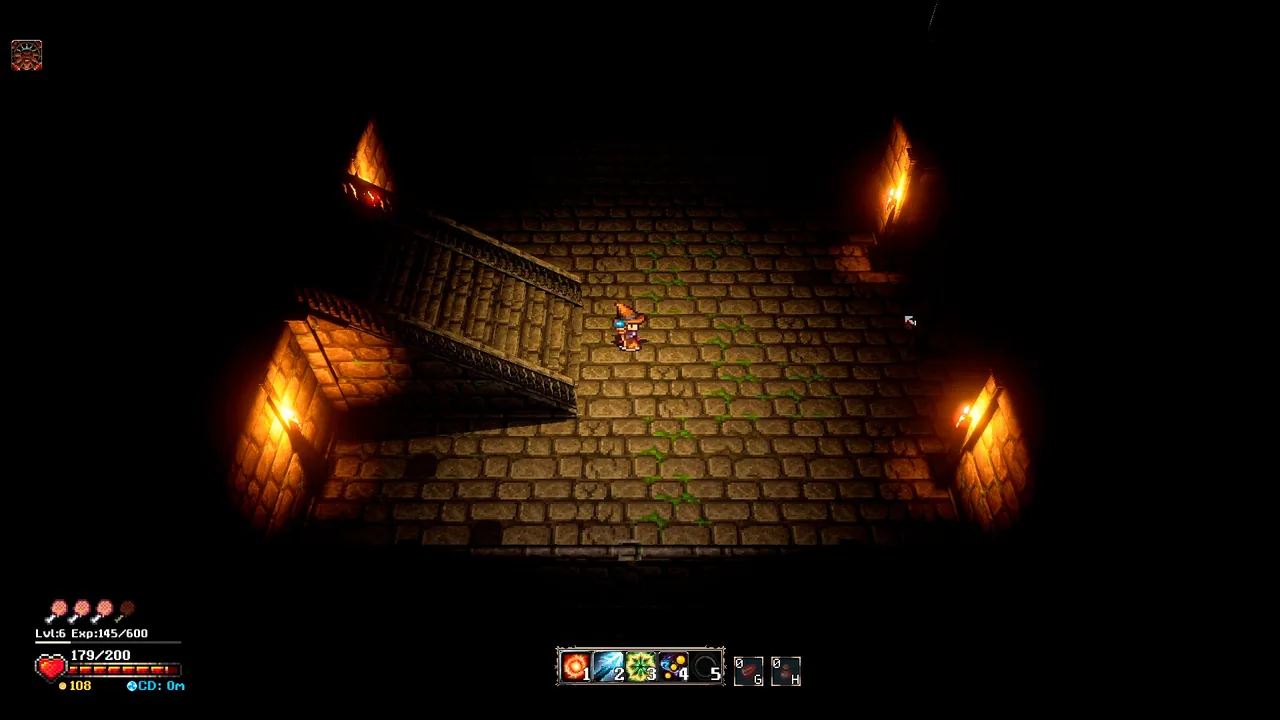
- Only five biomes and fifteen dungeons that multiple reviewers describe as functionally identical in layout and structure, with a level cap of 20 that limits how far any single build can be pushed
- A specific, repeatedly reported design flaw where boss attacks can kill your character after the boss itself is already defeated, wiping the gear and progress from that run at the worst possible moment
- Difficulty and experience scaling reviewers describe as inconsistent -- some find the game too easy to ever feel roguelike tension, others report being outleveled by zones that suddenly spike in difficulty
Who it's for: Roguelike and ARPG fans who want a short, cheap, visually distinctive build-crafting sandbox and are willing to accept real technical rough edges as part of the price. Not for anyone who needs guaranteed ongoing support, deep late-game content, or console-quality controller support out of the box.
Our recommendation: A genuinely good deal at NZ$5.99 for what's actually here -- five to fifteen hours of build experimentation with a strong visual identity -- as long as expectations are set for a short, somewhat unfinished-feeling game rather than an actively growing one. The apparent development silence since October 2025 is the main reason to wait for a sale rather than pay full price today.
6.5 / 10
Few debut indies get the kind of goodwill The Rangers In The South earned in its first week. One reviewer describes reporting a controller issue and having the developer ship a fix inside 24 hours; another lists missing auto-attack and key remapping as day-one complaints, then notes both arrived "the same day." That responsiveness, paired with pixel art striking enough that reviewers keep reaching for Octopath Traveler and Ragnarok Online as reference points, is why a game with this many rough edges launched to Very Positive and largely stayed there. Eighteen months on, the question worth asking isn't whether the January 2025 debut was good -- reviewers agree it was -- it's whether the game grew past it, and the evidence on that point is more mixed.
Hundreds of builds, five places to use them
The core loop is familiar roguelike ARPG territory rendered with real visual craft: no fixed classes, procedurally generated equipment, and a growing pool of abilities and traits that let each run diverge from the last. Reviewers who click with the build variety describe it in specific, enthusiastic terms -- "hundreds of unique abilities, character traits, and procedurally generated equipment," reads the store page, and player reviews largely back the claim up rather than call it marketing inflation. "Incredible game for this price," reads one review comparing it to "Vampire Survivors meets Diablo with even more pixelated Square JRPG visuals," adding that wanting more map variety "isn't a fair complaint at all given the price."
That last clause is doing real work, because the map variety complaint shows up constantly once you look past the build system. Five biomes and fifteen dungeons sounds like a reasonable amount of content for a NZ$5.99 debut, but reviewers across the review history describe the dungeons as functionally identical to each other regardless of biome -- "all the dungeons looked the same," reads one; "there's just 5 zones. There are 15 dungeons (which are all the same)," reads another, more bluntly. Combined with a level cap of 20, several reviewers describe hitting a hard structural ceiling on how far any individual build can meaningfully develop, which cuts against the "hundreds of builds" pitch even when the ability variety itself holds up.
A death that arrives after the boss is already dead
One specific bug shows up often enough, across a wide enough date range, to be treated as a real design flaw rather than a rare edge case: boss attacks that land after the boss has already been killed, taking the player down at the exact moment they should be collecting their reward. "I am so pissed that killing the final boss kills you," reads one detailed review, describing losing a specific, carefully assembled build including a revival scroll they'd farmed specifically to survive the encounter. Another reviewer reports the same outcome in gentler terms: "Fun until I defeat the last boss on my first run and lost all the Divine items I farmed before hand." A third describes the mechanical cause directly -- the "BOSS DEFEATED" banner covers the screen while the player is still vulnerable to attacks already in motion. It's the kind of bug that doesn't just cost a run, it costs the specific moment a roguelike run is supposed to pay off, and it recurs across reviews spanning January 2025 through 2026 without apparent resolution.
Difficulty balance draws a second, related set of complaints, and they pull in opposite directions depending on the reviewer. Some describe the game as too forgiving to generate real roguelike tension -- "I didn't die once, so I did not get to experience the roguelike elements," reads one -- while others report being outleveled by sudden zone difficulty spikes after grinding out an earlier area's experience curve. Both complaints point at the same underlying issue: an experience and difficulty curve that hasn't been tuned consistently across its five zones.
Fast support, then apparent silence
What sets this game apart from a lot of similarly small, similarly rough debuts is how much genuine post-launch work followed it. The Steam news feed logs a 2025 roadmap posted two days after launch, a Fishing Update in March, a new boss encounter ("Lord of the Undead") in April, and a substantial "Way of the Monk" content update in July -- nine months of real, named content releases, not just bug-fix housekeeping. That's a more sustained support run than plenty of indie debuts at this price manage before quietly stopping.
But the feed's last entry is an October 2025 achievements fix, and nothing has followed it since. Reviews from the months after start to notice directly. "It's pretty much been abandoned," reads a December 2025 review, adding that the game "feels more like a demo than a game" despite genuine potential. A July 2026 review is blunter still: "the last update was on October 2025. Most likely an abandoned project as of now." One reviewer goes further, claiming -- without evidence this review can independently verify -- that the developer appears to be working on a new, similar-looking project instead of continuing this one; that specific claim comes from a single source and should be read as one player's speculation rather than a confirmed fact, but the underlying observation about the support timeline itself is borne out directly by the news feed.
It's also worth addressing directly what a handful of reviews speculate about but don't confirm: whether AI was used to build the game. The store page carries an official AI Generated Content Disclosure, which reads in full: "AI has been used in the product development as a production assistant. All the material has ultimately been worked on and developed by a human." That's the verifiable answer to a question a few reviews raise more sharply than the evidence supports -- useful context for anyone weighing those specific complaints against what the developer has actually disclosed.
Worth the asking price, with eyes open
At NZ$5.99, most reviewers -- even ones with real complaints -- land on the same conclusion: this is good value for a handful of hours with a genuinely appealing visual identity and a build system that delivers on its promise more than it doesn't. The achievement data backs up how the game is actually being played: 89.7% of owners hit the second level milestone, but that number falls steadily to 24.1% for hitting the level cap and just 12.0% for reaching the game's ending, consistent with a game that plenty of people enjoy for a session or two without necessarily seeing it through.
6.5 out of 10. The Rangers In The South earned its Very Positive score honestly, with striking pixel art, a build system with real depth, and -- for most of 2025 -- a developer visibly working to improve it. What holds it back from a stronger recommendation is scope that hasn't grown to match its ambitions: five interchangeable zones, a level cap that caps builds before they mature, a specific bug that can undo a run at its final moment, and a development trail that's gone quiet for the better part of a year. Buy it for a cheap, good-looking few hours of build experimentation. Don't buy it expecting the fuller game its opening months once looked like they were building toward.
Pros and cons
Pros
- A distinctive, widely praised visual identity -- SNES-inspired pixel art with 2.5D depth that reviewers repeatedly compare to Octopath Traveler and Ragnarok Online
- An unusually responsive launch window: reviewers describe specific bugs and missing features (controller remapping, auto-attack) being patched within a day of being reported
- Hundreds of procedurally generated ability, trait and equipment combinations give genuine build-crafting variety within each run, praised even by reviewers frustrated with other aspects
- Nine months of real content updates after launch (new dungeons, a monk-themed update, an undead boss encounter) before the news feed went quiet, a more substantial support run than many similarly priced indies manage
- An official AI Generated Content Disclosure describing AI as "a production assistant" with all material "ultimately... worked on and developed by a human," giving buyers a verifiable answer to a question several reviews speculate about
Cons
- Only five biomes and fifteen dungeons that multiple reviewers describe as functionally identical in layout and structure, with a level cap of 20 that limits how far any single build can be pushed
- A specific, repeatedly reported design flaw where boss attacks can kill your character after the boss itself is already defeated, wiping the gear and progress from that run at the worst possible moment
- Difficulty and experience scaling reviewers describe as inconsistent -- some find the game too easy to ever feel roguelike tension, others report being outleveled by zones that suddenly spike in difficulty
- Controller support drew specific, repeated complaints around icon mislabelling and unreliable enemy targeting, even after the responsive early patches
- The Steam news feed shows no posts since an October 2025 achievements fix, and a growing number of reviews from late 2025 through mid-2026 describe the game as abandoned
Screenshots
-
The Rangers In The SouthImage: DPA Studios via Steam -
The Rangers In The SouthImage: DPA Studios via Steam -
The Rangers In The SouthImage: DPA Studios via Steam -
How the review scores each part of the gameWanderer Editorial -
The essentialsWanderer Editorial -
The short versionWanderer Editorial