Game review
Mortal Sin
8 / 10
- Developer
- Nikola Todorovic
- Publisher
- Nikola Todorovic
- Released
- 29 August 2025
- Platforms
- Windows
- Genre
- First-Person Action Roguelike
- Monetisation
- Premium, one-off purchase, no microtransactions
- Players
- Single-player
The short version
Mortal Sin is a first-person melee roguelike built almost entirely around the feel of hitting things, and after two and a half years in Early Access it finally has an ending, a real final boss and a second art style worth its price of admission.
It still asks a lot of patience from anyone who isn't already sold on procedurally generated dungeons, and a stingy persistent-currency system punishes players for quitting mid-session in a way that feels like an oversight rather than a design choice.
Biggest strengths
- Melee combat has real stagger, follow-through and combo timing instead of one attack animation reused on every enemy
- The 1.0 animation rework noticeably improved how weapons connect and how enemies react to being hit
- Two selectable art styles — the original high-contrast comic-book look and a new, more detailed palette — change the game's whole mood without touching a single system
Biggest weaknesses
- Gold earned during a run only carries over to the crafting and potion stations if you keep playing without quitting — closing the game first empties your purse next session
- The back half of a run leans hard on knowing your combos or having assembled a strong build; players who haven't will spike into difficulty they aren't ready for
- The story exists mainly to frame the combat rather than to be followed for its own sake, even after the 1.0 narrative pass
Who it's for: Players who want first-person melee combat with actual weight and stagger rather than a hack-and-slash button mash, and anyone who enjoys roguelike build variety more than they need a gripping story to justify another run.
Our recommendation: Buy it if procedurally generated melee combat sounds appealing on its own merits — the systems around it are competent rather than exceptional, but the hitting is genuinely great.
8 / 10
Most roguelikes sell you a loop and let the story ride along as decoration. Mortal Sin spent two and a half years in Early Access selling almost nothing but the loop — a first-person melee combat system with genuine weight behind every swing, dropped into procedurally generated dungeons with no real ending in sight — and it worked well enough to build a devoted following before the game was even finished. Its full 1.0 release in August 2025 is the payoff: a completed story, a proper final boss, a full animation rework and a second art style, all bolted onto a combat system that was already the reason anyone was paying attention.
Combat is still the entire pitch
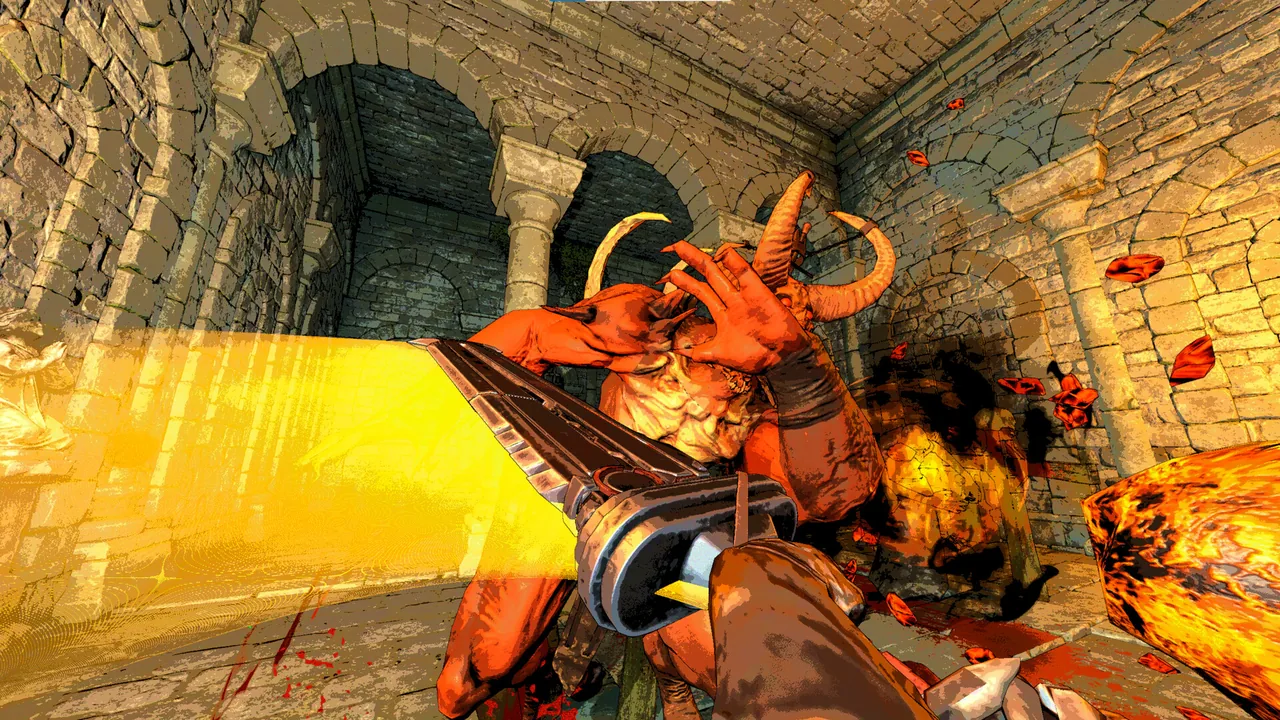
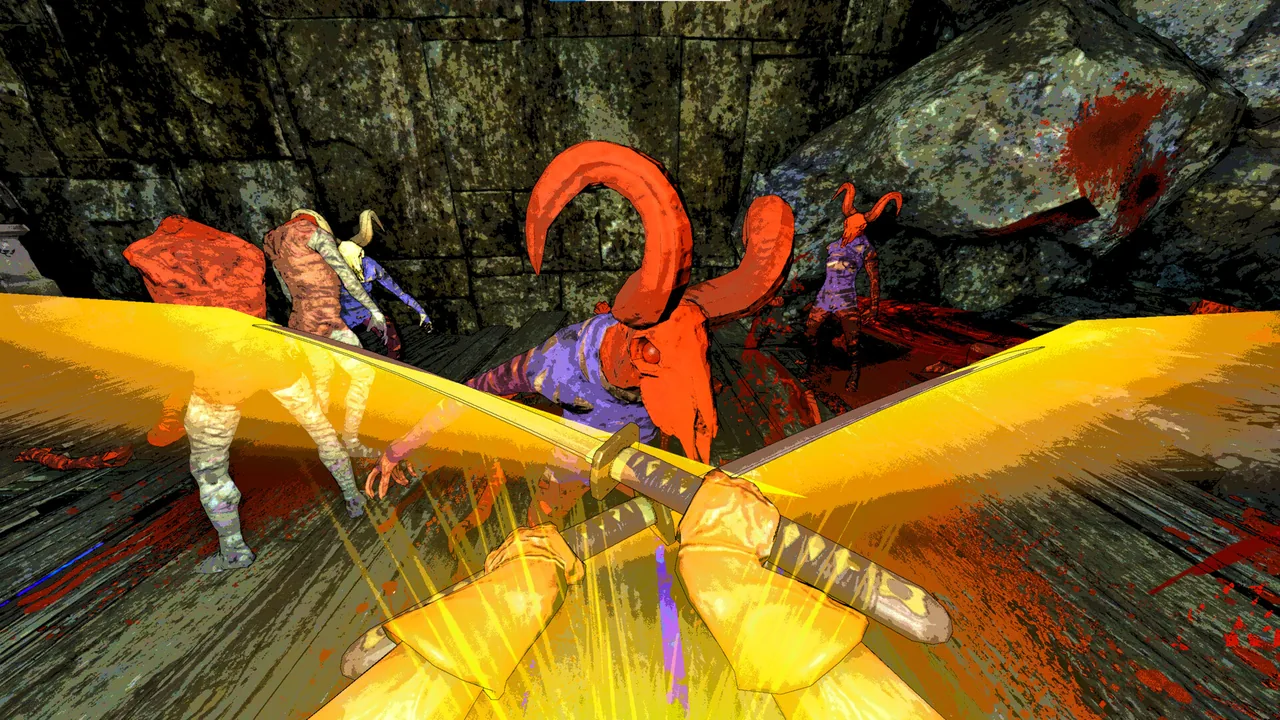
Strip away the classes, the loot and the procedural layouts, and Mortal Sin is a first-person melee game that wants every swing to feel like a decision rather than a button press. Weapons have real wind-up and follow-through, enemies stagger and react to where and how hard you hit them, and positioning matters more than reflexes alone — a heavy weapon commits you to a swing an enemy can punish if you misjudge the range, while lighter weapons trade damage for the ability to bail out of a bad exchange. Solo developer Nikola Todorovic rebuilt a large portion of this system for 1.0, adding hundreds of new animations specifically to make hits land with more snap and weight, and it shows: the combat reads as considerably more confident than the Early Access build that first turned heads back in March 2023.
That confidence is the game's actual achievement. First-person melee is a notoriously hard feel to nail — most games either turn it into a glorified shooter with swords instead of guns, or leave it mushy and unsatisfying because there's no camera distance to sell impact the way a third-person game can. Mortal Sin threads that needle by leaning entirely on animation, hit-stop and stagger rather than numbers on a health bar, and it's the reason critics kept describing the game as the first-person melee experience they didn't know they wanted.
Classes, loot and the shape of a run
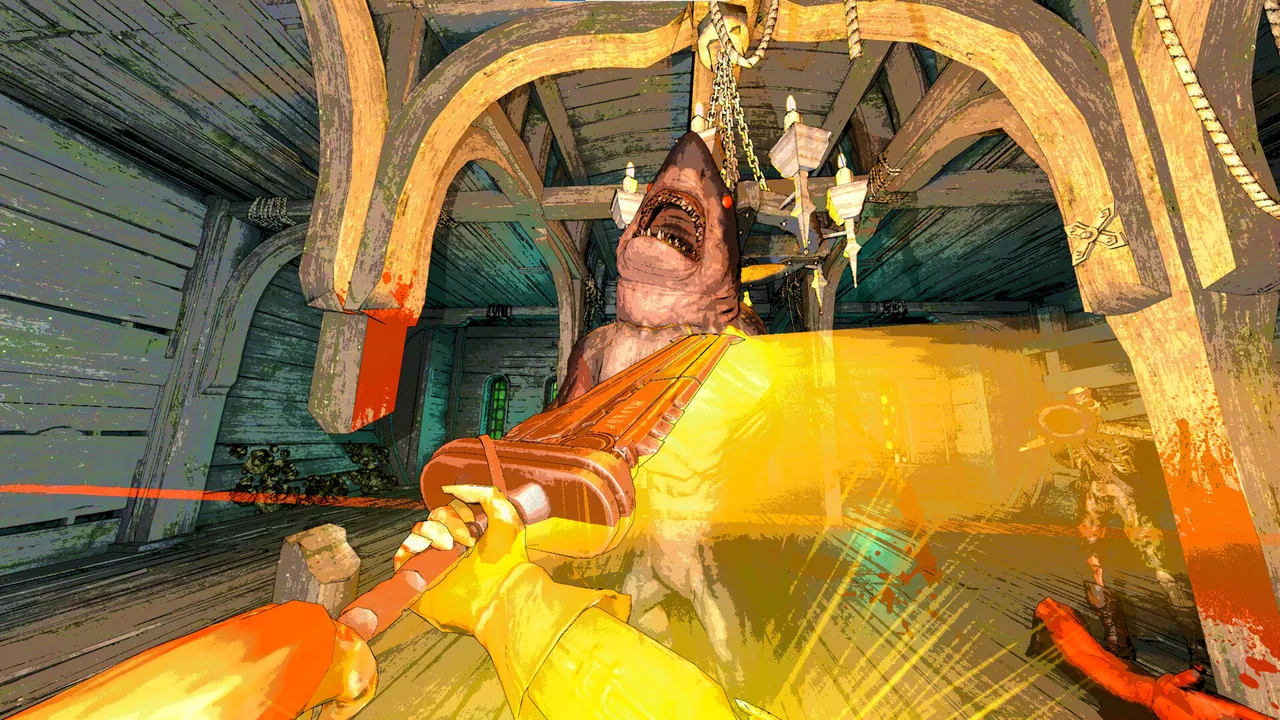
Runs start with the Struggler, a plain sword-and-shield class that exists to teach the basics before later unlocks open up more distinctive archetypes — a scythe-wielding spellcaster called the Reaper among them — each built around a different combination of melee, ranged options and magic. Procedural generation governs both the dungeon layout and what a given run actually hands you: weapon drops, trap placement, treasure rooms and the biome itself, which ranges from castles to caves to woodland stretches, all shuffle between attempts. The 1.0 update added new enemy types and class options on top of what Early Access shipped, and the difference is noticeable in how differentiated builds feel the further into the game you get — early runs can feel similar to each other, but character builds diverge meaningfully once more of the class roster and item pool are unlocked.
The difficulty curve follows a familiar roguelike shape: the first half of a typical run is forgiving, and the second half depends heavily on whether a player has internalised their combos or stumbled into a strong item combination. Get sloppy in a crowded room without either, and Mortal Sin punishes that mistake fast. That's a defensible design choice for a game built around mastery, but it does mean the difficulty spike lands harder on players who treat the early biomes as a formality rather than practice.
Two art styles, one confident direction
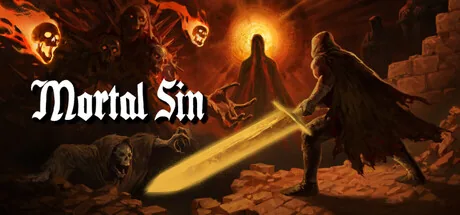
Mortal Sin's visual identity was always one of its selling points — a high-contrast, blood-and-ink comic book look that made screenshots instantly recognisable well before the game left Early Access. The 1.0 release doesn't replace that style; it adds a second one, a more detailed palette players can toggle between at will without affecting any underlying system. It's a genuinely generous piece of post-launch work from a solo developer, and it means players who found the original style too abstract or too stark now have an alternative without losing what made the game distinctive in the first place. Either way you look at it, the presentation is one of the clearer reasons Mortal Sin stood out in an extremely crowded roguelike market.
The 1.0 story, and Enimatik
Early Access Mortal Sin had classes, loot and biomes, but no real narrative through-line and no proper ending — you fought your way deeper until the game simply ran out of content. The 1.0 release closes that gap with a fleshed-out story and a new true final boss, Enimatik, a multi-phase encounter with distinct attack patterns and multiple endings depending on how a player has built and played through the campaign. It's a meaningful structural addition rather than a token final fight bolted on to satisfy a launch checklist, and it gives runs a destination that the Early Access version genuinely lacked. The story itself still functions more as a frame for the combat than as a reason to keep playing on its own — this isn't a game anyone will remember for its writing — but a proper ending was the single biggest thing standing between Mortal Sin and feeling complete, and 1.0 delivers it.
A save system with an unfriendly edge
The one piece of Mortal Sin's design that reads as an oversight rather than a deliberate choice is how its persistent currency behaves. Gold collected during a run can be spent at the crafting station or potion shop to carry a small advantage into the next attempt — but only if the player keeps the game running to do it. Quit out first, and the next session starts with an empty purse regardless of what was earned. It's a small mechanical detail, but it's the kind of friction that punishes exactly the play pattern most people actually have: a run or two before bed, rather than an unbroken session. Nothing else in the game's systems creates this kind of quiet penalty for simply closing the application, which makes it stand out more than its size would suggest.
Value and monetisation
Mortal Sin is a straightforward premium purchase at NZ$35.99 with no in-game store, no microtransactions and no seasonal content gating the campaign behind a subscription. The only additional purchase on its Steam page is a soundtrack, which is exactly the kind of optional add-on this kind of game should offer and nothing more. For a solo-developed title with achievements, cloud saves, full controller support and translations across ten languages including French and Spanish added at 1.0, that price buys a complete, self-contained game rather than the first instalment of something bigger. Players weighing the cost against playtime should know upfront that value here comes from how much a player enjoys the moment-to-moment combat loop, since that's what most of the hours are actually spent on.
Players who like combat this physical but would rather their progress accumulate over weeks instead of resetting every run might find Wanderer's slower, persistent approach to melee and gathering a useful contrast to what Mortal Sin demands every single attempt.
Final verdict
Mortal Sin earns its reputation on the strength of one thing done unusually well: first-person melee combat with real stagger, weight and follow-through, wrapped in procedural dungeons and a class roster that genuinely differentiates as a player unlocks more of it. The 1.0 release gives that combat system the ending and narrative shape it was missing for two and a half years, adds a second art style that broadens who the game will appeal to, and reworks animation across the board to make every hit land better than it used to. It settles at 8.0 rather than higher because the story remains a frame rather than a destination, the difficulty curve can spike hard on underprepared players, and a stingy quit-penalty on persistent currency feels like an unresolved rough edge in an otherwise polished full release. None of that undoes what the game does best. Anyone who wants first-person melee combat that actually feels like it has consequences should put this near the top of their list.
Price and platform details checked 31 July 2026.
Pros and cons
Pros
- Melee combat has real stagger, follow-through and combo timing instead of one attack animation reused on every enemy
- The 1.0 animation rework noticeably improved how weapons connect and how enemies react to being hit
- Two selectable art styles — the original high-contrast comic-book look and a new, more detailed palette — change the game's whole mood without touching a single system
- Enimatik, the new final boss, gives runs an actual multi-phase capstone the Early Access version never had
- Procedural dungeons vary loot, traps and layout enough across biomes that repeat runs rarely feel identical
- One-time premium price with no battle pass, no loot boxes and no microtransactions to work around
Cons
- Gold earned during a run only carries over to the crafting and potion stations if you keep playing without quitting — closing the game first empties your purse next session
- The back half of a run leans hard on knowing your combos or having assembled a strong build; players who haven't will spike into difficulty they aren't ready for
- The story exists mainly to frame the combat rather than to be followed for its own sake, even after the 1.0 narrative pass
- No co-op, versus or any multiplayer mode of any kind
- Windows only, with no native Mac or Linux build despite requirements modest enough to run on most hardware
Screenshots
-
Mortal SinImage: Nikola Todorovic via Steam -
Mortal SinImage: Nikola Todorovic via Steam -
Mortal SinImage: Nikola Todorovic via Steam -
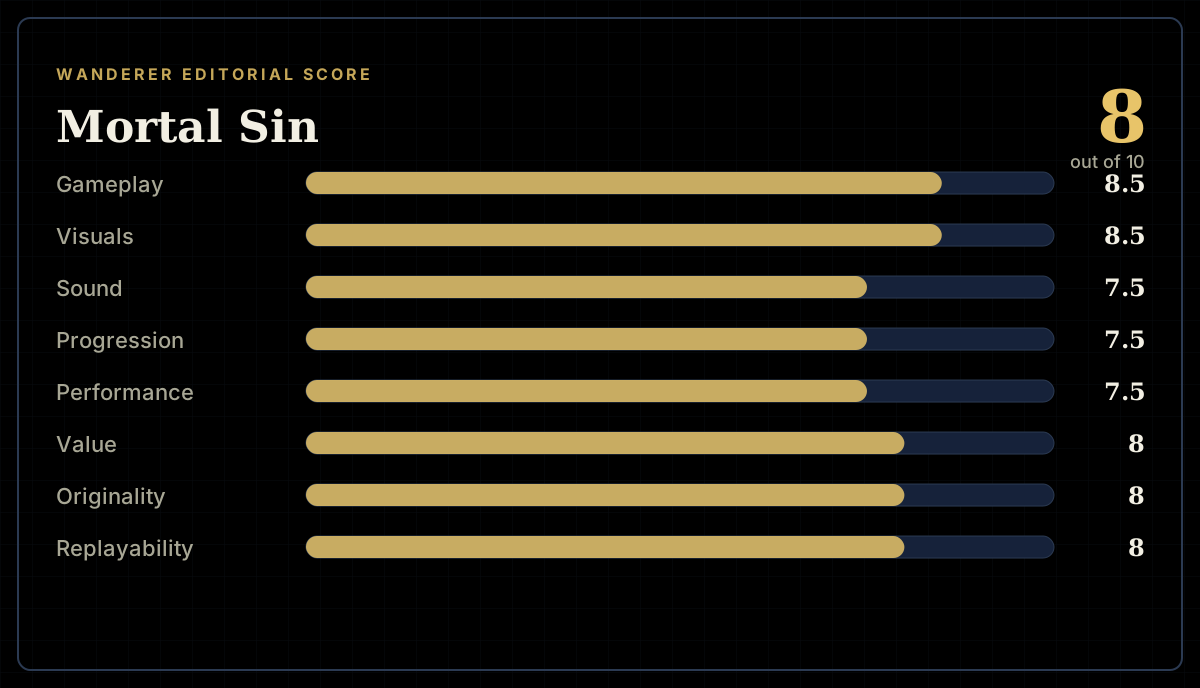
How the review scores each part of the gameWanderer Editorial -
The short versionWanderer Editorial