
Game review
Witchspire
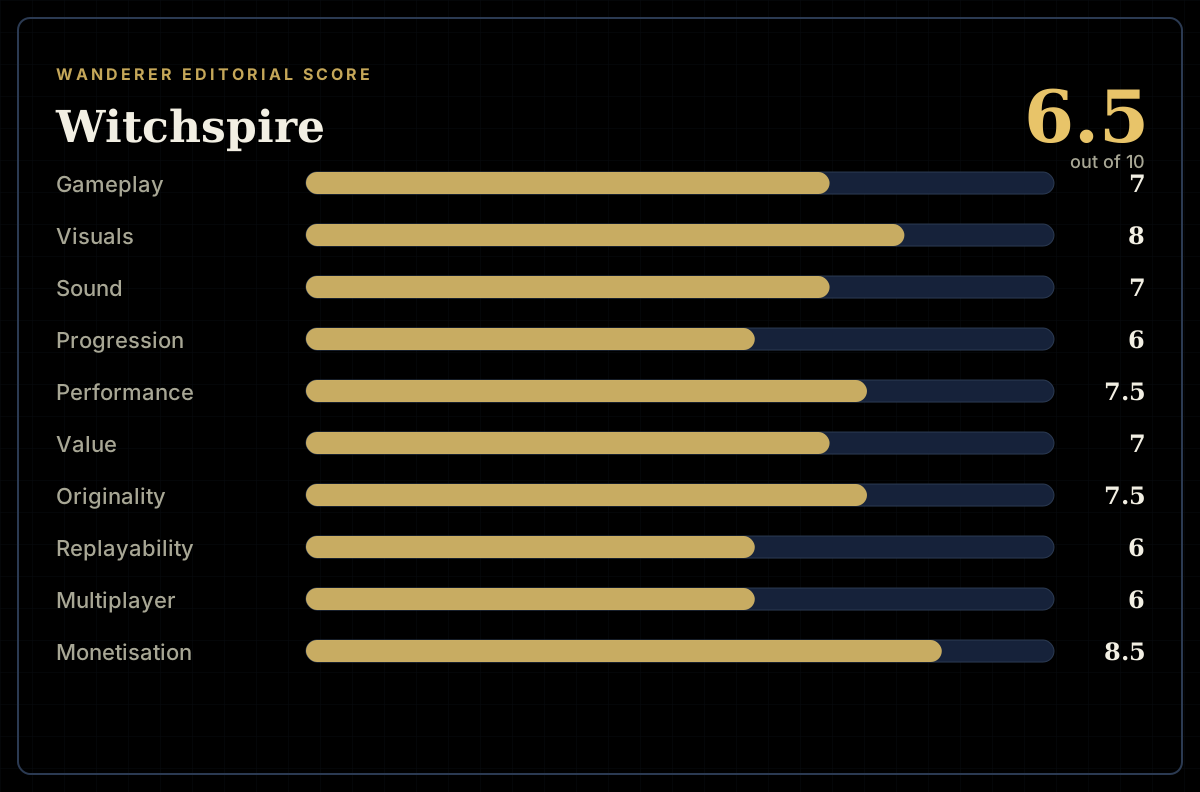
6.5 / 10
- Developer
- Envar Games
- Publisher
- Envar Games (self-published, listed on Steam as Envar Publishing)
- Released
- 10 June 2026
- Platforms
- Windows
- Genre
- Survival crafting RPG
- Monetisation
- Premium, one-off purchase — no premium currency, no battle pass, no loot boxes; an optional Founder's Edition DLC adds cosmetic-only extras on top of the base game
- Players
- Co-op for up to six players in a player-hosted world (four is the recommended practical ceiling); no dedicated server option
The short version
Witchspire's smartest decision is refusing to treat magic as a reskin. Where most survival games hand you an axe and a pickaxe and call it a day, Witchspire makes gathering, traversal and combat all flow through the same spell-casting fantasy — you conjure timber instead of chopping it, spirit-jump instead of climbing, and send a swarm of magical pickaxes into a rock face instead of swinging one yourself. That's a genuinely different feeling from Valheim or Enshrouded, and it's the reason to be curious about this one.
What it doesn't yet have is a world that earns the premise. Seven weeks into Early Access, the "chosen one against a spreading corruption" story gives almost nothing to act on, NPCs are scarce, and building placement still trips people up badly enough to dominate the negative reviews. Performance is unusually solid for an open-world co-op game this early, and the six-coven class system is more thoughtful than it needed to be. The bones are good. The meat hasn't grown in yet.
Biggest strengths
- The six-coven system ties your starting weapon (spellblade or wand), elemental affinity and visual identity into one meaningful early choice instead of a cosmetic-only class picker
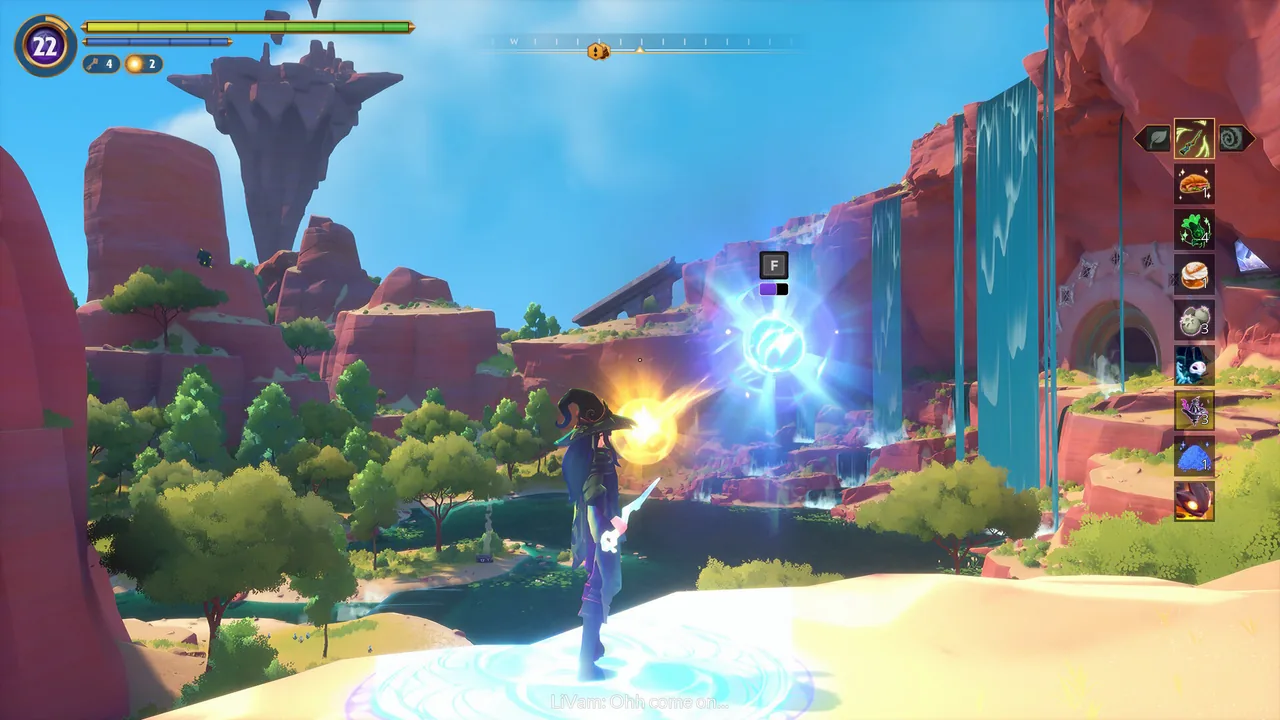
- Gathering and traversal are reskinned as actual spells — calling forth timber, sending out magical pickaxes, spirit-jumping up ledges, blinking out of an attack — rather than a mining-simulator hotbar with a coat of paint
- Familiars are raised, specialised and carried into fights rather than collected as a taming checklist
Biggest weaknesses
- Building placement and removal produced real player frustration at launch, with furniture that couldn't be relocated or deleted a recurring complaint in user reviews
- Wand-based ranged combat's hit detection feels unreliable next to spellblade melee, undercutting half the class roster
- The "chosen one versus the corruption" premise gives almost nothing to act on this early — vague quest direction, thin NPC presence, and a world that reads emptier than its map size suggests
Who it's for: Players who want the systemic depth of Valheim or Core Keeper filtered through a spellcasting fantasy, and who are willing to treat a June 2026 Early Access build as a foundation rather than a finished game. Less suited to anyone drawn in purely by the "cozy witch" marketing — the difficulty curve and the grind are real.
Our recommendation: Worth a look if the coven-and-familiar hook appeals and you're comfortable riding out Early Access rough edges, but there's no harm in waiting for the Frozen Tundra content update before committing serious hours.
6.5 / 10
The survival-crafting shelf does not need another game where you punch a tree, build a lean-to and wait for night to fall. Valheim, Core Keeper, Enshrouded and now RuneScape: Dragonwilds have all staked out that territory with enough polish that a newcomer needs a genuinely different hook to justify existing. Witchspire's hook is that it never lets you forget you're playing a witch. You don't chop wood, you call a stand of trees into being and harvest what grows. You don't climb, you spirit-jump. You don't swing a pickaxe, you send a swarm of them into a rock face while you stand back and watch. It's the same resource-and-build loop every game in this genre runs on, wearing a spellcasting costume that actually changes how each verb feels in your hands — and for the first few hours, that's enough to make Witchspire feel like it found something new to say.
The trouble is that Early Access games get judged on what they are today, not what the concept promises, and seven weeks after launch Witchspire is still mostly concept. The magic system is real and it's good. The world built around it is thinner than the pitch suggests.
Six covens, one meaningfully different starting choice
Character creation in most survival games is a costume selection screen. Witchspire ties its six covens — Cloudpiercers, Starsmiths and Foretellers starting with a spellblade; Wildroots, Tomekeepers and Nightscribes starting with a wand — to an elemental affinity, a starting weapon category and a visual identity all at once, and lets you swap between spellblade and wand later rather than locking you in forever. That's a smarter opening decision than it needed to be: it gives new players a reason to actually read the coven descriptions instead of picking whichever outfit looks best, without punishing anyone for an early mistake.
Where it comes apart a little is in how the two weapon types actually play. Spellblade combat is straightforward, animation-readable melee with genuine weight behind each swing. Wand combat is meant to be its ranged counterpart, but player reports since launch describe attacks that visibly connect without registering, which is a serious problem in a game that splits its whole class roster fifty-fifty between the two weapon types. A coven system this well thought-out deserves combat that backs it up evenly, and right now it doesn't quite.
Gathering that never stops being a spell
The best design idea in Witchspire is refusing to let survival mechanics exist outside the fiction. Resource gathering, traversal and even some combat utility are all cast as spells rather than performed as menial tasks: conjuring timber when you're short on it, blinking away from an incoming hit, spirit-jumping up terrain a normal survival protagonist would need a ladder for. It's a small shift on paper but it changes the rhythm of play — the usual "stop enjoying the world, go grind wood for twenty minutes" beat that survival games are built on gets folded into the same loop as combat and exploration instead of interrupting it.
It also means Witchspire never really needs a hunger bar to create urgency, and it doesn't have one in the way Valheim does — you won't starve, and resources exist to replenish and bolster power rather than stave off death. That's a legitimate design choice, not a missing feature, but it does mean the moment-to-moment pressure has to come from somewhere else, and right now that somewhere else — combat difficulty and the corruption creeping through the world — hasn't been tuned to fill the gap the way a hunger clock would.
Familiars as companions, not checklist items
Taming systems in this genre usually reduce animals to a spreadsheet: catch it, cage it, forget it. Witchspire's familiars are built to be raised alongside your own character rather than collected past them. You defeat wild creatures in battle to earn their spirits, carry a handful into exploration and combat, and grow their abilities over time to complement your build — more than twenty-five familiars are documented across the game's elemental types at this point, with the studio's own roadmap promising more alongside a Familiar Wheel for easier command management. It's the system that reviewers across the board single out as the game's most immediately likeable idea, and it earns that reputation: giving a companion actual growth stakes, rather than a capture-and- forget slot, makes the wilderness feel worth engaging with rather than just harvesting.
Building around the hearth, and where it still trips people up
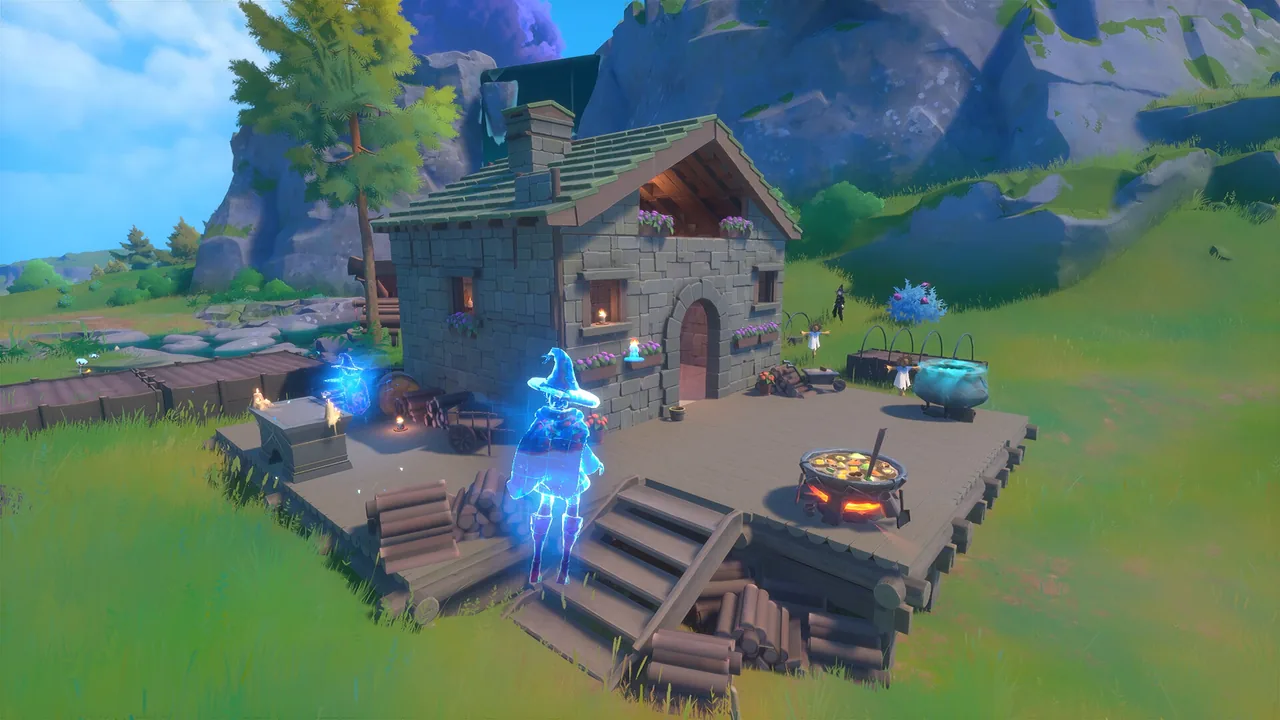
Base construction revolves around a hearth cauldron and uses astral projection to let you place objects while untethered from normal movement and gravity — a nice bit of atmosphere that makes building feel like a witch's ritual rather than a construction-site chore. The problem is more basic than tone: at launch, placing and removing pieces both lived in the same interaction mode, so an accidental right-click could delete something you meant to keep, or leave furniture stuck in a spot you couldn't undo. That specific complaint shows up often enough in user reviews to have clearly cost the game real goodwill in its first weeks, and while a later patch split placement and removal into separate modes with red highlighting on what you're about to delete, the base system still reads as less forgiving than the survival genre's better building tools. If you're the kind of player who likes rebuilding a base from scratch after a bad decision, budget for that here more than you would elsewhere.
A chosen-one story without much to chase
Witchspire's premise — you're the one called to hold back a corruption spreading through the world — is the kind of setup that needs specifics fast, and right now it doesn't supply many. NPCs are sparse, quest direction leans vague, and the open world's scale ends up working against it: a map big enough to fly a broom across for an hour needs people and objectives scattered through it to justify the trip, and Witchspire hasn't populated it yet. None of this is fatal for a game seven weeks into Early Access — Envar Games has already laid out a public roadmap that puts a new frozen biome and the next chapter of the story, "The Frozen Tundra," ahead of a further narrative chapter called "Throne of Corruption" — but it does mean the current build is closer to a well-made sandbox with a premise attached than a story anyone will finish for the story's sake.
Where it sits next to the neighbours
Witchspire is entering a genre that Wanderer has covered from several angles already. Next to Valheim, which earns its five years of Early Access polish through biome-gated difficulty spikes and a stagger-based combat system, Witchspire's world feels noticeably less dangerous and less structured — there's no equivalent to Valheim's boss-gated progression forcing you forward. Next to Enshrouded, whose voxel terrain-sculpting and twelve-specialty skill tree remain the more mechanically ambitious of the two, Witchspire's building and progression systems currently look thinner, though its magic-first gathering loop is the more distinctive idea of the pair. And against Core Keeper, which built an entire identity around digging as both traversal and progression, Witchspire's open-world structure is a genuinely different shape — less about excavating a contained space, more about exploring outward — which at least means it isn't competing on Core Keeper's exact terms.
None of those comparisons are damning. They're the honest context for a seven-week-old build: this is a genre where the best games have had years to sand off their rough edges, and Witchspire is being judged next to them anyway because that's the shelf it chose to sit on.
Performance, price and what Early Access actually means here
The one area where Witchspire outperforms its age is technical stability. Multiple independent write-ups noted the game running smoothly with minimal stutter even on lower-end hardware, which is a real accomplishment for an open-world co-op title this early — most Early Access survival games launch with the opposite problem. Co-op itself supports up to six players in a player-hosted session, though the practical sweet spot sits closer to four; there's no dedicated server option, so a session's stability rides entirely on whoever is hosting it, and a host disconnecting takes everyone with them.
On price, Witchspire is straightforward in a genre that increasingly isn't: one upfront cost, no premium currency, no battle pass, no loot boxes. The optional Founder's Edition DLC adds cosmetic extras and nothing that touches progression or power, which is exactly how an Early Access cosmetic upsell should work. At roughly NZ$33 for the base game, it's priced in line with Enshrouded and below Valheim's post-launch premium — reasonable for what's here now, provided you go in understanding "what's here now" is still a foundation rather than a finished house.
Verdict
Witchspire deserves credit for building its survival loop around an idea instead of a checklist — spellcasting that touches gathering, traversal and combat all at once is a better foundation than most genre entries start with, and the coven-and-familiar systems sitting on top of it are more thoughtfully designed than an Early Access launch usually manages. But a foundation is what it is: the story doesn't yet give players a reason to push forward, the building system's rough edges cost real goodwill at launch, and wand combat needs a pass before the class roster feels balanced. Players drawn in by the "cozy witch adventure" pitch specifically should know the actual game leans more toward a grind-forward survival RPG than a relaxing hangout sim. For anyone who wants a genuinely different take on the genre's core loop and doesn't mind riding out the growing pains while Envar Games works through its roadmap, Witchspire is worth the seven-week-old asking price. For everyone else, "Frozen Tundra" is a reasonable point to check back in.
Pros and cons
Pros
- The six-coven system ties your starting weapon (spellblade or wand), elemental affinity and visual identity into one meaningful early choice instead of a cosmetic-only class picker
- Gathering and traversal are reskinned as actual spells — calling forth timber, sending out magical pickaxes, spirit-jumping up ledges, blinking out of an attack — rather than a mining-simulator hotbar with a coat of paint
- Familiars are raised, specialised and carried into fights rather than collected as a taming checklist
- Runs smoothly on modest hardware, a genuinely unusual strength for an open-world co-op survival game seven weeks into Early Access
- Straightforward pricing with no premium currency, battle pass or loot boxes; the only paid add-on is a cosmetic Founder's Edition upgrade
Cons
- Building placement and removal produced real player frustration at launch, with furniture that couldn't be relocated or deleted a recurring complaint in user reviews
- Wand-based ranged combat's hit detection feels unreliable next to spellblade melee, undercutting half the class roster
- The "chosen one versus the corruption" premise gives almost nothing to act on this early — vague quest direction, thin NPC presence, and a world that reads emptier than its map size suggests
- Co-op is peer-hosted with no dedicated server option, so session stability depends entirely on whoever's hosting
- Progression toward the more interesting crafting and hearth-building unlocks involves a noticeable grinding climb before the systems open up
Screenshots
-

WitchspireImage: Envar Games via Steam -
WitchspireImage: Envar Games via Steam -
WitchspireImage: Envar Games via Steam -
How the review scores each part of the gameWanderer Editorial -
The short versionWanderer Editorial