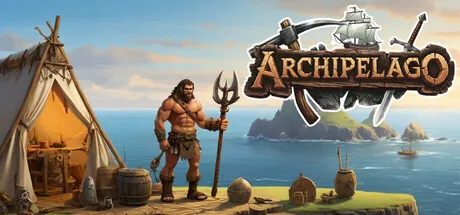
Game review
Archipelago: Island Survival
5.8 / 10
- Developer
- FrostFire
- Publisher
- FrostFire
- Released
- 24 October 2024
- Platforms
- Windows
- Genre
- Survival RPG
- Monetisation
- One-off premium purchase, no DLC or in-game store found
- Players
- Single-player only
The short version
Archipelago: Island Survival packs an enormous feature list into a solo-developer project: more than 60 buildable structures, upward of 40 dungeon and maze layouts, 17 factions with a reputation system that moves shop prices, and an 11-category weapon system spanning melee, ranged and magic, all wrapped around a chain of islands that get harder — and richer — the further north you sail. It asks less than many genre giants charge on sale.
What makes it hard to rate with real confidence is how little anyone has said about it. Almost two years after release the game carries just four Steam user reviews and no critic coverage anywhere this review could find. One of those four is a glowing 191-hour recommendation; the others describe repetition, a base that resets on every new island, and crashes roughly every half hour. Steam's own achievement statistics back up that last complaint's shape even without taking sides on the cause: completion falls off a cliff well before the back half of the game's content, meaning most of the small number of people who bought it never saw most of what its store page describes.
Biggest strengths
- An unusually large feature list for a solo-developer project and a low price: 60-plus craftable structures, 40-plus dungeon and maze layouts, 17 factions with reputation-gated trading, and an 11-category weapon system spanning melee, ranged and magic
- Cheap even by indie-survival standards at NZ$14.75 / US$9.99, with no DLC or in-game store layered on top
- A deliberate onboarding push aimed at survival-genre newcomers — a staged tutorial, contextual tips as new systems unlock, and an in-game wiki reachable from the main menu
Biggest weaknesses
- An extraordinarily thin community record — after nearly two years on sale, only four Steam user reviews exist in total (one positive, three negative), and no professional review coverage could be found anywhere
- A specific, detailed stability complaint describing crashes or freezes roughly every 30 to 40 minutes, which is hard to weigh against so small a review sample but is not the kind of report to wave away
- Steam's own global achievement data shows a steep drop-off: the earliest unlocks sit around 50% of the (very small) player base, but completion collapses to single digits and then to zero well before the back half of the 39-achievement list
Who it's for: Players drawn to checklist-heavy, ambitious solo-dev survival RPGs — a rougher, less polished cousin of Valheim or Craftopia — who are comfortable being among the first handful of reviewers and can tolerate real stability risk for a low asking price.
Our recommendation: Treat it as a cheap, ambitious gamble rather than a safe purchase. The feature list is genuinely large for the money, but the review record is too thin to promise a smooth ride — check for more recent user reviews before buying if stability matters to you.
5.8 / 10
Introduction
Archipelago: Island Survival is a survival RPG from FrostFire, a studio that appears to have built and published the game entirely on its own, released on Steam on 24 October 2024 for Windows only. On paper it is one of the more ambitious solo-developer survival games to come out of that period: a medieval-fantasy sandbox where a shipwreck strands the player on the southern edge of a chain of islands, and the only way forward is north, into progressively harder and richer territory. The store page lists a genuinely long feature checklist — base building, faction reputation, dungeon crawling, trading, magic, character progression across 11 weapon categories — for a price that undercuts most of the survival genre's bigger names. The unusual part of covering it now, nearly two years after launch, is how little anyone else has said about it: the game's Steam page carries a grand total of four user reviews, and no professional outlet this review could find has covered it at all. This review is written from FrostFire's own store description, Steam's public achievement statistics, and every one of those four user reviews — all four of them, read in full — rather than from a play session, in line with this outlet's policy of not running competitive multiplayer or CPU-hungry titles on review hardware shared with production services.
A large feature list for a small team
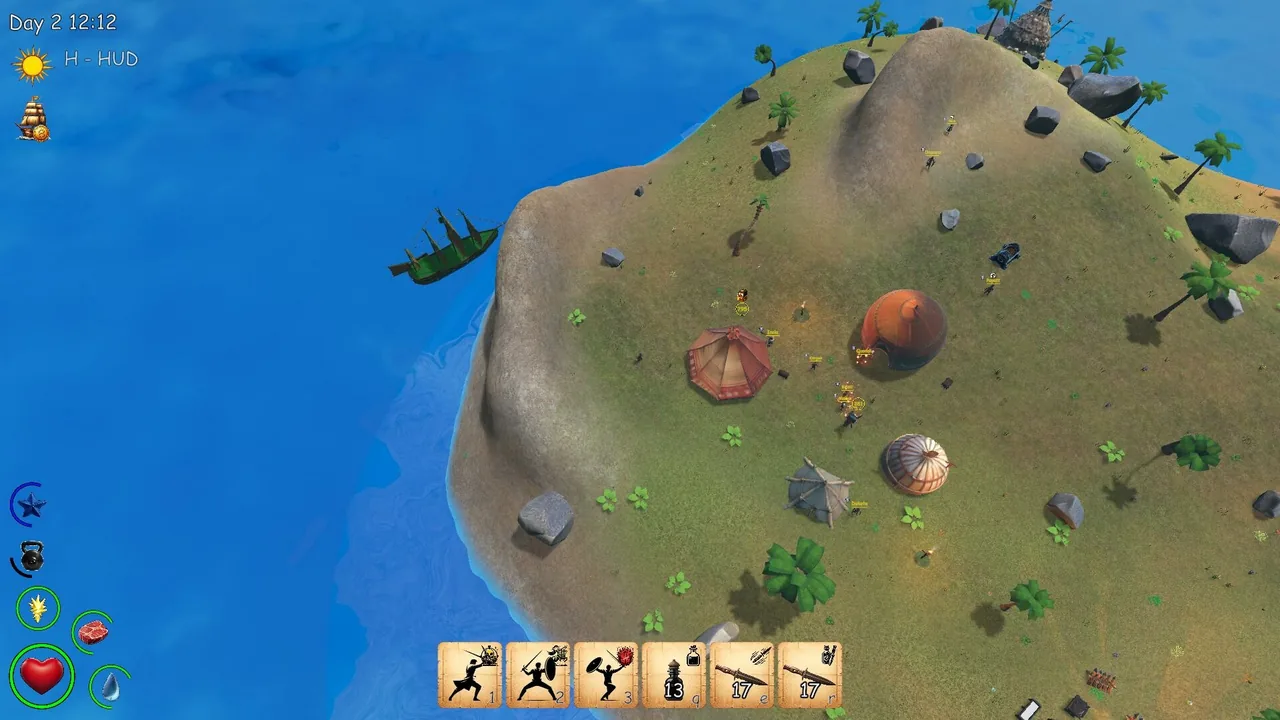
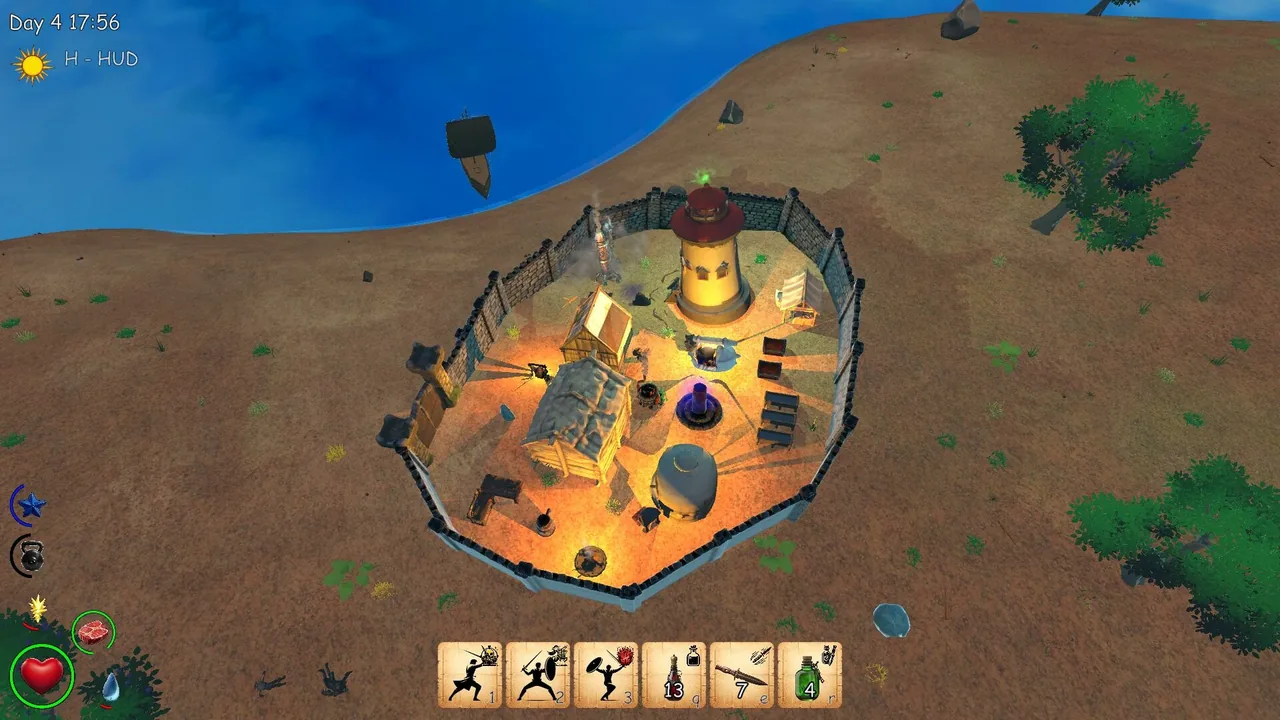
The scope FrostFire describes is striking for what looks like a one-studio project. The store page claims more than 500 items and resources in one panel and "over 300" in another — an inconsistency worth flagging on its own, though either number is a lot of inventory for a small team to balance — gathered with pickaxes and axes or looted from more than 100 enemies and NPCs. Crafting feeds into more than 60 structures for building, defence, resource gathering and comfort, and bases are meant to be fortified against wave-style attacks that arrive during in-game storms. Layered on top of that is a faction system spanning 17 distinct groups, some hostile and some neutral, where completing quests raises reputation and lowers prices at that faction's traders — a reputation-to-economy loop that, if it works as described, gives the trading layer a reason to matter beyond simple resource dumping. Character progression runs through experience gained from combat, gathering and crafting, spent on core attributes and on 11 separate weapon-skill categories covering melee, ranged combat and magic. None of this is individually novel — it reads like a checklist assembled from Valheim's island-escalation structure, ARK's dungeon-and-faction sprawl and a generic crafting-RPG skill tree — but the sheer number of interlocking systems for a solo-developer release is unusual, and it's the game's clearest selling point regardless of how well any one piece has been polished.
Escalating islands, and the wiki the developer clearly thought newcomers would need
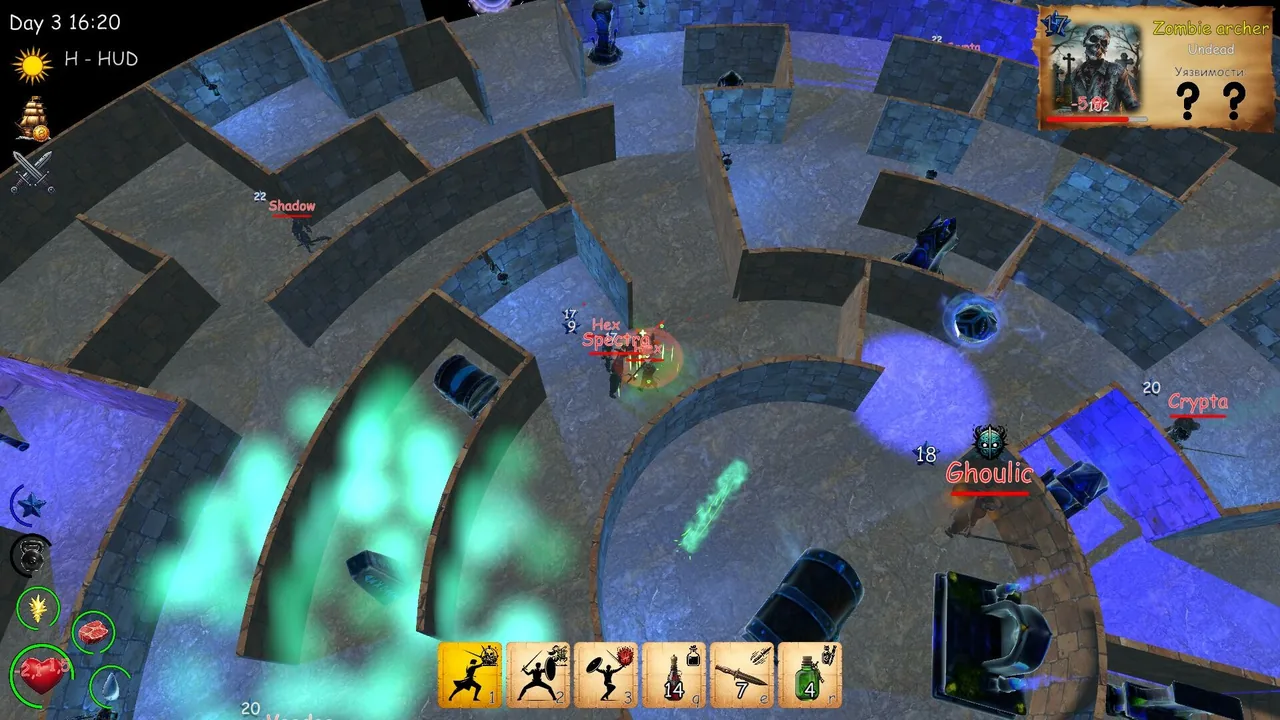
The core structural idea is straightforward and, going by the marketing copy alone, well judged: players start on a southern island with only stone-age tools and a simple raft, and sailing north opens progressively tougher islands with rarer resources, stronger enemies and — per the store description — more than 40 dungeon and maze layouts to clear for loot and to shut down local enemy spawns. That gives the sandbox a clear sense of direction that a lot of open-ended survival games lack. FrostFire also states, explicitly and at some length in the store description, that it designed the onboarding for players who have never touched a survival game before: a tutorial at the start, contextual tips as new systems come online, instructional videos, and a "comprehensive Wiki" reachable from the main menu. That's a specific design choice worth crediting on its own terms — most solo-developer survival games assume genre fluency and let new players sink or swim — even though, with a user-review sample of four, there is essentially no independent confirmation of how well it actually lands in practice.
A four-review record, read in full
This is the section that makes Archipelago: Island Survival difficult to rate with real confidence, and it's worth being direct about it. Nearly two years after release, Steam's own review-summary API returns exactly four user reviews for this game, in four different languages, and no aggregator or press outlet turned up a single professional write-up. Steam doesn't even generate a percentage score at that volume — the listing simply reads "4 user reviews." All four were read for this piece.
The one positive review, from a player with 191 hours logged, is short but genuinely enthusiastic: an open world with endless building, endless mining and endless enemies to fight, recommended without reservation. That kind of playtime is worth noting on its own — someone found nearly 200 hours of reasons to keep going. The three negative reviews are more specific, and two of them describe problems that would matter to almost any prospective buyer. One, from a player with roughly 19 hours logged, calls the moment-to-moment gameplay easy but very repetitive, says every island plays out the same way, and specifically complains that base structures have to be rebuilt from scratch on each new island rather than carrying forward — echoed by a complaint in the same review that quests repeat with only enemy levels changing. Another, from a player around 8 hours in, is blunter about stability: acknowledging the game feels like it was "put together on a shoestring," and reporting crashes or freezes roughly every 30 to 40 minutes. The fourth review is a two-hour, one-word dismissal with no detail to weigh.
Four reviews is not a sample anyone should treat as statistically meaningful, and it would be unfair to let one crash report stand in for the whole game's stability. But it's also the entire public record that exists, and a specific, detailed stability complaint sitting inside such a small sample carries more weight than the same complaint would inside a thousand-review pool where it might be an outlier.
What the achievement data adds
Steam's global achievement statistics offer one more angle, and they're consistent with the repetition and drop-off described in that negative review. Of the game's 39 achievements, the easiest early unlocks — the first combat kill, the first level of core survival skills — sit around 50% of the tracked player base, which is a normal shape for an early-game milestone. Completion falls away quickly after that: mid-tier dungeon and exploration achievements are down in the twenties and thirties of a percent, and a meaningful chunk of the list's back half sits at 1–2%, with the single hardest achievement recorded at 0%. That curve doesn't prove why players stop — it's consistent with a game that's simply long and demanding as much as with one that loses players to bugs or fatigue — but it does confirm, independently of the four written reviews, that whatever content sits in the back half of Archipelago's design is seen by only a small fraction of the people who own it.
Verdict
Archipelago: Island Survival is a genuinely ambitious piece of solo-developer work — a long list of interlocking systems, an escalating island structure with a clear sense of direction, and an unusually deliberate attempt to onboard players who've never touched the survival genre before, all for a price well under what the genre's bigger names ask. What it isn't, yet, is a game with enough of a public track record to recommend without caveats. Four Steam reviews and zero critic coverage after nearly two years on sale is its own kind of signal, and the specific complaints inside that thin sample — repeated content, progress that resets on every new island, and a detailed crash report — line up with what Steam's own achievement curve shows independently. None of that means the game is bad; it means it is genuinely unproven, and buyers should go in pricing that uncertainty in rather than assuming a large, cheap feature list is the whole story.
Pros and cons
Pros
- An unusually large feature list for a solo-developer project and a low price: 60-plus craftable structures, 40-plus dungeon and maze layouts, 17 factions with reputation-gated trading, and an 11-category weapon system spanning melee, ranged and magic
- Cheap even by indie-survival standards at NZ$14.75 / US$9.99, with no DLC or in-game store layered on top
- A deliberate onboarding push aimed at survival-genre newcomers — a staged tutorial, contextual tips as new systems unlock, and an in-game wiki reachable from the main menu
- A clear structural hook: islands escalate from south to north, giving the sandbox a sense of forward direction instead of an open, directionless map
Cons
- An extraordinarily thin community record — after nearly two years on sale, only four Steam user reviews exist in total (one positive, three negative), and no professional review coverage could be found anywhere
- A specific, detailed stability complaint describing crashes or freezes roughly every 30 to 40 minutes, which is hard to weigh against so small a review sample but is not the kind of report to wave away
- Steam's own global achievement data shows a steep drop-off: the earliest unlocks sit around 50% of the (very small) player base, but completion collapses to single digits and then to zero well before the back half of the 39-achievement list
- A repeated complaint that starting over on a new island means rebuilding core structures from scratch rather than carrying earlier progress forward, on top of missions that reportedly repeat with only enemy levels changed
Screenshots
-
Archipelago: Island SurvivalImage: FrostFire via Steam -
Archipelago: Island SurvivalImage: FrostFire via Steam -
Archipelago: Island SurvivalImage: FrostFire via Steam -
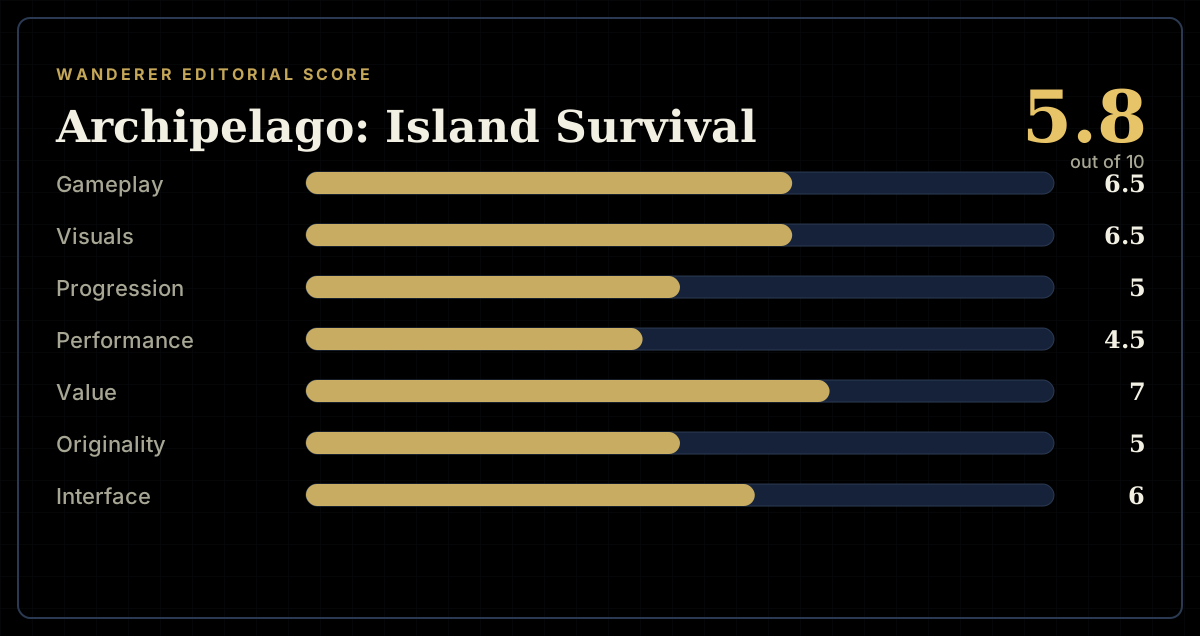
How the review scores each part of the gameWanderer Editorial -
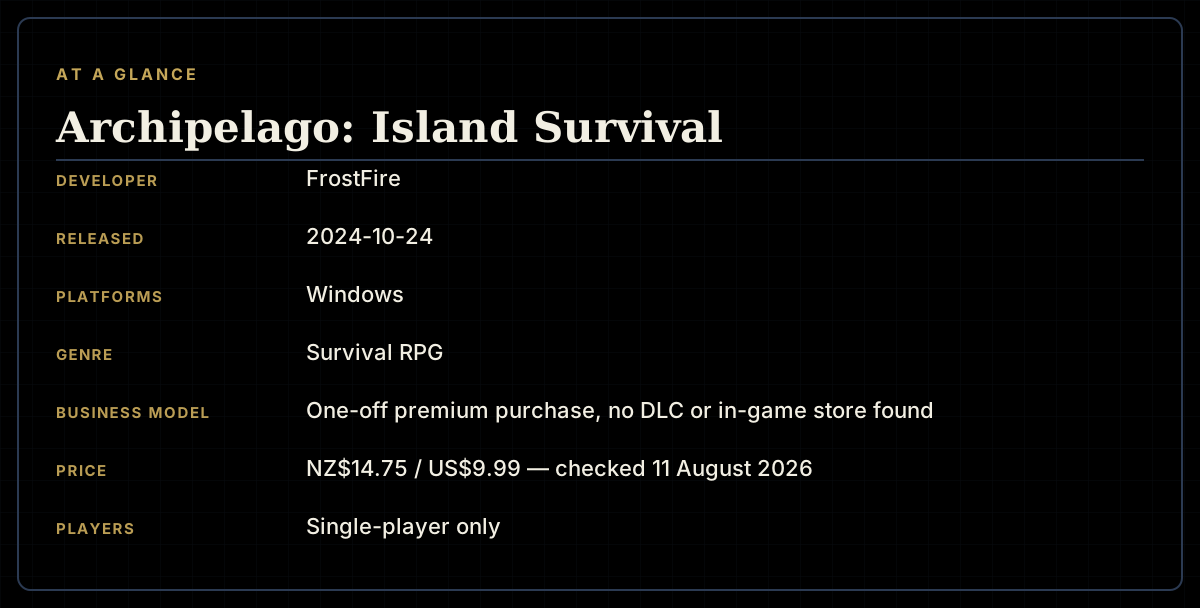
The essentials at a glanceWanderer Editorial -
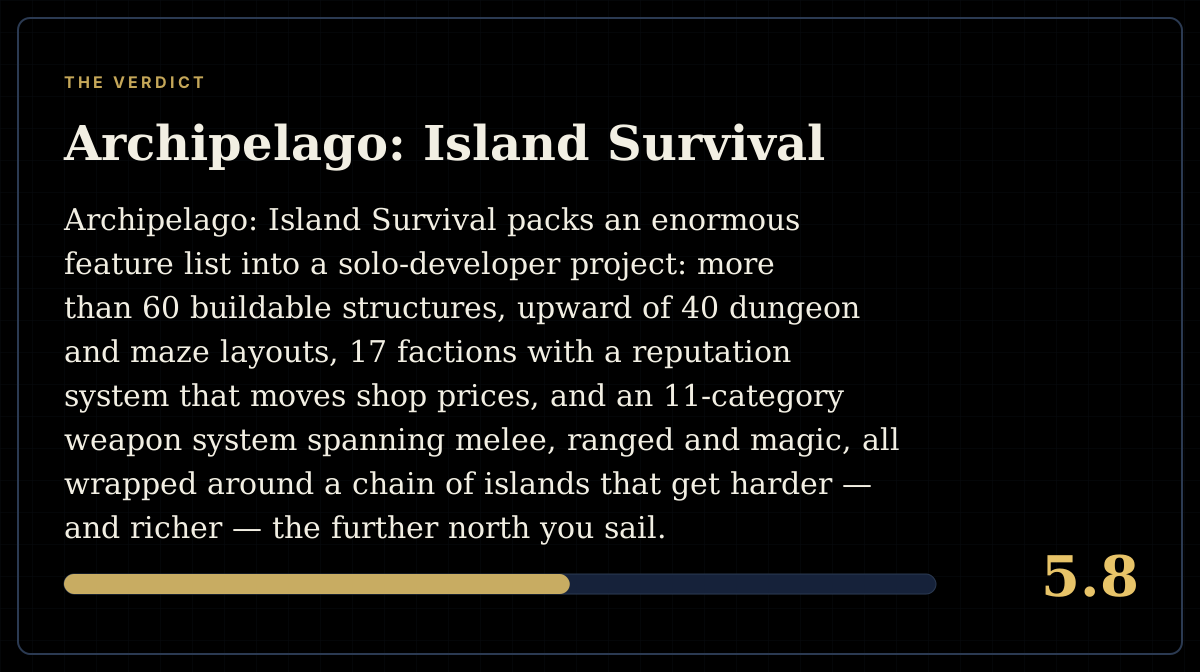
The short versionWanderer Editorial