
Game review
Vampire Therapist
6.5 / 10
- Developer
- Little Bat Games
- Publisher
- Little Bat Games
- Released
- 18 July 2024
- Platforms
- Windows, macOS
- Genre
- Narrative therapy simulator
- Monetisation
- One-time purchase, with a free content update ("Couples Therapy") added post-launch
- Players
- Single-player only
The short version
Vampire Therapist puts you in the chair across from a rotating cast of emotionally troubled bloodsuckers, teaching real cognitive behavioral therapy concepts as you guide them through centuries of unresolved baggage, delusion, and self-loathing. This review's sample shows the premise landing powerfully for a great many players, several describing genuine personal or educational value from the game's earnest handling of real therapeutic concepts wrapped in a witty, well-voiced vampire comedy. What tempers that praise, repeated with unusual consistency across the negative sample, is a structural complaint: the game does not allow you to answer incorrectly or fail a client, which a large portion of reviewers say strips away the sense of real choice or consequence a narrative game typically promises, leaving something closer to an interactive teaching tool than a story with genuine stakes.
Biggest strengths
- The writing, humor, and voice acting draw consistent, specific praise, with multiple reviewers describing genuinely moving or funny moments delivered by a well-regarded cast
- Several reviewers, including at least one licensed therapist, credit the game with accurately and effectively teaching real cognitive behavioral therapy concepts in an accessible, memorable way
- Multiple reviewers describe genuine personal impact, crediting the game with helping them recognize their own cognitive distortions or providing meaningful support during real mental health struggles
Biggest weaknesses
- The single most repeated complaint across nearly the entire negative sample is that the game does not allow incorrect choices or failure states, with multiple reviewers describing it as functioning more like an interactive teaching manual than a game with real narrative stakes
- Several reviewers report that once a wrong answer is selected, the game actively redirects the player back toward the correct choice rather than allowing the story to progress with consequences, undermining any sense that decisions genuinely matter
- At least one detailed reviewer raises a specific, serious concern about a scenario in which repeatedly declining a character's advances is eventually overridden by the narrative regardless of the player's choices, a concrete content-design issue distinct from the broader "no fail state" complaint
Who it's for: Players genuinely curious about therapeutic concepts and cognitive behavioral therapy delivered through witty, well-acted vampire comedy, who don't need meaningful branching choice or failure states to stay engaged with a narrative experience.
Our recommendation: A genuinely well-crafted, sometimes moving piece of interactive fiction with real educational value — just go in understanding this is closer to a guided lesson than a game where your choices carry real narrative weight, since that expectation gap is the single most common source of disappointment in this review's sample.
6.5 / 10
Vampire Therapist asks a genuinely unusual question: what if a reformed bloodsucker used real cognitive behavioral therapy techniques to help other vampires work through centuries of unresolved grief, delusion, and self-loathing? It's a premise that could easily play as a one-note gimmick, and this review's sample makes clear it mostly doesn't — the writing, voice cast, and educational sincerity earn real, repeated affection. Where this sample gets remarkably consistent is in identifying exactly what keeps that affection from translating into unqualified praise: a structural choice about failure and consequence that a large share of critical reviewers land on independently.
Real therapeutic value, taken seriously by real professionals and patients
The praise for how the game handles its subject matter is specific and often personal. "It helped me a lot during my mental health struggles. It teaches you CBT in a gaming manner and is easy to understand. I also very much like the plot... I did get professio[nal help too, but this game genuinely contributed]," one reviewer writes. Another brings real professional context to their assessment: "So I heard about this game and knew it would be up my alley being an IRL therapist (not a CBT one, but still) and, yeah, I really enjoy playing it." A third distills the appeal with real warmth: "Came for the absurd concept, stayed for the phenomenal voice acting and heartfelt story. I am going back to therapy because of this game and I mean that in a good way." That's a genuinely rare kind of endorsement for a game to earn, and it speaks to real craft and care in how the CBT material is delivered.
The complaint that dominates almost every critical review
Set against that goodwill, the negative sample converges with unusual precision on one specific structural issue. "There is no possibility to be a bad therapist and to face your wrong choices - you simply cannot choose anything wrong, the game won't let you," one reviewer writes. Another makes the same point even more directly: "You're constantly given choices, but they are disregarded... your 'guide' telepathically tells you to pick a different [option if you pick wrong]." A third sums up the resulting experience bluntly: "the game itself is not a game in its core, it's a teaching manua[l wearing a narrative's clothing]." This isn't a handful of scattered nitpicks — it's close to a consensus among critical reviewers, describing the same underlying design decision from slightly different angles, and it's a fair, substantive critique of a game explicitly marketed with "choices matter" framing.
A specific concern worth reporting carefully
One detailed negative review raises a more serious, specific issue distinct from the general lack of failure states: a scenario in which the player repeatedly declines a character's romantic advances, only for the narrative to proceed toward that outcome regardless of the choices made. "It was very uncomfortable to refuse someone's advances four times, only to then be made to indulge their kink," the reviewer writes, framing it as a genuine design failure rather than a stylistic quibble. This review takes that report seriously and passes it along directly — it's a concrete instance of the broader "choices don't matter" structural complaint intersecting with content that specifically concerns consent, which raises the stakes of that design choice considerably beyond a simple therapy-simulation gimmick.
A character who tests some reviewers' patience
A smaller, more specific complaint concerns one recurring character. "I love the idea, and I really wanted to like this game. They clearly put in a ton of effort to do this the right way. There's just one problem: the main character. He's a one-dimensional stereotype of an American, Wild-West gunslinger," one reviewer writes, describing the character's dialogue as actively grating enough to undercut engagement with the surrounding cast. That's a fair, specific criticism worth flagging for buyers who might otherwise expect uniformly strong writing across every character based on the game's overall reputation.
What the achievement data adds
Steam's own completion figures are consistent with reviewer descriptions of a forgiving, low-failure-state main game. An early milestone sits at 95.0%, and several early-tutorial achievements remain comfortably high, suggesting most buyers move through the core sessions without real obstruction — exactly what the "you can't fail" complaint would predict. The achievements that do drop steeply, down to 1.7-4.8%, are tied specifically to paid DLC content and harder optional completion goals, indicating the base narrative experience is intentionally accessible while genuine challenge exists only in its expanded, optional material.
An exceptionally well-supported release
Whatever this review's structural criticisms, they exist alongside one of the more genuinely celebrated support records in this review series. Vampire Therapist's partner-events feed documents a sustained, ambitious post-launch history: multiple hotfixes in its first months, a free "Couples Therapy" content expansion, a free "Fathoms Below" story update, a digital art book, an official soundtrack, and — notably — a genuine BAFTA nomination alongside other industry award recognition. That's a remarkable level of critical and developer investment for a niche therapy-simulation visual novel.
Final verdict
Vampire Therapist succeeds at something genuinely difficult: teaching real cognitive behavioral therapy concepts through witty, well-voiced narrative fiction that several players describe as personally meaningful. Its consistent, structural lack of real failure states or consequential choice is a fair and widely-repeated criticism worth taking seriously, and at least one specific reported scenario raises real questions about how the game handles player refusal in more sensitive content. Go in expecting an earnest, well-crafted lesson delivered through vampire comedy rather than a game where your decisions carry lasting narrative weight, and this is a strong, memorable recommendation.
Pros and cons
Pros
- The writing, humor, and voice acting draw consistent, specific praise, with multiple reviewers describing genuinely moving or funny moments delivered by a well-regarded cast
- Several reviewers, including at least one licensed therapist, credit the game with accurately and effectively teaching real cognitive behavioral therapy concepts in an accessible, memorable way
- Multiple reviewers describe genuine personal impact, crediting the game with helping them recognize their own cognitive distortions or providing meaningful support during real mental health struggles
- The central premise — using vampire immortality and emotional baggage as a vehicle for real therapeutic concepts — is credited as a clever, well-executed hook that elevates the material beyond a gimmick
- Steam's own partner-events feed documents exceptional, sustained post-launch support, including multiple award nominations, a free "Couples Therapy" content update, an art book, and a soundtrack release, confirming genuine ongoing investment in the project
Cons
- The single most repeated complaint across nearly the entire negative sample is that the game does not allow incorrect choices or failure states, with multiple reviewers describing it as functioning more like an interactive teaching manual than a game with real narrative stakes
- Several reviewers report that once a wrong answer is selected, the game actively redirects the player back toward the correct choice rather than allowing the story to progress with consequences, undermining any sense that decisions genuinely matter
- At least one detailed reviewer raises a specific, serious concern about a scenario in which repeatedly declining a character's advances is eventually overridden by the narrative regardless of the player's choices, a concrete content-design issue distinct from the broader "no fail state" complaint
- Multiple reviewers describe at least one prominent character as a flat, irritating stereotype whose dialogue and mannerisms undercut engagement with an otherwise strong cast
- Several reviewers who came in expecting a more traditional visual novel with meaningful branching describe the novelty wearing off once the game's teaching-tool structure becomes clear, particularly for players with prior psychology background who found the content too introductory
Screenshots
-

Vampire TherapistImage: Little Bat Games via Steam -

Vampire TherapistImage: Little Bat Games via Steam -

Vampire TherapistImage: Little Bat Games via Steam -
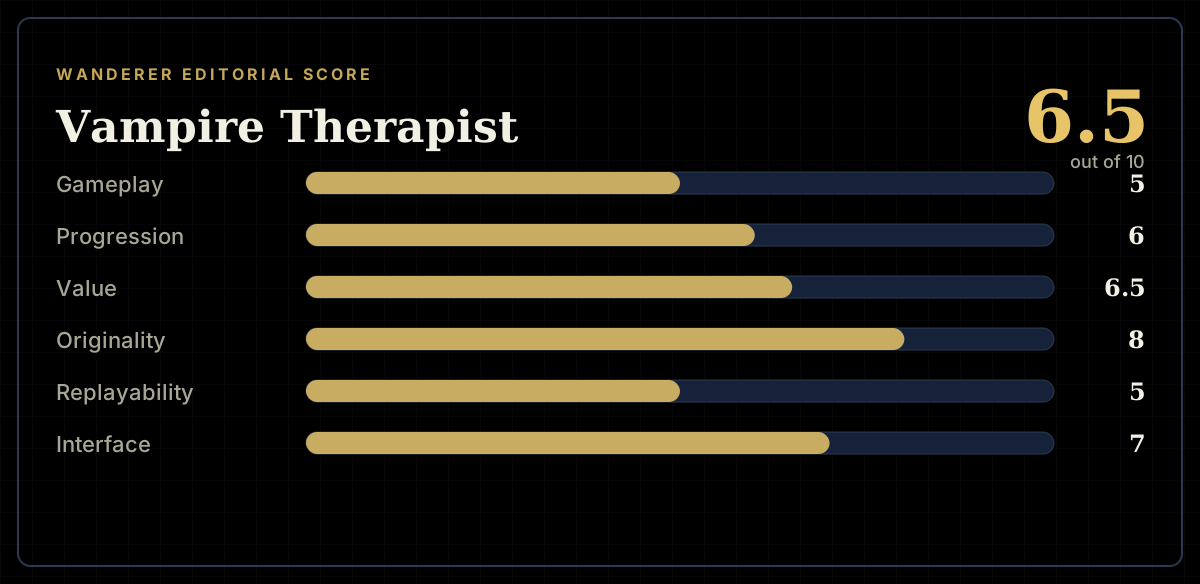
How the review scores each part of the gameWanderer Editorial -
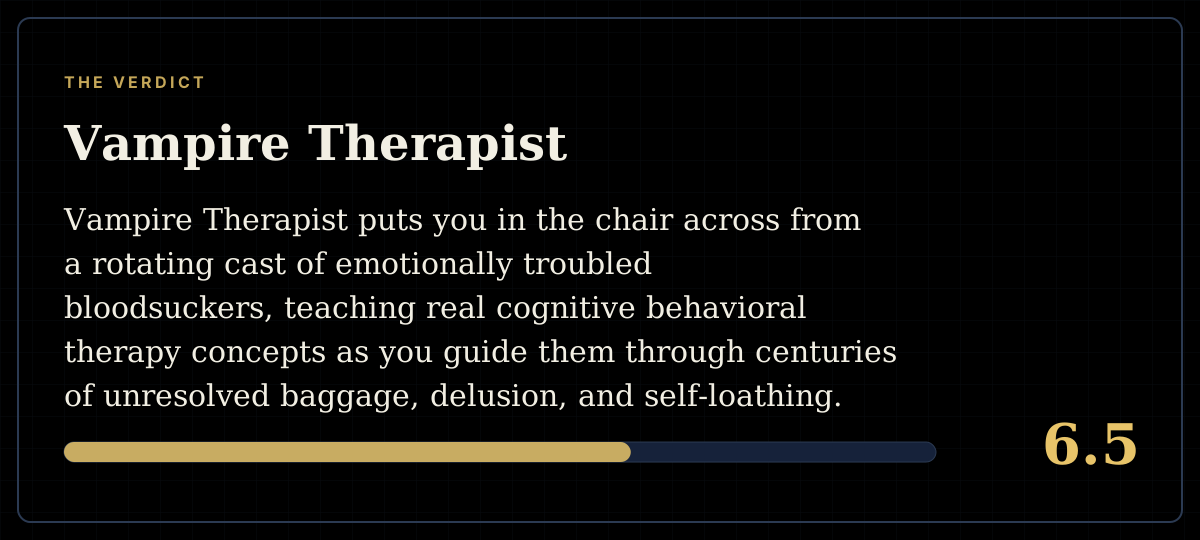
The short versionWanderer Editorial