Game review
Trials of Innocence
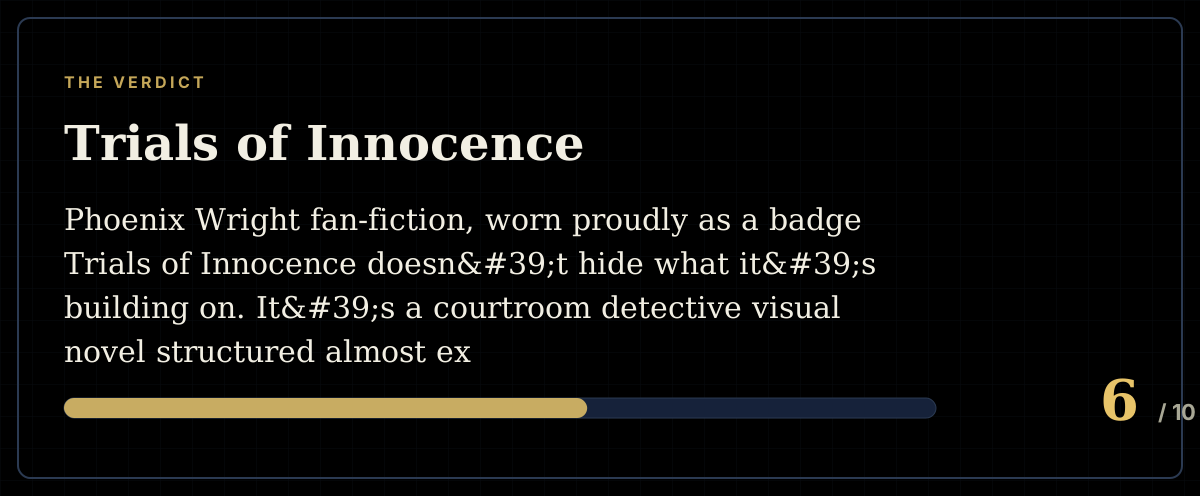
6 / 10
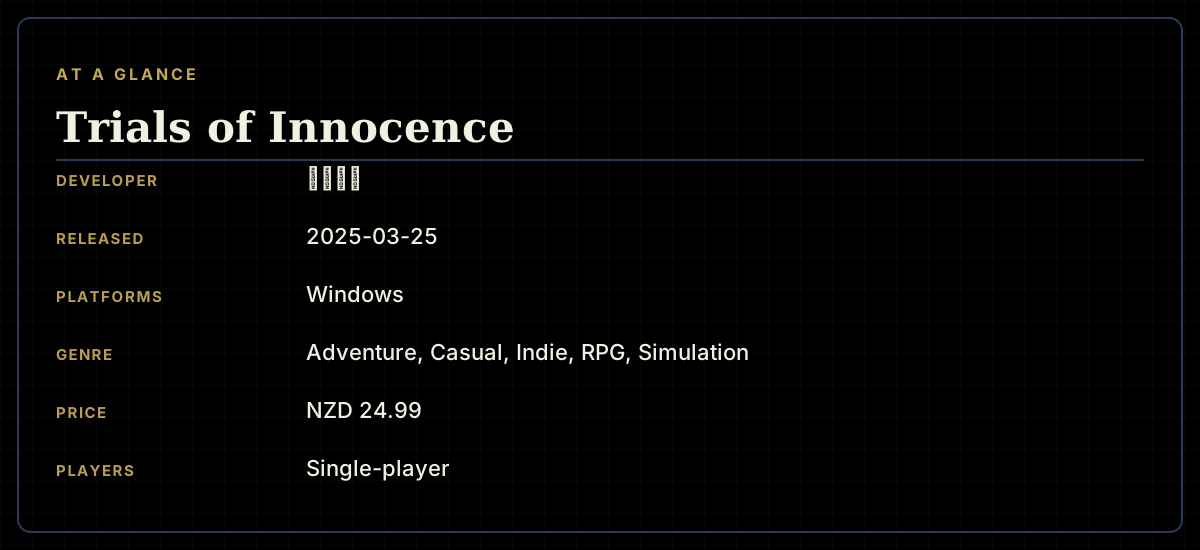
- Developer
- 猫龙游戏
- Publisher
- Right Mind
- Released
- 25 March 2025
- Platforms
- Windows
- Genre
- Adventure, Casual, Indie, RPG, Simulation
- Players
- Single-player
The short version
Biggest strengths
- A genuinely faithful, evidently loving recreation of the Ace Attorney investigate-and-cross-examine structure, with reviewers who push past the rough opening consistently praising its mystery-writing and plotting
- Appealing, distinctive character art and courtroom presentation that draw consistent praise even from otherwise critical reviewers
- A moderate 11-achievement spread (91.9% down to 16.5%) consistent with a game that has real structural content beyond its opening case
Biggest weaknesses
- Rough, frequently awkward "Engrish" translation is by far the single most consistent complaint across nearly every negative review, undermining dialogue-heavy trial sequences that depend on precise reading
- One recurring character's name is reportedly rendered inconsistently, sometimes in Chinese characters and sometimes in English, within the same localized text
- Cross-Examination sequences are criticized as visually interesting but mechanically shallow, with statements often feeling redundant rather than meaningfully interactive
6 / 10
Phoenix Wright fan-fiction, worn proudly as a badge
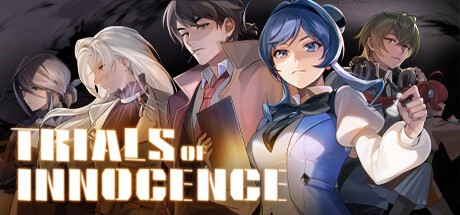
Trials of Innocence doesn't hide what it's building on. It's a courtroom detective visual novel structured almost exactly like Capcom's Ace Attorney series: investigate a crime scene, gather and cross-reference evidence, then head into a formal trial where you present contradictions against witness testimony to unravel a case. One reviewer sums up the whole pitch in a single line: "My Review could begin and end with 'It's Phoenix Wright Fanfiction' and that would be sufficient for everyone to know exactly what they're getting into with this game." That's not meant as an insult in most cases — it's an accurate description of a genre the source material has left mostly unattended for years, and reviewers who came in specifically hungry for more of that exact structure generally find real, evident craft and passion in how faithfully it's been rebuilt here.
Based on the available English-language review sample of 116 reviews — 108 positive, 8 negative, landing at an overall Very Positive rating — the game has clearly connected with its target audience of genre fans. One reviewer frames the whole experience as a satisfying substitute in a currently underserved space: "If you really like Ace Attorney style games, this will scratch that itch," even while going on to list specific personal complaints. That's a useful framing for judging Trials of Innocence fairly: this is a game built almost entirely for people who already love this exact formula, not one designed to convert newcomers, and it should be judged on how well it executes that promise rather than on how original its foundational structure is.
A translation rough enough to undermine its own trials
The single dominant complaint running through nearly every negative review, without exception, is the quality of the English localization. In a genre built entirely around parsing dialogue precisely enough to spot contradictions, an awkward translation isn't a cosmetic flaw — it actively interferes with the core gameplay loop. The most detailed and heavily upvoted negative review lays out the specific problem: "I greatly appreciate the effort put into translating the game into English. However, the translation occasionally feels overly direct, leading to awkward phrasing and simplified text." A separate reviewer, self-identified as a longtime reader of rough fan translations, is blunter about the effect over a long session: "There's some really really rough translations such that it reads very Engrish."
That translation quality has a specific, mechanically relevant consequence beyond simple readability, according to at least one reviewer: "English translation is very rough, which makes it very easy for you to start glazing over the text when it goes on for too long because there's too many redundant or awkward sentence structures. This is especially bad when we really get into the trials, when you need to be on the lookout for specific contradictions in the testimony." When the entire point of a trial sequence is catching a precise inconsistency in a witness's wording, prose that already reads as inconsistent for the wrong reasons makes that specific job measurably harder. A separate, more severe assessment goes further: "you can clearly tell that the translator did not speak a word of English," while still crediting "genuinely clever ideas" and strong visual presentation underneath the language problems.
One specific, recurring detail crops up independently across multiple reviews rather than being an isolated nitpick: at least one major character's name is displayed inconsistently, sometimes rendered in Chinese characters and sometimes in English within the same localized script. "One character's name is sometimes displayed with Chinese characters and sometimes with English ones, which is confusing," one reviewer notes — a small thing individually, but the kind of detail that erodes confidence in the localization pass as a whole when it appears alongside broader phrasing complaints. A separate, more purist objection targets the localization approach rather than its execution: one reviewer specifically objects to character names being anglicized at all, comparing it unfavourably to the original Ace Attorney's own much-discussed Americanization and stating a preference for direct translation over localization as a matter of principle.
An overwhelming first case, then a game with real ideas underneath
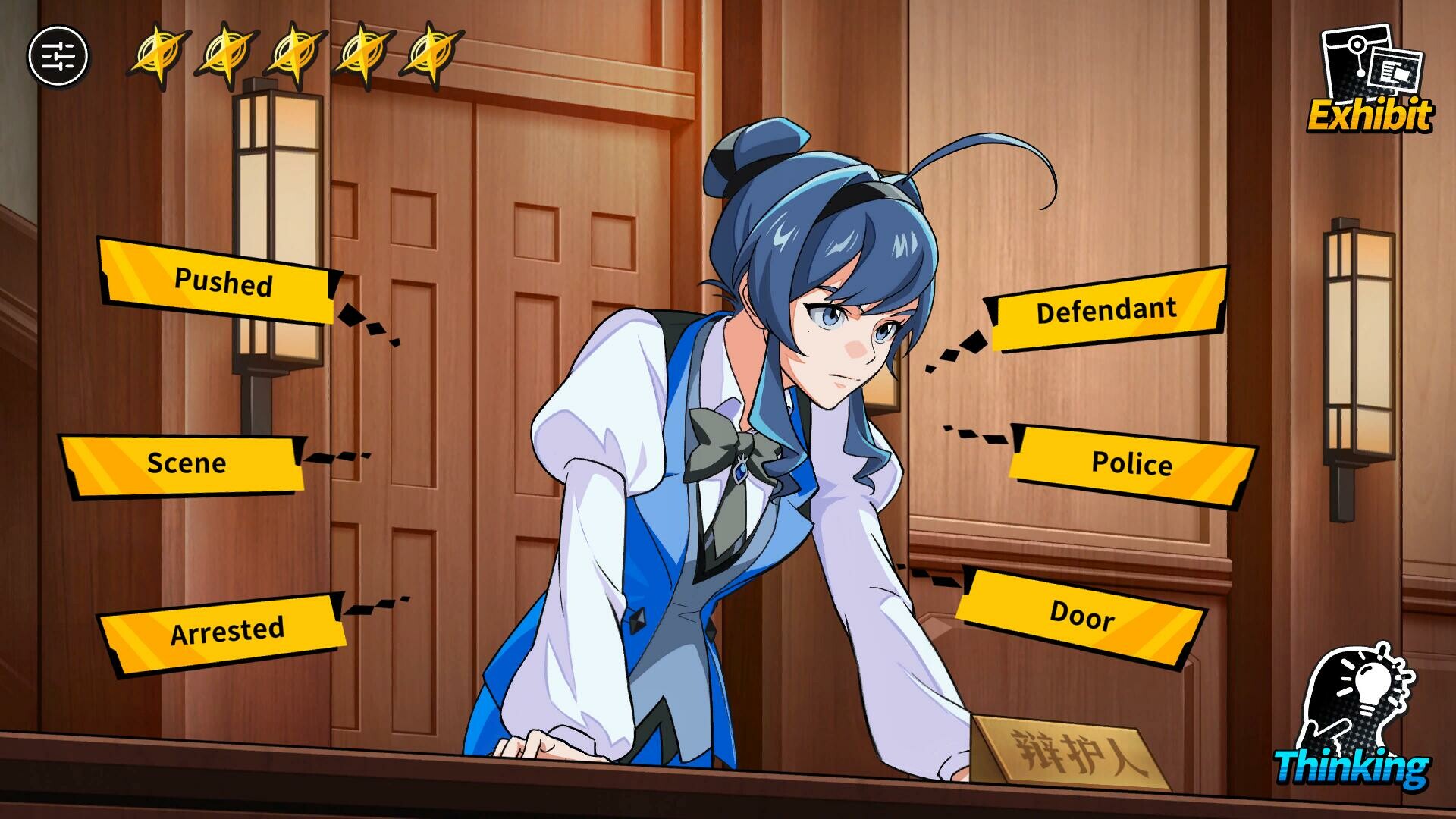
Beyond the language issues, the most detailed critical review identifies a structural pacing problem specific to the opening hours: "The first case, serving as a tutorial, unfortunately overwhelms players by introducing numerous mechanics and unnecessary pieces of evidence simultaneously." That's a meaningfully different complaint from the translation issues — it's a design and onboarding problem, front-loading systems rather than pacing them out, and it compounds the difficulty of a first impression already strained by rough prose. The same reviewer specifically calls out the Cross-Examination segments, the genre's signature contradiction-spotting mechanic, as underdeveloped relative to their presentation: "The Cross-Examination segments introduce an interesting presentation style but lack depth and meaningful interactivity. Often, statements feel redundant."
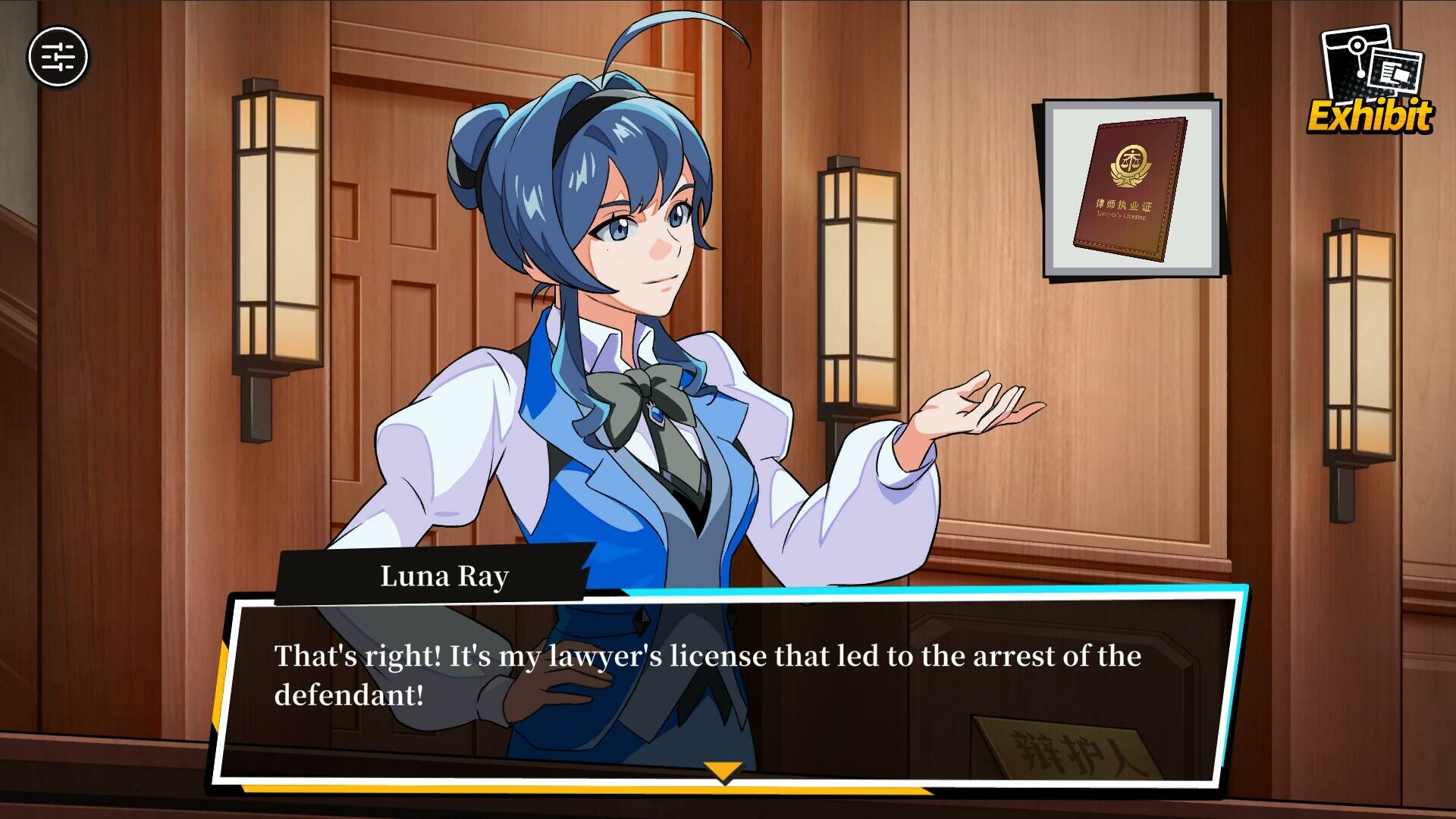
Presentation draws more mixed, but generally more favourable, assessment. The same detailed review credits "appealing character designs and aesthetics" while noting the animation doesn't back it up: "it lacks expressive animations, resulting in characters appearing somewhat static." A separate technical complaint from the same source flags "performance issues during critical problem-solving moments, causing noticeable jitteriness or sluggish responsiveness" — a real concern for a genre where quick, confident interaction during time-pressured evidence presentation is central to the tension the format is built around.
Set against all of that, it's worth being clear that the negative review sample here is genuinely small — eight reviews against 108 positive ones — and several of the negative reviews explicitly frame their complaints as reluctant rather than dismissive. "While there are some genuinely clever ideas in this game, and it look gorgeous, I cannot in good conscience recommend a game with such an atrocious translation," one such reviewer writes, drawing a clear line between disliking the translation specifically and disliking the underlying game. The most detailed critical review opens by acknowledging exactly that distinction directly: "the game successfully captures the core spirit of Ace Attorney, reflecting evident passion and dedication from the developers," before getting into its list of specific complaints — a pattern that recurs often enough across the negative sample to suggest a genuinely well-built game held back by one specific, fixable production gap rather than a fundamentally weak one.
Where the fans land, and what the numbers back up
The positive side of the ledger is worth taking seriously given how heavily it outweighs the negative sample. One long-time player, updating their review after finishing the full game rather than just the opening case, frames it as a clear success: describing it as "a solid mystery game, that managed to wrong foot me once or twice" and crediting genuine surprise in how the plot developed. A separate reviewer who specifically played through pirated copies before buying legitimately to leave a positive review is a small but telling signal of goodwill toward the underlying work, despite noting in the same breath that "the English translation is pretty jank at many times." Another reviewer who frames their assessment as a slow-burn improvement over its own runtime writes: "A almost carbon copy of Ace Attorney at first, with very similar character dynamics and structure. While the start isn't that engaging, just stick with it because the end half are really good, with some plot developments I really didn't see coming."
The achievement data offers a modest but useful supporting signal for that "slow burn" reading. Across 11 total achievements, the completion curve runs from 91.9% for the earliest, easiest milestone down to 16.5% for the most demanding late-game goal, with several mid-tier achievements clustered in the 45-65% range. That's a real, if unremarkable, drop-off consistent with a moderate share of the playerbase finishing the early, rockier case-one hours and then continuing on into the later content that multiple positive reviews specifically credit as the game's strongest material — though it's a court-case-completion curve rather than direct confirmation of any specific onboarding complaint, and should be read as circumstantial support rather than proof.
Where this leaves it
Trials of Innocence is a genuine, evidently sincere attempt to recreate the Ace Attorney courtroom-drama format for players who've been waiting years for more of it, and the overwhelmingly positive review response suggests it largely succeeds for its target audience once the rough opening hours are behind them. What holds it back from an easier recommendation at its twenty-five-dollar asking price is a translation that both individual reviewers and the sheer consistency of the complaint across nearly every negative review agree is genuinely rough — rough enough, in a genre built entirely around parsing precise witness testimony, to interfere directly with the gameplay itself rather than remaining a purely cosmetic annoyance. Layer on an overloaded tutorial case, shallow Cross-Examination interactivity, and some reported UI jitter during time-pressured sequences, and this reads as a game whose passion and underlying mystery-writing are real, but whose execution — specifically its English localization — needs another pass before it can be recommended without a significant asterisk. Worth it for patient Ace Attorney fans willing to push through a rocky opening case; a harder sell for anyone who isn't already primed to forgive rough English prose in exchange for a genre fix that's otherwise hard to find elsewhere right now.
Pros and cons
Pros
- A genuinely faithful, evidently loving recreation of the Ace Attorney investigate-and-cross-examine structure, with reviewers who push past the rough opening consistently praising its mystery-writing and plotting
- Appealing, distinctive character art and courtroom presentation that draw consistent praise even from otherwise critical reviewers
- A moderate 11-achievement spread (91.9% down to 16.5%) consistent with a game that has real structural content beyond its opening case
- A vocal minority of fans specifically credit the back half of the story with real, unexpected plot developments that reward sticking with it
Cons
- Rough, frequently awkward "Engrish" translation is by far the single most consistent complaint across nearly every negative review, undermining dialogue-heavy trial sequences that depend on precise reading
- One recurring character's name is reportedly rendered inconsistently, sometimes in Chinese characters and sometimes in English, within the same localized text
- Cross-Examination sequences are criticized as visually interesting but mechanically shallow, with statements often feeling redundant rather than meaningfully interactive
- The opening tutorial case is widely reported as overwhelming, introducing too many systems and evidence pieces simultaneously rather than easing players in
- Static, only lightly animated character art and reported UI jitter during time-pressured evidence sequences
Screenshots
-
Trials of InnocenceImage: Right Mind via Steam -
Trials of InnocenceImage: Right Mind via Steam -

Trials of InnocenceImage: Right Mind via Steam -
How the review scores each part of the gameWanderer Editorial -
At a glanceWanderer Editorial -
The short versionWanderer Editorial