
Game review
Lightracer: For Judge
5.5 / 10
- Developer
- Smartmelon Games
- Publisher
- Smartmelon Games
- Released
- 7 January 2025
- Platforms
- Windows
- Genre
- Adventure, Indie, RPG, Simulation, Strategy
- Players
- Single-player
The short version
Biggest strengths
- A genuinely ambitious sci-fi narrative — playing a powerful Judge navigating a divided, dystopian society — that multiple reviewers describe as deep, immersive, and morally complicated
- Strong characterisation and worldbuilding that reviewers repeatedly single out as the game's real strength, even when they're frustrated with everything around it
- A wide achievement spread (88.6% down to 2.9% across 24 achievements) suggests real branching content and multiple distinct endings worth pursuing
Biggest weaknesses
- Near-unanimous complaint across almost every English-language review, positive and negative alike: the translation is rough, with grammar errors, incorrect gender pronouns, and confused technical terminology, in a game where reading is the entire experience
- Multiple reviewers who played the developer's previous game, Lightracer: Spark, say this one is a clear step down in translation quality specifically
- Plot-unrelated mini-games are criticized for disproportionately high resource rewards that reviewers say undercut the game's own economy and pacing
5.5 / 10
A judge, a divided world, and a lot of reading
Lightracer: For Judge puts you in the seat of power in a dystopian future, playing a Judge navigating a fractured society while searching for hope amid the wreckage — a text-heavy narrative game closer to interactive fiction than a conventional RPG, structured around dialogue, choices, and consequences rather than combat or exploration. It's the follow-up to Smartmelon Games' earlier Lightracer: Spark, and reviewers who played that first game arrive at this one with real, specific expectations shaped by it, which turns out to matter a great deal for how the review sample reads.
The narrative ambition itself draws genuine, repeated praise. One reviewer calls it "an incredible story-driven game with backrooms intrigue that explores social implications of technological progress," and multiple others describe the plot as deep and morally uncertain enough that they were genuinely unsure who to trust throughout. Even reviewers who are otherwise sharply critical of the execution consistently carve out an exception for the writing's ambition and the characters' charisma — this isn't a case of a hollow premise dragging reviewers along, the underlying story is doing real work.
A translation that undermines the entire point
The single most consistent complaint in the review sample, appearing in nearly every review regardless of overall verdict, is translation quality — and for a game that is, by design, almost entirely text, that's not a minor cosmetic issue but a direct attack on the product's core function. Reviewers report grammar errors, dialogue that reads as borderline nonsensical in places, and specific, recurring technical mistakes — one reviewer methodically points out that the game confuses "Stellar," "Solar," "interstellar," and "Galaxy" despite them meaning different things, a level of specificity that suggests real reading frustration rather than casual dismissiveness. Pronoun and gender errors are cited independently by more than one reviewer as well.
What sharpens the complaint further is direct comparison: several reviewers explicitly played and finished the developer's previous game and report that its translation, while imperfect, was noticeably better than this one's. "I played and finished Lightracer Spark before, from the same studio, and that translation also wasn't perfect, but it was much better than this," one review states plainly, and another separately confirms the same comparison. That consistency across independent reviewers — not just "the translation is bad" but "the translation is worse than this developer's own prior work" — is a stronger, more specific signal than a generic localization complaint would be.
Mini-games that work against the main design
A second, more specific mechanical complaint concerns optional mini-games offered between story segments, ostensibly for bonus resources. Multiple reviewers report these mini-games are disconnected from the plot and pay out at a rate high enough to distort the game's intended economy and pacing, effectively making the "real" progression systems less meaningful by comparison. One reviewer frames this directly as a regression from the developer's previous title, arguing the earlier game's systems were more coherent. A related, more practical complaint concerns interface friction — reviewers describe slow transitions between screens, occasional disconnects, and insufficient status feedback that together make navigating the game feel more bureaucratic than the story itself warrants.
One further note worth reporting rather than adjudicating: a single reviewer characterises the game's political framing as biased, calling it "basically a propaganda piece." That's one attributed opinion rather than a pattern corroborated across the sample, and this review takes no position on it beyond naming that the claim exists in the public review record.
What the achievement spread suggests about branching content
The achievement data is worth reading alongside the review complaints rather than in isolation, because it argues for a game with real structural ambition underneath the localisation problems. The curve runs smoothly from 88.6% for the earliest milestone down through a genuinely wide middle band — a cluster of achievements sitting in the 40-55% range, another in the 20-38% range — before dropping to single digits for the rarest outcomes at 4.2% and 2.9%. That shape, with multiple distinct plateaus rather than one sharp cliff, is consistent with a branching narrative offering several genuinely different paths and endings rather than one linear story with a few bonus unlocks tacked on. It corroborates the reviewers who describe replaying to see different outcomes, and it suggests the mini-game and interface complaints, frustrating as they are, sit on top of a narrative structure with real substance rather than papering over a thin one.
That distinction matters for how to weigh this review's verdict. A game with a rough translation wrapped around a shallow story is a much easier pass; a game with a rough translation wrapped around a story with this much apparent branching and reviewer-confirmed depth is a more genuine loss for exactly the audience it's built for — the readers willing to invest the hours a text-heavy game like this demands.
Where this leaves it
Lightracer: For Judge has a story genuinely worth telling, and the reviewers who push through to the end largely say so themselves — the ambition, the moral complexity, and the characters are real strengths that a rough English localisation doesn't erase entirely. But for a text-driven game, translation quality isn't a peripheral concern, and the specific, repeated, comparative complaint that this release is a step down from the developer's own earlier work in exactly that department is hard to look past. Worth considering for readers with a high tolerance for rough prose in exchange for a genuinely ambitious sci-fi narrative, and worth waiting on for anyone who needs clean, polished English text to actually enjoy a story this dependent on it.
Pros and cons
Pros
- A genuinely ambitious sci-fi narrative — playing a powerful Judge navigating a divided, dystopian society — that multiple reviewers describe as deep, immersive, and morally complicated
- Strong characterisation and worldbuilding that reviewers repeatedly single out as the game's real strength, even when they're frustrated with everything around it
- A wide achievement spread (88.6% down to 2.9% across 24 achievements) suggests real branching content and multiple distinct endings worth pursuing
- Reviewers who finish it consistently describe the story as rewarding despite the friction getting there
Cons
- Near-unanimous complaint across almost every English-language review, positive and negative alike: the translation is rough, with grammar errors, incorrect gender pronouns, and confused technical terminology, in a game where reading is the entire experience
- Multiple reviewers who played the developer's previous game, Lightracer: Spark, say this one is a clear step down in translation quality specifically
- Plot-unrelated mini-games are criticized for disproportionately high resource rewards that reviewers say undercut the game's own economy and pacing
- Navigating between screens is reported as slow and interrupted by disconnects, with several reviewers wanting clearer status feedback and less menu-wading
Screenshots
-
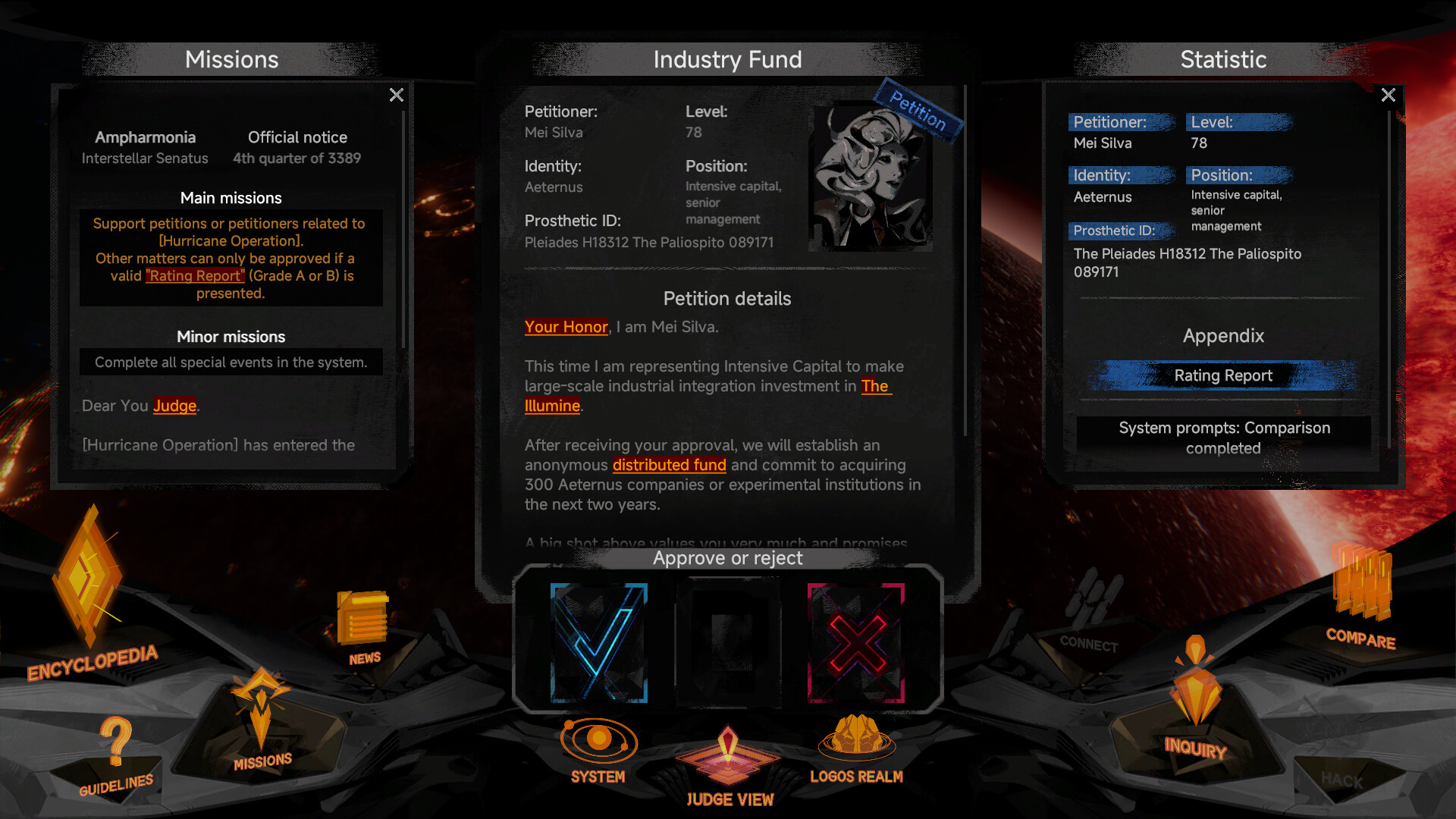
Lightracer: For JudgeImage: Smartmelon Games via Steam -

Lightracer: For JudgeImage: Smartmelon Games via Steam -
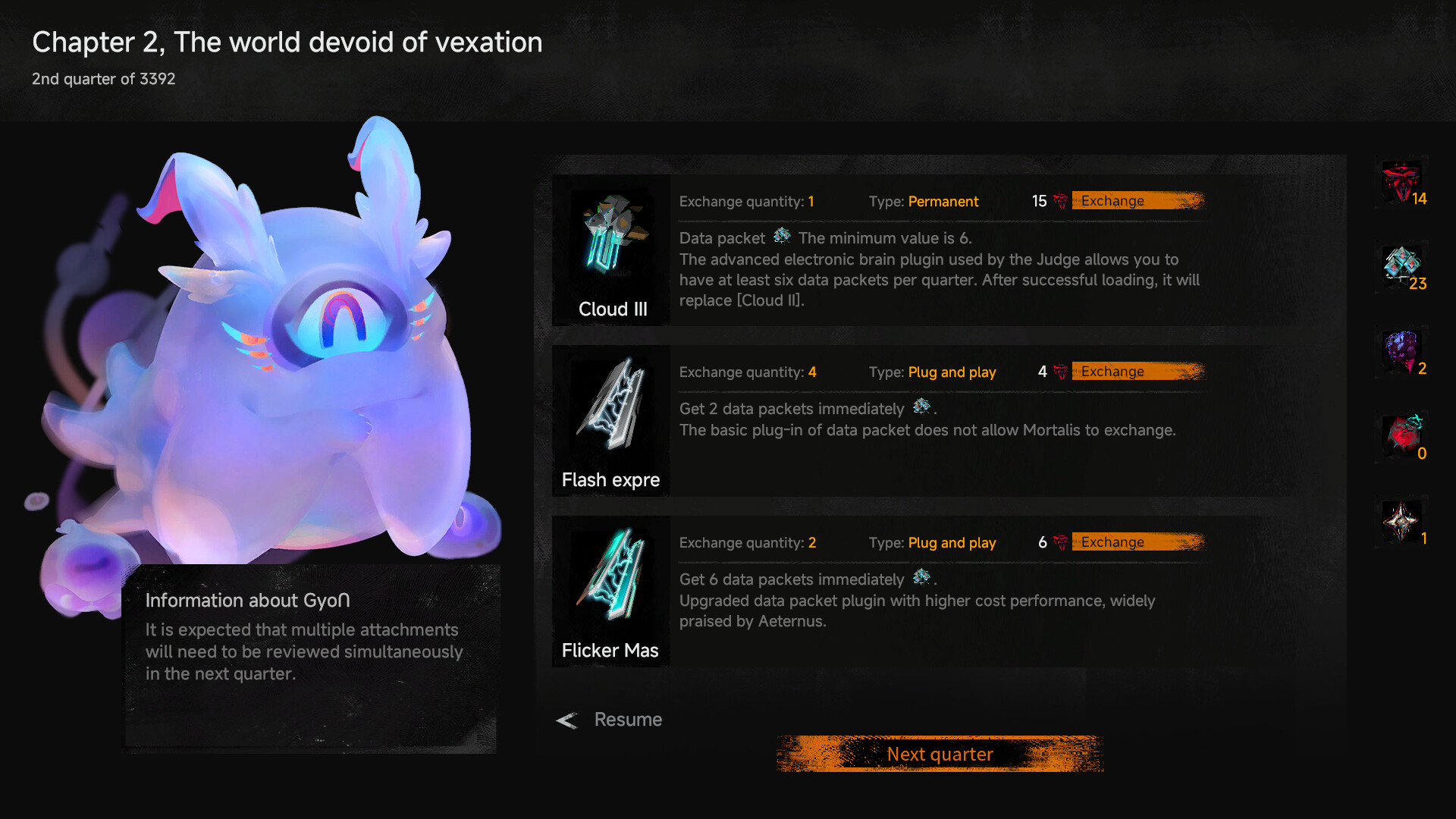
Lightracer: For JudgeImage: Smartmelon Games via Steam -
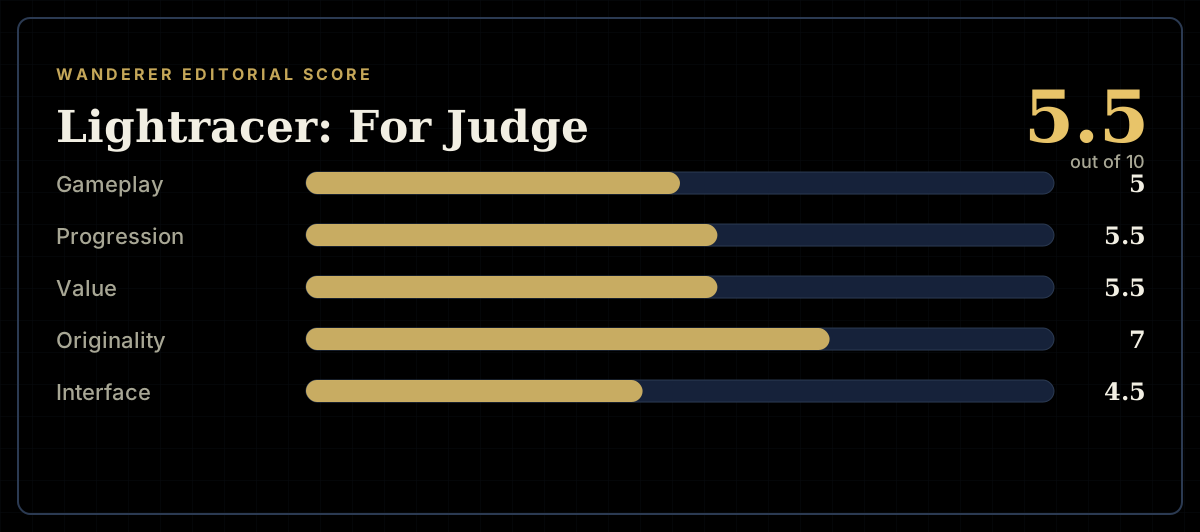
How the review scores each part of the gameWanderer Editorial -
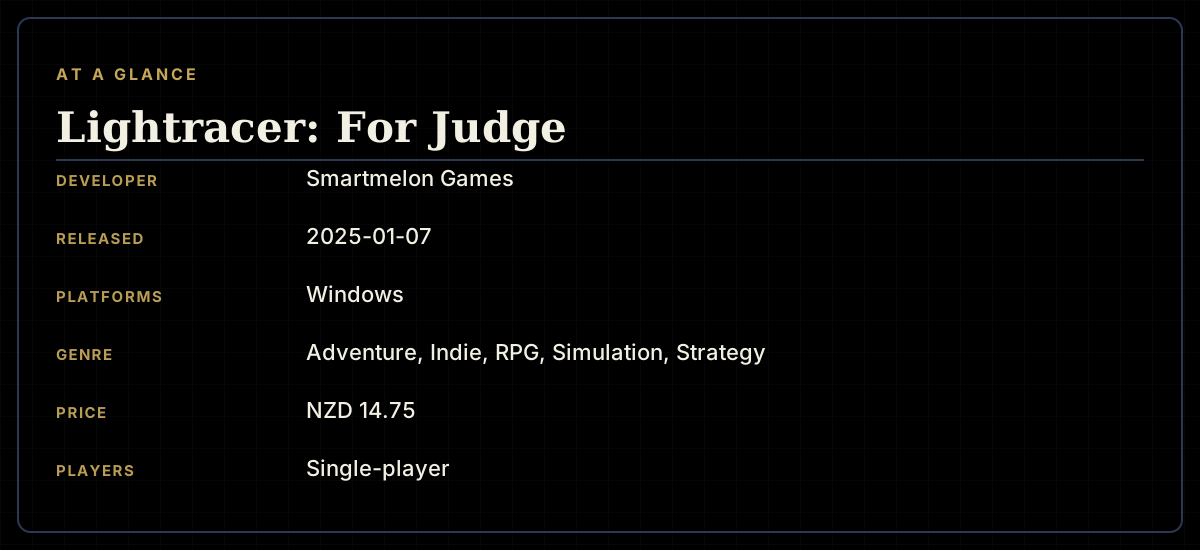
At a glanceWanderer Editorial -
The short versionWanderer Editorial