Game review
The Hundred Line -Last Defense Academy-
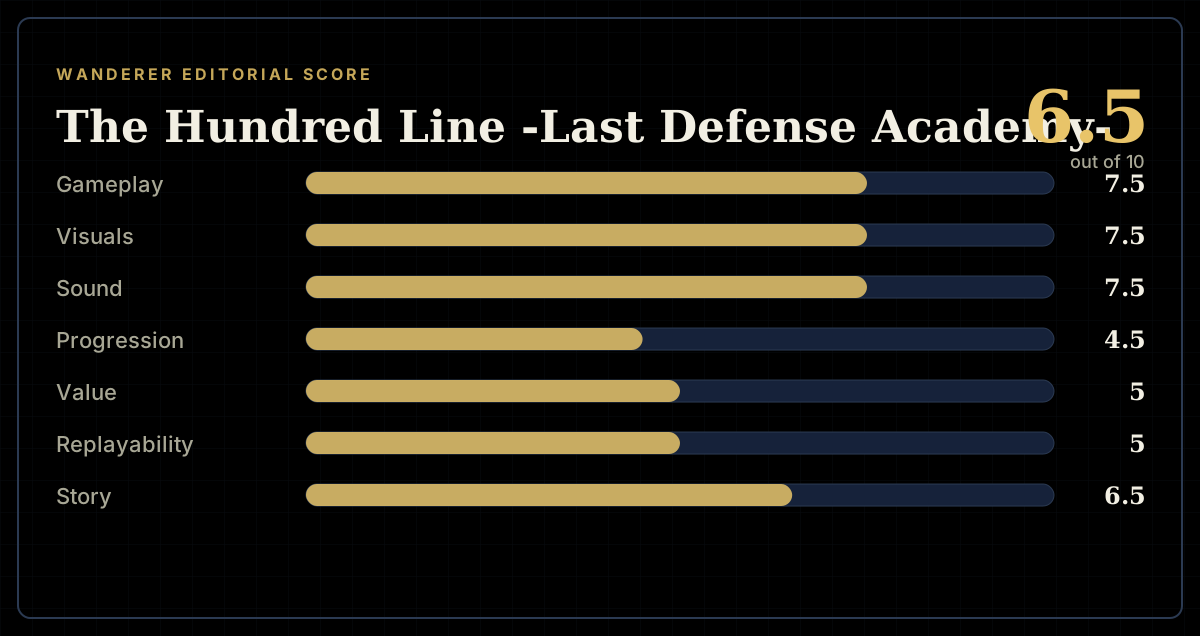
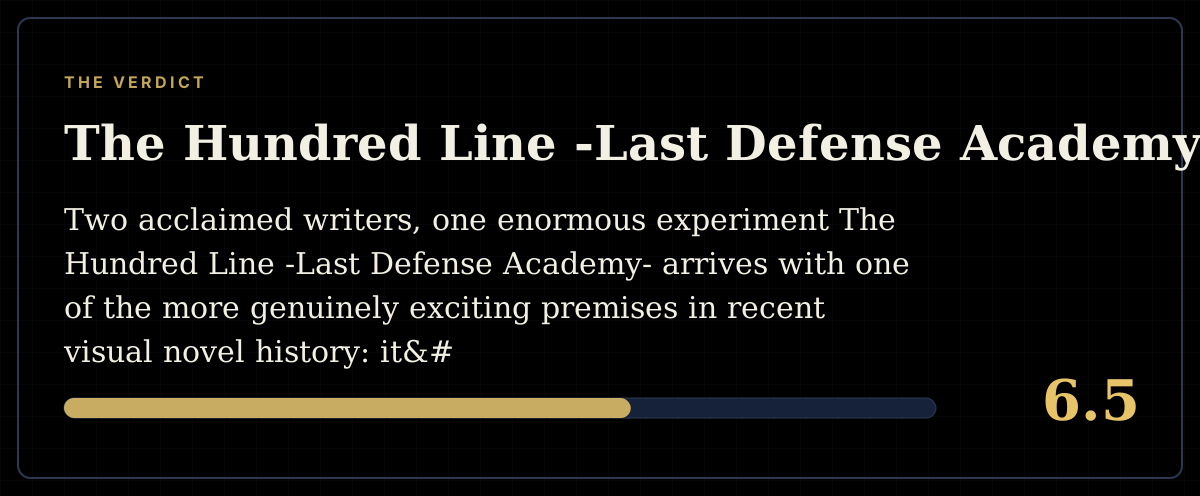
6.5 / 10
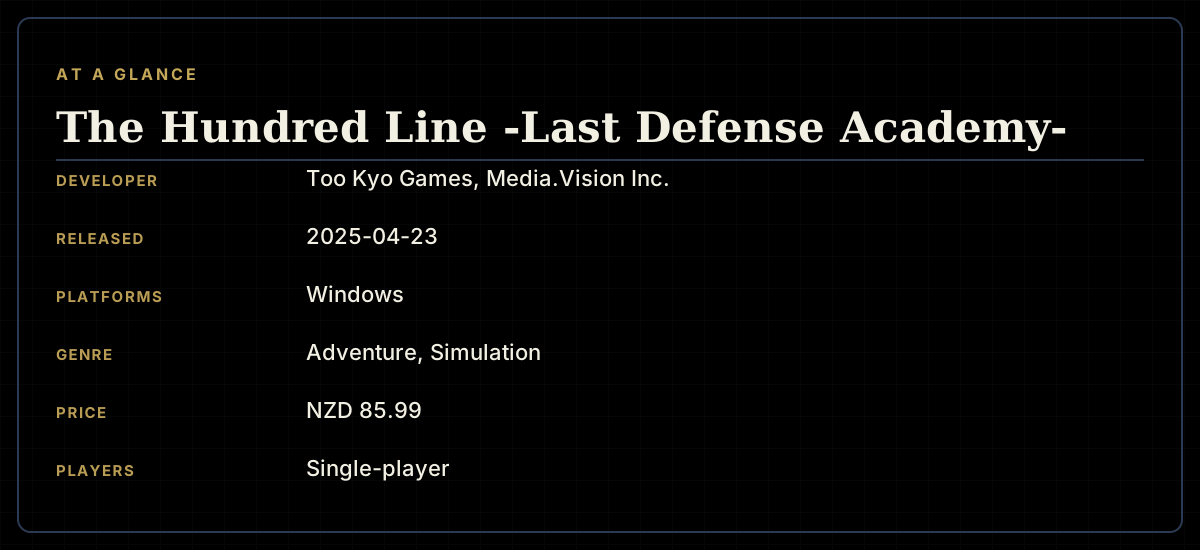
- Developer
- Too Kyo Games, Media.Vision Inc.
- Publisher
- Aniplex Inc.
- Released
- 23 April 2025
- Platforms
- Windows
- Genre
- Adventure, Simulation
- Players
- Single-player
The short version
Biggest strengths
- A genuinely excellent, fast-paced turn-based tactics combat system that multiple reviewers call among the best they've played in the genre, a real surprise for a game built primarily around narrative
- The opening 20-30 hours and the game's central, "true" narrative route are consistently and strongly praised, with several longtime fans calling it a career highlight for both collaborating writers
- Genuine ambition and scale rarely attempted elsewhere — 21 distinct branching routes and 100 possible endings built around one core cast and setting
Biggest weaknesses
- Achievement data confirms what dozens of detailed reviews independently describe as severe bloat — full completion sits at just 8.3% of the entire playerbase against a stated 100-150 hour time investment
- Many of the 21 routes and their endings are widely described as filler, repetitive, or afterthoughts compared to the single strongly-developed main route, undermining the game's own premise that every ending carries equal weight
- Repetitive daily-loop structure includes unskippable day-transition banners and sleep sequences that reviewers say add hours of dead time across a full playthrough
6.5 / 10
Two acclaimed writers, one enormous experiment
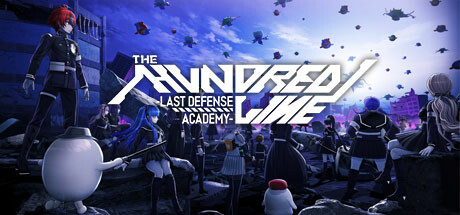
The Hundred Line -Last Defense Academy- arrives with one of the more genuinely exciting premises in recent visual novel history: it's the first collaboration between Kazutaka Kodaka, creator of the Danganronpa series, and Kotaro Uchikoshi, creator of Zero Escape — two writers whose separate bodies of work have shaped an entire generation's expectations for mystery-driven, morally knotty visual fiction. Fifteen students are tasked with defending their school against monstrous invaders across a hundred days, and the game wraps that premise in turn-based tactical combat, a structural choice that lets it pitch itself as something genuinely new for both writers rather than a retread of either's back catalogue. The anticipation in the review base is palpable and, for a large stretch of the game, rewarded: one review opens by naming exactly the thing longtime fans were hoping for — "this is the game people have been hoping for ever since Uchikoshi and Kodaka began working together" — before landing, tellingly, on a much more mixed overall verdict once the rest of the game is accounted for.
The tactics combat is the genuine, unqualified success story here, and it's worth stating plainly because it gets somewhat buried under the narrative discussion in most reviews: "the gameplay is fantastic," one detailed review states, "a turn based tactics game has never felt so fast paced and dynamic." That's echoed across the review sample regardless of how a given reviewer ultimately feels about the story surrounding it — this isn't a visual novel with combat bolted on as an afterthought, it's a genuinely well-designed tactics system that would likely earn praise as a standalone game.
A masterpiece for the first thirty hours
Nearly every detailed review, positive and negative alike, agrees on one thing: the opening stretch of The Hundred Line is exceptional. "This game begins 30 hours in, after one of the most incredible 'prologues' you'll play in your life — if you're a fan of Uchikoshi or Kodaka's works," one reviewer writes, and that specific framing — a 30-hour prologue functioning almost as its own complete, satisfying arc — recurs across the sample. Reviewers who grew up with Danganronpa describe the opening as a genuinely emotional experience; one comparison lands with real specificity: "if you were obsessed with Danganronpa as a young teenager, like I was, this game feels like that scene from Ratatouille where the food critic flashes back to his childhood."
The trouble, according to the overwhelming majority of detailed critical reviews, is what happens after that opening act concludes and the game's actual structural gimmick — 21 branching routes leading to 100 distinct endings — takes over. The premise sold to players is that this scale represents ambition and replayable depth. The reception argues it's closer to a structural miscalculation.
A hundred endings, but not a hundred stories
The single most consistent, most specific complaint across the negative review sample is that the game's headline feature — its sheer branching scale — actively works against it rather than for it. "The gameplay holds back the story," one reviewer writes. "Routes have far too much free time and filler for the amount of interesting content on each one." Another, after finishing every route and maxing every stat, is blunter still: "This game basically has 99 bad endings and 1 good ending," arguing that the entire "every ending is meaningful" pitch collapses once you've actually played through the alternatives and found most of them thin by comparison to the single, clearly favoured "true" path. A separate long-form review reaches a strikingly similar number independently — "I completed 8 of the 21 routes and unlocked 51 of the 100 endings, and honestly, that was more than enough to see what this game really is: bloated, repetitive, and strangely dishonest" about its own scope.
This isn't a minority complaint from a handful of dissatisfied players. It's the dominant, specifically-worded critique running through dozens of reviews with tens of thousands of combined upvotes, many written by reviewers who explicitly identify as longtime Kodaka and Uchikoshi fans and who frame their disappointment in exactly those terms — not as newcomers rejecting an unfamiliar style, but as devoted fans watching two writers they admire dilute their best ideas across far more content than those ideas could sustain.
Real, specific friction on top of the pacing problem
Beyond the structural bloat, reviewers repeatedly flag concrete technical annoyances that compound the length problem rather than existing separately from it. Combat can be "skipped" via an in-game option, but multiple reviewers report the animations and scene transitions play out at full length regardless — "skipping fights still has the fight take like 5 minutes to get through due to unskippable animations and transitions," one review states, a genuinely strange gap between a stated feature and its actual behaviour. The game's daily structure layers its own friction on top: every single day includes an unskippable banner announcing its start and end, plus a recurring sleep transition, all of which accumulate into real, measurable dead time across a playthrough already being criticised for running too long. One reviewer notes a community-made mod exists specifically to multiply game speed and "helps" — a fan-made workaround for a pacing problem the base game never addresses itself.
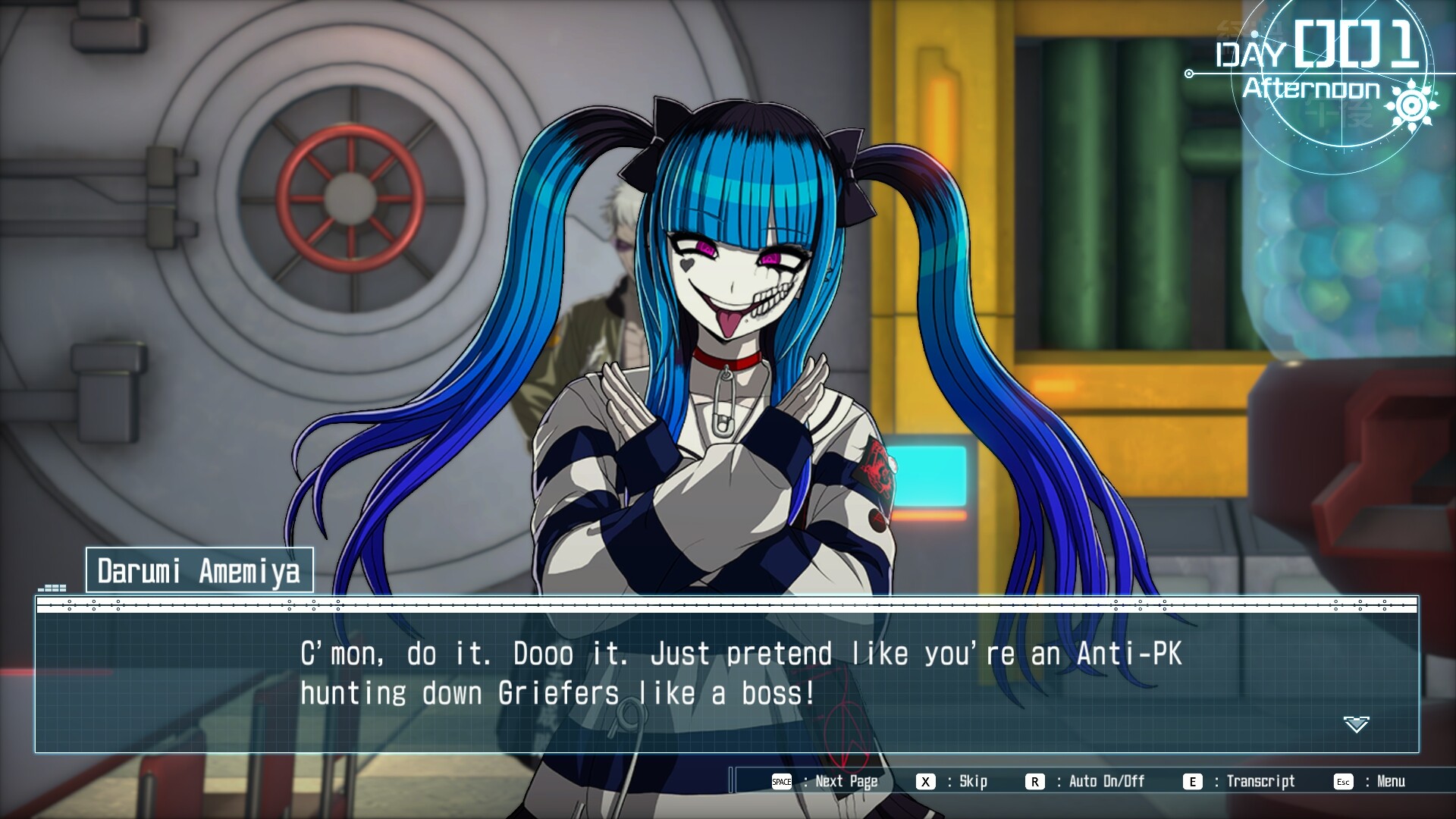
A smaller but recurring writing complaint concerns characterisation: several reviewers describe dialogue that repeatedly foregrounds each character's single defining quirk regardless of scene context, a criticism distinct from the pacing issues and specifically about craft. "For every single conversation, the writers thought it necessary to shoehorn each character's singular defining quirk in, no matter how irrelevant it is to the topic," one review states, framing it alongside "insufferable characters" as a separate reason the game undercuts its own strong premise.
What the numbers confirm
The achievement data settles what could otherwise read as reviewer exaggeration about the game's scale problem. Early, common-route milestones sit extremely high — rescuing an early character at 96.1%, clearing the first boss at 83.6%, arriving at key story beats in the 72-85% range — confirming that the strong, widely-praised opening really is experienced by nearly everyone who buys the game. But completion collapses sharply deeper into the branching structure: individual route-completion achievements for the less-travelled paths sit in the 13-18% range, and the achievement for completing literally everything the game offers sits at just 8.3% of the entire playerbase. That's about as close to an objective confirmation of "most players don't finish most of the routes" as achievement data can provide, and it lines up precisely with the qualitative complaints above rather than contradicting them.
Where this leaves it
The Hundred Line -Last Defense Academy- is a genuinely ambitious, occasionally brilliant game trapped inside a structure that its own audience — including its most devoted, most qualified fans — argues works against it. The tactics combat is excellent on its own terms, the opening act and central route deliver real, hard-earned emotional payoff, and the collaboration between Kodaka and Uchikoshi produces moments that longtime followers of either writer describe as career highlights. But the 100-ending premise that defines the game's marketing and its asking price turns out, by wide and detailed consensus, to be mostly padding around one genuinely strong story, compounded by unskippable transitions and repetitive daily-loop mechanics that make the bloat felt rather than just discussed. Recommended for the opening act and the combat system alone, with realistic expectations that finishing everything the box promises is a commitment most of the game's own buyers, by the numbers, never actually make.
Pros and cons
Pros
- A genuinely excellent, fast-paced turn-based tactics combat system that multiple reviewers call among the best they've played in the genre, a real surprise for a game built primarily around narrative
- The opening 20-30 hours and the game's central, "true" narrative route are consistently and strongly praised, with several longtime fans calling it a career highlight for both collaborating writers
- Genuine ambition and scale rarely attempted elsewhere — 21 distinct branching routes and 100 possible endings built around one core cast and setting
- Strong art direction, voice work, and production values throughout, matching the premium positioning of the release
Cons
- Achievement data confirms what dozens of detailed reviews independently describe as severe bloat — full completion sits at just 8.3% of the entire playerbase against a stated 100-150 hour time investment
- Many of the 21 routes and their endings are widely described as filler, repetitive, or afterthoughts compared to the single strongly-developed main route, undermining the game's own premise that every ending carries equal weight
- Repetitive daily-loop structure includes unskippable day-transition banners and sleep sequences that reviewers say add hours of dead time across a full playthrough
- Combat animations and transitions remain unskippable even when using the game's own "skip fight" option, a specific and widely-repeated technical annoyance
- Some dialogue and character writing is criticized as shoehorning a single personality quirk into every line regardless of relevance to the scene
Screenshots
-
The Hundred Line -Last Defense Academy-Image: Aniplex Inc. via Steam -

The Hundred Line -Last Defense Academy-Image: Aniplex Inc. via Steam -
The Hundred Line -Last Defense Academy-Image: Aniplex Inc. via Steam -
How the review scores each part of the gameWanderer Editorial -
At a glanceWanderer Editorial -
The short versionWanderer Editorial