
Game review
Promise Mascot Agency
7.5 / 10
- Developer
- Kaizen Game Works
- Publisher
- Kaizen Game Works
- Released
- 10 April 2025
- Platforms
- Windows
- Genre
- Open World, Narrative Adventure, Management Sim
- Monetisation
- One-time purchase, no DLC or in-game currency
- Players
- Single-player
The short version
Promise Mascot Agency exiles a disgraced yakuza to Kaso-Machi, a cursed, half-abandoned Japanese town, and tasks him with rebuilding a mascot talent agency from nothing — recruiting living, breathing mascot characters with their own anxieties and dreams, sending them out on jobs, and slowly untangling a town-wide conspiracy while driving a tiny truck across an open world. Reviewers repeatedly describe it as a Yakuza business side-story — the kind of management minigame Sega's series has offered for years — expanded into a complete, standalone game, right down to casting Kiryu's own Japanese voice actor in a lead role the marketing barely mentions. The reception is Overwhelmingly Positive, and the praise is unusually specific: reviewers single out the writing, the soundtrack, the anti-capitalist undercurrent and a distinctive melancholic atmosphere one reviewer memorably calls "anemoia" — nostalgia for a place you've never actually been. Set against that is a real, detailed minority who found the open-world driving, gliding and item-collecting mechanics repetitive within a few hours, arguing the game's considerable heart isn't matched by equally considerable gameplay depth.
Biggest strengths
- The writing draws exceptionally strong, specific praise across the corpus — reviewers repeatedly cite hilarious, profound and genuinely well-crafted dialogue, with an anti-capitalist thematic undercurrent several reviewers say elevates the game beyond its comedic surface
- The mascot cast is singled out for real emotional range beneath the absurdist premise, with reviewers describing surprisingly affecting arcs for characters introduced as pure comic relief
- Casting Kiryu's own Japanese voice actor in a lead role — an easter egg the marketing itself barely mentions — is treated by multiple reviewers as both a delightful discovery and confirmation of how directly the game is drawing on Yakuza's business-management side-content as its core inspiration
Biggest weaknesses
- A substantial, detailed minority of reviewers independently report the open-world driving and item-collecting loop becoming repetitive within just a few hours, well before the story concludes, with one specifically noting the game "doesn't reward exploration" beyond generic scattered collectables
- Some reviewers report the core traversal tools — a launch-based glider and a projectile character named Pinky — trivialise environmental puzzles that might otherwise have required more thoughtful navigation, reducing exploration to a repeated, low-effort solution
- At least one reviewer specifically found the main story dialogue repetitive "to a sickening level" on replay or extended play, a sharper critique than the more common "simply gets samey" complaint
Who it's for: Fans of Yakuza's business and management side-content who wanted an entire game built around that specific pleasure, and anyone drawn to distinctive, melancholic, character-driven writing wrapped around a genuinely novel management-sim premise. Less of a fit for players who need constantly evolving open-world mechanics to stay engaged, since the driving and collection loop stays largely consistent throughout.
Our recommendation: A strong recommendation, particularly at a discount, for players drawn to distinctive writing and atmosphere over mechanical depth — go in expecting a narrative-forward management game with simple, repeated systems rather than an ever-escalating open-world sandbox, and the well-documented repetition complaints are far less likely to bother you.
7.5 / 10
A Yakuza side-story, grown into a whole game
Promise Mascot Agency's premise reads like a fever dream in the best way: a disgraced yakuza, exiled to the cursed, half-emptied town of Kaso-Machi, is given one last chance at redemption by building a mascot talent agency from scratch. The mascots themselves aren't the hollow brand ambassadors the premise jokes about — they're living, anxious, fully-realised characters, from a cat with an unfortunate video habit to a sobbing block of tofu, each needing to be recruited, mentored and sent out on jobs that inevitably go sideways. Reviewers who've spent real time with Sega's Yakuza series recognise the DNA immediately: this is that franchise's beloved business-management side-content, expanded into a complete, standalone open-world game. The connection runs deeper than inspiration — the game reportedly cast Kiryu's own Japanese voice actor in a lead role, a detail several reviewers discovered themselves rather than through marketing, since the game barely advertises it.
Writing that earns its passionate fans
What separates Promise Mascot Agency's review corpus from ordinary genre enthusiasm is how specifically reviewers credit the writing. Dialogue is repeatedly called both hilarious and profound, with more than one reviewer highlighting an anti-capitalist thread running beneath the comedy that elevates the game past its absurdist premise. One reviewer coins a specific word for the atmosphere the game achieves — "anemoia," nostalgia for a place you've never actually been — capturing something that shows up across many other reviews without the same vocabulary: a melancholic, lived-in feeling that reviewers say is rare in games built around comedy and management-sim mechanics. One of the most personally affecting accounts in the corpus describes playing through eight straight hours the day after having to put down a beloved pet, finding real comfort in the game's gentle, simple loop — a testament to the specific emotional register the writing and pacing achieve for at least some of its audience.
When the charm outruns the mechanics
Set against that passionate reception is a real, detailed minority — not a handful of outliers, but dozens of independently-written reviews making overlapping, specific points. The most common thread: the open-world driving and item-collecting loop becomes repetitive within the first few hours, with one reviewer noting flatly that the world "doesn't reward exploration" beyond generic scattered pickups. A more specific mechanical complaint concerns the traversal toolkit itself — a launch-capable glider and a throwable companion character named Pinky are reported to trivialise environmental puzzles that might otherwise have demanded more thoughtful navigation, turning what could be interesting spatial problem-solving into a repeated, low-effort routine. At least one reviewer goes further on the writing side too, finding the main story's dialogue "repetitive to a sickening level" rather than simply thin — a sharper version of the more common complaint.
Several of these critical reviewers are explicit that they're writing in direct response to what they perceive as disproportionate, uniform acclaim — one titles their account "I'm honestly baffled by the overwhelmingly positive reviews." That framing is worth taking seriously rather than dismissing as contrarianism: the complaints themselves are specific and detailed, not vague dissatisfaction, and they converge independently on the same handful of mechanical issues across many different reviewers.
What the achievement data suggests
Despite the repetition complaints, Steam's own achievement data paints a relatively healthy completion picture. More than a third of players reach the achievement tied to finishing the main story — a notably strong figure for an open-world game of this scope, where completion rates below 20% are common. That suggests the mechanical criticisms, however specific and legitimate, aren't stopping the majority of players who start the game from actually finishing it — likely because the writing and atmosphere carry enough of the experience to sustain interest even when the moment-to- moment gameplay itself draws complaints.
A pedigree that shows
It's worth situating Promise Mascot Agency against its developer's own history, since reviewers clearly do. Kaizen Game Works previously made Paradise Killer, a similarly strange, atmosphere-first open-world mystery game that built its own passionate following on distinctive writing over conventional mechanical polish. Several reviewers who came to Promise Mascot Agency as existing Paradise Killer fans describe recognising the same authorial voice immediately, and at least one 100%-completionist reviewer who loved the studio's earlier work says they went in "desperately looking for something that was truly worth it" and came away more mixed than they expected — a useful data point precisely because it comes from someone predisposed to love it. That reviewer's verdict, that the driving isn't fun and the gliding is "awful" despite genuinely appreciating the mascots' character arcs, captures the split running through this whole review about as concisely as any single account in the corpus.
The verdict
Promise Mascot Agency is a distinctive, big-hearted game whose writing, music and atmosphere have won it real, passionate devotion — including from players who explicitly credit it with getting them through genuinely hard personal moments. That devotion is honest rather than uncritical, though: a substantial, detailed body of reviewers argues the open-world mechanics underneath all that heart don't hold up to the same standard, becoming repetitive well before the story concludes. Both things are true at once, and the achievement data suggests most players land on the side of finishing it anyway. At a discount, this is an easy recommendation for anyone drawn to distinctive, melancholic, character-first writing; even at full price, the strength of that writing is likely worth the mechanical repetition for the audience it's built for.
Pros and cons
Pros
- The writing draws exceptionally strong, specific praise across the corpus — reviewers repeatedly cite hilarious, profound and genuinely well-crafted dialogue, with an anti-capitalist thematic undercurrent several reviewers say elevates the game beyond its comedic surface
- The mascot cast is singled out for real emotional range beneath the absurdist premise, with reviewers describing surprisingly affecting arcs for characters introduced as pure comic relief
- Casting Kiryu's own Japanese voice actor in a lead role — an easter egg the marketing itself barely mentions — is treated by multiple reviewers as both a delightful discovery and confirmation of how directly the game is drawing on Yakuza's business-management side-content as its core inspiration
- The soundtrack and overall atmosphere draw specific, passionate praise, with one reviewer coining "anemoia" — nostalgia for a place never personally experienced — to describe the game's distinctive melancholic-yet-cozy tone
- Global achievement data shows a healthier-than-typical completion curve for an open-world game this size, with well over a third of players reaching the main story's final achievement — suggesting the mechanical repetition criticized by some doesn't stop most players from seeing the story through
Cons
- A substantial, detailed minority of reviewers independently report the open-world driving and item-collecting loop becoming repetitive within just a few hours, well before the story concludes, with one specifically noting the game "doesn't reward exploration" beyond generic scattered collectables
- Some reviewers report the core traversal tools — a launch-based glider and a projectile character named Pinky — trivialise environmental puzzles that might otherwise have required more thoughtful navigation, reducing exploration to a repeated, low-effort solution
- At least one reviewer specifically found the main story dialogue repetitive "to a sickening level" on replay or extended play, a sharper critique than the more common "simply gets samey" complaint
- Several critical reviewers explicitly frame their write-ups as a counterweight to what they see as disproportionately uniform praise, with one titling their account "I'm honestly baffled by the overwhelmingly positive reviews" — worth reading as a genuine minority signal rather than dismissing given how detailed and specific the accompanying complaints are
- The core gameplay loop remains largely consistent from the early hours through to the end, so players who bounce off the driving-and-collecting mechanics in the opening stretch are unlikely to find the back half meaningfully different
Screenshots
-

Promise Mascot AgencyImage: Kaizen Game Works via Steam -

Promise Mascot AgencyImage: Kaizen Game Works via Steam -

Promise Mascot AgencyImage: Kaizen Game Works via Steam -
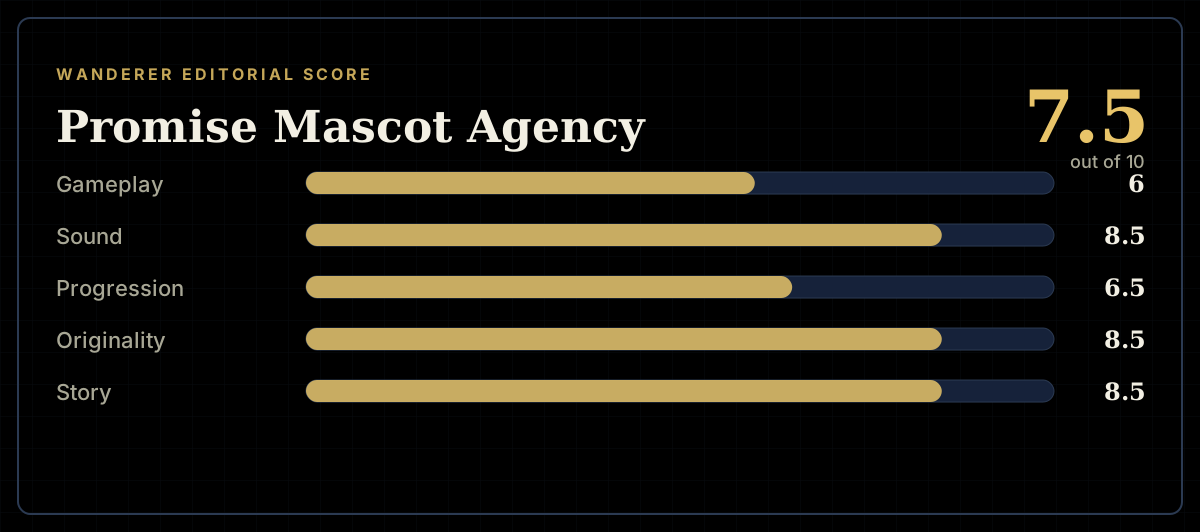
How the review scores each part of the gameWanderer Editorial -
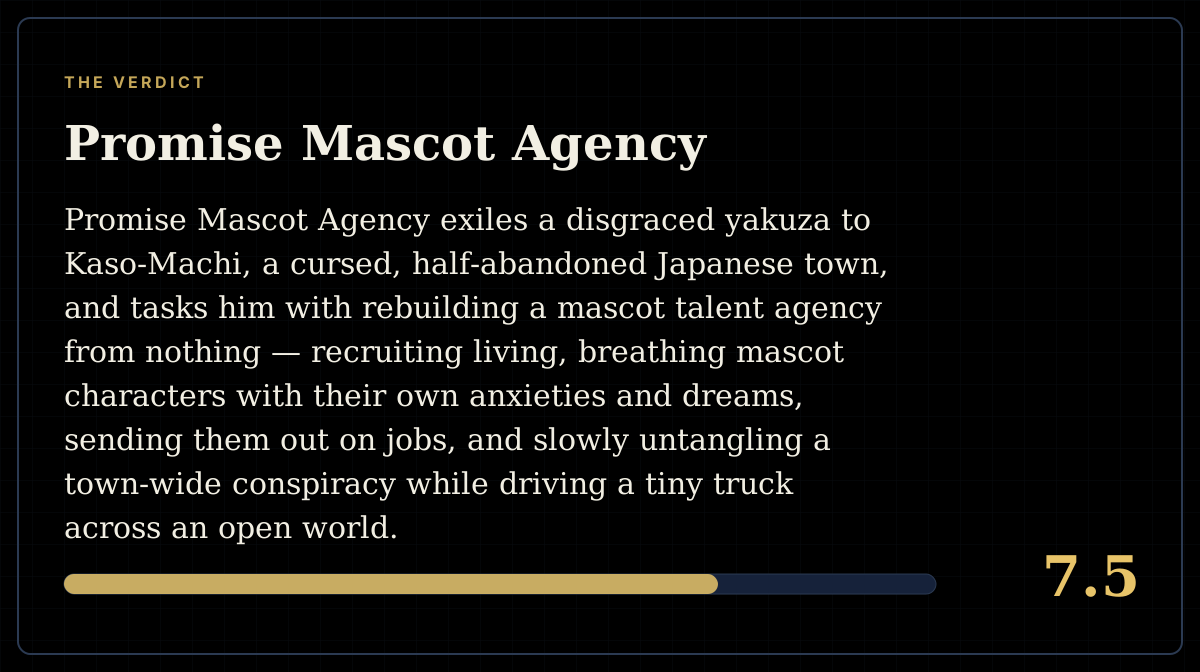
The short versionWanderer Editorial