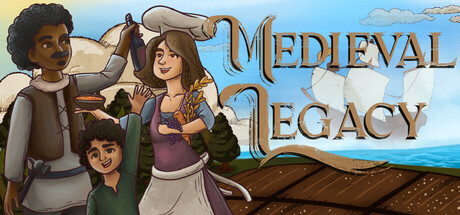
Game review
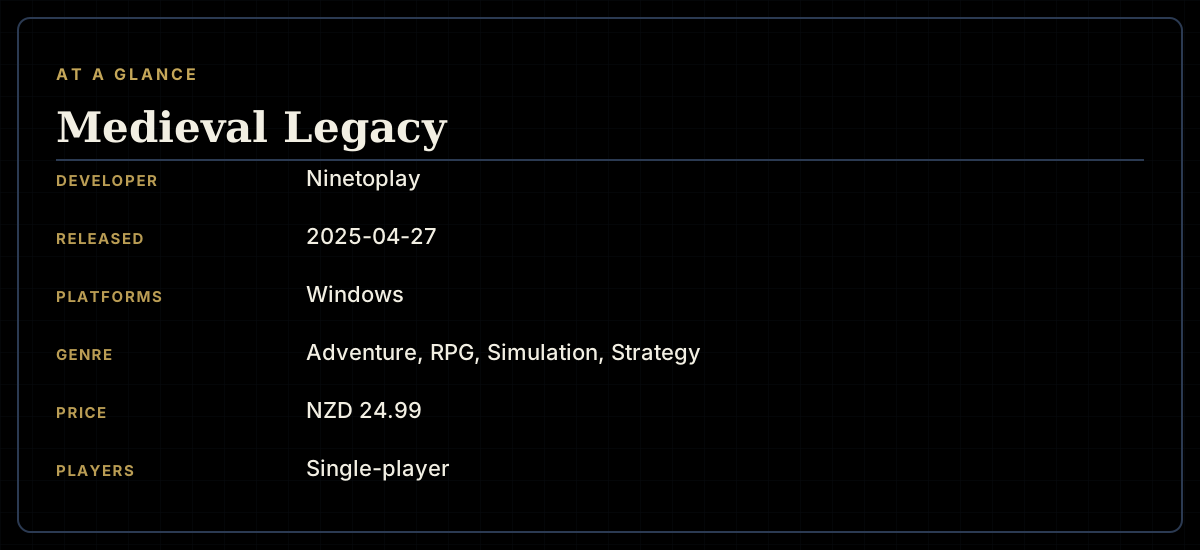
Medieval Legacy
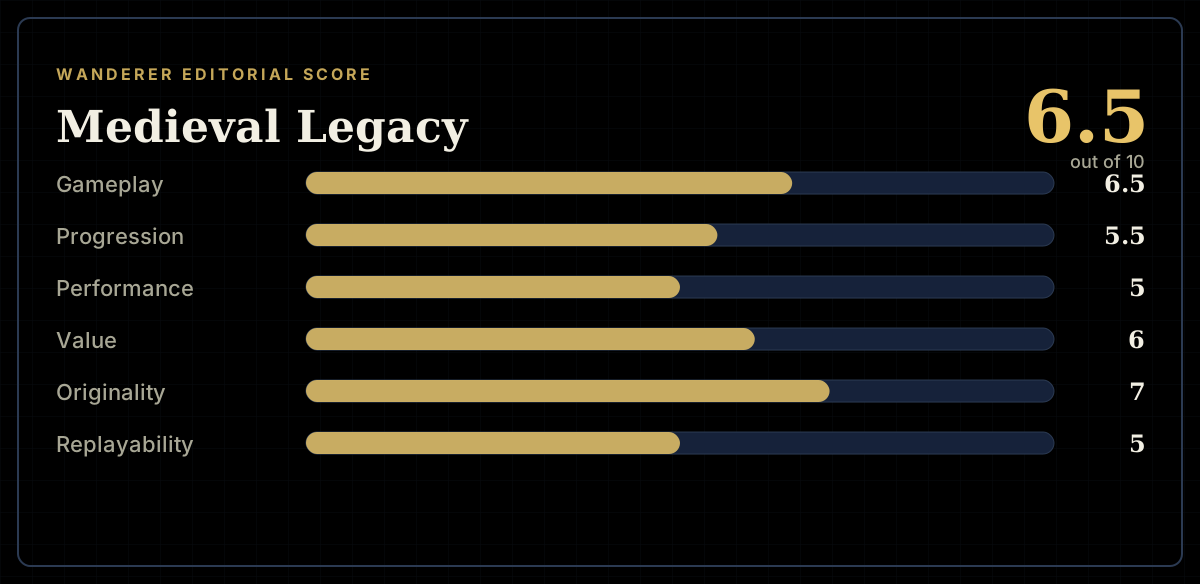
6.5 / 10
- Developer
- Ninetoplay
- Publisher
- Ninetoplay
- Released
- 27 April 2025
- Platforms
- Windows
- Genre
- Adventure, RPG, Simulation, Strategy
- Players
- Single-player
The short version
Biggest strengths
- A genuinely compelling opening act — surviving as a struggling peasant family against food shortages, weather and market swings feels tense and puzzle-like in a way several reviewers compare favourably to The Guild series
- A dynastic skill-inheritance system means the family, not any single character, is the real unit of progression, giving the economy game a human throughline most trading sims don't have
- A wide achievement spread (96.1% down to 0.9%) across what look like several distinct content tiers suggests real structural depth for players who push past the early hours
Biggest weaknesses
- Multiple reviewers, including one with over 2,300 hours logged, describe a "whack-a-mole" patching pattern where fixing one bug reintroduces or exposes another, rather than the game steadily stabilising
- The mid-to-late game is repeatedly described as trivially easy once the early economic puzzle is solved, with runs converging on the same winning strategy regardless of starting conditions
- Random events can swing punishingly harsh even on easy difficulty, including specific reports of child characters dying to events reviewers found disproportionate to the stated difficulty level
6.5 / 10
From starving peasant to trading dynasty
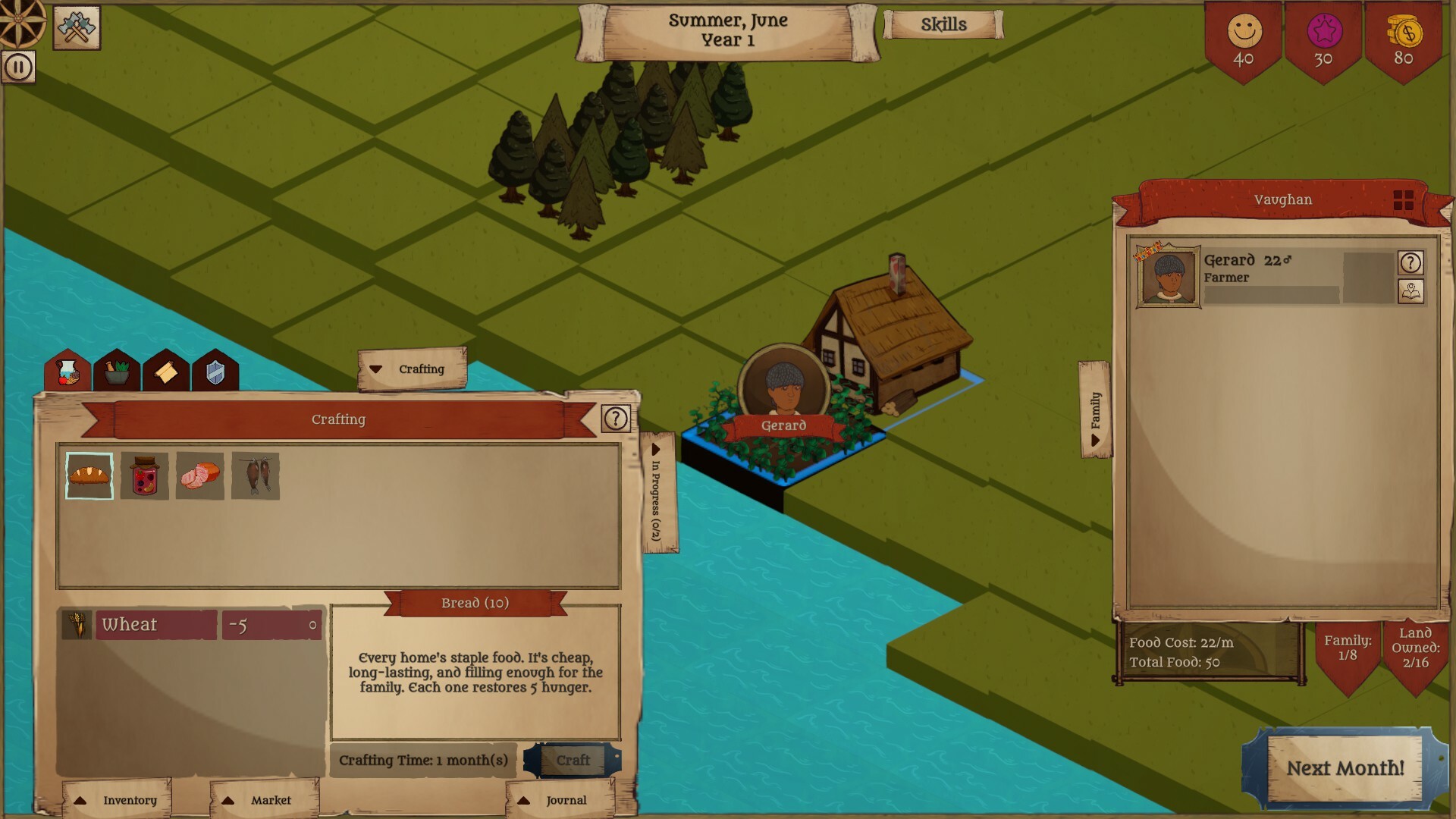
Medieval Legacy opens with a genuinely effective hook: you're a single struggling family, one bad harvest away from real hardship, trying to buy grain cheap and sell whatever you can scrape together at enough of a margin to survive the month. Reviewers consistently single out this opening stretch as the game's strongest material — several draw a direct, approving comparison to The Guild series, an older but well-regarded lineage of dynasty-management economy games this one is clearly drawing inspiration from. The tension is real: food security, weather, and the black market's better prices against the legal market's safer, lower ones all create a genuine early puzzle rather than a tutorial-paced ramp.
What separates it structurally from a straightforward trading sim is the family layer sitting underneath the economy. Children inherit and develop skills that shape what professions and opportunities open up to the next generation, meaning a single family's fortunes compound (or collapse) across a timeline that outlives any individual character. One reviewer describes the loop precisely: children are limited to basic child professions and vulnerable to illness and injury in their early years, then graduate into the family's actual working roster, tying the economic game directly to a human, generational stake rather than an abstract resource counter.
A late game that runs out of ideas
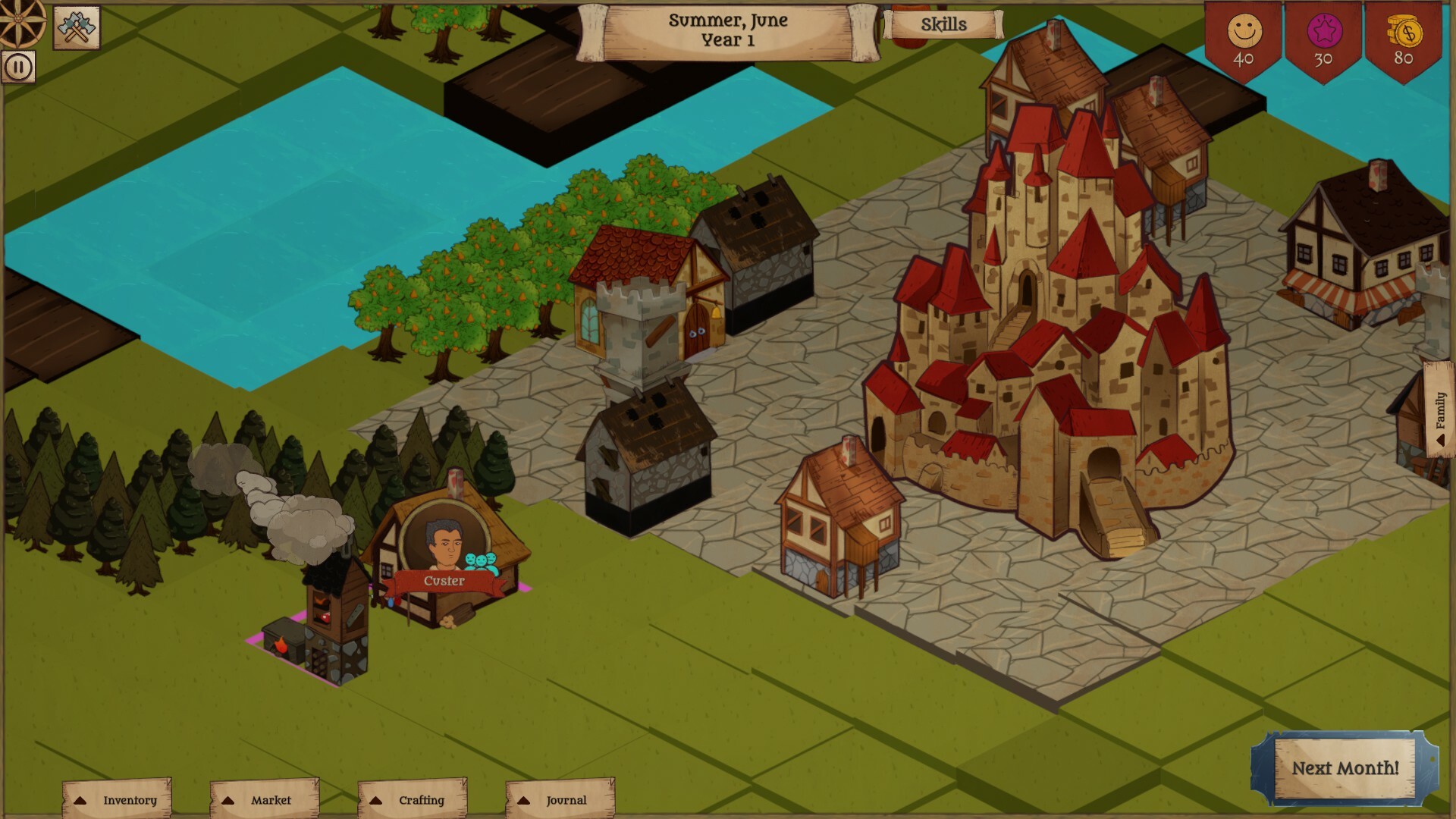
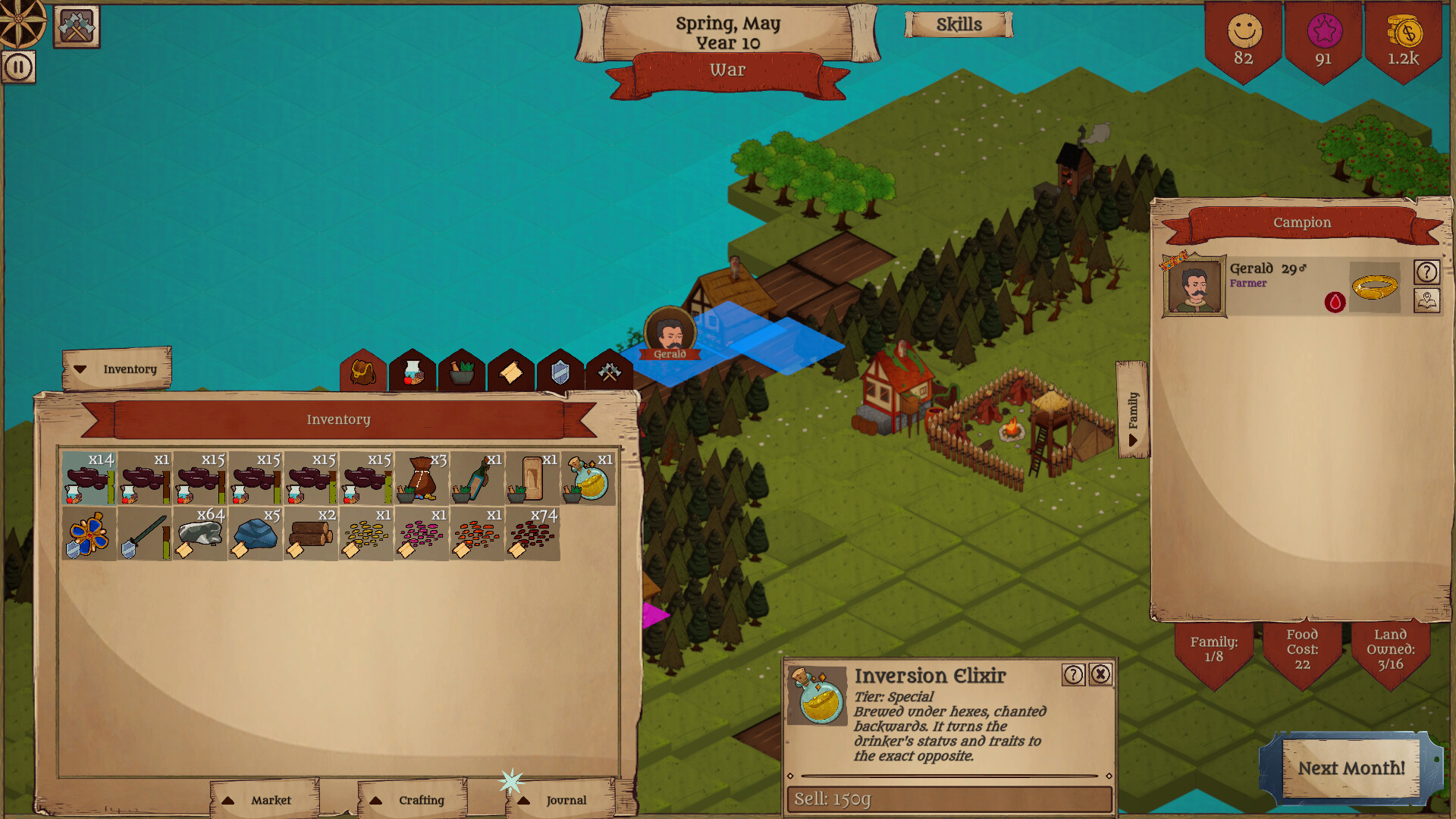
The most consistent structural criticism, echoed across reviewers with wildly different playtimes, is that the challenge and the strategic depth both collapse once the early survival puzzle is solved. "Once you learn the game its very linear. You just survive until you get rich," one reviewer summarises after five hours, and a much longer-playtime reviewer separately reports building a castle by year 15 on hard difficulty and finding the late game "too easy" regardless of starting conditions. Several reviews describe more than two hundred random events existing in the game's files without meaningfully deepening the actual decision space — the events add colour and variance to a run's story, but the underlying strategic choices remain the same run to run. That's a real gap between the game's apparent content volume and its actual replay depth, and it shows up specifically in reviewer language rather than as vague dissatisfaction.
Bugs that come back after they're fixed
The single most pointed criticism in the review sample, and the one carrying the most weight given its source, comes from a reviewer with over 2,300 hours logged: "It's hard to tell whether the developers actually play their own game or conduct proper testing. Their approach feels like a never-ending game of whack-a-mole — bugs get fixed, the user experience improves slightly, but then previously working features break, or entirely new issues surface." That's a specific, structural complaint about patch quality rather than a one-off bug report, and it's echoed by a separate reviewer who calls the game simply "full of bugs and issues" while still endorsing the underlying idea. Balance swings compound the concern — one player reports two infant deaths to "work related accidents" on easy mode within a single family line, an outcome that reads as a tuning failure on a supposedly forgiving difficulty setting rather than intended hardship.
None of this reads as an abandoned or unsupported project — the reviews reference an evolved, expanded game relative to an earlier public demo, and nothing in the sample suggests development has stopped. It reads instead as a genuinely promising economy-and-family sim whose foundational systems (the early economic puzzle, the generational skill inheritance) are stronger than its current stability and long-term pacing.
What the achievement data confirms and what it doesn't
The achievement list is genuinely useful here as a check against the "shallow once you learn it" complaint, and the picture it paints is mixed rather than one-sided. The completion curve does show real structural depth: milestones cluster into what look like three distinct content tiers (achievement IDs in the 1000s, 2000s and 3000s), with the earliest tier sitting in the 80–96% range, a middle band mostly in the 15–55% range, and the hardest late-tier achievements down in the 1–7% range. That's consistent with a genuinely long tail of harder objectives existing in the game, which cuts against the idea that there's simply nothing left to do once the early economy is solved.
What it can't settle is the separate, more specific complaint that the strategic decisions stay the same regardless of starting conditions — achievement completion measures whether players reached a state, not whether they took a different path to get there. Both things can be true at once: a wide, genuinely difficult set of long-term goals sitting on top of a strategy layer that converges on one dominant approach once discovered. That's the more precise version of the "linear once you learn it" complaint, and it's a real design gap rather than a contradiction with the achievement data.
Where this leaves it
Medieval Legacy's first several hours are a legitimately compelling medieval survival-economy puzzle, elevated by a dynastic structure that gives the numbers a human face most trading sims lack. Where it falls short is exactly where a lot of ambitious economy sims do: the late game doesn't hold up the promise of the early game, regression-prone patching undermines confidence in the current build's stability, and difficulty tuning can swing harder than the stated setting suggests it should. Recommended for players drawn specifically to the early-game tension and the family-legacy concept, with the expectation that the strategic depth and technical polish both have real room left to grow.
Pros and cons
Pros
- A genuinely compelling opening act — surviving as a struggling peasant family against food shortages, weather and market swings feels tense and puzzle-like in a way several reviewers compare favourably to The Guild series
- A dynastic skill-inheritance system means the family, not any single character, is the real unit of progression, giving the economy game a human throughline most trading sims don't have
- A wide achievement spread (96.1% down to 0.9%) across what look like several distinct content tiers suggests real structural depth for players who push past the early hours
- Buying low and selling on the black market for a premium is a genuinely satisfying core loop when the numbers are working in your favour
Cons
- Multiple reviewers, including one with over 2,300 hours logged, describe a "whack-a-mole" patching pattern where fixing one bug reintroduces or exposes another, rather than the game steadily stabilising
- The mid-to-late game is repeatedly described as trivially easy once the early economic puzzle is solved, with runs converging on the same winning strategy regardless of starting conditions
- Random events can swing punishingly harsh even on easy difficulty, including specific reports of child characters dying to events reviewers found disproportionate to the stated difficulty level
- Several reviewers want clearer mid-game goals and structure, reporting they reached a comfortable financial position with no clear sense of what to pursue next
Screenshots
-
Medieval LegacyImage: Ninetoplay via Steam -
Medieval LegacyImage: Ninetoplay via Steam -
Medieval LegacyImage: Ninetoplay via Steam -
How the review scores each part of the gameWanderer Editorial -
At a glanceWanderer Editorial -
The short versionWanderer Editorial