
Game review
Anonymous Hacker Simulator
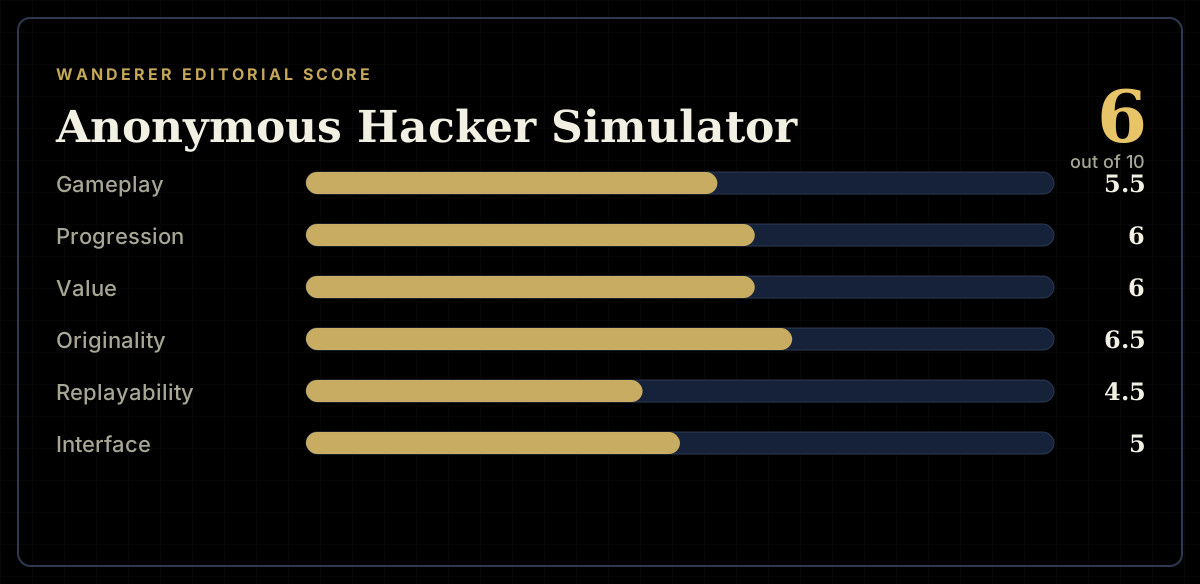
6 / 10
- Developer
- Sicarius
- Publisher
- G-DEVS.com
- Released
- 3 April 2024
- Platforms
- Windows
- Genre
- Hacking simulator
- Monetisation
- One-time purchase, no in-game store or additional currency purchases
- Players
- Single-player only
The short version
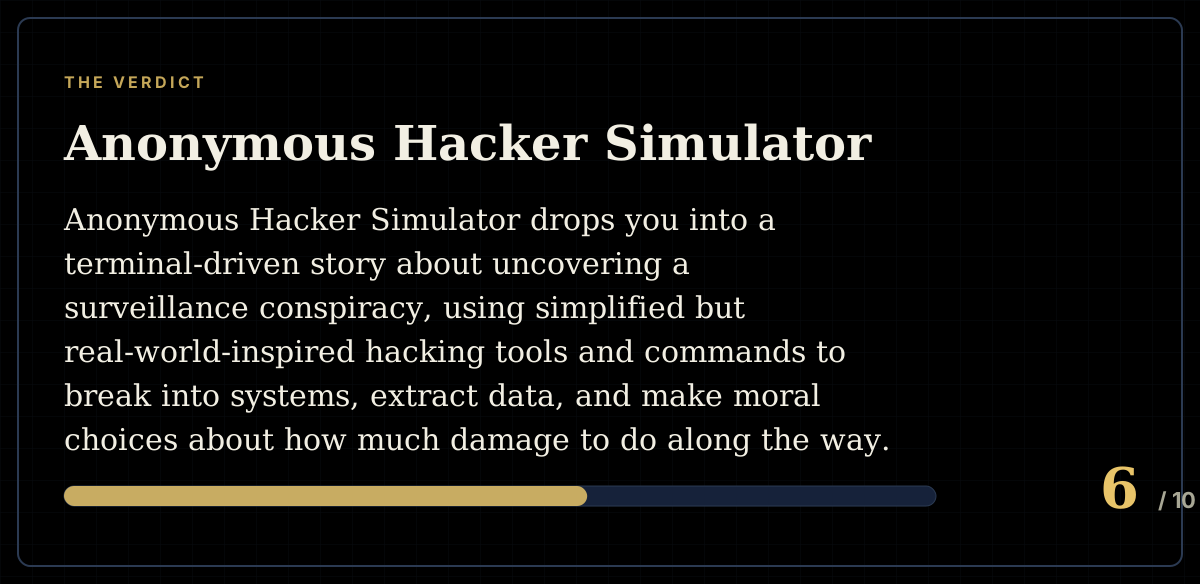
Anonymous Hacker Simulator drops you into a terminal-driven story about uncovering a surveillance conspiracy, using simplified but real-world-inspired hacking tools and commands to break into systems, extract data, and make moral choices about how much damage to do along the way. This review's sample includes genuinely credible praise from reviewers who work professionally in cybersecurity, several describing the simplified command syntax as a reasonably faithful, educational approximation of real techniques. What tempers that praise is a specific, recurring set of complaints: missing basic terminal functionality that genre veterans expect, a story structure considerably more linear and scripted than its marketing implies, and — confirmed directly through Steam's own disclosure requirements — the developer's official acknowledgment that some portrait and image art in the game was AI-generated.
Biggest strengths
- The simplified command-line hacking mechanics earn genuine, credible praise from multiple reviewers who work professionally in cybersecurity, several describing real educational value in the underlying concepts despite necessary simplifications
- The moral-choice system, letting players decide how much damage to inflict during hacks, draws specific praise for adding real weight to otherwise mechanical objectives
- The game is repeatedly described as unexpectedly immersive and engaging, with multiple reviewers reporting far longer play sessions than they initially intended
Biggest weaknesses
- Multiple reviewers, including several with professional cybersecurity backgrounds, report the terminal lacks basic functionality expected of the genre, including working directory navigation, file listing, and tab-completion, all present in comparable titles like Grey Hack
- The story and mission structure are described by several reviewers as considerably more linear and scripted than the "simulator" framing suggests, with most missions telling players exactly which tool and command to use rather than allowing genuine open-ended problem-solving
- Steam's own official AI Generated Content Disclosure confirms the developer's admission that some portraits and images in the game were AI-generated, a fact this review can state directly rather than relay as reviewer suspicion, and one that several reviewers cite as a specific reason for their negative recommendation
Who it's for: Players curious about hacking and cybersecurity concepts looking for an accessible, story-driven introduction rather than a true open-ended simulator, with realistic expectations about the terminal's simplified functionality.
Our recommendation: A genuinely credible, entertaining introduction to hacking concepts for curious newcomers and even some cybersecurity professionals, but players specifically wanting a deep, free-form command-line simulator like Grey Hack should look elsewhere — and know upfront that some of the game's art was AI-generated.
6 / 10
Anonymous Hacker Simulator hands you a terminal window and a story: a surveillance organization is up to something, and it's your job to hack your way into their systems, extract what you find, and decide along the way how much damage your intrusions cause. This review's sample takes the "simulator" framing seriously enough to bring in genuinely credentialed opinions from working cybersecurity professionals — and identifies, with equal clarity, exactly where that framing oversells what the game actually delivers.
Real professionals finding real value
The most distinctive praise in this review's sample comes from reviewers with genuine domain expertise. "As someone who actually does cybersecurity and some ethical hacking for a living, this game is a lot of fun. I'd have preferred if the tools were less simplified (since I've used basically all of the real tools, it meant I had to unlearn some of the tools I knew because they work" differently here, one reviewer writes, offering a specific, informed critique alongside genuine praise. Another, also working in the field, gives a considered assessment: "As someone in cybersec I am actually impressed at how realistic this game is. It's not a wow factor but going into it I certainly didn't expect to have this experience. Sure this is an extremely simplified version of the real deal but even then it's quite detailed." A third reviewer captures the appeal for a general audience: "I figured I'd try this game for a bit. Just an hour or so to get a feel for it. I played 14 hours straight," describing the puzzle-like satisfaction of identifying vulnerabilities as genuinely gripping.
Where the "simulator" label runs thin
Set against that credentialed praise, several reviewers — including ones equally versed in the subject matter — describe real functional gaps against genre peers. "If you're wanting a free-form hacking simulator, this is not the game for you. I went into this game expecting a simulator. What I got was a mostly linear story with some minor branches. Every mission is a set puzzle but basically tells you what to do to hack the target," one reviewer writes. Another gets specific about missing basics: "I wish was that the CLI was more like IRL where you can cd through the folders and also list files and also cat the .txt files." A third, having refunded the game over this exact issue, writes: "there was no ls and cd functionality in terminal. ls simply brings up the 'File Browser' and it didn't seem to display any of the folders or files that the ga[me expected]." That's a specific, concrete gap relative to the genre's more open-ended entries like Grey Hack, worth knowing about before buying with those expectations.
A confirmed fact, not a reviewer suspicion
Several reviewers raise concerns about AI-generated art in the game, and this review can confirm the underlying claim directly rather than relay it as speculation. Checking the game's own Steam store page reveals an official "AI Generated Content Disclosure" section, stating plainly: "The game contains portraits and images generated by AI." One reviewer specifically cites this as a dealbreaker: "I made the mistake of not checking the AI disclaimer before purchase and found that it's riddled with slop. The kicker here is there are some anti-AI themes present in the storyline" — a notable tension between the game's own narrative content and its production methods, worth flagging directly to prospective buyers with strong feelings on the subject either way.
Naive narrative beats and a specific, reproducible bug
A handful of reviewers flag specific storytelling choices that stretched credibility even within a simplified framework. "The point in the game that broke me was when you 'hack' the property rights of a private island and a sportscar from some guy, instantly converted to 10.000.000$ into your account, and then the game ordering you to spend all of it on a new villa for yourself," one reviewer writes, describing a moment that felt tonally jarring against the game's more grounded, educational stretches. Separately, at least one reviewer documents a concrete technical issue: "Do not do the gig's out of order, it will cause a soft crash and lock you out of moving forward" — a specific, reproducible bug worth knowing about for anyone tempted to explore missions non-sequentially.
What the achievement data confirms about engagement
Steam's own completion figures show a familiar shape: an early main-story milestone sits at a strong 85.5%, confirming most buyers get comfortably into the campaign, while several late-game optional achievements fall to just 1.0%. That's consistent with reviewer reports that the main story is accessible and engaging for most players, while genuinely deep optional content — side gigs, harder objectives — draws only a small, dedicated fraction of the audience back for full completion.
A studio genuinely invested in the genre
This review found strong evidence the developer treated this as a long-term project rather than a quick release. The partner-events feed documents a full pre-launch cycle stretching back to 2022, including a public prologue and demo well ahead of the April 2024 launch, followed by seven or more numbered patches and hotfixes through 2025. The studio went on to announce a follow-up hacking-genre title, HackHub, suggesting genuine specialization and continued investment in this specific niche rather than a one-off cash grab.
Final verdict
Anonymous Hacker Simulator earns genuinely credible praise from cybersecurity professionals for its simplified but reasonably faithful approach to hacking concepts, while falling short of true open-ended simulation with missing basic terminal functionality and a more linear story structure than its marketing suggests. Its confirmed use of AI-generated art is a fact worth knowing rather than a mere rumor, and should factor into your decision accordingly — but for players seeking an accessible, entertaining introduction to hacking concepts rather than a deep command-line sandbox, this remains a reasonable pick.
Pros and cons
Pros
- The simplified command-line hacking mechanics earn genuine, credible praise from multiple reviewers who work professionally in cybersecurity, several describing real educational value in the underlying concepts despite necessary simplifications
- The moral-choice system, letting players decide how much damage to inflict during hacks, draws specific praise for adding real weight to otherwise mechanical objectives
- The game is repeatedly described as unexpectedly immersive and engaging, with multiple reviewers reporting far longer play sessions than they initially intended
- Steam's own partner-events feed documents an exceptionally active, sustained support record, including a full pre-launch prologue and demo cycle and seven or more numbered patches with hotfixes in the months following release
- The developer went on to release a subsequent game in the same hacking-simulation space, HackHub, suggesting a studio with continued investment in and expertise around this specific genre niche
Cons
- Multiple reviewers, including several with professional cybersecurity backgrounds, report the terminal lacks basic functionality expected of the genre, including working directory navigation, file listing, and tab-completion, all present in comparable titles like Grey Hack
- The story and mission structure are described by several reviewers as considerably more linear and scripted than the "simulator" framing suggests, with most missions telling players exactly which tool and command to use rather than allowing genuine open-ended problem-solving
- Steam's own official AI Generated Content Disclosure confirms the developer's admission that some portraits and images in the game were AI-generated, a fact this review can state directly rather than relay as reviewer suspicion, and one that several reviewers cite as a specific reason for their negative recommendation
- At least one reviewer documents a specific, reproducible bug where completing gigs out of the intended order causes a soft crash that locks the player out of further progress
- Several reviewers describe the moment-to-moment gameplay as becoming repetitive after the first few hours, with limited variety in how later missions differ mechanically from earlier ones
Screenshots
-

Anonymous Hacker SimulatorImage: G-DEVS.com via Steam -

Anonymous Hacker SimulatorImage: G-DEVS.com via Steam -

Anonymous Hacker SimulatorImage: G-DEVS.com via Steam -
How the review scores each part of the gameWanderer Editorial -
The short versionWanderer Editorial