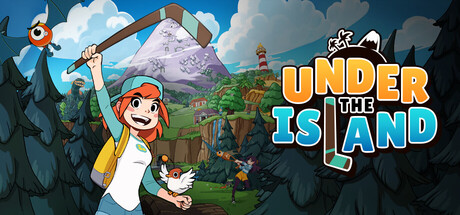
Game review
Under The Island Review
7 / 10
- Developer
- Slime King Games
- Publisher
- Top Hat Studios, Inc.
- Released
- 17 February 2026
- Platforms
- Windows
- Genre
- Action-Adventure
- Monetisation
- Paid
- Players
- Single-player
The short version
Under The Island wears its Link's Awakening and Minish Cap influences openly, and mostly earns the comparison through confident world design, generous exploration rewards, and a genuinely charming cast. It won't test anyone looking for a hard-fought action game, and its story stays fairly thin, but as a cosy, well-crafted top-down adventure it delivers exactly what it promises.
Biggest strengths
- Exploration-first design with genuinely rewarding secrets, upgrades, and shortcuts around every corner
- Charming pixel art, sound design, and a likeable central cast
- Generous, well-paced progression that keeps unlocking new tools and areas without ever feeling stingy
Biggest weaknesses
- Combat and puzzles are simple throughout, with almost no difficulty curve or optional hard mode
- Story and character writing stay fairly light, especially for the central relationship between Nia and Avocado
- No accessibility options such as puzzle skips or adjustable difficulty
Who it's for: Fans of classic top-down Zelda games, particularly Link's Awakening and Minish Cap, who want a gentle, exploration-first adventure rather than a combat or puzzle challenge.
Our recommendation: Recommended for genre fans, especially anyone nostalgic for Game Boy-era Zelda who wants a modern, patched, and polished take without the difficulty spikes.
7 / 10
A New Girl on a Sinking Island
Under The Island casts the player as Nia, a newcomer to the small, colourful Seashell Island, who teams up with local resident Avocado after learning the island is fated to sink beneath the ocean. From that fairly simple hook, the game opens into a classic top-down structure: an overworld dotted with secrets, a handful of dungeons gated by story progress, and a steady drip of new tools that each unlock a little more of the map. Anyone who's spent time with Link's Awakening or The Minish Cap will recognise the shape of it immediately, right down to the sword-swipe animations and the item-gated puzzle design, and the game doesn't try particularly hard to hide those influences. What it does instead is execute that formula with real craft, and the response from players backs that up — a 92% positive rating across 446 English reviews, with comparisons to Minish Cap and Link's Awakening showing up constantly and approvingly in the review sample.
The strongest praise across the review sample lands squarely on exploration. Rather than leaning on modern conveniences like quest markers or map pins, Under The Island trusts the player to poke around, and rewards that curiosity consistently — hidden chests, optional side content, and small environmental puzzles are scattered generously enough that wandering off the critical path rarely feels like wasted time. One reviewer specifically praised the choice not to force exploration through UI hand-holding, arguing it makes discovering the island's details feel earned rather than assigned. It's a design choice that pays off: several reviewers logged well past the game's expected ten-to-twelve-hour runtime chasing full completion, describing hours in the twenties without a hint of the padding that plagues weaker collectathon design.
Comfortable Rather Than Challenging
Where Under The Island departs most clearly from its inspirations is difficulty. Combat throughout stays simple — enemy patterns are readable, damage is forgiving, and by the midpoint of the game most reviewers report rarely feeling threatened even with a modest health bar. Puzzles follow the same pattern: item-gated and logical, but rarely taxing, with a few reviewers noting that speedrunner-minded players in particular may find them a little too straightforward. This isn't a flaw so much as a clear design decision, and the reviews are split on how much it matters. Some players explicitly welcomed it, describing the game as an ideal entry point for newer or younger players getting into the genre; others, expecting a tougher Zelda-like in the Souls-adjacent style that's become common in recent years, came away a little underwhelmed, with one review noting that none of the game's systems ever felt genuinely exciting even though nothing about the craftsmanship was in question.
That gentleness extends to structure as well. Fast travel and unlockable shortcuts are available early and often, save points are frequent and support three separate profiles, and the game goes out of its way to warn players before entering areas with tougher enemies. It's a design philosophy clearly built around comfort and momentum rather than tension, and it succeeds on those terms — this is a game that wants you to keep moving forward and keep finding things, not one that wants to make you sweat for the privilege.
Where the Writing and Interface Lag Behind
The Nia-and-Avocado relationship at the story's centre gets less room to breathe than the world around it. Several reviewers who otherwise loved the game noted that the writing stays fairly light, with the emotional stakes of a literally sinking island never quite matched by the character work carrying the plot forward. It's not a dealbreaker in a genre where a thin story is often part of the package, but it is a noticeable gap between how much care clearly went into the world and how little went into deepening the people in it.
A smaller but recurring complaint concerns the interface. More than one reviewer flagged a font choice that makes certain digits hard to tell apart even after a pre-release adjustment, and a few mentioned minor collision frustrations, such as Nia's movement catching awkwardly on ladders or scenery. None of these are serious issues on their own, but they're the kind of small friction points that stand out precisely because the rest of the presentation — the pixel art, the music, the animation work — is handled so confidently. There are also no accessibility accommodations like adjustable difficulty or puzzle-skip options, which is worth knowing for anyone who might need them, particularly given how minigame-heavy some optional content can get; a few reviewers noted the minigames come with little to no in-game explanation of their rules.
A Small Studio's Confident Debut
The review sample repeatedly credits an active post-launch patching cycle, with one particularly detailed review referencing a fourth patch that ironed out most of the bugs present at launch. That kind of ongoing support, paired with the game's already-strong foundations, has left Under The Island in a noticeably stronger state today than it likely was in its first week. For a game built by what reviewers describe as a small team, the amount of detail packed into the world — distinct regions, a reasonably varied cast of townsfolk, layered side content — is genuinely impressive, and more than one reviewer expressed hope for a sequel or a follow-up game in the same style.
Verdict
Under The Island doesn't reinvent the Zelda-like formula, and it isn't trying to. What it offers instead is a lovingly built, generously paced, low-difficulty take on Link's Awakening-style exploration, executed with enough craft in its art, music, and world design to stand comfortably alongside the games it's clearly inspired by. Players hoping for a stiff challenge or a story with real emotional weight should look elsewhere, but anyone chasing that specific feeling of a Game Boy-era Zelda adventure, modernised and polished, will likely find exactly what they're looking for here.
Pros and cons
Pros
- Exploration-first design with genuinely rewarding secrets, upgrades, and shortcuts around every corner
- Charming pixel art, sound design, and a likeable central cast
- Generous, well-paced progression that keeps unlocking new tools and areas without ever feeling stingy
- Actively patched post-launch, with several rough edges reportedly smoothed out since release
Cons
- Combat and puzzles are simple throughout, with almost no difficulty curve or optional hard mode
- Story and character writing stay fairly light, especially for the central relationship between Nia and Avocado
- No accessibility options such as puzzle skips or adjustable difficulty
- A handful of interface rough spots, including a font that makes some digits hard to tell apart and occasional awkward collision against scenery
Screenshots
-
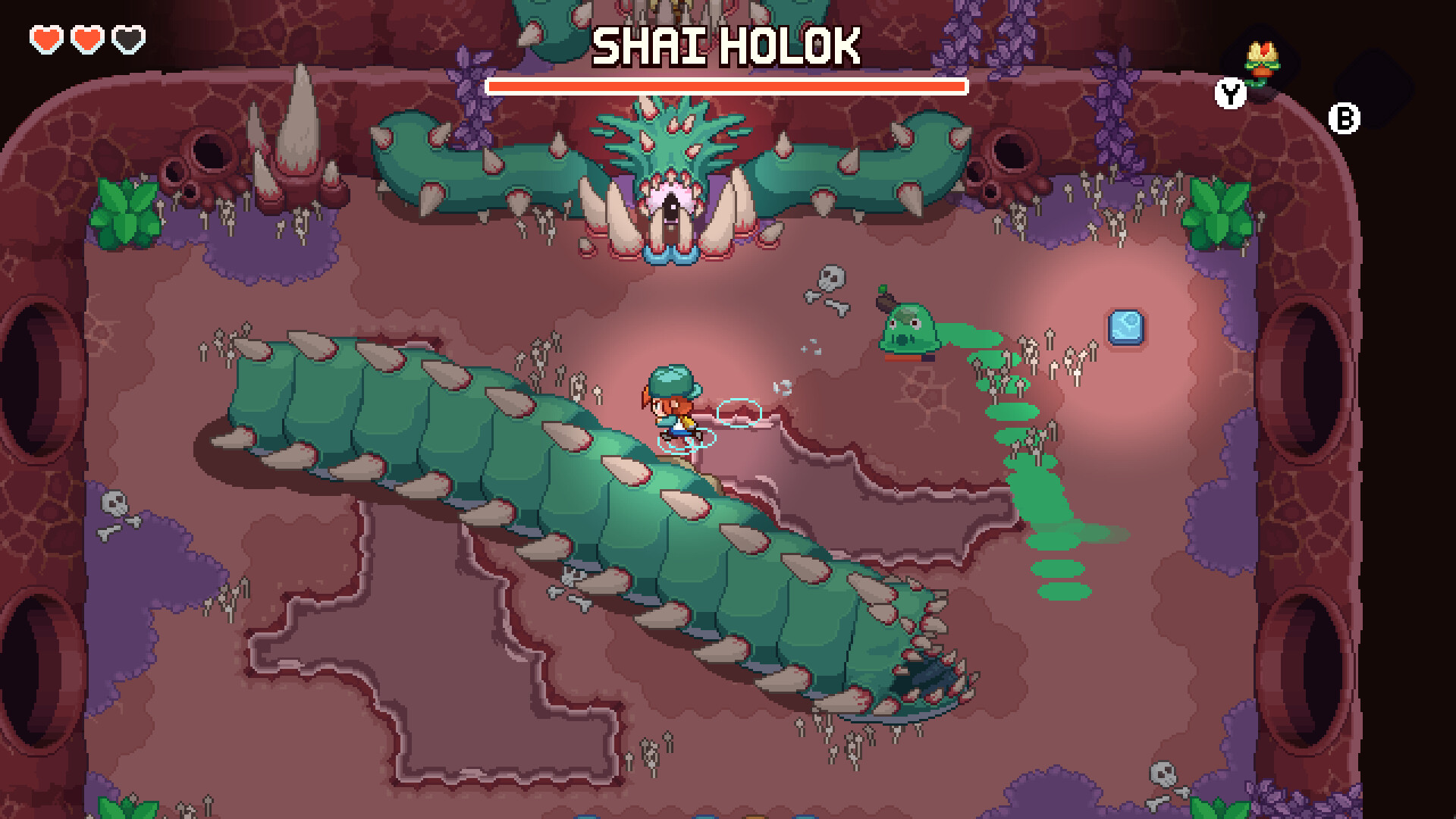
A boss encounter with Shai Holok — the review sample repeatedly notes boss fights are few in number and rarely difficultTop Hat Studios, Inc. -
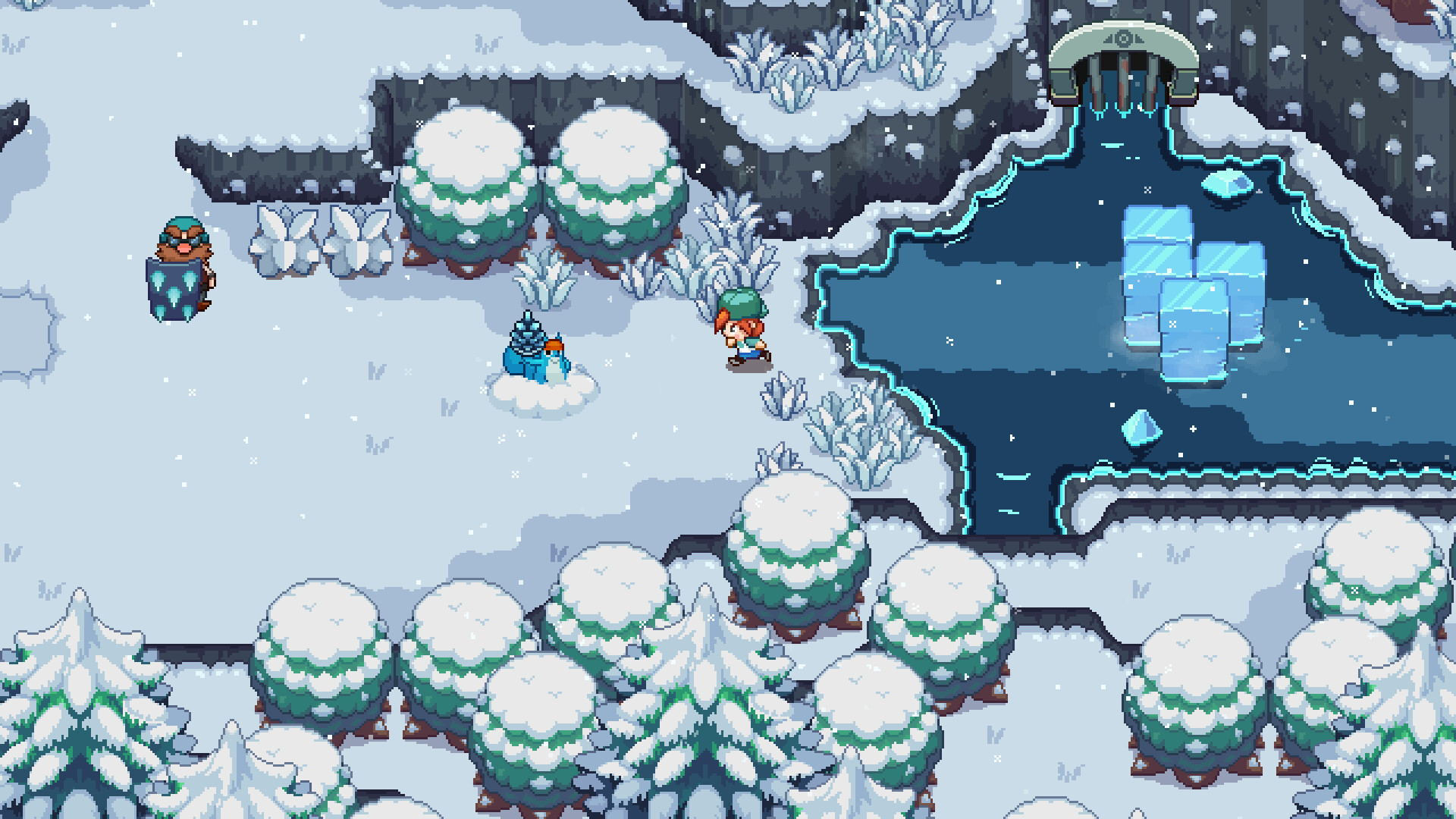
One of the island's varied regions, part of the exploration-first world design reviewers praised mostTop Hat Studios, Inc. -
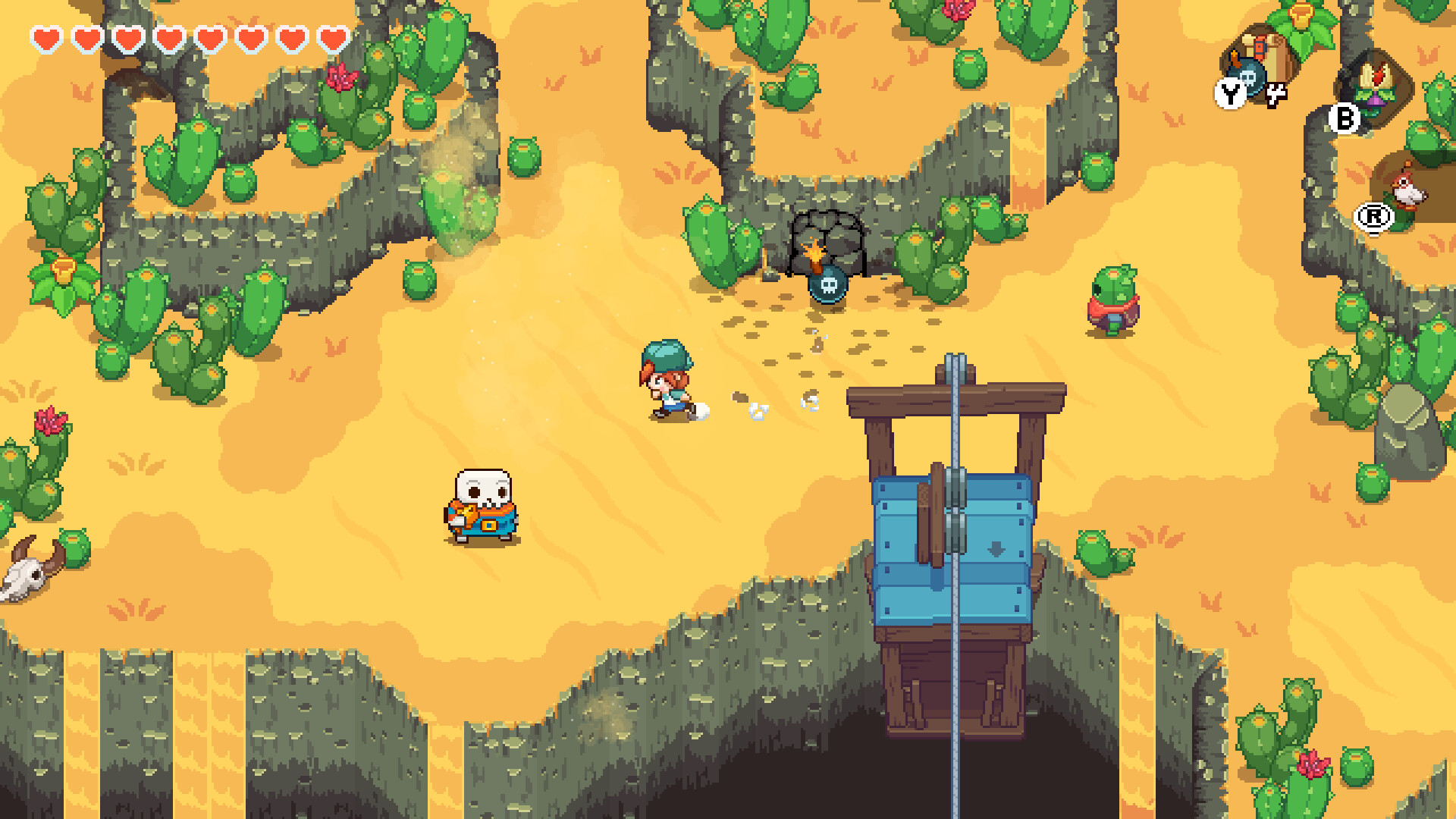
The desert region, one of several distinct biomes that reward players for wandering off the main pathTop Hat Studios, Inc. -
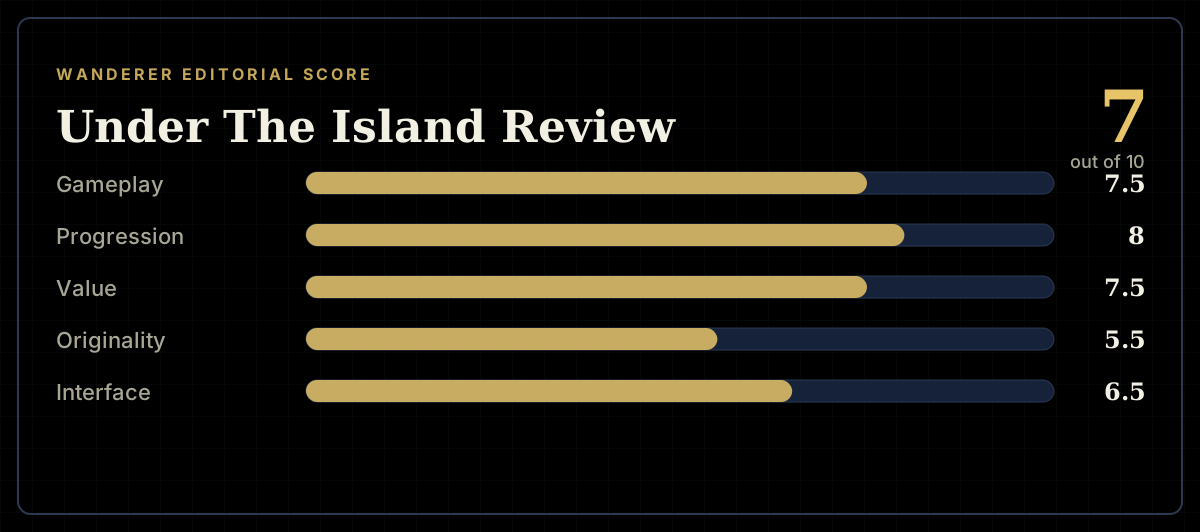
How the review scores each part of the gameWanderer Editorial -
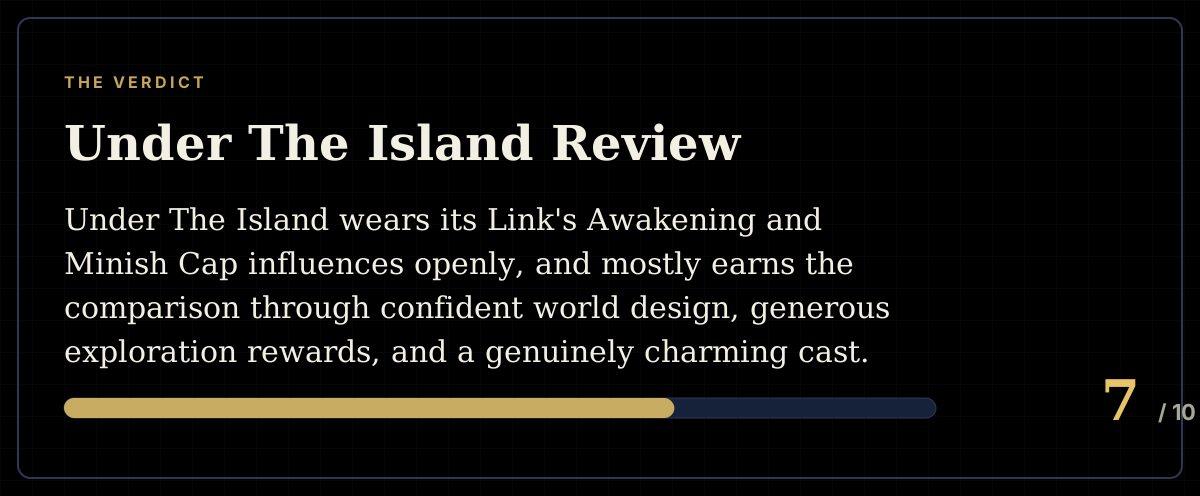
The short versionWanderer Editorial