Game review
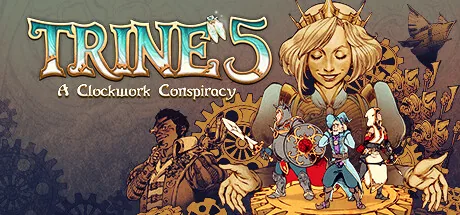
Trine 5: A Clockwork Conspiracy
7 / 10
- Developer
- Frozenbyte
- Publisher
- THQ Nordic
- Released
- 31 August 2023
- Platforms
- Windows
- Genre
- Fantasy Puzzle-Platformer
- Monetisation
- One-time purchase. No in-app purchases, ads or premium currency.
- Players
- Online, LAN and shared-screen co-op for up to three players, plus Steam Remote Play Together
The short version
Trine 5 sends the wizard Amadeus, the thief Zoya and the knight Pontius back into another storybook fantasy kingdom of physics puzzles, platforming and light combat, in the fifth entry of Frozenbyte's long-running co-op series. Steam has it at Very Positive -- 2,248 of 2,500 reviews (89.9%), and 764 of 846 in English (90.3%) -- and the single most consistent word across virtually every review, positive or negative, is some version of "gorgeous." Nobody disputes that this is the best-looking Trine game yet.
What a meaningful share of that same review base disputes, in detail and across three full years of dated reviews from launch week in September 2023 through mid-2026, is whether the series' signature feature -- co-op -- actually works. 28 of the 82 English-language negative reviews sampled for this piece raise desyncs, lost save progress, freezes after cutscenes or connection failures by name, several explicitly noting the problems were still present two years after launch with no fix in sight.
Biggest strengths
- Extremely consistent praise for the art direction, lighting and music across nearly every review in the sample, positive and negative alike -- reviewers call it the best-looking entry in the series without much dissent
- A genuinely large, varied campaign -- 20 levels, three distinct playable characters with their own ability trees, and a reasonably smooth achievement-completion curve suggesting most owners who start it do make real progress
- Full controller support and shared-screen local co-op, which several reviewers say is where the game plays most reliably
Biggest weaknesses
- Online co-op reliability is the single most repeated specific complaint in the negative review sample, spanning launch week through mid-2026 with no apparent fix -- desyncs, lost skill allocations, crashes after cutscenes and one report of collectible progress being wiped twice
- Puzzle design leans more abstract and less forgiving than earlier games, and several reviewers say the "never" hint setting still interrupts more than intended
- The mage's abilities can solo the large majority of puzzles on their own, several reviewers say, leaving the ranger and warrior with comparatively little to do in a three-player group
Who it's for: Existing Trine fans wanting more of the series' co-op puzzle-platforming in its most visually accomplished form, and newcomers who want a beautiful, forgiving single-player fantasy adventure. A poor fit for anyone planning to rely on online co-op specifically, given how consistently that mode is reported as unstable years after release.
Our recommendation: Strong on sale, and currently 60% off. Play it solo or in local couch co-op if possible -- that's where the reported problems are rarest -- and go in expecting the puzzles to lean more abstract and less forgiving than earlier entries.
7 / 10
The best-looking Trine yet, by wide agreement
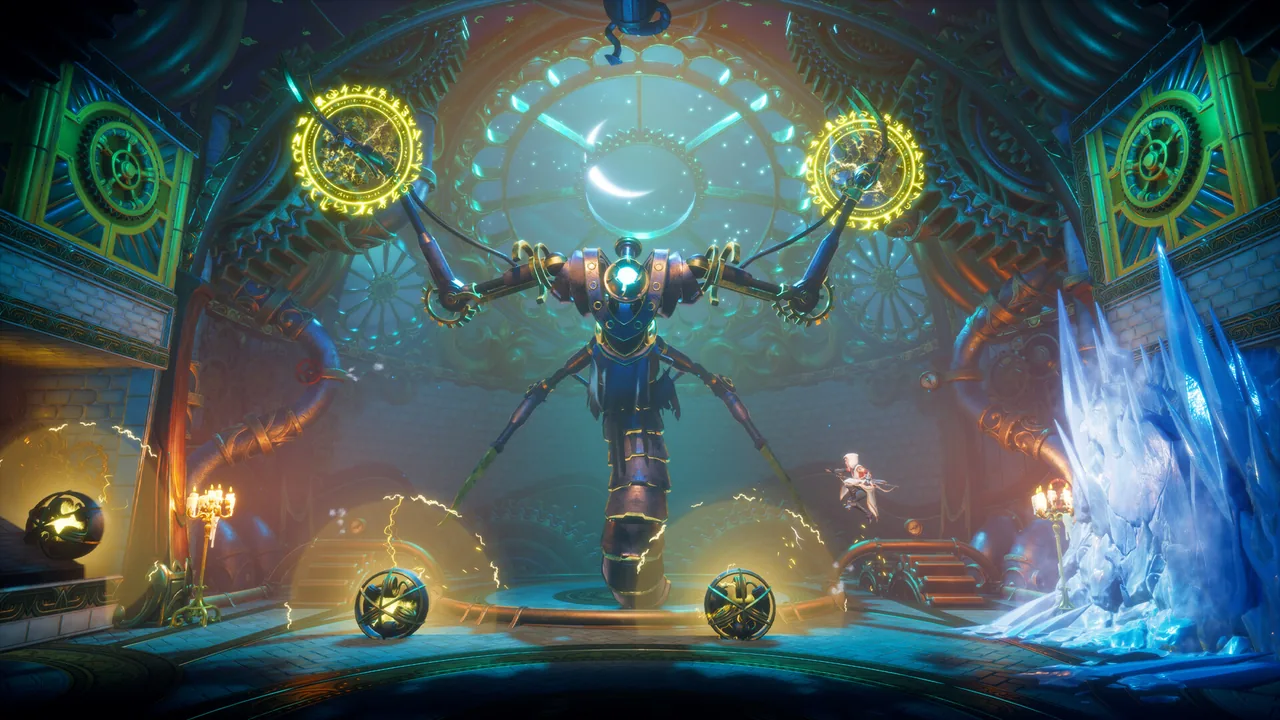
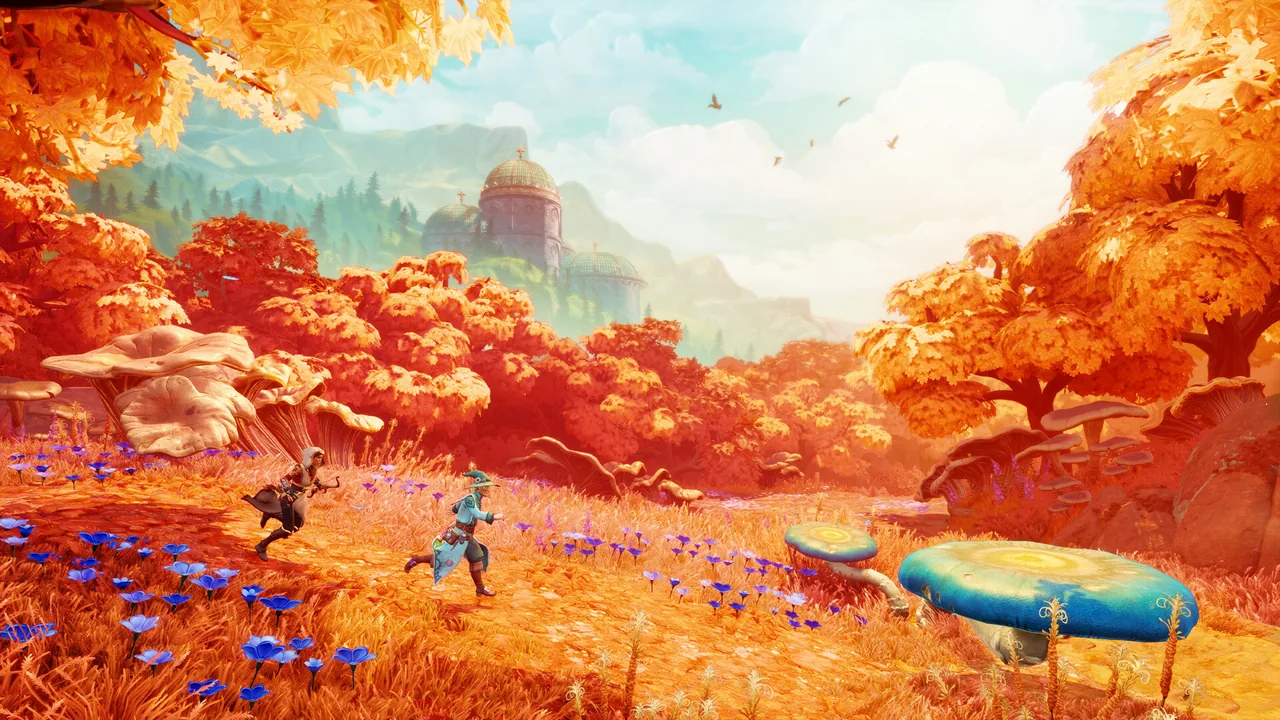
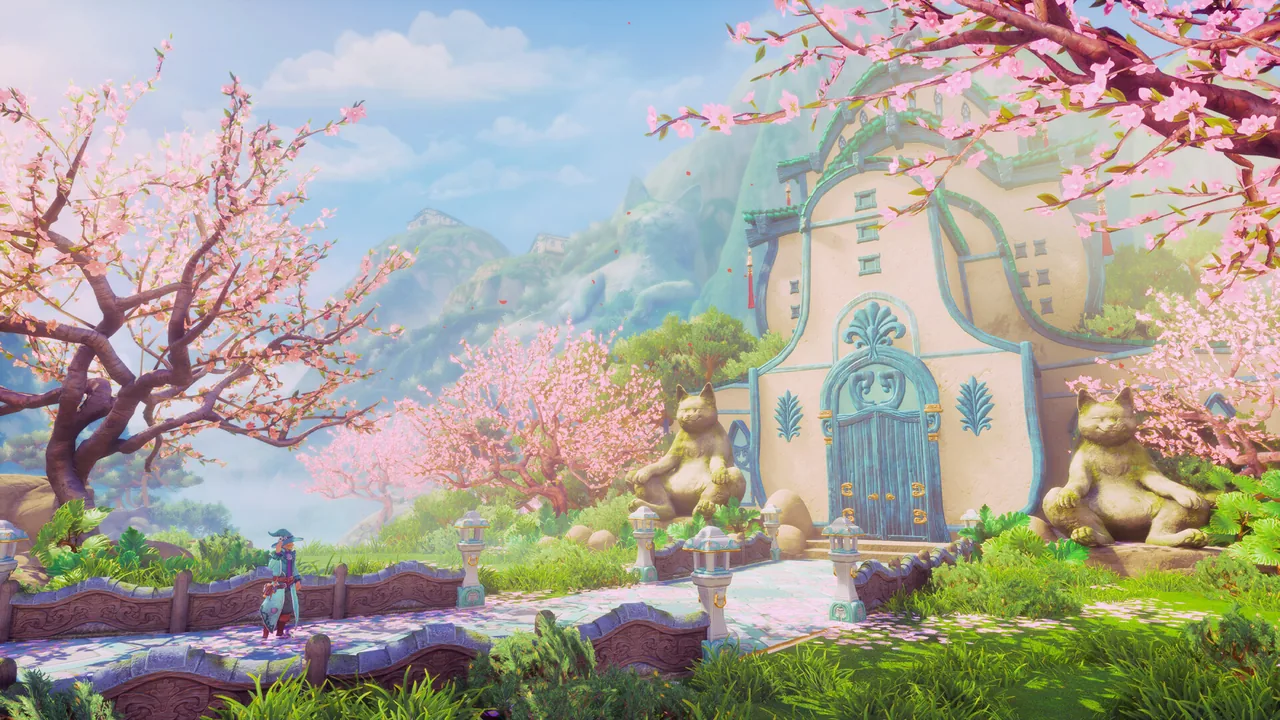
There isn't much dispute about this part: across the review sample gathered for this piece, art direction is the one thing almost nobody argues about. "The visuals are gorgeous and polished," begins a representative negative review before pivoting to its actual complaint; a positive review opens "This game looks absolutely stunning. It's gorgeous." Reviewers who otherwise call the game disappointing compared to earlier entries still routinely carve out a sentence for the lighting, the storybook art style or the music. Frozenbyte has made five of these games now, refining the same 2.5D fairytale aesthetic each time, and by the fifth attempt the visual craft is clearly not in question for anyone in the sample.
Genre-wise, Steam tags this Action, Adventure, Indie and RPG — the RPG tag is generous. There's a light skill tree per character that grows with the story, but there's no stat build, no gear progression and no branching class system; Trine 5 is, as it has always been, a co-op physics-puzzle platformer with light combat, where you control a wizard who can conjure boxes and levitate objects, a thief who fires grappling arrows, and a knight who tanks and smashes. Playing solo, you can freely swap between all three; playing co-op, up to three people each take one.
The problem is the thing the series is built on
Co-op is Trine's whole identity — it's been a couch-and-online co-op puzzle series since the original in 2009 — which is what makes the pattern in the negative reviews worth taking seriously rather than dismissing as routine launch grumbling. Of the 82 English-language negative reviews sampled for this piece, 28 — more than a third — raise a specific multiplayer technical problem by name, and they are not clustered around launch week. "Despite the game being out for 2 years at this point, multiplayer is still an unpleasant experience. If you're not the host, every time you join the game at your last saved point, you don't get to keep your skill allocation," reads a review from October 2025. "Multiplayer desync all the time requiring a game reboot to be able to play together again. Last update being 9 months old, it will never be fixed," reads one from July
- Others, spread from December 2023 through 2026, describe crashes after every cutscene,
connection failures specific to "friends only" lobbies, ten-second-plus ping to one player in a session, and — in one case — collectible progress reset twice across separate incidents. This is not a single loud complaint; it's the same category of problem, independently observed, across nearly three years of a game whose entire pitch is "play this with people."
That doesn't mean co-op never works — plenty of positive reviews describe genuinely happy sessions with partners and family, and local, same-screen co-op is mentioned as noticeably more stable than online play in several reviews on both sides of the recommendation line. But anyone planning specifically on online co-op, rather than a couch session, should treat the persistence and spread of these reports as a real risk rather than bad luck.
Puzzles that ask more, and don't always explain themselves
The second recurring complaint is about the puzzle design itself, and it's more a matter of taste than a bug — but it's raised often enough to be worth flagging clearly. Several longtime fans describe this entry's puzzles as more abstract and less open to creative solutions than earlier games in the series, where Trine's appeal was often "there are five ways to solve this and they're all valid." "The puzzles seem very boring compared to all earlier entries in the series. Obviously limited to prevent you from solving them creatively," reads one; "a lot of them require such abstract thinking that there's only one solution," reads another. Compounding this, more than one reviewer notes a contradiction in the hint system: setting "puzzle assist time" to Never is supposed to mean no hints, but several say the game still nudges players more than that setting implies.
There's also a specific and repeatedly-mentioned balance problem in three-player groups: the mage's combination of levitation, box-conjuring and hover abilities can solve the large majority of the game's puzzles solo, which several reviewers say leaves the ranger and especially the warrior with comparatively little meaningful puzzle-solving to do, turning some multiplayer sessions into one person working while two wait. Combat draws milder but real criticism too — several reviewers call it the series' weakest element as always, with a handful of specific boss fights singled out as punishing spikes that clash with the otherwise forgiving platforming pace.
How far people actually get
Global Steam achievement data offers a useful, dispassionate check on all of the above. Across the game's 20 story levels, completion falls in a smooth, expected curve — 88.4% of players finish level one, and that declines steadily to 28.5% who complete the full campaign, a normal shape for a 15-to-30-hour co-op adventure rather than evidence of mass abandonment early on. Full-completion achievements — collecting every experience orb, letter or cosmetic across all 20 levels — sit much lower, around 7-9%, which tracks with how much of the review sample treats 100%-style completionism as its own separate, more frustrating undertaking (and, per the reports above, one occasionally undermined by save-related bugs). Read together, the data supports a fairly specific picture: most buyers who start Trine 5 do see meaningful chunks of it, but full completion is rare even by the standards of the genre.
Verdict
Trine 5 is a genuinely gorgeous, reasonably substantial entry in a franchise that clearly still has an audience that loves it — Very Positive at 90% isn't a fluke, and the presentation alone earns a large share of that. But the specific, repeated, multi-year pattern of online co-op instability in a series whose entire identity is co-op is a real and current risk, not a fixed launch hiccup, and the puzzle design's shift toward more abstract, less creatively-solvable challenges will land differently depending on what you came to the series for. At full price it's an easy game to hesitate on for exactly the reasons above; at the 60%-off price currently on Steam, played solo or on a shared couch rather than online, it's a much easier recommendation.
Pros and cons
Pros
- Extremely consistent praise for the art direction, lighting and music across nearly every review in the sample, positive and negative alike -- reviewers call it the best-looking entry in the series without much dissent
- A genuinely large, varied campaign -- 20 levels, three distinct playable characters with their own ability trees, and a reasonably smooth achievement-completion curve suggesting most owners who start it do make real progress
- Full controller support and shared-screen local co-op, which several reviewers say is where the game plays most reliably
- A real, if divisive, attempt to push the puzzle design further than earlier entries, which a meaningful share of reviewers say pays off once you adjust to it
Cons
- Online co-op reliability is the single most repeated specific complaint in the negative review sample, spanning launch week through mid-2026 with no apparent fix -- desyncs, lost skill allocations, crashes after cutscenes and one report of collectible progress being wiped twice
- Puzzle design leans more abstract and less forgiving than earlier games, and several reviewers say the "never" hint setting still interrupts more than intended
- The mage's abilities can solo the large majority of puzzles on their own, several reviewers say, leaving the ranger and warrior with comparatively little to do in a three-player group
- A vocal minority of longtime fans call the story and writing weaker than previous entries, and describe the game as repeating the series' established formula rather than moving it forward
- Full price (NZ$54.95) draws more value complaints than the current discounted price does
Screenshots
-
Trine 5: A Clockwork ConspiracyImage: THQ Nordic via Steam -
Trine 5: A Clockwork ConspiracyImage: THQ Nordic via Steam -
Trine 5: A Clockwork ConspiracyImage: THQ Nordic via Steam -
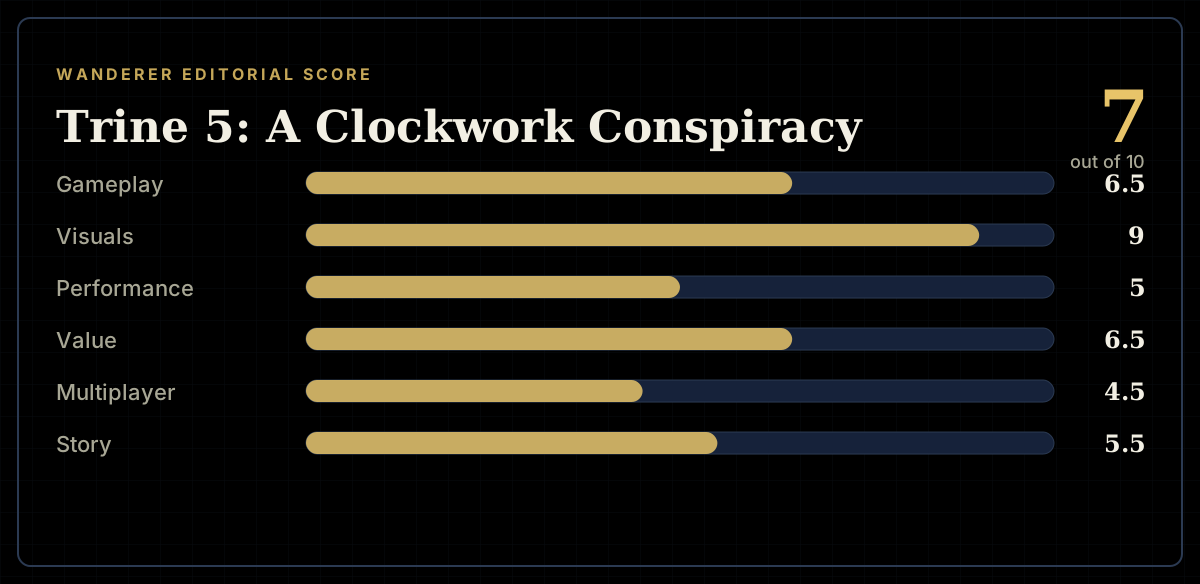
How the review scores each part of the gameWanderer Editorial -
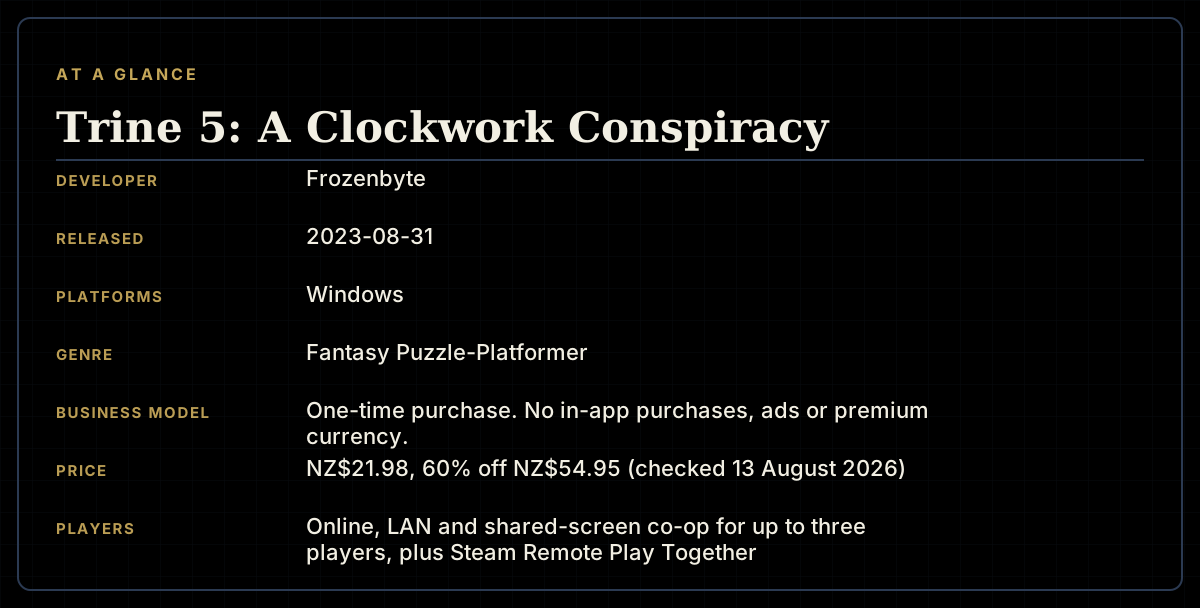
The essentials at a glanceWanderer Editorial -
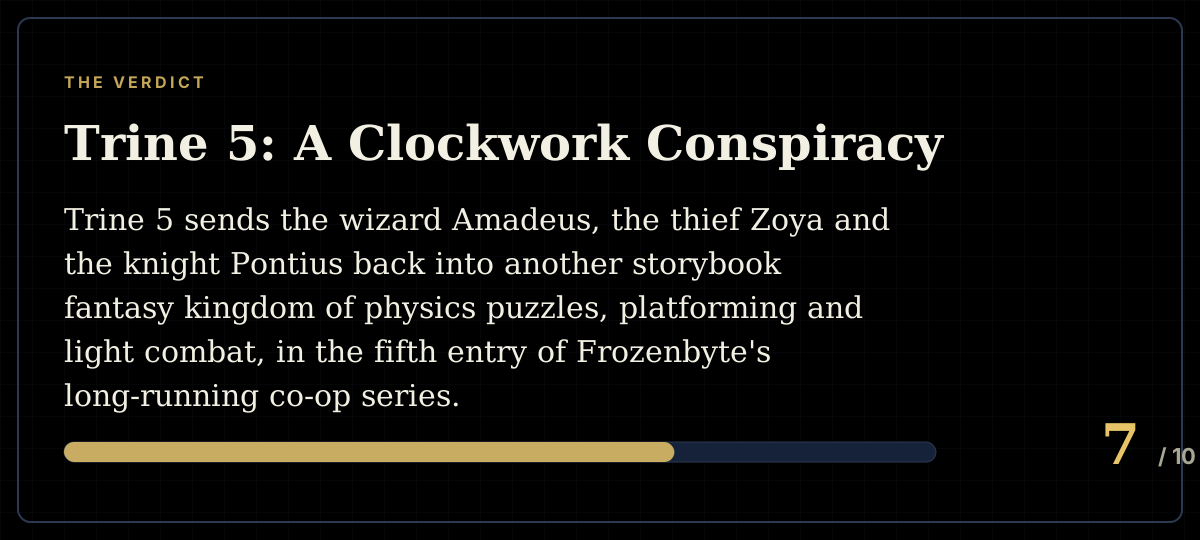
The final verdictWanderer Editorial