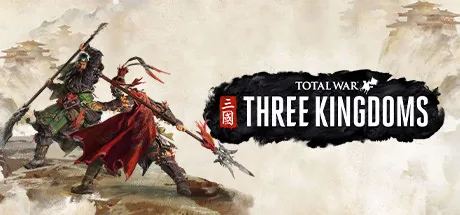
Game review
Total War: Three Kingdoms
7 / 10
- Developer
- Creative Assembly
- Publisher
- SEGA
- Released
- 23 May 2019
- Platforms
- Windows, macOS, Linux
- Genre
- Strategy
- Monetisation
- One-time purchase plus 12 pieces of paid DLC, several of which reviewers say gate previously-included playable characters
- Players
- Online multiplayer battles and campaigns alongside the single-player campaign
The short version
Total War: Three Kingdoms is Creative Assembly's turn-based empire-building and real-time battle strategy game set in third-century China, built around a deep diplomacy system (the "Guanxi" relationship mechanic) and offering two distinct campaign modes: a historically grounded "Records" mode and a more fantastical, hero-driven "Romance" mode. It sits at 84% positive ("Very Positive") across 23,076 English-language Steam reviews, and this review read the 100 most-helpful negative reviews alongside the 100 most recent English reviews.
The campaign systems are genuinely well regarded — multiple negative reviewers still call it "one of the better Total War games" before explaining their complaint. Two separate, dateable issues pull the score down. First, a 2019 controversy: reviewers describe Creative Assembly banning or restricting certain user mods after partnering with NetEase to publish the game in China, a decision a large cluster of launch-era negative reviews specifically object to on principle rather than over gameplay. Second, an ongoing pattern reviewers describe as abandonment: a paid DLC roadmap that was meant to expand the game era by era but reviewers say stopped short of covering the actual Three Kingdoms period the title promises, alongside persistent crash and black-screen bugs some reviewers report as recently as 2026. A "Boot Issue Fix" patch did ship in October 2025, addressing one specific long-standing complaint.
Biggest strengths
- A genuinely deep diplomacy system (the Guanxi relationship mechanic) multiple negative reviewers single out as one of the series' best even while criticising other aspects
- Two distinct campaign modes — a historically grounded "Records" mode and a supernatural, hero-driven "Romance" mode — giving real variety within one game
- Extremely high replay value reported across the negative sample itself, with several critical reviewers logging 300, 600 and even over 1,600 hours
Biggest weaknesses
- A 2019 controversy, reported across a large cluster of launch-era reviews: Creative Assembly restricted or banned certain user mods after partnering with NetEase to publish the game in China, which many reviewers treat as a standing reason to withhold recommendation regardless of gameplay quality
- A paid DLC structure reviewers repeatedly call aggressive, with characters some had already played moved behind later paywalls; one 2021 review reports roughly 80% of playable content locked without every DLC pack purchased
- Reviewers describe Creative Assembly ending the DLC roadmap before it reached the actual Three Kingdoms period the base game is named for, calling the title incomplete relative to its own advertised arc
Who it's for: Grand strategy and Total War fans who want deep diplomacy and two distinct ways to play a single setting — buyers should budget for DLC beyond the NZ$67.95 base price if they want the full advertised character roster, and check current crash reports before buying.
Our recommendation: The core campaign and diplomacy systems are among the series' best — worth it for strategy fans prepared to either buy into the DLC or accept a roster gap, and aware of the modding and development history around it.
7 / 10
Introduction
Total War: Three Kingdoms is Creative Assembly's turn-based empire-building and real-time battle strategy game, published by SEGA and released on 23 May 2019 at NZ$67.95. Set in third-century China as the Han dynasty collapses, it lets players unite the land through diplomacy, economics and warfare, offering a historically grounded "Records" campaign and a more fantastical, hero-driven "Romance" campaign built around near-mythical duels and larger-than-life warlords. It sits at 84% positive ("Very Positive") across 23,076 English-language Steam reviews. This review read the 100 most-helpful negative reviews of 3,648 total, plus a sample of the 100 most recent English reviews.
A campaign system reviewers still respect
Even among reviewers marking it down, the underlying design draws real praise. "The campaign is good(ish), with more diplomatic and economic options compared to previous Total War titles," reads one launch-era review, despite its overall thumbs-down. Another: "Game was not bad at all, one of the better Total Wars... AI wasn't horrendous, the gameplay wasn't too bad." The strongest signal of lasting engagement is buried in the negative sample itself: reviewers reporting 202, 326, 1,028 and even 1,636 hours played, several explicitly saying they had genuine fun before their specific complaint soured them on recommending it.
The 2019 modding controversy
A large cluster of launch-era negative reviews centres on a single, specific decision: Creative Assembly restricting or banning certain user-made mods after partnering with NetEase to publish the game in China. "First there was the censoring of mods and mod creators. Then there was the NetEase partnership," reads one review with 131 hours logged, also citing a regional price hike across the developer's historical catalogue. Another, more bluntly: "Sells blood as DLC. Sells Chinese players out to [NetEase]. Sanitizing mods and banning mods that dont fit their family friendly vision." A third sums up the pattern several reviewers repeat almost verbatim: "Obligatory 'Mod Ban = Negative Review' review. You got my money, but you won't get my endorsement!" This review is reporting what these reviewers describe rather than independently verifying every specific claim about the moderation policy, but the volume and consistency of independent reviewers naming the same NetEase partnership and the same modding restriction is a real, dateable pattern rather than an isolated complaint.
"Abandoned" before finishing its own story
A second, more recent pattern runs through 2022-2026: reviewers arguing Creative Assembly stopped supporting the game before its DLC roadmap reached the period the title is actually named for. "They didn't get to the time where the Three Kingdoms proper started before ceasing DLC implementation," reads a 2025 review with over 1,000 hours logged, calling the gameplay itself "wonderful" despite the criticism. Another, in 2026: "Only two of the three 'Three Kingdoms' got their mechanics expanded before CA abandoned development." This sits alongside a long-running, separate complaint about how DLC is structured: "Characters that I was just playing yesterday were randomly put behind a paywall now," reads a 2022 review with 1,636 hours played. An earlier, very-high-vote review states the scale bluntly: "be prepared to have... 80% of the content just showing as a lock symbol" without buying every DLC pack.
Crashes that outlasted years of patches — partly fixed
Technical stability is the other recurring 2025-2026 complaint. "The game consistently crashes during an AI player turn," reads one 2025 review, describing a campaign left permanently locked. Another: "Freezes on startup... this seems to be a known issue with many people reporting this never got fixed." This review checked the game's own Steam news feed and found a "Boot Issue Fix" patch dated 30 October 2025 — a genuine, dated response to part of this complaint — though reviews describing mid-campaign crashes continued into 2026, suggesting the fix addressed the launch black-screen issue specifically rather than all reported instability.
Verdict
Total War: Three Kingdoms remains one of the more structurally ambitious entries in its series — its diplomacy system and dual campaign modes draw real, specific praise even from reviewers recommending against it, and the hundreds to thousands of hours logged across its own negative sample are hard evidence of a genuinely engaging core game. What holds the score down is a combination of a real 2019 controversy over modding restrictions tied to a Chinese publishing partnership, a DLC structure reviewers across several years call exploitative and incomplete relative to the title's own promise, and technical stability problems only partly addressed by a 2025 patch. Worth it for the campaign systems alone if you go in aware of the DLC structure and its history — budget for that beyond the base price, or accept the gap in the roster.
Pros and cons
Pros
- A genuinely deep diplomacy system (the Guanxi relationship mechanic) multiple negative reviewers single out as one of the series' best even while criticising other aspects
- Two distinct campaign modes — a historically grounded "Records" mode and a supernatural, hero-driven "Romance" mode — giving real variety within one game
- Extremely high replay value reported across the negative sample itself, with several critical reviewers logging 300, 600 and even over 1,600 hours
- Recent English reviews hold at 82% positive, close to the 84% lifetime figure — sentiment has stayed broadly stable rather than declining sharply
Cons
- A 2019 controversy, reported across a large cluster of launch-era reviews: Creative Assembly restricted or banned certain user mods after partnering with NetEase to publish the game in China, which many reviewers treat as a standing reason to withhold recommendation regardless of gameplay quality
- A paid DLC structure reviewers repeatedly call aggressive, with characters some had already played moved behind later paywalls; one 2021 review reports roughly 80% of playable content locked without every DLC pack purchased
- Reviewers describe Creative Assembly ending the DLC roadmap before it reached the actual Three Kingdoms period the base game is named for, calling the title incomplete relative to its own advertised arc
- Persistent crash and black-screen-on-launch bugs reported as recently as 2026, though a dedicated "Boot Issue Fix" patch shipped in October 2025 addressing part of the problem
- Campaign AI is criticised by a meaningful share of reviewers as playing by inconsistent rules compared to the player, particularly around economic and siege mechanics
Screenshots
-
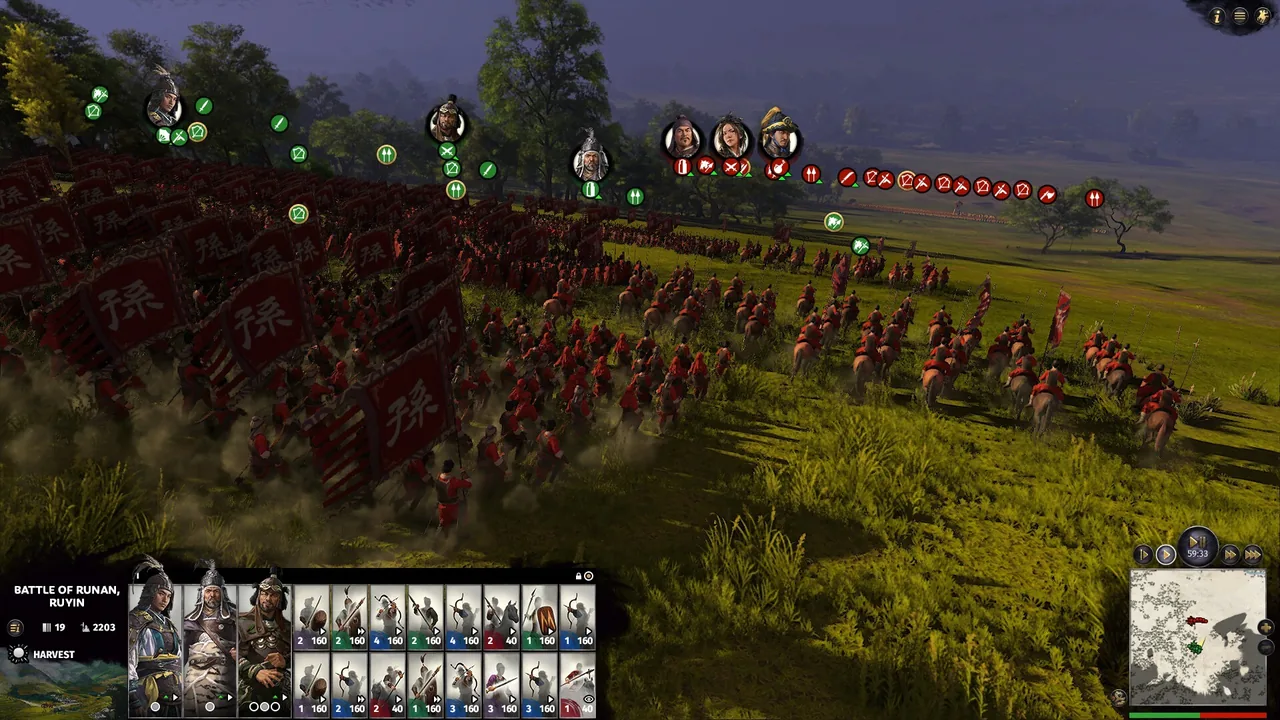
Total War: THREE KINGDOMSImage: SEGA via Steam -
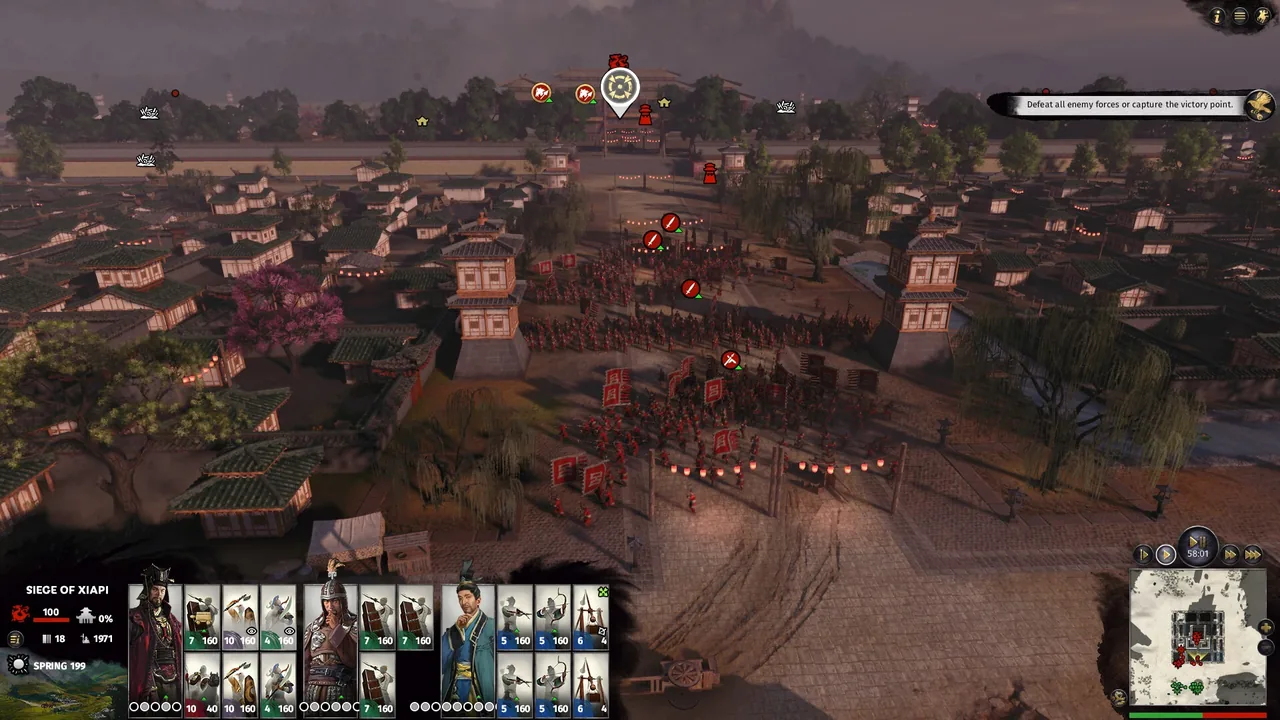
Total War: THREE KINGDOMSImage: SEGA via Steam -
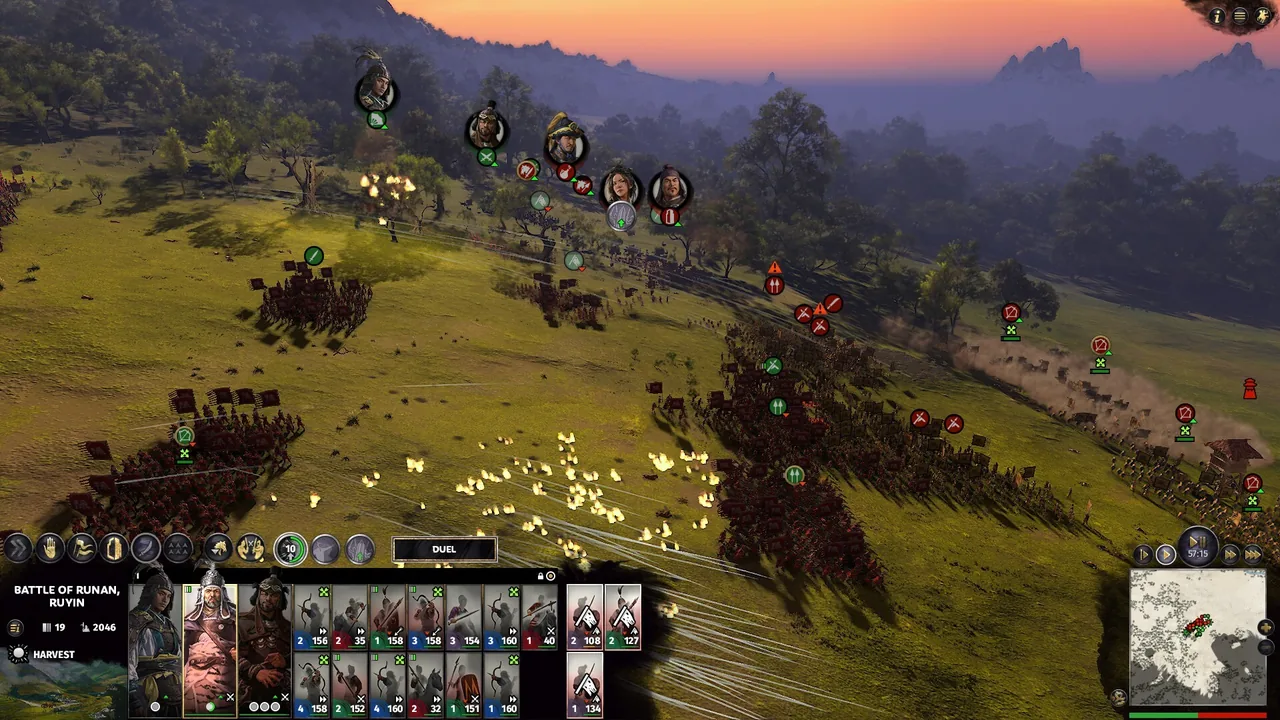
Total War: THREE KINGDOMSImage: SEGA via Steam -
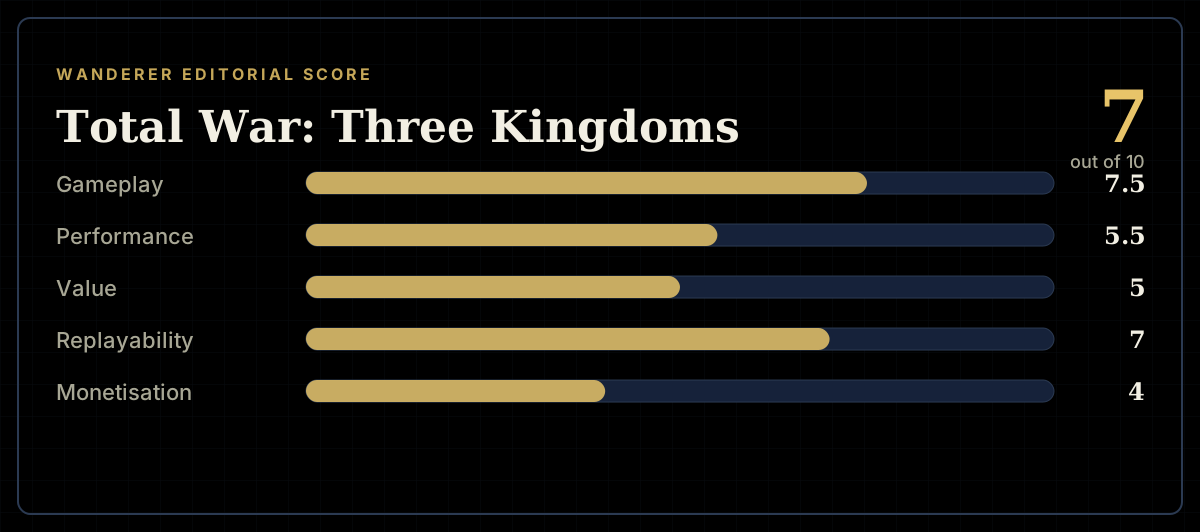
How the review scores each part of the gameWanderer Editorial -
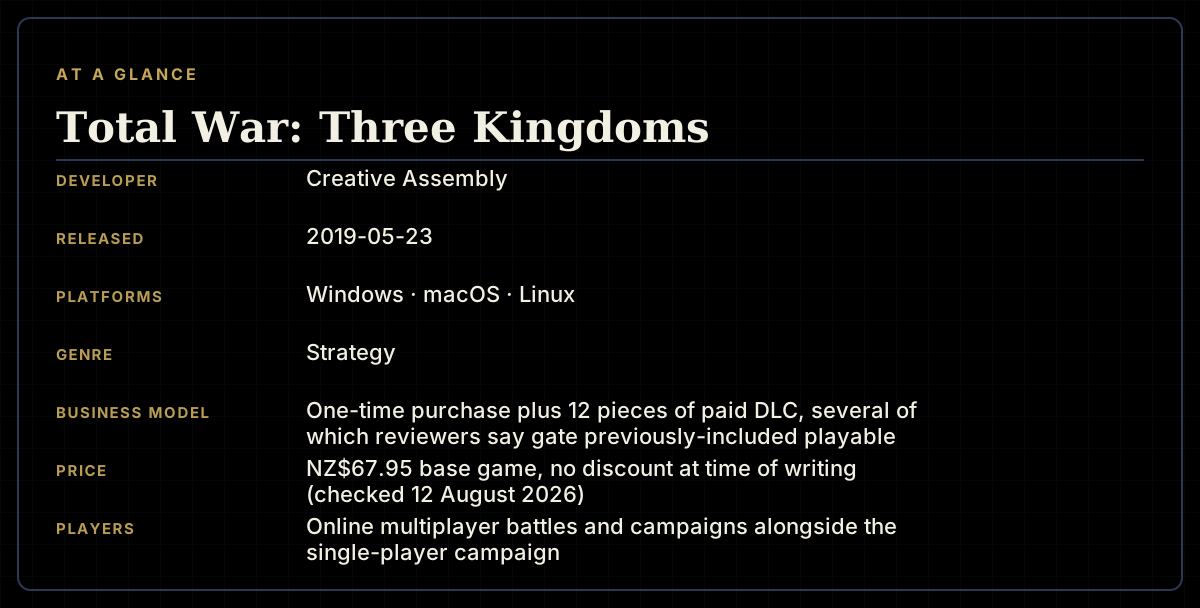
The essentials at a glanceWanderer Editorial -
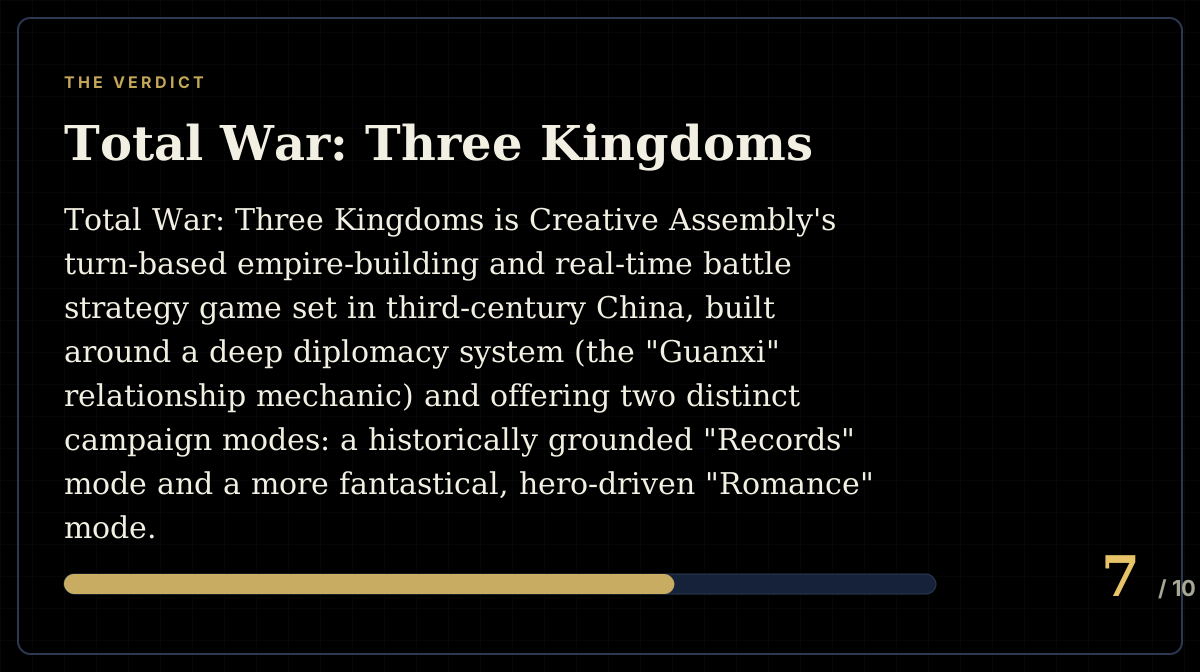
The short versionWanderer Editorial