Game review
Victoria 3
6.5 / 10
- Developer
- Paradox Development Studio
- Publisher
- Paradox Interactive
- Released
- 25 October 2022
- Platforms
- Windows, macOS, Linux
- Genre
- Grand Strategy
- Monetisation
- One-time purchase plus a large expansion and content-pack programme — 17 DLC entries as of August 2026.
- Players
- Online multiplayer supported
The short version
Victoria 3 deserves credit for the thing it tried: a Paradox grand-strategy game where the interesting decisions are about markets, labour and political blocs rather than armies. When the economic simulation is working — pops migrating, industries competing, a construction queue reshaping a nation over decades — nothing else does this.
Four years on, its own audience still won't let two things go. Warfare is mentioned in 57 of the hundred most-helpful English negative reviews, described as a front-line abstraction that resolves battles by dice roll and moves armies in ways nobody can predict. And the DLC programme now runs to 17 entries on a NZ$79.99 base game, which reviewers characterise as finishing the game by instalment. April 2026's Great Wave expansion then needed nine hotfixes in two months.
Biggest strengths
- A grand-strategy game built around economics and politics rather than conquest, which almost nothing else attempts
- The population, market and construction systems produce genuinely emergent national histories
- Enormous long-term support — dev diaries, and hotfixes arriving weekly when something breaks
Biggest weaknesses
- Warfare is the single largest complaint and remains contentious four years after release
- 17 DLC entries on top of a NZ$79.99 base game, which reviewers describe as paying to finish it
- Reviewers dispute the depth of the economic simulation itself, arguing different economic systems play too similarly
Who it's for: Strategy players who want an economic and political simulation rather than a war game, and who accept Paradox's long-tail development model. Not a good entry point to the genre, and not for anyone who wants the military depth Victoria 2 had.
Our recommendation: Buy it on discount, and read what the expansion you're eyeing actually adds before paying for it. The economic core is genuinely special and genuinely unfinished — after four years, that's a statement about the model rather than the schedule.
6.5 / 10
The most-upvoted negative review of Victoria 3 has 4,035 votes, 303 hours played, and an update appended seven months after it was written. The author returned after the game's third major patch and first expansion, acknowledged that Paradox had fixed most of what they'd complained about, and still couldn't recommend it.
That's Victoria 3 in miniature — a game whose problems were never really bugs, reviewed by people who stayed long enough to be sure. The median playtime across its hundred most-helpful English negatives is 302.8 hours, and the highest is 3,184.
What it's brave enough to be
Paradox make war games. Europa Universalis, Hearts of Iron, Crusader Kings — the verbs are conquer, scheme, expand. Victoria 3 is the one where the verb is industrialise.
You run a 19th-century nation as an economy and a society: populations with professions and living standards, markets with supply and demand, a construction queue that decides whether you become a manufacturing power or stay agrarian, and political interest groups whose support you need to pass laws. Play Sweden and the interesting story is a forty-year argument about tariffs and suffrage, not a border war.
Nothing else in strategy does this at this scale, and when it clicks it produces national histories you couldn't have scripted. That's why the score is a 6.5 rather than something harsher: the ambition is real and the good version of this game is genuinely singular.
The warfare argument, four years old and still going
Warfare appears in 57 of the hundred most-helpful English negative reviews — more than DLC, more than the economy, more than anything else.
Victoria 3 replaced army micromanagement with an abstracted front-line system: you assign generals to fronts and set orders, rather than moving stacks. The intent was to keep attention on the economy. The result, according to a 367-hour reviewer, is that "modifiers not applying, entire battles decided solely by random dice rolls, warfare in this game is so broken." A 268-hour player describes armies capturing a province then "suddenly start Travelling for 30 days to the same frontline."
Twenty-five of those hundred negatives invoke Victoria 2 directly, and the comparison is always the same: the older game had cruder systems that behaved predictably, and predictability is what a strategy player needs in order to plan.
There's a subtler criticism too, and it goes at the heart of the pitch. A 59-hour reviewer with 1,292 votes argues that "a command economy plays 100% exactly the same as a 'laissez-faire' economy" — that the simulation models supply, demand and comparative advantage without those systems producing meaningfully different games. If true, the economic depth is presentational. That's contested by plenty of players, but it's the sharpest version of the case against, and it deserves airing in a review of a game sold as an economic simulator.
Seventeen DLC
The store lists 17 DLC entries alongside a NZ$79.99 base game, and 43 of the hundred negatives mention DLC.
The best-articulated version, at 1,100 votes, isn't a rant: it names the pattern as "an annoying trend of underdeveloped paradox games that will take multiple DLCs at $20–$30 to be actually finished, yet those DLC will be considered 'optional' by paradox as a way to deflect valid criticism of their business practices."
That's the honest shape of the argument. Paradox's model genuinely does produce games that are far better in year five than year one — Stellaris and Europa Universalis IV are both evidence for the defence. The objection is that buyers pay full price for year one and then pay again for the improvement, and that "optional" is doing a lot of work when the improvements are structural rather than cosmetic.
The Great Wave, and a somber dev diary
Here's the most current thing a buyer should know. The Great Wave expansion arrived in April 2026, and what followed was nine hotfixes in two months — 1.13.1, .2 and .3 within 48 hours of each other at the end of April, then .4, .5, .6, .7 and .8 across May, and .9 in late June. Two of them were described by the developers as containing over 100 and close to 200 separate entries.
On 7 May 2026 the studio published Dev Diary #183, which they themselves introduced as "a somewhat more somber development diary" reflecting on the release. That's an unusually direct acknowledgement, and it's to their credit — but it's also the clearest signal available that the expansion landed badly.
It shows in the numbers. Lifetime, Victoria 3 sits at 68.3% positive in English. Of the 100 most recent English reviews, posted across the last three weeks, only 58 are positive, at a 145-hour median. Recent reviewers describe memory leaks and, in one memorable phrase from a 158-hour player, a game "held together with duct tape and hope."
That puts Victoria 3 in the minority of games I've assessed lately: current sentiment below the lifetime score rather than above it.
The verdict
Victoria 3 earns a 6.5. It is the most interesting idea in grand strategy — a game about building a society rather than conquering one — and after four years, seventeen DLC and hundreds of patches, it is still audibly arguing with the people who have given it three hundred hours each.
What holds it here is that the two loudest complaints are the two things four years should have settled. Warfare remains a system its players don't trust. The economic simulation, the whole reason this game exists, is disputed by serious players as being less deep than it presents. And the answer to both has partly been more DLC on a base game that already costs NZ$79.99.
Buy it discounted if the premise excites you, because the premise is worth experiencing and nothing else offers it. Go in knowing you're buying a project rather than a product — and that its most recent chapter needed nine hotfixes and an apologetic dev diary.
Pros and cons
Pros
- A grand-strategy game built around economics and politics rather than conquest, which almost nothing else attempts
- The population, market and construction systems produce genuinely emergent national histories
- Enormous long-term support — dev diaries, and hotfixes arriving weekly when something breaks
- Runs on Windows, macOS and Linux
- Four years of patches have fixed the great majority of the launch bugs its early reviews describe
Cons
- Warfare is the single largest complaint and remains contentious four years after release
- 17 DLC entries on top of a NZ$79.99 base game, which reviewers describe as paying to finish it
- Reviewers dispute the depth of the economic simulation itself, arguing different economic systems play too similarly
- Performance and memory-leak complaints persist into 2026
- Recent reviews are running below the lifetime score, and the developers' own May 2026 dev diary on the latest expansion was openly downbeat
Screenshots
-
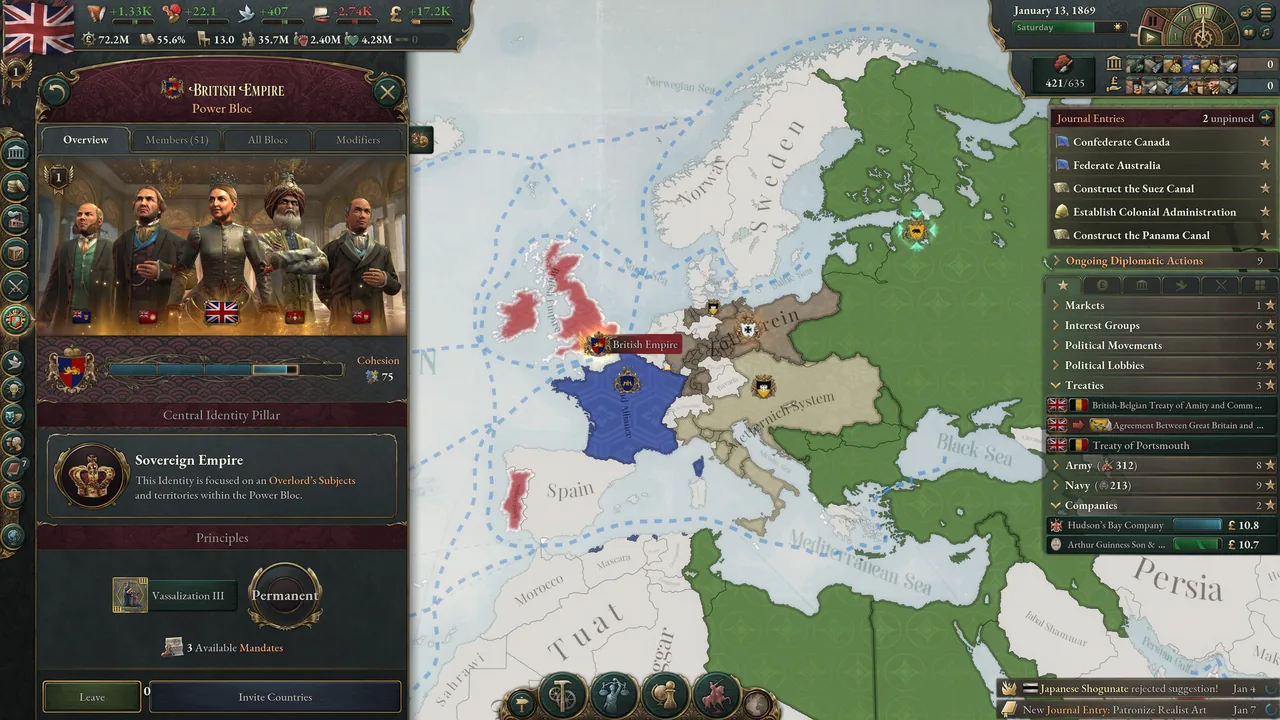
Victoria 3Image: Paradox Interactive via Steam -
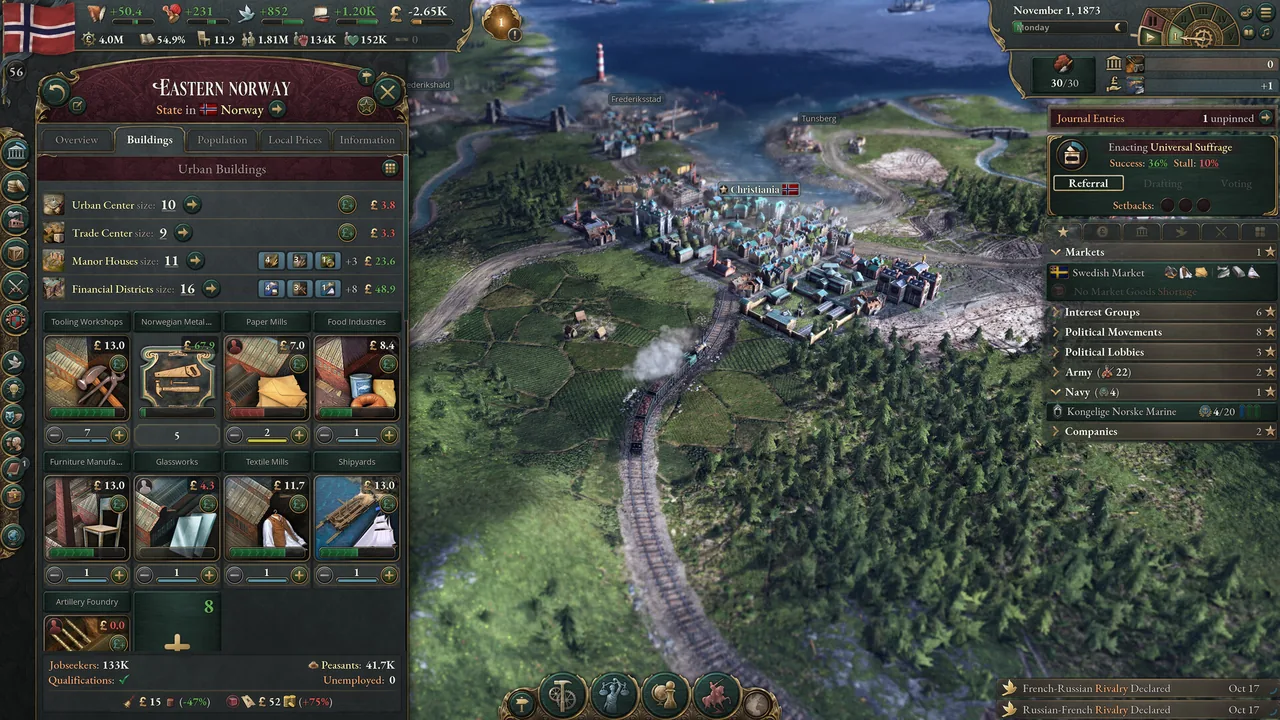
Victoria 3Image: Paradox Interactive via Steam -
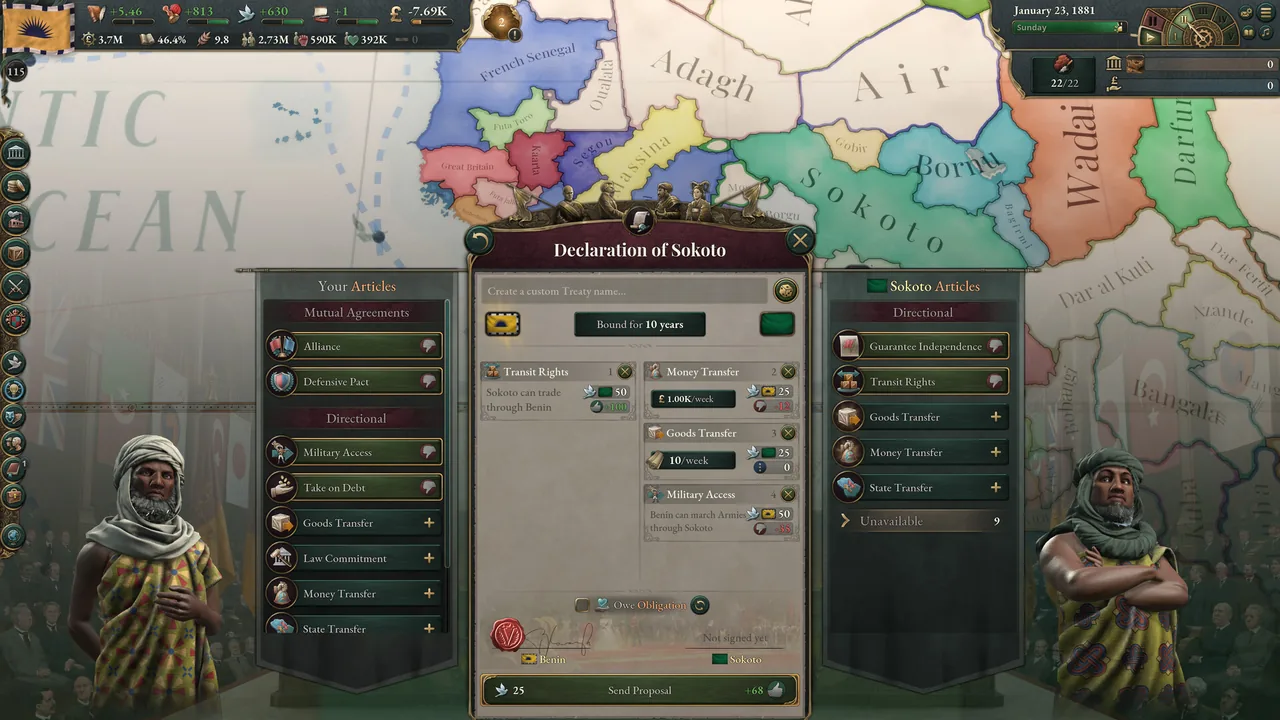
Victoria 3Image: Paradox Interactive via Steam -
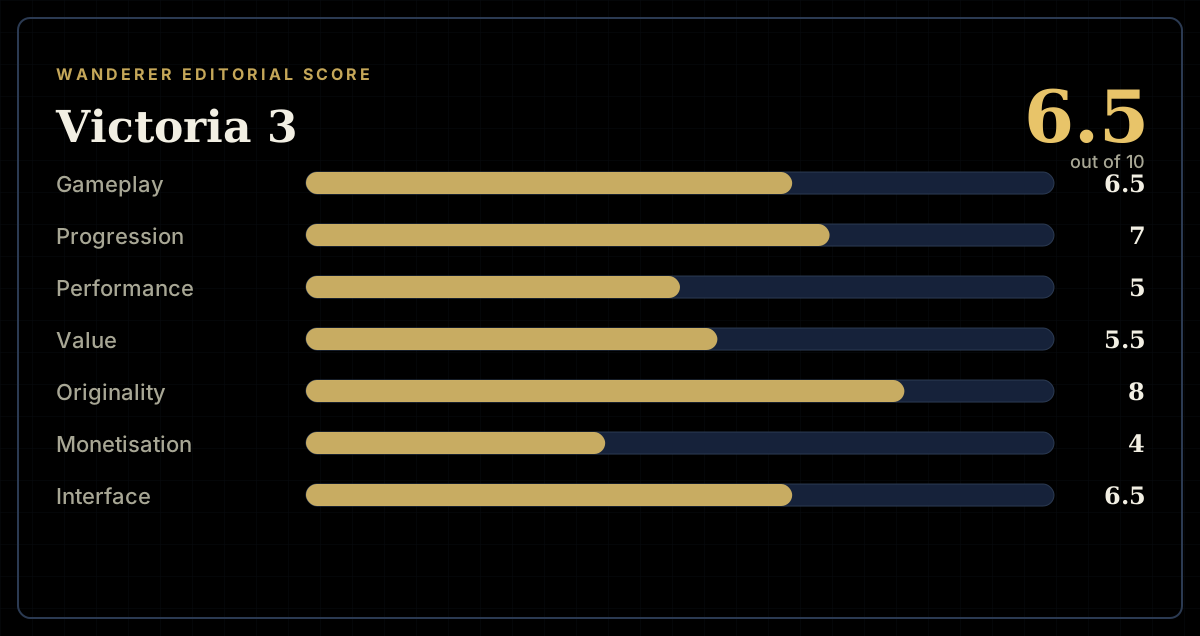
How the review scores each part of the gameWanderer Editorial -
The short versionWanderer Editorial