
Game review
Stellaris
7 / 10
- Developer
- Paradox Development Studio
- Publisher
- Paradox Interactive
- Released
- 9 May 2016
- Platforms
- Windows, macOS, Linux
- Genre
- 4X Grand Strategy
- Monetisation
- Base game NZ$79.99. The full DLC catalogue reportedly totals roughly NZ$275-290 to own everything, and several long-term reviewers describe most DLC content as already downloaded with the base install, with purchase unlocking access rather than adding a download.
- Players
- Online multiplayer supported, up to 32 players
The short version
Stellaris is, at its core, one of the most-loved 4X space strategy games ever made — reviewers with two, three, even four thousand hours logged describe it in terms usually reserved for favourite books rather than games. Ten years of free content patches alongside 32 pieces of paid DLC have genuinely expanded what the game can do, and the 85.8% lifetime positive score across 196,476 reviews reflects real, sustained affection.
It's also, right now, in the middle of a real and specific backlash from exactly the players who love it most. Sixty-one of the 100 most-upvoted negative reviews in this game's history are dated 2024 or later, and they converge on distinct, checkable complaints: a total DLC cost reviewers put at roughly $275-290 to own everything, a performance regression some report measuring at around 25% slower after a patch meant to fix performance, and — new in 2026 — player reports of AI-generated art in recent DLC. This is not old news fading; it's the newest, most-upvoted wave in the game's decade of reviews.
Biggest strengths
- Genuinely deep, replayable 4X systems that reviewers with thousands of hours still describe finding new depth in
- A decade of sustained free content patches alongside paid DLC, with active development continuing today (a 4.5 update in open beta as of July 2026)
- Strong multiplayer and roleplay-driven community culture, reflected in some of the most-upvoted reviews in the game's history being playful in-character playthrough summaries
Biggest weaknesses
- Reviewers estimate the full DLC catalogue costs roughly $275-290 to own, and multiple long-term players call the pricing model unreasonable relative to the base game
- A specific, measurable performance complaint recurs in 2025-26 reviews: a patch billed as a performance improvement is reported by some players as making the game around 25% slower
- Player reports emerged in 2026 alleging AI-generated art in recent DLC content, prompting some veteran players with thousands of hours logged to say they will stop supporting the game over it
Who it's for: 4X and grand strategy fans who want depth to grow into over hundreds of hours, and players comfortable treating the base game as the product and paid DLC as optional rather than essential. Less suited to anyone who wants to own "the complete game" outright — doing so here is a genuinely expensive proposition compared to most strategy games.
Our recommendation: Buy the base game — it's a complete, deep 4X experience on its own, and the positive-review corpus from players with thousands of hours confirms it holds up without a single DLC purchase. Be deliberate about which expansions you add rather than assuming you need the full catalogue, and read current reviews before buying recent DLC specifically, given the 2026 wave of player reports about AI-generated art quality in newer content.
7 / 10
Stellaris turned ten this year, and its review history splits cleanly into two very different kinds of writing. One kind is the sort of review usually reserved for a favourite novel or a decades-old friendship — players with 2,000, even 2,800 hours logged describing the game in terms of who they were when they started playing it. The other kind, increasingly, is the same players explaining exactly why they've stopped recommending it, and doing so with more specificity than a typical DLC-fatigue complaint usually carries.
The game people fell in love with
Read the classic positive reviews and the affection is unmistakable and specific. One player, retired and in his late sixties when he started, calls playing Stellaris "food for thought" and frames picking up a new hobby that late in life as its own small triumph. Another, writing during the game's contentious 2.0 update, admits understanding why people who preferred the old version were upset — and recommends the new, more strategic direction anyway, because they'd come to prefer it. The role-play summaries that made this game's reviews minor internet fixtures ("Play as a Reptile race, find Earth near my starting position, infiltrate human government, annex them — 10/10 for realism") aren't jokes at the game's expense; they're evidence of a sandbox generous enough to produce genuinely different stories for different players, repeatedly, over years.
What changed: a very current, very specific backlash
Here's the finding worth leading with. Sixty-one of the 100 most-upvoted negative reviews in this game's entire ten-year history are dated 2024 or later — not a launch controversy aging into irrelevance, but the newest, loudest wave the game has ever produced. And unlike a vague "it's not as good anymore" complaint, the specifics are checkable and repeated independently across many reviewers:
The cost of owning everything. Multiple reviewers, independently, put the total price of the base game plus all DLC at roughly $275-290. Several describe a specific mechanic that sharpens the frustration: DLC content is reportedly already present in the game's files once installed, with purchase acting as an unlock rather than triggering a new download — meaning, as one reviewer with 1,796 hours puts it, "over 90% of content" sits inaccessible on a fresh install until paid for separately.
A measured performance complaint. One reviewer with 1,575 hours states plainly that a 4.0 update "meant to improve performance" resulted in the game running "about 25% slower now than before." This is stated as an observation rather than a vague feeling, and it recurs in spirit across other 2025-26 reviews describing late-game engine slowdown as worse than they remember it being.
Player-reported AI-generated content, in 2026 specifically. This is the newest and sharpest thread. A reviewer with 1,859 hours, who explicitly says they'd stuck with the game through previous rushed DLC, writes that Paradox has "begun to use generative AI... to pump out cheap, ugly, lazy trash for exorbitant prices" and states they will stop supporting the company over it. Another, with 641 hours, adds "AI generated content included too?" as an edit to an already-negative review. This review treats these as player allegations rather than a confirmed studio statement — Wanderer found no official Paradox communication addressing it directly — but the claim is specific, repeated by more than one high-investment reviewer independently, and worth knowing about before buying current DLC.
One further 2026 review, with very low playtime, raises a separate concern about the scope of data the game collects — SteamID, hardware configuration, browsing information. That claim carries less weight here given the reviewer's minimal engagement with the game itself, and readers who want to evaluate it should check Stellaris's current privacy documentation directly rather than take a single low-playtime review as the full picture.
Reading this as a backlash, not a verdict on the game
What makes this wave worth taking seriously is exactly who's writing it. These aren't disappointed newcomers — the reviewers driving this backlash have 600, 1,000, nearly 1,900 hours logged, the same profile as the game's most devoted fans. Several say directly that they still consider the base game excellent and are voting specifically against Paradox's business practices, not the strategy game underneath them. That's a meaningful distinction: the achievement data and the classic positive reviews both confirm the core game hasn't gotten worse. What's changed is how a meaningful slice of its most loyal players feel about paying for what comes next.
7 out of 10. Stellaris the game remains one of the deepest, most replayable 4X strategy titles available, and a decade of sustained development — including active patches as recently as this month — backs that up. The score sits below what the base gameplay alone would earn because of a real, current, well-documented conflict between the studio and its own veteran playerbase over DLC pricing, a specific performance regression, and 2026's player-reported AI-content concerns. Buy the base game with confidence. Approach the DLC catalogue, and especially anything released recently, with the same scrutiny the game's own longest-tenured fans are currently applying to it.
Pros and cons
Pros
- Genuinely deep, replayable 4X systems that reviewers with thousands of hours still describe finding new depth in
- A decade of sustained free content patches alongside paid DLC, with active development continuing today (a 4.5 update in open beta as of July 2026)
- Strong multiplayer and roleplay-driven community culture, reflected in some of the most-upvoted reviews in the game's history being playful in-character playthrough summaries
- The base game stands on its own as a complete, well-regarded 4X experience without any DLC
- Ten-year sales and free-weekend anniversary events show a studio still actively promoting and supporting the game rather than treating it as a legacy release
Cons
- Reviewers estimate the full DLC catalogue costs roughly $275-290 to own, and multiple long-term players call the pricing model unreasonable relative to the base game
- A specific, measurable performance complaint recurs in 2025-26 reviews: a patch billed as a performance improvement is reported by some players as making the game around 25% slower
- Player reports emerged in 2026 alleging AI-generated art in recent DLC content, prompting some veteran players with thousands of hours logged to say they will stop supporting the game over it
- A specific 2026 review raised concerns about the scope of telemetry and data collection, including SteamID, hardware configuration and browsing data — worth investigating independently before assuming it as settled fact
- Some reviewers describe the frequency of major reworks as demanding, requiring players to relearn core systems after long breaks
Screenshots
-
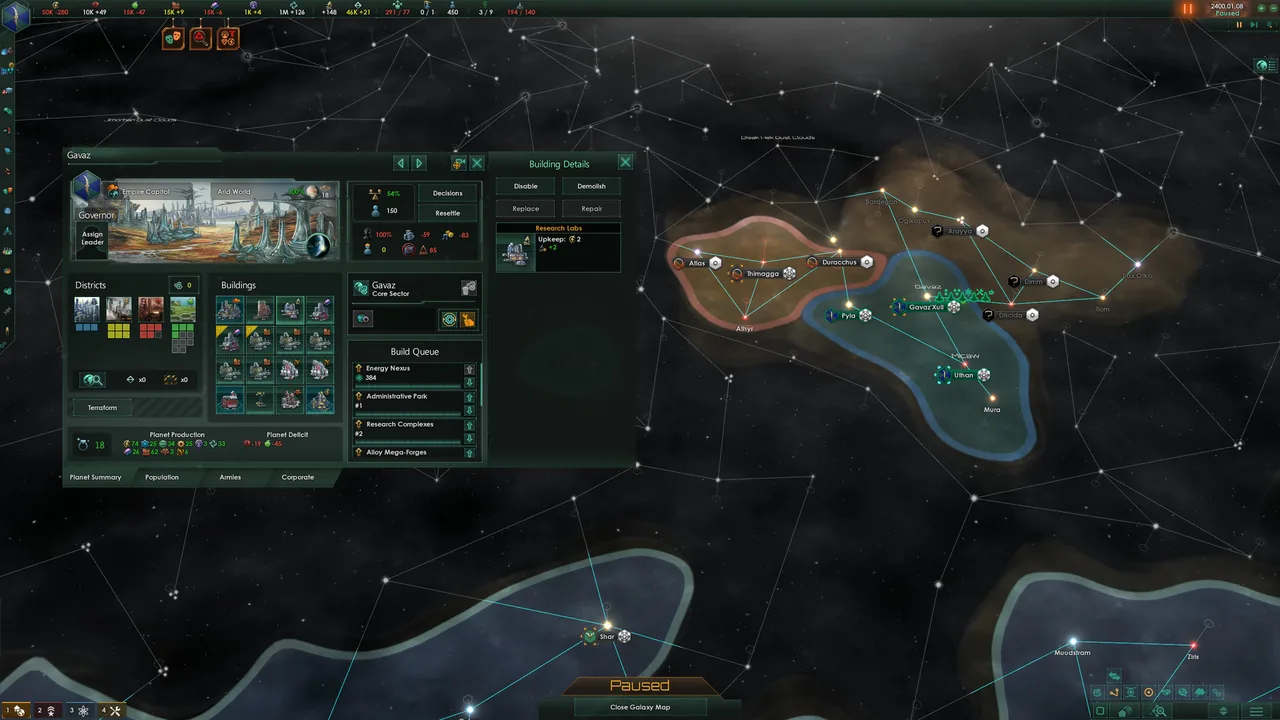
StellarisImage: Paradox Interactive via Steam -

StellarisImage: Paradox Interactive via Steam -
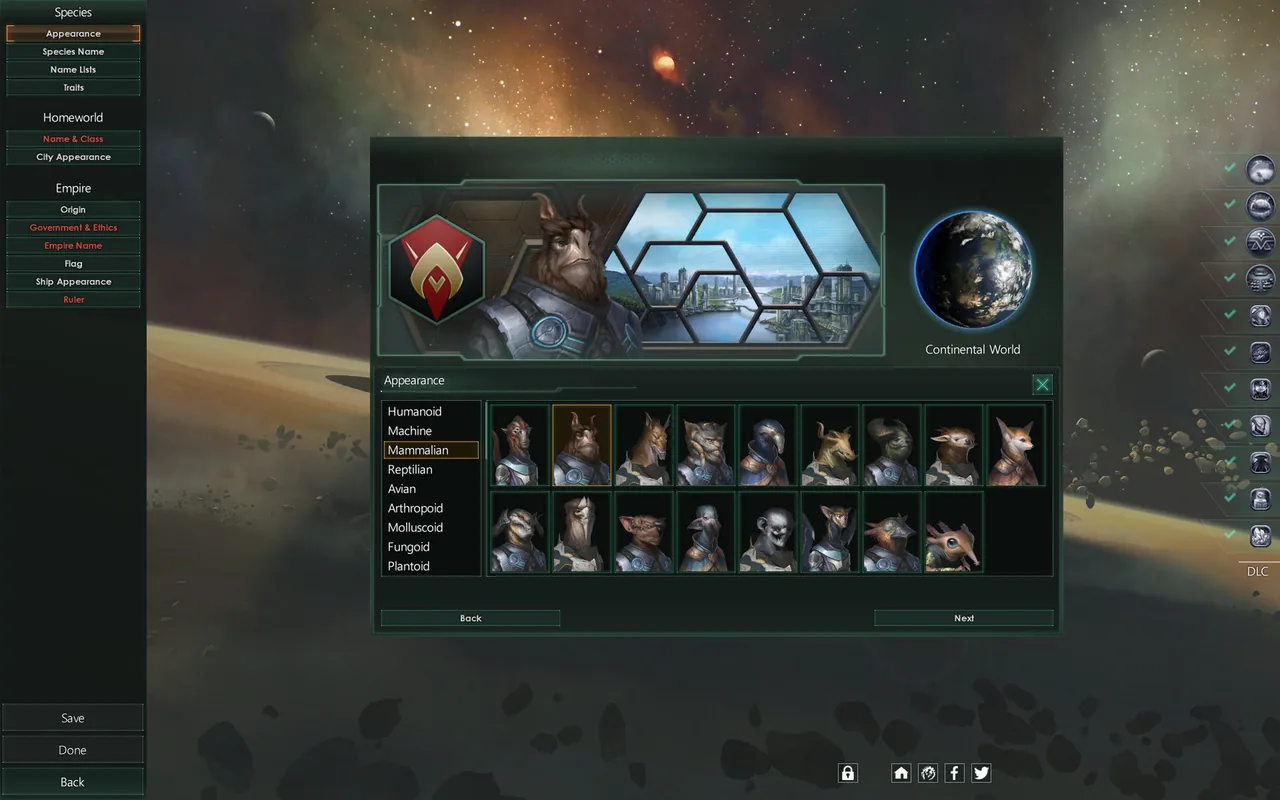
StellarisImage: Paradox Interactive via Steam -
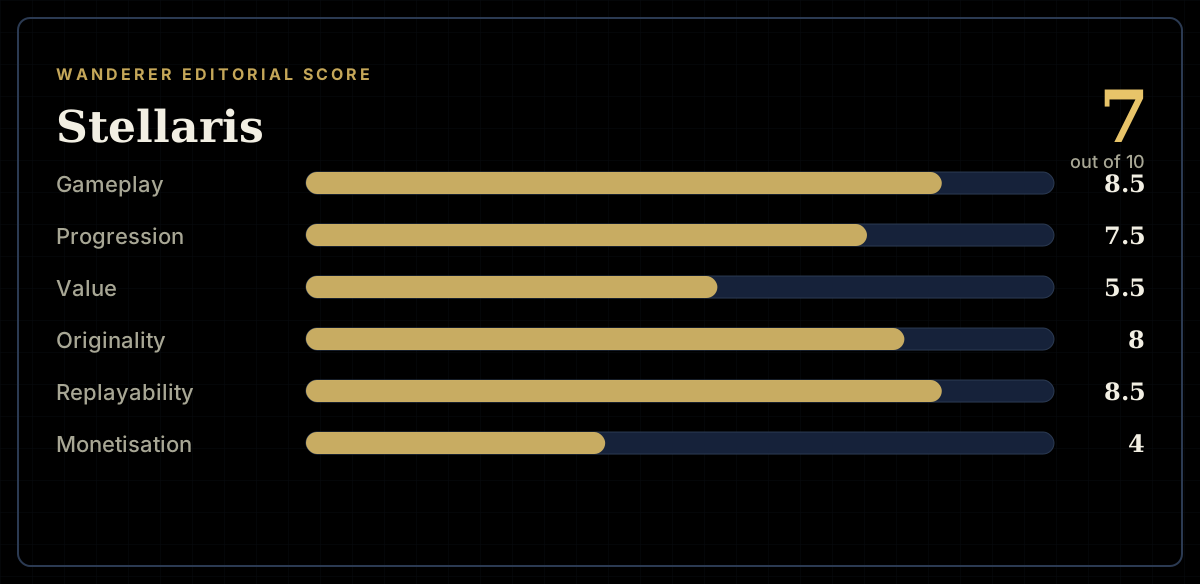
How the review scores each part of the gameWanderer Editorial -
The short versionWanderer Editorial