
Game review
States of Power
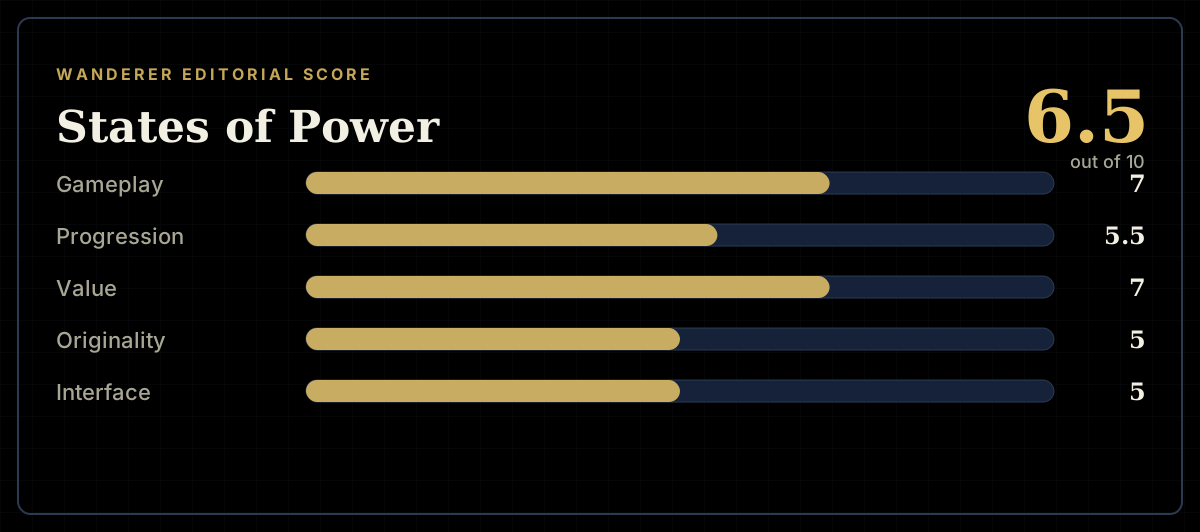
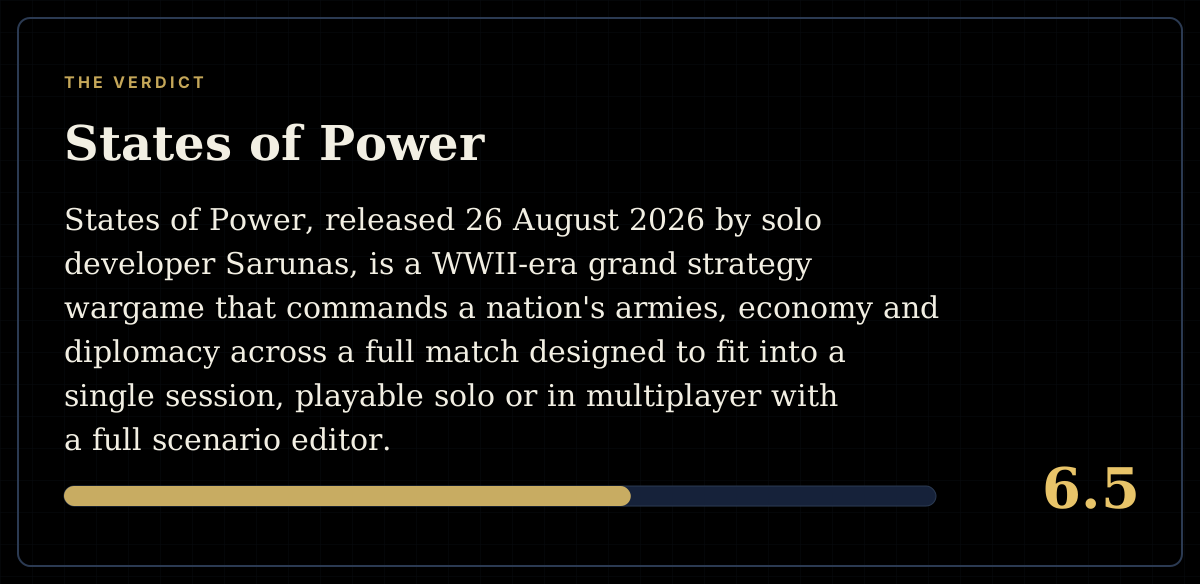
6.5 / 10
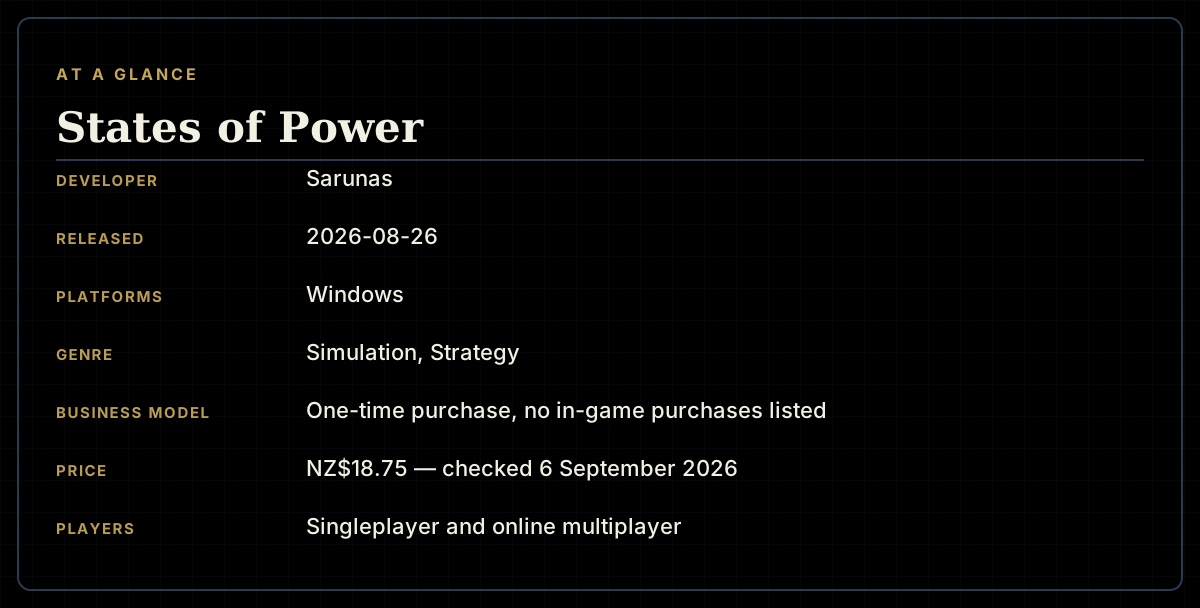
- Developer
- Sarunas
- Publisher
- Sarunas
- Released
- 26 August 2026
- Platforms
- Windows
- Genre
- Simulation, Strategy
- Monetisation
- One-time purchase, no in-game purchases listed
- Players
- Singleplayer and online multiplayer
The short version
States of Power, released 26 August 2026 by solo developer Sarunas, is a WWII-era grand strategy wargame that commands a nation's armies, economy and diplomacy across a full match designed to fit into a single session, playable solo or in multiplayer with a full scenario editor. It sits Very Positive with a strong sample of 158 reviews, and reading across that sample turns up a remarkably consistent framing from its own community: reviewers overwhelmingly describe it as a streamlined, accessible alternative to genre heavyweights like Hearts of Iron IV, repeatedly crediting it as the strategy game newcomers to the genre have been waiting for without the intimidating systems-stacking of its inspirations. Set against that broad praise is a specific, recurring set of mechanical complaints: full military conquest is reportedly the only way to annex a nation with no peace-conference alternative, defeated enemy units retreat and can regenerate rather than dying outright, and population is described as capped in a way that prevents balancing economy and army simultaneously in the current build. A single detailed reviewer additionally reports a dismissive response from the developer to a specific bug report, a claim this review reports as one player's account rather than a confirmed pattern.
Biggest strengths
- The single most repeated praise in this review's research is genuine accessibility — multiple reviewers who describe bouncing off or being intimidated by Hearts of Iron IV report picking this up quickly and enjoying it specifically because it strips away hidden mechanics and systems-stacking without feeling shallow
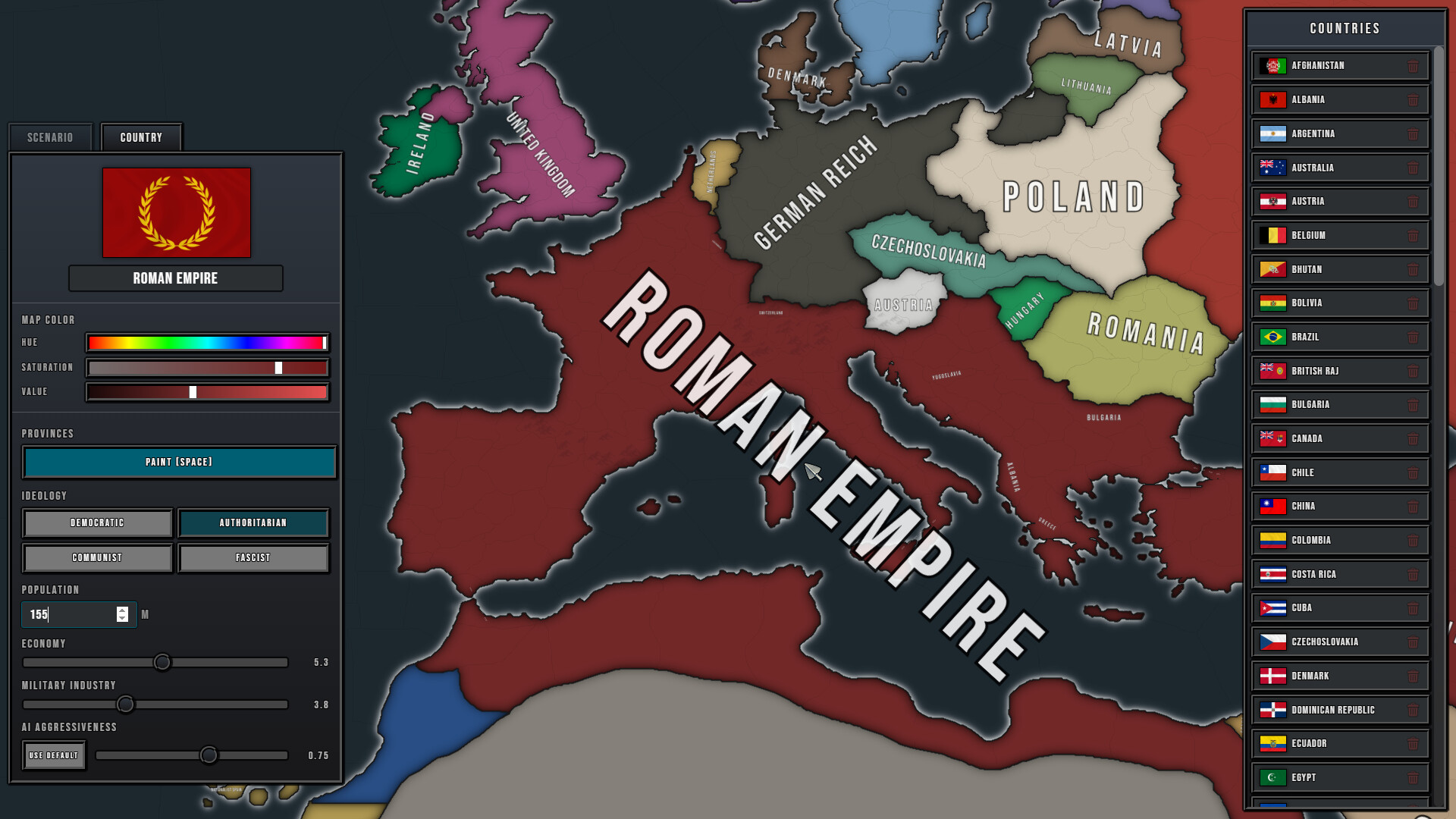
- The scenario editor and modding potential draw specific, detailed praise, with one reviewer describing plans to recreate a well-known Hearts of Iron IV total-conversion mod and calling it by far the game's best feature
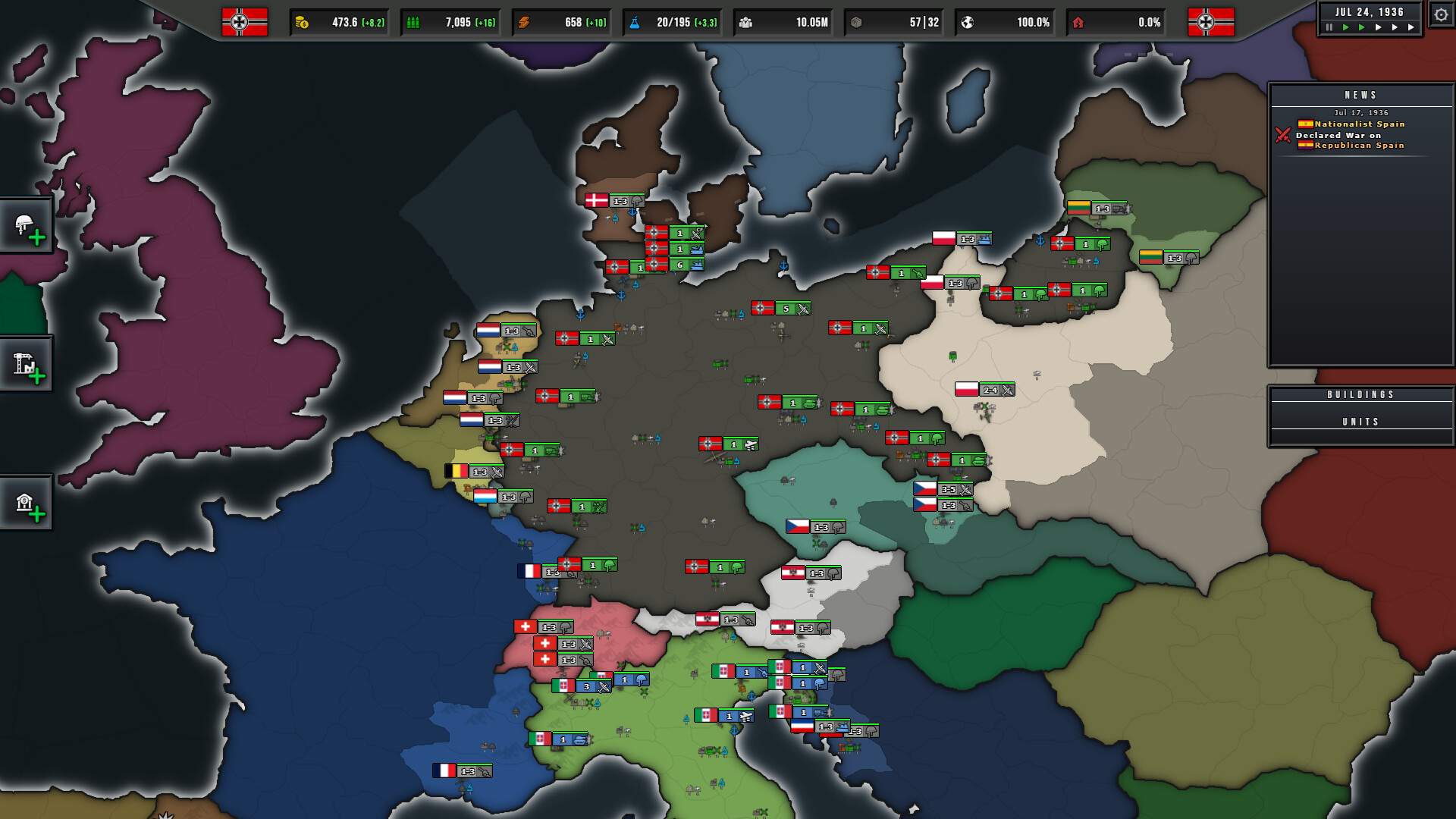
- Combat unit roles are reported to behave as expected by multiple experienced strategy players — artillery for pushing, tanks for breakthroughs, infantry for holding lines — giving the simplified system real tactical legibility
Biggest weaknesses
- A specific, repeatedly reported design gap: there is currently no peace-conference or partial-annexation mechanism, meaning fully conquering a nation requires occupying its entire territory, which multiple reviewers say turns some campaigns into tedious, disproportionate slogs chasing distant provinces
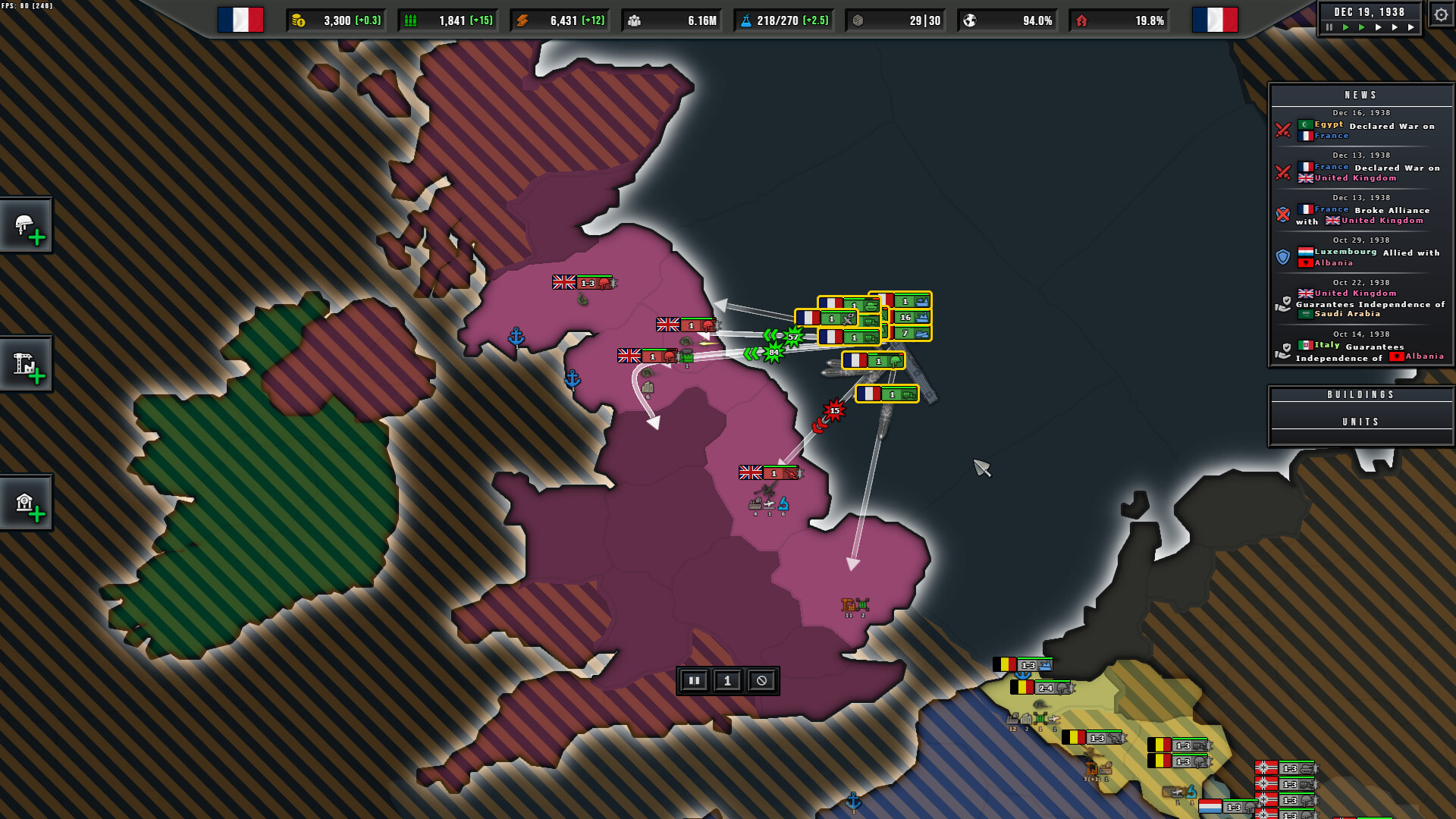
- Multiple reviewers report that defeated units don't die outright but retreat and can regenerate, allowing a beaten enemy force to circle back and recapture territory repeatedly rather than being permanently removed from the fight
- Population is described by more than one reviewer as capped in a way that currently prevents balancing a growing economy against a growing army simultaneously, forcing an awkward tradeoff the more experienced strategy players in this sample say undermines late-game planning
Who it's for: Strategy fans who have bounced off Hearts of Iron IV's complexity and want a genuinely accessible, fast-to-learn grand strategy wargame with real map-painting and scenario-building potential.
Our recommendation: Strongly worth it at this price for anyone curious about grand strategy who's been put off by the genre's usual learning curve; go in aware the current build has real, specific gaps around diplomacy, unit attrition and population that limit how deep a single campaign can go.
6.5 / 10
Introduction
States of Power, released 26 August 2026 by solo developer Sarunas, is a WWII-era grand strategy wargame built around commanding a nation's armed forces, economy and diplomacy across matches designed to fit into a single sitting, playable solo, in multiplayer, or through a full scenario editor. It sits Very Positive with a strong sample of 158 reviews, and reading across that sample turns up an unusually consistent story about exactly what this game is for and who it's for: this is a grand strategy game built specifically as an on-ramp for players the genre's biggest names have historically scared off.
Grand strategy, minus the intimidation
The dominant, most repeated praise across this review's research is accessibility. Multiple reviewers explicitly describe bouncing off Hearts of Iron IV — put off by its dense, interlocking systems and steep learning curve — and picking up States of Power instead with immediate success. One reviewer with a full-time job specifically credits the game for delivering the map-painting, unit-management strategy experience they wanted without demanding the hours of external tutorial videos that games like HOI4 effectively require. Several reviewers use nearly identical language independently, calling it a "HOI4 lite" or comparable shorthand, and mean it as a compliment rather than a knock — the simplification is consistently framed as intentional and successful rather than as a sign of missing depth. Reviewers with substantial playtime, including more than one logging over a thousand hours, back this up with sustained engagement rather than a fleeting first impression.
Real modding potential, and combat that behaves as expected
Beyond accessibility, the scenario editor and modding tools draw specific, detailed praise. One reviewer describes plans to recreate a well-known Hearts of Iron IV total-conversion mod within States of Power's own editor and calls this the single best feature in the game. Multiple experienced strategy players separately praise how legibly combat units behave: artillery reliably supports offensives, tanks deliver breakthroughs, infantry holds lines, and anti-air performs its role effectively, giving the pared-down combat system real tactical coherence rather than feeling arbitrary.
Specific, unresolved mechanical gaps
Set against that praise is a cluster of concrete complaints repeated across multiple independent reviews. The most frequently cited is the absence of any peace-conference or partial-annexation system: fully conquering a nation currently requires occupying its entire territory, and more than one reviewer specifically calls out large, sparsely defended countries as turning what should be a quick campaign into a tedious slog chasing distant provinces with no negotiated alternative. Related to this, several reviewers report that defeated units don't die outright but retreat and regenerate, allowing an ostensibly beaten opponent to circle back and recapture already-conquered territory — one reviewer specifically calls this "annoying and frustrating" and argues either the unit should be removed from the fight permanently or prevented from immediately re-entering contested land. A further specific complaint concerns population, which multiple reviewers describe as capped in a way that currently prevents growing an economy and an army at the same rate, forcing an early strategic tradeoff more experienced players in this sample say limits how a campaign can be played out.
Interruptions, pathfinding, and one disputed developer interaction
Smaller but specific complaints round out the negative side of this sample. Several reviewers report frequent alert pop-ups interrupting play at pivotal combat moments, and multiple detailed reports describe AI pathfinding issues that make late-game wars across several fronts a tedious micromanagement exercise rather than a strategic one. One reviewer goes further, reporting they brought a reproducible AI pathfinding bug to the developer's attention and received a dismissive response denying the issue could occur. This review has not independently verified that specific exchange and reports it only as one detailed reviewer's account, not as a confirmed pattern of how the developer engages with bug reports generally — a caution worth stating plainly given how directly it contradicts the broader, largely positive picture other reviewers paint of an actively updated, responsive solo project.
Who this actually serves, and who it doesn't yet
Reading the full sample together, the audience split is unusually clean. Players coming from outside the grand strategy genre, or who tried and bounced off Hearts of Iron IV specifically, consistently report exactly the experience the developer seems to be aiming for: a fast, legible introduction to nation-scale wargaming that respects their time. Several of these reviewers state directly that this is their first strategy game review, or their first successful attempt at the genre after previously giving up, which is a meaningfully different kind of endorsement than a veteran simply enjoying a lighter diversion. On the other side of that split, the more experienced strategy players in this sample — the ones with the deepest HOI4 and EU4 backgrounds — are also the ones raising the most specific mechanical complaints, about population caps, unit regeneration and the missing peace-conference system. That's not necessarily a contradiction: it reads as a game that has genuinely nailed its stated goal of accessibility while still leaving real systemic gaps that only become visible once a player pushes past the early, easy hours into a longer, more demanding campaign. Whether that matters to you depends heavily on which side of that split you're on, and this review found detailed, credible accounts on both.
Final Verdict
States of Power succeeds at a specific, difficult goal: making grand strategy wargaming genuinely approachable without making it feel shallow, earning consistent, detailed praise from players who'd given up on the genre's bigger, more demanding entries. What holds this score down is a real set of unresolved mechanical gaps — no peace-conference alternative to total conquest, units that regenerate rather than dying, and a population cap that limits how a campaign can be balanced — that keep it feeling more like a strong, promising sandbox than a fully realised strategy game. Excellent value at its current price for the accessibility alone; go in expecting a genre-lite experience with real rough edges rather than a complete HOI4 replacement.
Pros and cons
Pros
- The single most repeated praise in this review's research is genuine accessibility — multiple reviewers who describe bouncing off or being intimidated by Hearts of Iron IV report picking this up quickly and enjoying it specifically because it strips away hidden mechanics and systems-stacking without feeling shallow
- The scenario editor and modding potential draw specific, detailed praise, with one reviewer describing plans to recreate a well-known Hearts of Iron IV total-conversion mod and calling it by far the game's best feature
- Combat unit roles are reported to behave as expected by multiple experienced strategy players — artillery for pushing, tanks for breakthroughs, infantry for holding lines — giving the simplified system real tactical legibility
- The price is repeatedly described as excellent value relative to the amount of content and replayability on offer, with several reviewers specifically framing it as money better spent than on comparable genre entries
Cons
- A specific, repeatedly reported design gap: there is currently no peace-conference or partial-annexation mechanism, meaning fully conquering a nation requires occupying its entire territory, which multiple reviewers say turns some campaigns into tedious, disproportionate slogs chasing distant provinces
- Multiple reviewers report that defeated units don't die outright but retreat and can regenerate, allowing a beaten enemy force to circle back and recapture territory repeatedly rather than being permanently removed from the fight
- Population is described by more than one reviewer as capped in a way that currently prevents balancing a growing economy against a growing army simultaneously, forcing an awkward tradeoff the more experienced strategy players in this sample say undermines late-game planning
- Several reviewers report frequent, intrusive alert pop-ups interrupting play at pivotal combat moments, and multiple detailed reports describe AI pathfinding issues that turn late-game multi-front wars into a tedious micromanagement exercise
- One detailed reviewer reports a specific, dismissive response from the developer after reporting a reproducible AI pathfinding bug; this review reports this as a single player's account rather than a verified pattern of developer conduct
Screenshots
-
States of PowerImage: Sarunas via Steam -
States of PowerImage: Sarunas via Steam -
States of PowerImage: Sarunas via Steam -
How the review scores each part of the gameWanderer Editorial -
The essentials at a glanceWanderer Editorial -
The short versionWanderer Editorial