Game review
Europa Universalis IV
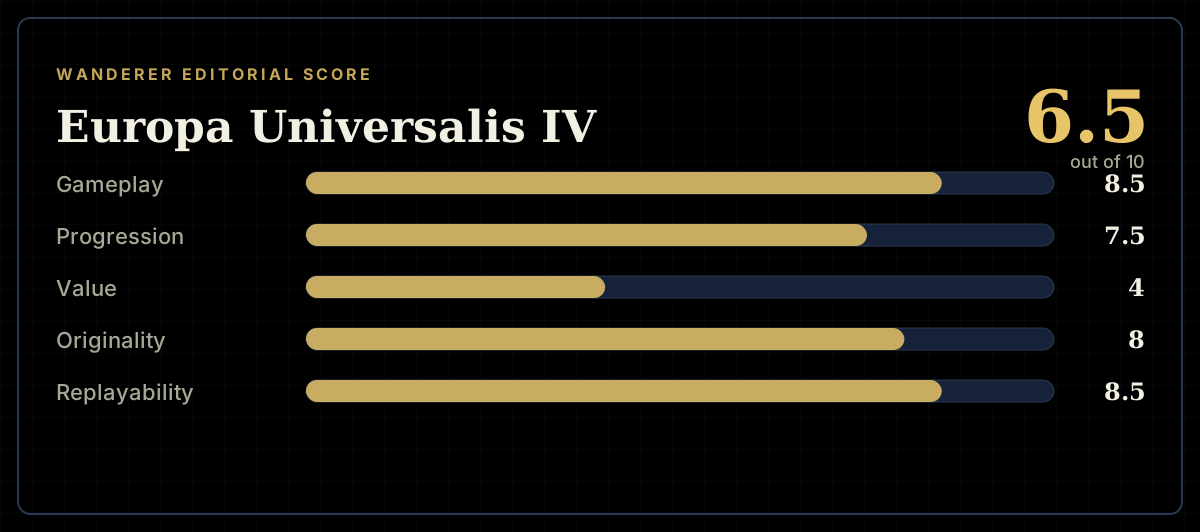
6.5 / 10
- Developer
- Paradox Development Studio
- Publisher
- Paradox Interactive
- Released
- 13 August 2013
- Platforms
- Windows, macOS, Linux
- Genre
- Grand Strategy
- Monetisation
- Premium base purchase plus 33 separate paid DLC packages, adding up to roughly seven and a half times the base game's own price; several of the largest additions gate mechanics that AI opponents can use regardless of whether the player owns them, a specific and frequently repeated player complaint
- Players
- Single-player or online multiplayer
The short version
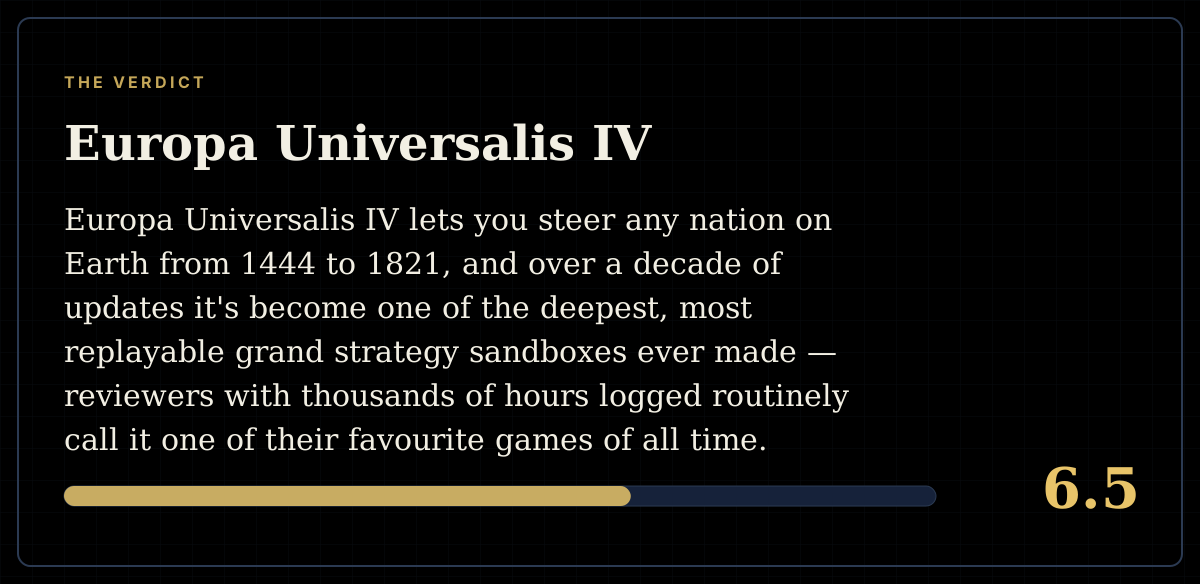
Europa Universalis IV lets you steer any nation on Earth from 1444 to 1821, and over a decade of updates it's become one of the deepest, most replayable grand strategy sandboxes ever made — reviewers with thousands of hours logged routinely call it one of their favourite games of all time. That same decade of updates is also the reason its DLC catalogue has become a running industry punchline: 33 separate paid packages that together cost several times the base game, some of which reportedly grant AI opponents mechanics a non-owning player can't access or counter.
This is a genuinely rare case where the negative reviews and the actual quality of the game aren't in conflict — a large share of them are written by players who love the game deeply and are voting with their thumbs specifically against how it's sold, not against what it plays like.
Biggest strengths
- An unmatched historical sandbox spanning nearly four centuries, with genuine strategic depth across diplomacy, trade, warfare and internal development
- Extraordinary replayability — reviewers with thousands of hours logged still describe finding new approaches and nations to try
- A large, dedicated community and modding scene that has kept the game evolving well past its 2013 release
Biggest weaknesses
- 33 separate paid DLC packages add up to roughly seven and a half times the base game's price, and reviewers with thousands of hours invested describe the model as exploitative regardless of how much they love the underlying game
- Multiple reviewers report that some DLC-gated mechanics are usable by AI opponents even when the player hasn't purchased the relevant expansion, creating an uneven playing field
- A meaningful share of negative reviews explicitly state they enjoyed hundreds or thousands of hours of play and are voting down the business model on principle, not the game itself
Who it's for: Grand strategy veterans who want the deepest historical sandbox available, and are willing to budget carefully — and patiently — for the DLC that actually matters rather than buying the whole catalogue at once.
Our recommendation: Buy the base game, then research which specific expansions unlock mechanics you actually care about before spending further — several reviewers with thousands of hours specifically recommend waiting for deep sales on individual DLC rather than buying the full collection, given how steep the combined price gets.
6.5 / 10
Few games have as strange a relationship with their own review score as Europa Universalis IV. Read enough of the negative reviews and a pattern emerges that almost never shows up elsewhere: a huge number of them are written by players with thousands of hours logged, explicitly praising the game before giving it a thumbs-down anyway. That's not a contradiction. It's a decade-long protest, and this review has to take both halves of it seriously.
Four centuries, played however you like
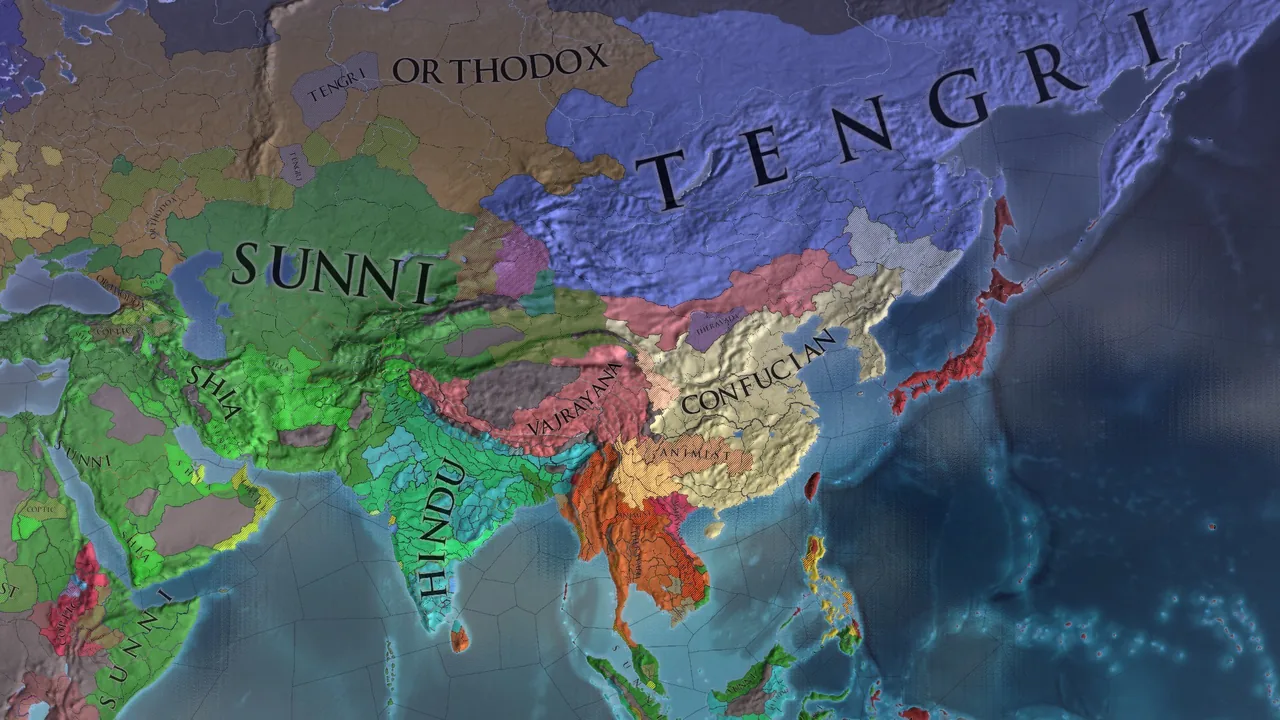
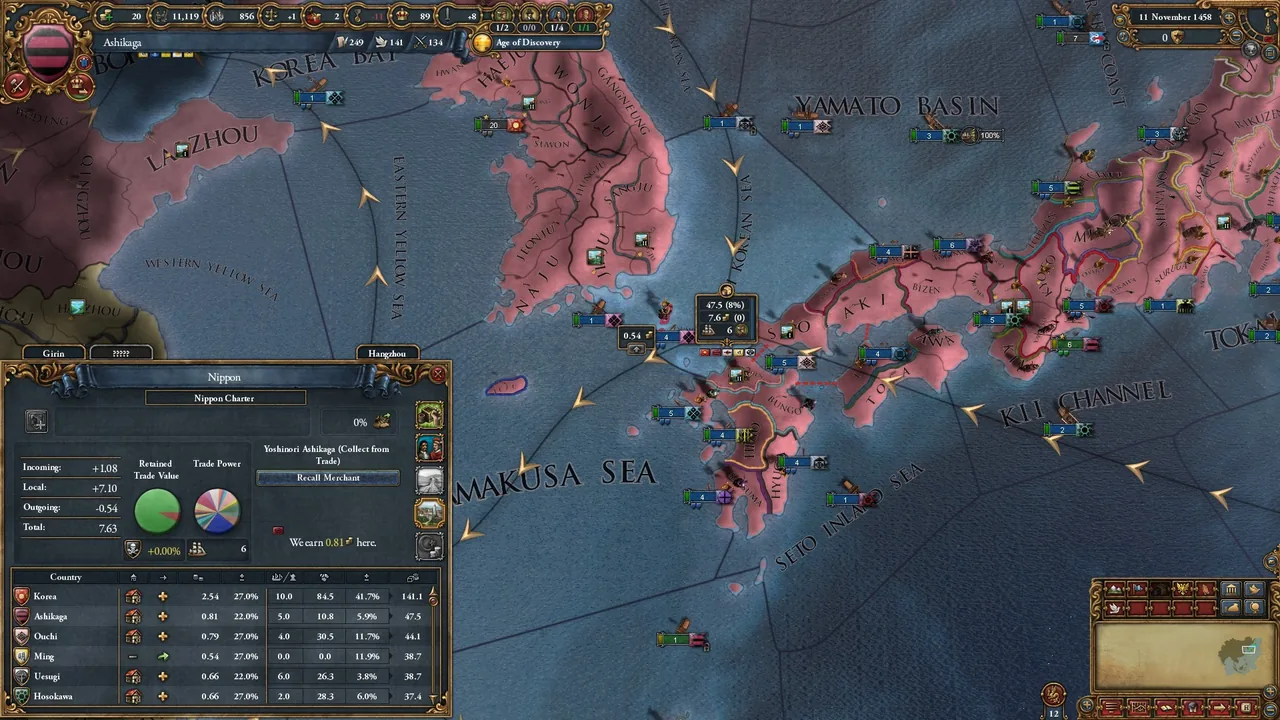
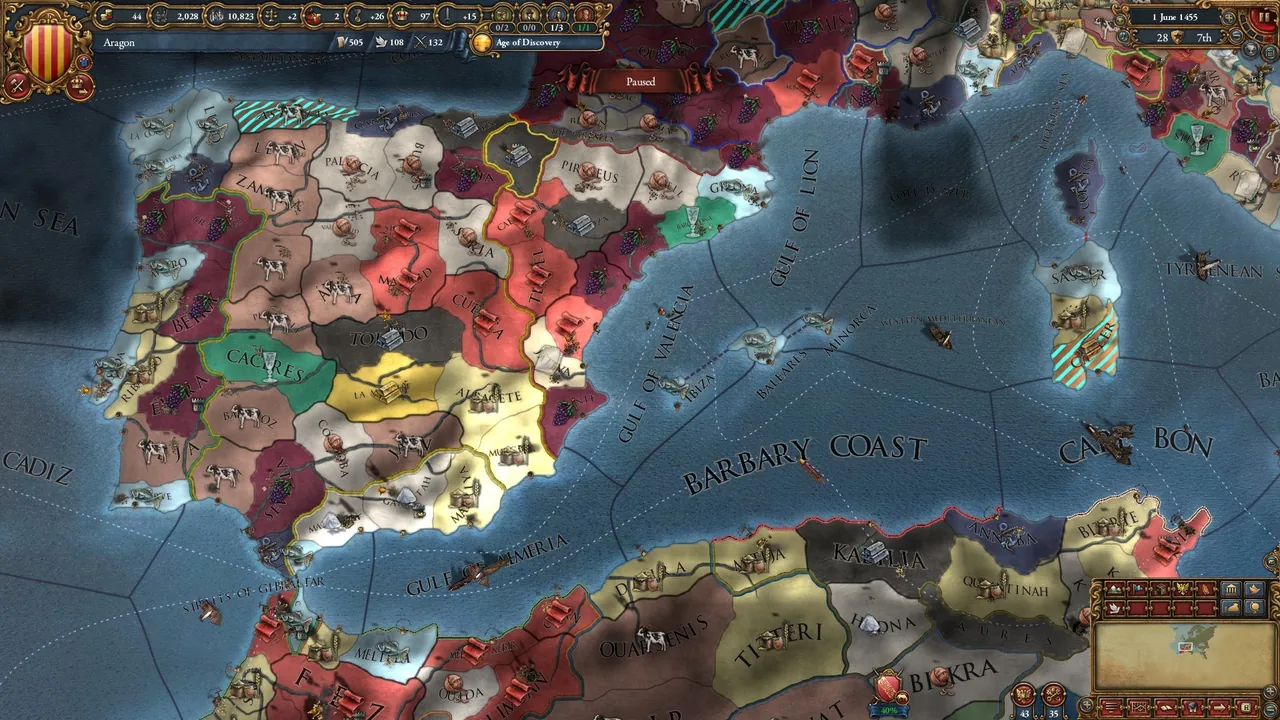
The core pitch hasn't changed since 2013: pick any recognised nation on the map and steer it through nearly four hundred years of alternate history, from 1444 to 1821, balancing diplomacy, trade, technology, religion and warfare against dozens of AI-controlled rivals doing the same. It's an extraordinary sandbox, deep enough that reviewers with genuinely staggering playtimes — several past a thousand hours, some past six thousand — still describe finding new nations, strategies and historical paths to explore. Judged purely as a strategy game, Europa Universalis IV is routinely described, including by its most vocal DLC critics, as one of the best in its genre.
The DLC catalogue, and why it's become the actual review
That same decade of continuous support is the direct cause of the game's other defining characteristic: 33 separate paid DLC packages, ranging from major expansions to smaller "Immersion Packs," that together cost roughly seven and a half times the base game's own price. Reviewers don't dispute that individual expansions add real content — the complaint, repeated with remarkable consistency across hundreds of thousands of hours of collective playtime, is about the cumulative model itself: patches that strip mechanics out to sell back separately, a pace of new DLC that several long-term players say became impossible to keep up with financially, and — the specific complaint that shows up most often and matters most mechanically — AI opponents that reportedly retain access to DLC-gated mechanics and bonuses regardless of whether the human player has purchased them. If accurate as widely reported, that's not just an expensive inconvenience; it tilts the actual balance of the game against players who haven't kept paying.
A protest vote, not a quality complaint
What makes this genuinely unusual, and worth stating plainly, is how many of the negative reviews are explicit about separating the two issues. "Great game, despicable developer" and "I love this game but stop releasing these broken DLCs" are close paraphrases of a recurring sentiment: players aren't saying Europa Universalis IV is bad. They're using the one blunt tool Steam gives them — a thumbs-down — to register a business-model complaint they otherwise have no channel for, from inside thousands of hours of genuine enjoyment. That's worth reading as exactly what it is: a protest against pricing and structure, not a verdict on the underlying design.
What buying in today should look like
Paradox has periodically responded to this pressure — several reviews reference bundle packs explicitly framed as steps toward better value, even while describing the asking price as still steep. The practical advice threaded through the reviews is consistent: buy the base game, decide which specific mechanical additions you actually want rather than assuming you need the whole catalogue, and watch for the deep sales Paradox runs regularly on individual expansions rather than buying at full combined price. Several thousand-hour veterans specifically recommend this patient approach over paying for everything at once.
Final verdict
Europa Universalis IV remains one of the deepest, most replayable grand strategy games available, and there's no serious argument otherwise from the community that's kept playing it for over a decade. It settles at 6.5 rather than a score that reflects its design alone because the DLC structure is a real, current, and unusually well-documented cost — not a historical footnote, but an active complaint from players still logging hundreds of hours in 2026 — and because reports of AI retaining access to content the player hasn't purchased is a legitimate fairness concern rather than simple sticker shock. Buy it, budget carefully, and expect the genuinely excellent game underneath to be worth the patience the pricing demands.
Price and review data checked 5 August 2026.
If you'd rather your strategic progression came without a decade-long expansion bill attached, Wanderer keeps its entire persistent world free to play.
Pros and cons
Pros
- An unmatched historical sandbox spanning nearly four centuries, with genuine strategic depth across diplomacy, trade, warfare and internal development
- Extraordinary replayability — reviewers with thousands of hours logged still describe finding new approaches and nations to try
- A large, dedicated community and modding scene that has kept the game evolving well past its 2013 release
- The core game, judged purely on design, is described even by its harshest DLC critics as one of the best in its genre
Cons
- 33 separate paid DLC packages add up to roughly seven and a half times the base game's price, and reviewers with thousands of hours invested describe the model as exploitative regardless of how much they love the underlying game
- Multiple reviewers report that some DLC-gated mechanics are usable by AI opponents even when the player hasn't purchased the relevant expansion, creating an uneven playing field
- A meaningful share of negative reviews explicitly state they enjoyed hundreds or thousands of hours of play and are voting down the business model on principle, not the game itself
- Patches have, according to several long-term players, occasionally stripped features into separately-sold DLC rather than shipping them as free updates
Screenshots
-
Europa Universalis IVImage: Paradox Interactive via Steam -
Europa Universalis IVImage: Paradox Interactive via Steam -
Europa Universalis IVImage: Paradox Interactive via Steam -
How the review scores each part of the gameWanderer Editorial -
The short versionWanderer Editorial