Game review
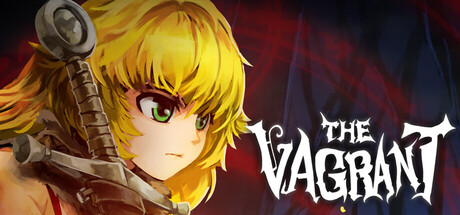
The Vagrant
6 / 10
- Developer
- O.T.K Games
- Publisher
- Thermite Games
- Released
- 9 June 2017
- Platforms
- Windows
- Genre
- 2D action RPG
- Monetisation
- One-off purchase, plus a cosmetic Cosplay DLC pack; no in-game currency or gameplay-affecting purchases
- Players
- None; single-player only, though several reviewers note the enemy health pools feel tuned with co-op in mind despite no co-op mode existing
The short version
The Vagrant's hand-painted art and combo-driven combat draw an instant, direct comparison from nearly every reviewer who's played a Vanillaware game: Odin Sphere, Dragon's Crown, and Muramasa all come up unprompted, and the comparison is rarely kind to The Vagrant's own execution. One detailed review calls it plainly "an Odin Sphere ripoff with far more fan service," and several others independently arrive at some version of "a worse Vanillaware game" as their core assessment. What keeps the review sample largely positive anyway is price: at a few dollars, reviewers repeatedly argue the beautiful art, a genuinely large roster of over 70 monster types and 10-plus bosses, and a story with multiple endings add up to real value even with combat that several detailed critics call generic, a midgame that turns into a resource grind, and platforming precision several reviewers say the controls simply don't support. It's an honest homage sold at an honest price, rather than an original standing on its own.
Biggest strengths
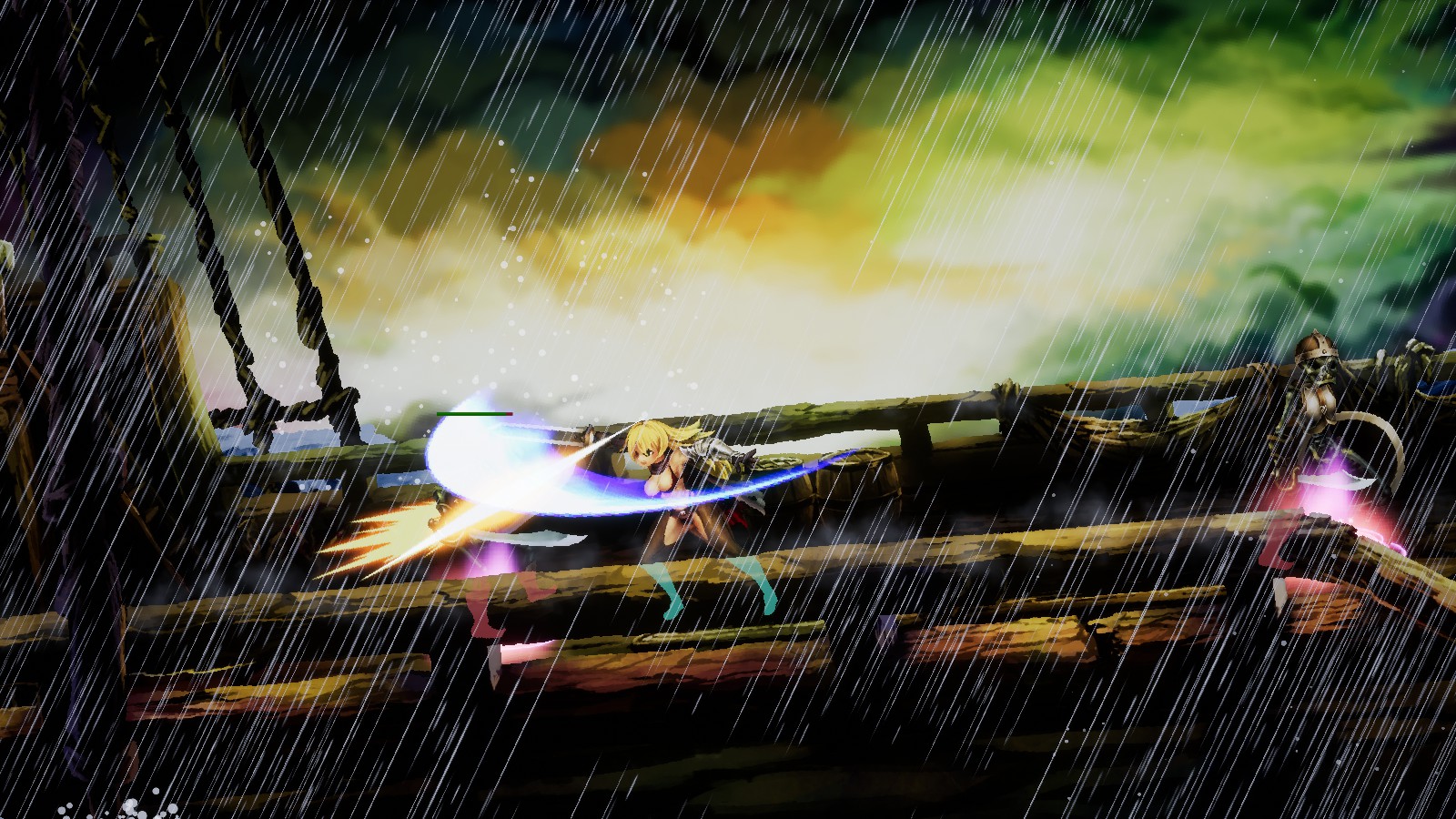
- Genuinely gorgeous, traditionally hand-painted character and environment art that draws consistent praise even from the harshest critical reviews
- A large roster of over 70 monster types and more than 10 boss encounters, giving real content volume for the asking price
- Multiple distinct endings give the story a real branch point worth exploring more than once
Biggest weaknesses
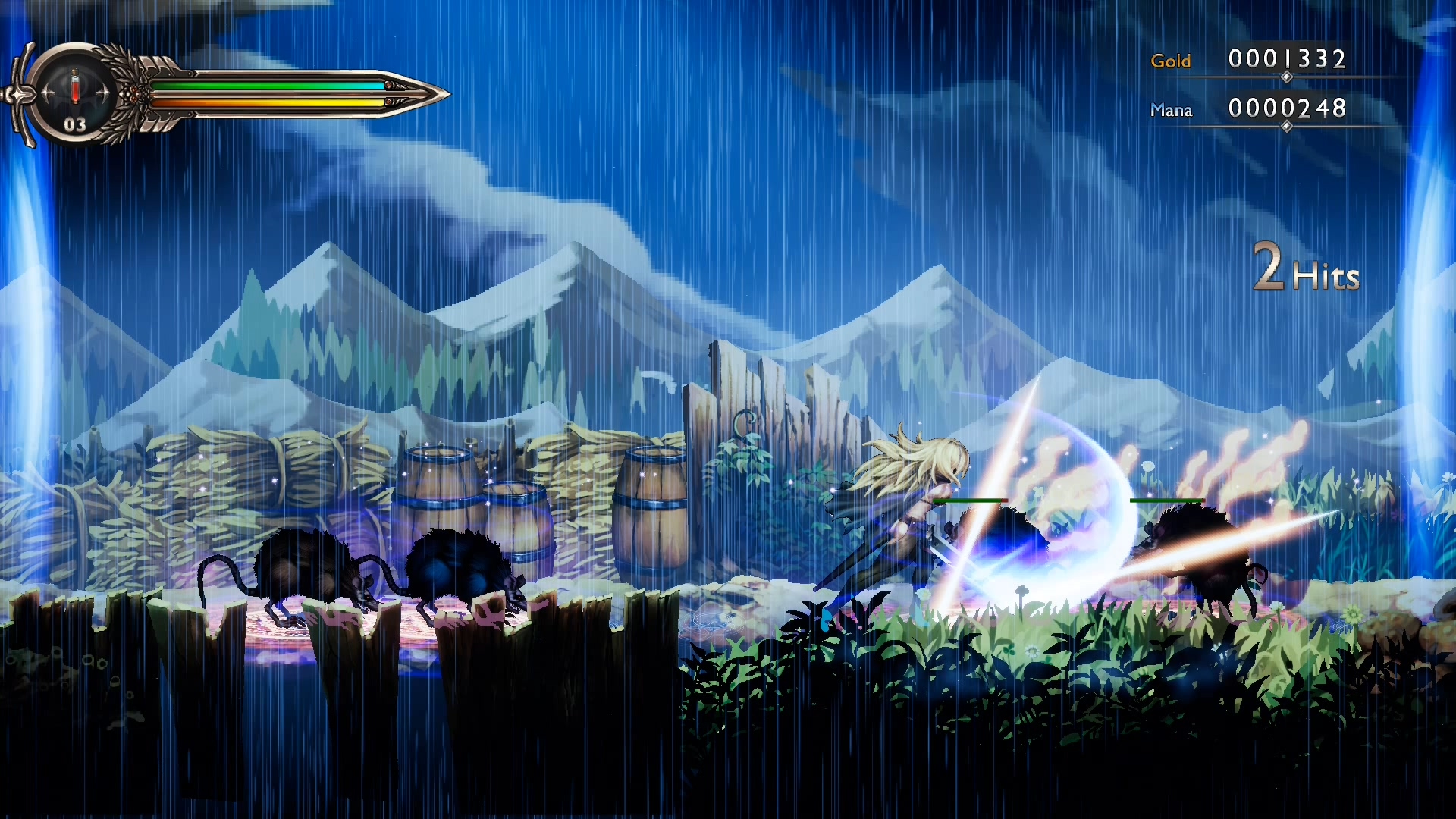
- Combat is described by multiple detailed reviewers as generic, repetitive, and lacking the weight or feedback of the Vanillaware games it's clearly modeled on, with one comparing it unfavorably to "an old flash game"
- A specific, repeated midgame complaint: potions and crafting materials run out faster than they can be earned, turning what was initially fun into what one reviewer calls "a huge grindfest"
- Keyboard controls are reported as imprecise for platforming specifically, with a run command requiring an unreliable double-tap rather than a toggle
Who it's for: Fans of Vanillaware's art style and combat rhythm looking for a much cheaper way to get a similar fix, and players who prioritize visual presentation over combat depth or narrative originality. Less suited to anyone expecting the polish or precision of the games it's directly imitating, or players needing full mouse support.
Our recommendation: An easy buy at its usual very low price for the art alone; go in with modest expectations about the combat and story, both of which reviewers consistently rate well below the presentation.
6 / 10
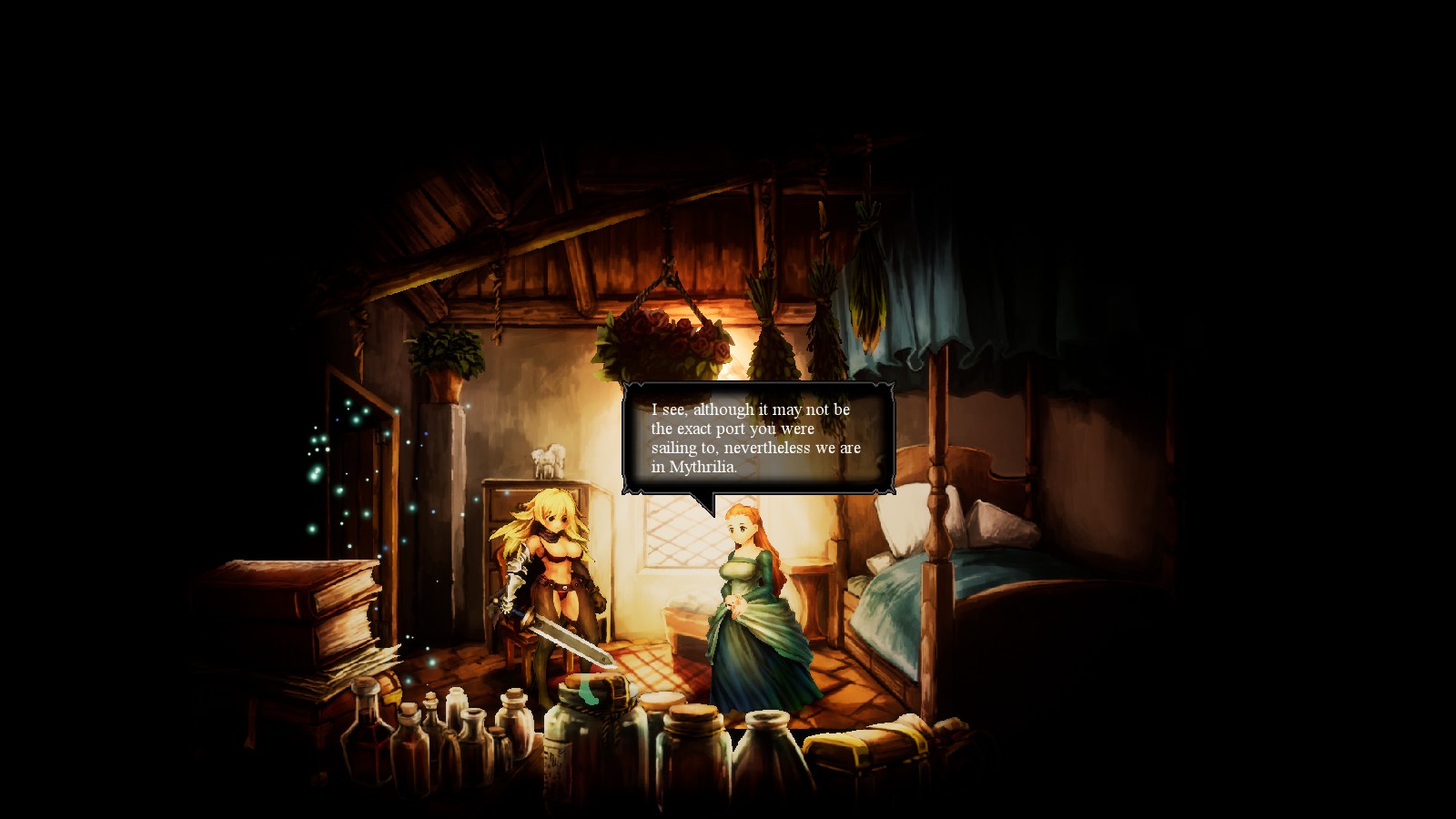
The Vagrant follows Vivian, a traveling sellsword chasing her missing father's research through a hand-painted fantasy world, hacking through mysterious forests and haunted castles in search of a family secret. It's a direct, openly acknowledged homage to Vanillaware's beloved catalogue — Odin Sphere, Dragon's Crown, Muramasa — right down to the traditionally-animated art style and combo-driven combat rhythm, developed by a small Chinese studio and sold at a small fraction of what those games typically cost. Nearly 1,730 English reviews have settled it at 89% Very Positive, and reading through them reveals an unusually candid, consistent theme: this is an homage its own fans openly acknowledge falls short of what it's imitating, recommended anyway because of just how little it costs to find out for yourself.
An homage its reviewers name directly, and don't let off easy
Almost every detailed review in the sample makes the Vanillaware comparison explicitly and unprompted, and most aren't gentle about it. One reviewer states it as plainly as possible: this "couldn't obviously more be an Odin Sphere ripoff with far more fan service." Another, shorter review reaches the same conclusion in five words: "just a worse version of any vanillaware game." A third, more sympathetic review still frames its recommendation the same way: "it's a good stab trying to wedge itself into the space that Odin's Sphere, Muramasa and Dragon's Crown occupies," without claiming it succeeds at matching them. That level of consistent, specific, named comparison — not vague "reminds me of" language but the same three specific titles named repeatedly across independent reviews — is worth taking as an accurate framing of what this game is actually trying, and mostly failing, to be.
Value that keeps the goodwill alive anyway
What keeps the aggregate score positive despite that consistent critique is price. Reviewer after reviewer explicitly frames their recommendation around cost rather than quality on its own terms: "ITS $4 DOLLARS DUMBASS... Already worth $4," one writes bluntly in response to more critical reviews. Another sums up the calculation plainly: "you cant really beat one dollar." A detailed Chinese-language review makes the same point with more specificity, calling it "price-breaking" for the domestic market given the hand-painted art, satisfying combo system, and roughly 70 enemy types paired with 10-plus hardcore bosses on offer for under four dollars. This is a consistent, explicit pattern across the sample: reviewers aren't rating The Vagrant against Vanillaware's games on quality alone, they're rating it against Vanillaware's games adjusted for a fraction of the price, and by that adjusted standard, most come away satisfied.
Where the imitation runs thin
The specific gaps reviewers point to are consistent enough to treat as real, not just harsh opinion. Combat draws the sharpest criticism: one detailed reviewer calls it "very generic and not engaging enough," while another goes further, comparing the feel of landing hits unfavorably to "an old flash game." A specific, repeated structural complaint concerns pacing: several reviewers independently describe the midgame turning into "a huge grindfest" once potions and crafting materials stop keeping pace with what bosses demand, with one describing enemy health pools as feeling tuned for a cooperative mode that the game doesn't actually have, making solo encounters "slow" rather than tense. A separate, more mechanical complaint concerns controls: keyboard-only players report the run command's reliance on an unreliable double-tap rather than a toggle specifically undermines platforming sections that need more precision than the input supports.
What the numbers say about who finishes it
Global achievement data shows real engagement with the game's combat content specifically — the first tracked boss sits at 68.5% completion, still healthy for an opening encounter — but a much steeper decline toward either of the game's two endings, with the "normal" conclusion held by only 13.9% of the playerbase and the "good" ending by just 10.7%. That gap between strong early engagement and a much smaller share of players reaching any conclusion is consistent with the review sample's own account of a midgame that loses momentum well before the credits, even for players who enjoyed the opening hours enough to keep going.
A design choice reviewers disagree sharply about
Character design draws some of the most divided reactions in the sample. Several reviewers note directly that the protagonist and other female characters are drawn with exaggerated proportions, one joking that "every woman in this game just has these absolutely HUGE... tracts of land," while a separate, more pointed review frames the same observation as a serious critique of derivative, over-sexualized design choices layered onto an already-borrowed art style. Other reviewers push back just as directly, reassuring potential buyers that despite the character art "it's not" the kind of game that invites that assumption, and that the actual content stays within an ordinary fantasy-action frame. This review reports both readings as genuine, independently-arrived-at reactions from within the same sample rather than picking a side — it's a real point of disagreement among the game's own audience, not a settled matter.
A curious localization detail
One detailed Chinese-language review flags something worth passing along as a specific, concrete observation: despite being developed by a Chinese studio, the game's only full voice acting is in Japanese, with Chinese supported as subtitles only — a choice the reviewer describes as slightly jarring for a domestic release clearly inspired by Japanese art and game design traditions rather than made within one. It's a small detail, but a specific and checkable one about how the game presents its own cultural identity that an English-language buyer might not otherwise encounter.
Verdict
The Vagrant is exactly what its own most balanced reviewers describe: a sincere, visually beautiful attempt to occupy Vanillaware's specific niche, sold at a price that makes its real, consistently-named shortcomings easy to forgive. The art earns its praise on its own; the combat, pacing, and controls consistently draw the same specific complaints from reviewers who otherwise recommend it. Buy it for a few dollars expecting a cheaper, rougher cousin of the games it's openly imitating, not a rival to them.
Sources: Steam store page and appdetails API (release date, pricing, platform data); Steam's aggregate review data (query_summary totals, English-language sample); individually read user reviews across languages, both positive and negative, sorted by helpfulness and recency; Steam's global achievement statistics API; O.T.K Games/Thermite Games' own partner-events patch notes, confirming an Early Access launch in June 2017 and a dense update cadence through the 1.0 release in July 2018 and beyond into late 2019.
Pros and cons
Pros
- Genuinely gorgeous, traditionally hand-painted character and environment art that draws consistent praise even from the harshest critical reviews
- A large roster of over 70 monster types and more than 10 boss encounters, giving real content volume for the asking price
- Multiple distinct endings give the story a real branch point worth exploring more than once
- An extremely low typical price makes even a modest recommendation an easy one to act on
- Achievement data confirms real completionist engagement with the boss roster specifically, even where broader endgame completion falls off sharply
Cons
- Combat is described by multiple detailed reviewers as generic, repetitive, and lacking the weight or feedback of the Vanillaware games it's clearly modeled on, with one comparing it unfavorably to "an old flash game"
- A specific, repeated midgame complaint: potions and crafting materials run out faster than they can be earned, turning what was initially fun into what one reviewer calls "a huge grindfest"
- Keyboard controls are reported as imprecise for platforming specifically, with a run command requiring an unreliable double-tap rather than a toggle
- Several reviewers report the enemy encounter design and boss health pools feel tuned for cooperative play despite no co-op mode existing, making solo fights feel unnecessarily slow
- Achievement data shows a steep drop from early boss encounters to either ending, suggesting a meaningful share of buyers don't see the story through to a conclusion
Screenshots
-
The VagrantImage: Thermite Games via Steam -
The VagrantImage: Thermite Games via Steam -
The VagrantImage: Thermite Games via Steam -
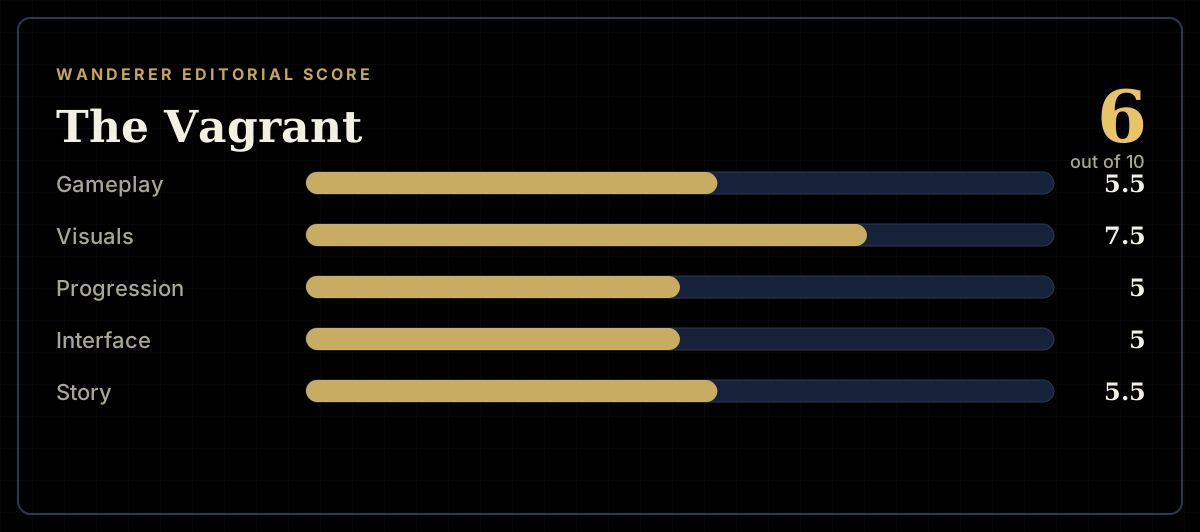
How the review scores each part of the gameWanderer Editorial -
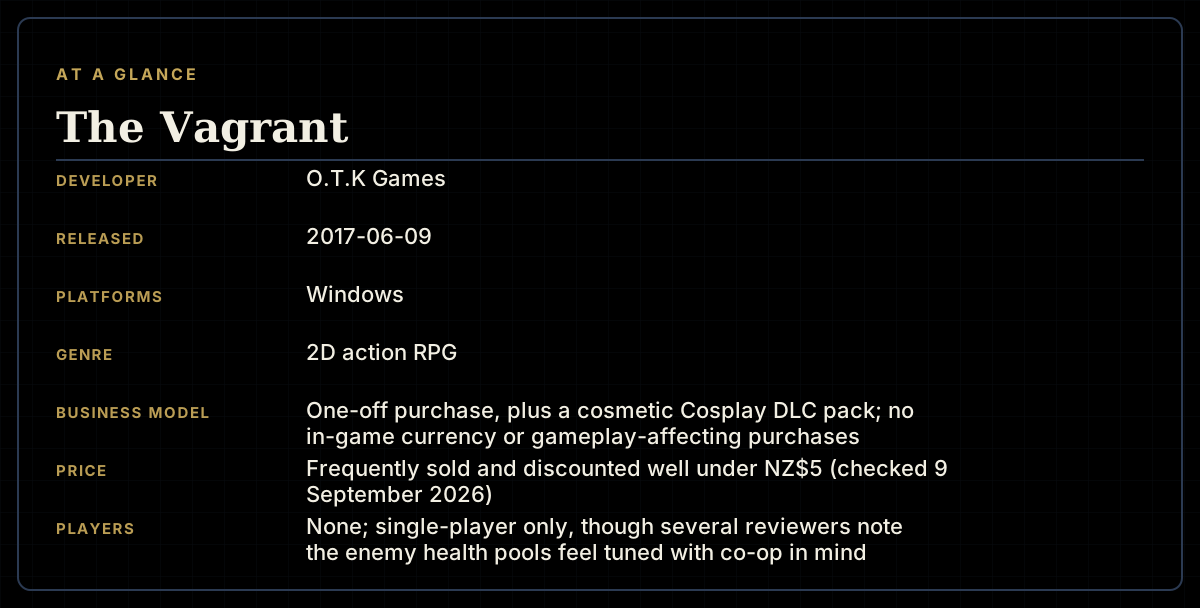
The specsWanderer Editorial -
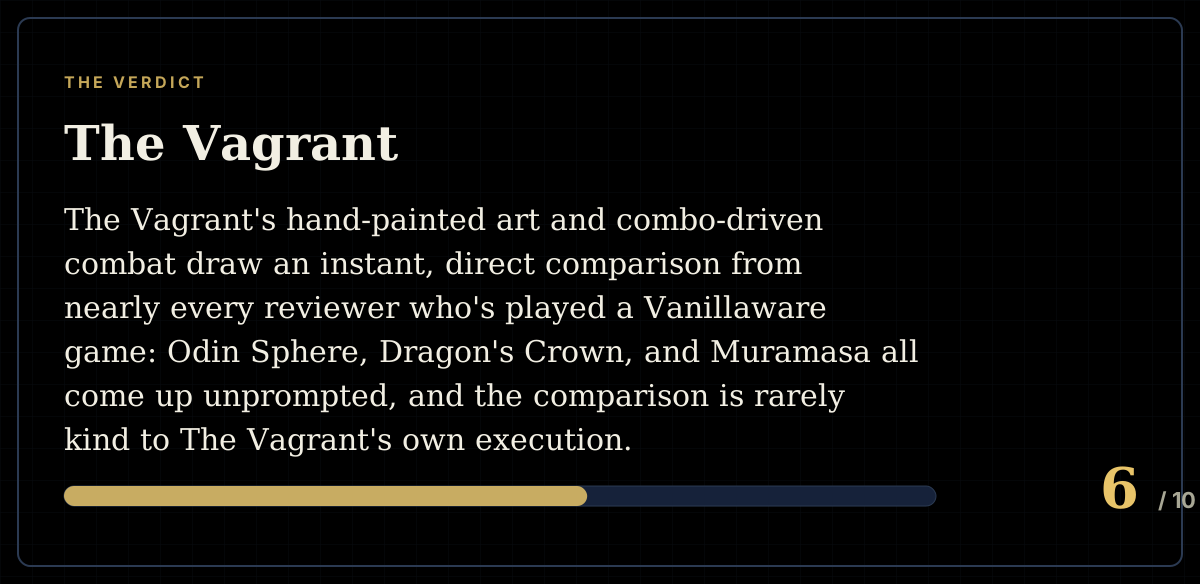
The short versionWanderer Editorial