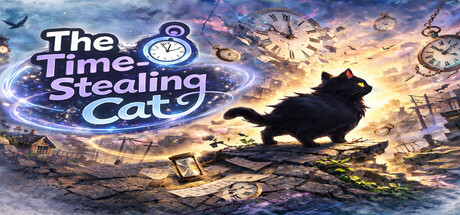
Game review
The Time-Stealing Cat Review
6 / 10
- Developer
- Chaos Cat Games
- Publisher
- Chaos Cat Games
- Released
- 3 August 2026
- Platforms
- ["Windows"]
- Genre
- RPG
A Twelfth Consecutive Launch Without a Single Review
The Time-Stealing Cat released on Steam on 3 August 2026 and currently has zero Steam user reviews, extending an unbroken run of unreviewed launches covered in this stretch of the schedule to twelve. That's a shame for a game with a genuinely distinctive premise, since the specific appeal here — playing an antagonist role in an otherwise conventional fantasy RPG story — is exactly the kind of hook that either clicks immediately or falls flat depending entirely on execution, and no store page description can settle that question on its own. This review is built entirely from the developer's own store page description, not from verified play.
Playing the Villain's Pet, Not the Hero
The premise inverts the standard RPG structure outright: "In a typical RPG, the hero defeats the Demon King. But in this game, you're on the Demon King's side." The player controls the Demon King's cat, whose "only mission" is to "delay the heroes for as long as possible before they reach the Demon King's Castle," with the framing that "the more time you buy, the stronger the Demon King becomes—and eventually, even the outcome of the final battle can change." That's a clever structural idea: rather than fighting the hero directly, the player works around them, manipulating the world itself to slow an opposing force that the game frames as automated and largely out of the player's direct control. It's a premise that immediately invites comparison to games built around indirect obstruction rather than direct combat, and the novelty of casting the player as antagonist-support rather than protagonist is a meaningfully different framing from most fantasy RPGs covered in this stretch.
Sabotage Instead of Combat
The specific tools described for sabotage are concrete: "collapse bridges," "block roads," and "buy out valuable items" before the automatically-traveling heroes can reach them. That last detail is worth pausing on — the store page states the heroes "automatically travel across the world," which suggests the core gameplay loop isn't about outrunning or intercepting a fast-moving threat, but about positioning obstacles ahead of a predictable path, more akin to a puzzle or resource-race than an action RPG. Whether that automatic-travel design makes for tense, well-paced sabotage runs or for a slower, more methodical experience where the outcome is telegraphed well in advance is impossible to judge without playing it, but it's a specific and unusual enough design choice that it deserves to be called out rather than glossed over.
The game also describes a dual-form system: as a cat, the player is "small, agile, and can slip into places others can't," while in human form the player "can talk with people, shop for items, and influence events directly." Switching between a stealthy, exploration-focused form and a social, transaction-focused form gives the sabotage loop at least two distinct approaches to the same goal, which suggests some thought has gone into varying how obstacles actually get placed rather than relying on one repeated mechanic throughout. The explorable world is described as spanning towns, "the Great Forest, the Goddess's Pond, Dragon Valley, and the Demon King's Castle," giving the sabotage campaign a handful of distinct settings to work across rather than one undifferentiated space.
A Short Journey, Repeatedly Delayed
The store page frames the hero's journey as one that "normally lasts only ten minutes," with the entire point of the game being how much longer the player's sabotage can stretch it out. That's an unusually short baseline to build a full game around, and it raises a real structural question: if delaying a ten-minute journey is the whole loop, does the game rely on replaying that same short journey repeatedly with escalating sabotage options, or does the described exploration and item discovery genuinely extend a single playthrough into something substantially longer? The store page doesn't specify a total runtime, which makes it hard to gauge whether this is a tight, replayable short-form experience or a padded one, though the explicit mention that "even the outcome of the final battle can change" depending on how much time is stolen suggests there's meant to be a payoff for successful sabotage beyond just a longer clock.
A Low Price With Unusually Broad Language Support
At NZ$6.39 with no discount at the time of writing, The Time-Stealing Cat sits at the budget end of the indie RPG space, in line with its apparent scope as a short, replayable sabotage game rather than a lengthy traditional RPG. There's no mention on the store page of any monetisation beyond the base purchase. Notably, the game supports an unusually broad 30 languages, including English, Japanese, Korean, both Chinese variants, and a long list of European languages — a wider localisation effort than most small indie titles attempt, suggesting the developer is aiming for a genuinely international audience despite the modest price point.
Verdict
The Time-Stealing Cat pitches a genuinely novel twist on the fantasy RPG formula: rather than playing the hero, the player works for the villain, using a dual cat-and-human form to sabotage an automatically-traveling hero's short journey before the final battle. Like every other title covered in this stretch, it remains completely unreviewed by Steam's user base at the time of writing, so whether its sabotage-focused loop stays engaging across repeated attempts, and whether its short baseline journey supports a satisfying full game, are unverified claims rather than confirmed strengths. Its low price and broad language support make it a low-risk pick for RPG fans specifically curious about its antagonist-focused premise, with the standing caveat that this assessment rests entirely on the developer's own description rather than anyone's actual playthrough.
Screenshots
-

Anime-style cutscenes frame the heroes' journey between sabotage sections, shown here as a young mage party is interrupted mid-castleImage: Chaos Cat Games via Steam -
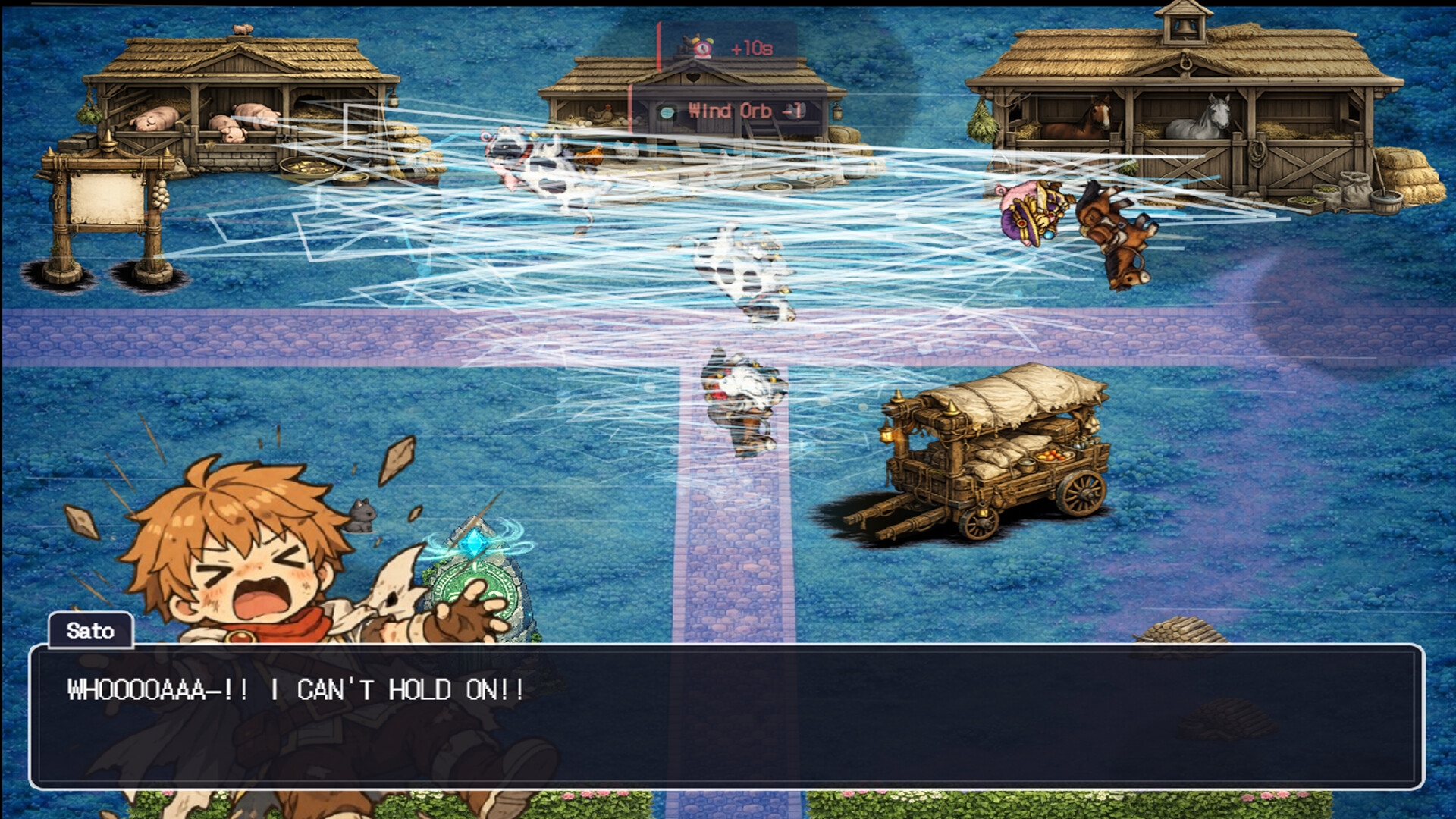
A farm sabotage sequence shows a wind effect scattering animals and a cart while a "+10s" readout tracks how much time has just been stolen from the heroesImage: Chaos Cat Games via Steam -
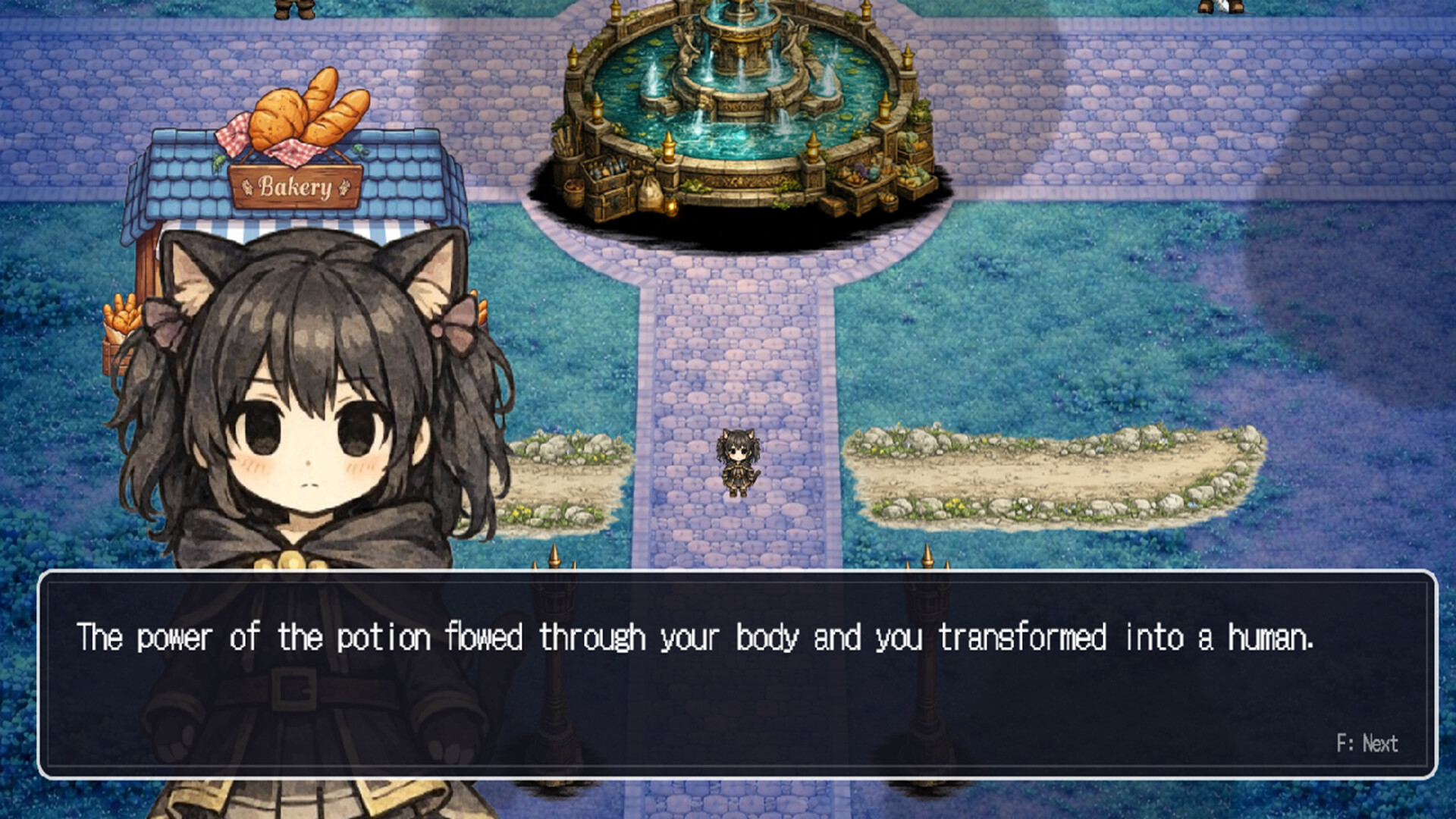
A town square scene captures the cat-to-human transformation in action, with the game explicitly narrating the change as it happensImage: Chaos Cat Games via Steam