Game review
Cursed and Fading Review
6 / 10
- Developer
- RG GameDev, LLC
- Publisher
- RG GameDev, LLC
- Released
- 14 September 2026
- Platforms
- ["Windows", "Linux"]
- Genre
- RPG
A Third Launch in a Row With No Reviews Yet
Cursed and Fading released on Steam on 14 September 2026 and, like the last two titles covered here, has picked up zero Steam user reviews at the time of writing. That pattern is becoming a real feature of working through this corner of the 2026 release calendar rather than a one-off oddity, and it deserves the same blunt disclosure every time: nothing below reflects verified play or player testimony, only the developer's own detailed store-page description of a game that, on paper, has one of the more distinctive core mechanics seen in this batch. Readers should treat every claim here as unverified until a real community weighs in.
Every Step Costs You a Stat Point
The hook driving Cursed and Fading is a genuinely unusual movement-as-resource-drain mechanic: "with every movement, you choose what to give up: Strength, Dexterity, Constitution, Intelligence, Wisdom, or Charisma," the store page explains, and "one point at a time, with every tile you cross, you grow weaker." Letting Constitution hit zero ends the run outright, while draining the other five narrows a character's options as they go. That's a striking twist on the roguelike survival loop — rather than a health bar ticking down from hazards or enemy hits, the game frames basic movement itself as the primary drain on a character's power, turning every step across the map into a small, permanent trade-off rather than a free action. It's the kind of mechanic that could easily tip into being punishing busywork if the pacing isn't tuned carefully, or could be the game's most memorable idea if it lands — and with no player feedback yet available, which of those two outcomes actually describes the finished game is impossible to say.
Six Classes, Four Tiers of Loot, and a Forgiving Death
Runs start "equipped and strong" on a procedurally generated map, with six selectable classes — Archer, Knight, Heavy Knight, Mounted Knight, Samurai, and Wizard — setting a character's starting stats before the attribute-draining movement system starts eroding them. The store page describes "400+ potential pieces of equipment" spanning Common, Uncommon, Rare, and Legendary rarity tiers, covering "weapons, shields, armor, accessories, and consumables," with an inventory whose capacity is explicitly tied to a character's current Strength and Constitution — a detail that ties the loot system directly back into the core drain mechanic, since a character who has bled out too much Strength presumably can't carry as much gear as one who has managed their stat spending more carefully. Combat itself is described as resolving automatically, with "your equipment versus the enemy's abilities" determining outcomes rather than direct player input during fights, which puts the tactical weight of the game almost entirely on pre-fight preparation, stat management, and route planning rather than on real-time execution.
Dying "does not end your run," per the store page — instead, "your soul finds a new body, losing only your gold, inventory, and equipment, but retaining your knowledge and slain enemies." That's a meaningful softening of the usual roguelike permadeath sting: a failed attempt costs a character their gear and currency, but not the run itself or whatever the player has learned about the map and its threats along the way. Between deaths and after runs, players can also spend collected Soul Shards "toward permanent unlocks," giving the game a standard meta-progression layer to soften the sting of a rough run further still. The overall structure sits closer to a rogue-lite than a strict roguelike as a result — failure has real, felt consequences, but it isn't the kind of total reset that would make experimenting with the attribute-drain system feel too risky to attempt.
A Daily Run Mode With a Leaderboard Twist
Beyond the standard procedurally-generated Freeplay mode — playable on Small, Medium, or Large maps, or against a player-entered generation seed — the game includes a Daily Run mode that starts "every midnight UTC" and gives every player "the whole world" on "the same map from the same start." Steam Leaderboards then rank players by "how much damage you can land on the lich in the fewest moves possible," which is a clever way of turning the core movement-drains-your-stats mechanic into a direct competitive scoring system: since every tile crossed costs a stat point, the leaderboard is effectively measuring who can reach and damage the final boss while spending the fewest points of their own attributes along the way. That's a neat, mechanically coherent use of the game's central idea for a shared daily challenge, assuming the underlying combat and pathing hold up well enough in practice to make route optimisation feel meaningful rather than arbitrary.
A Discounted Price for an Unusually Specific Pitch
At NZ$15.18 during a 25% launch discount off its regular NZ$20.25 price, Cursed and Fading isn't a budget release, but its feature list — six classes, 400-plus items across four rarity tiers, a forgiving-but-not-free death system, and a genuinely novel attribute-drain movement mechanic tied into a competitive daily mode — is unusually specific and mechanically interconnected for the asking price. There's no mention on the store page of any monetisation layer beyond the single purchase. The real open question, as with every other unreviewed launch in this batch, is whether the execution matches the ambition of the pitch — a mechanic this unusual lives or dies on careful numbers tuning, and that's precisely the kind of thing a store-page description can't confirm on its own.
Verdict
Cursed and Fading pairs a genuinely distinctive core mechanic — spending your own attributes with every step across a procedurally generated map — with a substantial supporting structure of six classes, four loot tiers, a forgiving death system, and a competitive daily leaderboard mode that directly plays off its central drain mechanic. It's also, like the last two games covered in this run, a completely unreviewed launch at the time of writing, so every claim above should be read as the developer's pitch rather than a verified assessment. For fantasy roguelike fans drawn to genuinely original ideas rather than another reskin of the genre's usual formula, Cursed and Fading looks like one of the more interesting untested prospects on Steam right now — but "untested" is doing real work in that sentence, and buyers should go in aware that no one has yet confirmed whether the idea holds up across a full playthrough.
Screenshots
-
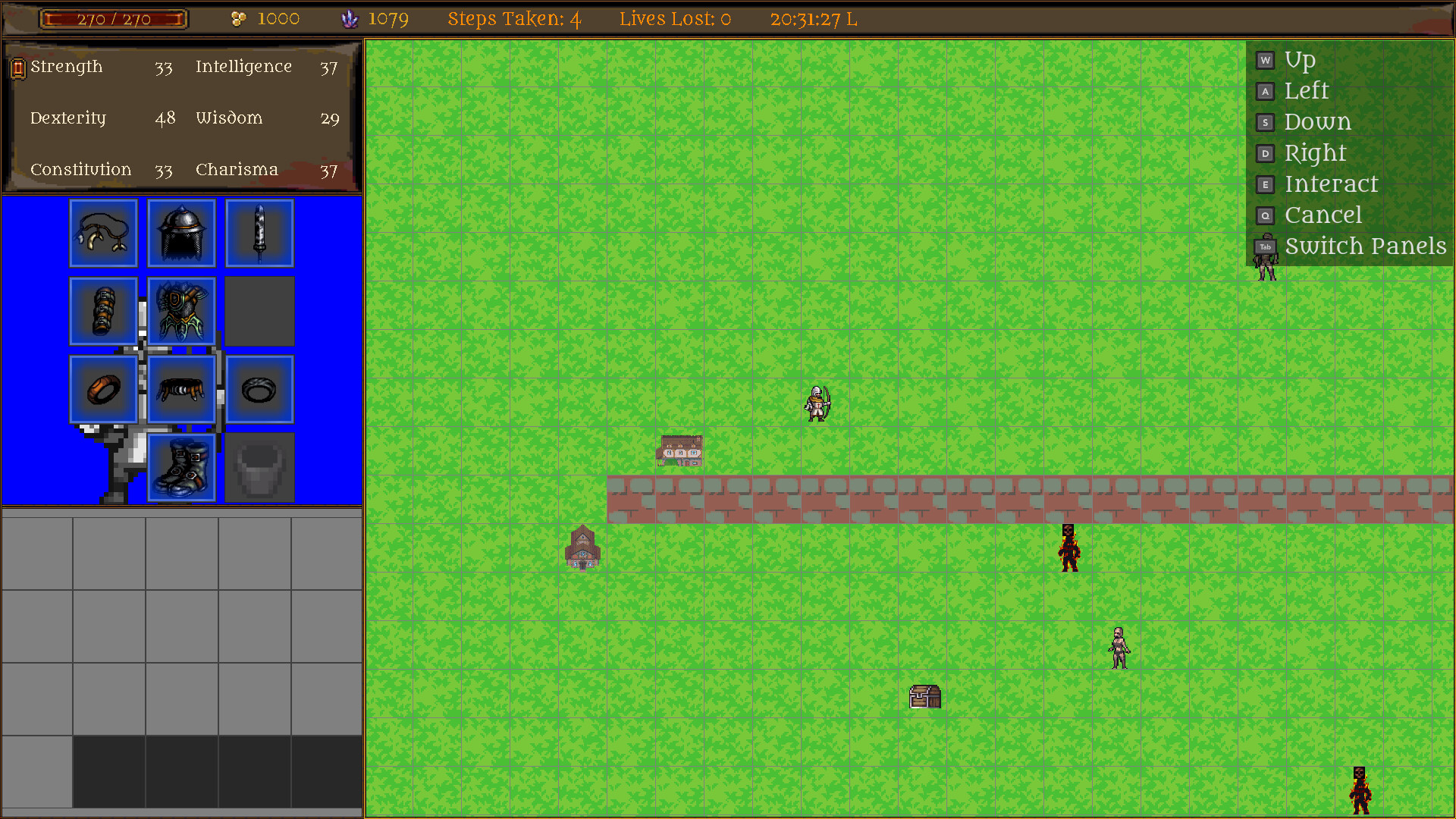
The overworld map tracks Steps Taken alongside all six attributes, tying every tile crossed directly to the game's stat-drain mechanicImage: RG GameDev, LLC via Steam -
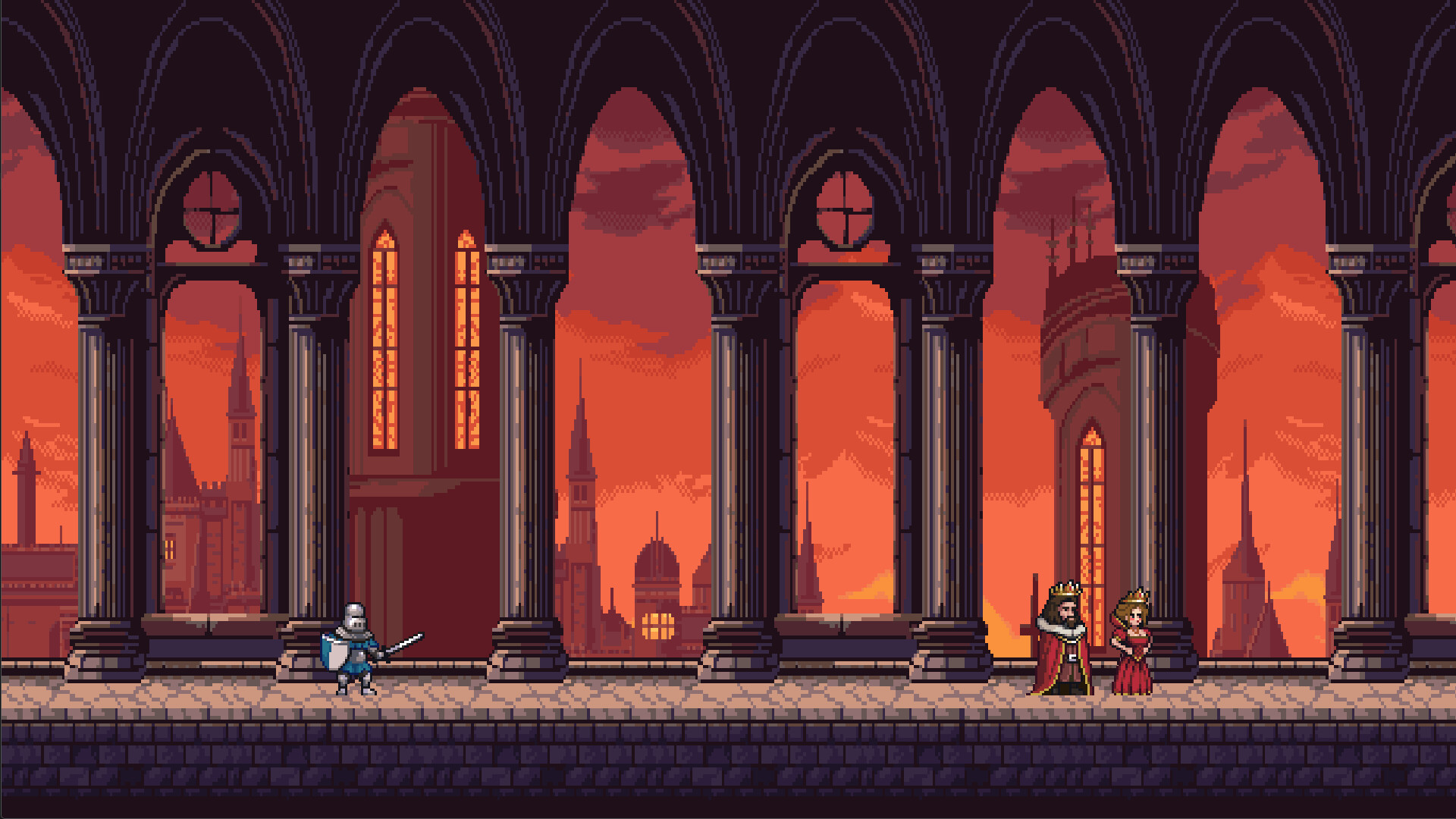
Story cutscenes render in a pixel-art side view, here showing an armoured knight approaching a king and queen in a grand hallImage: RG GameDev, LLC via Steam -
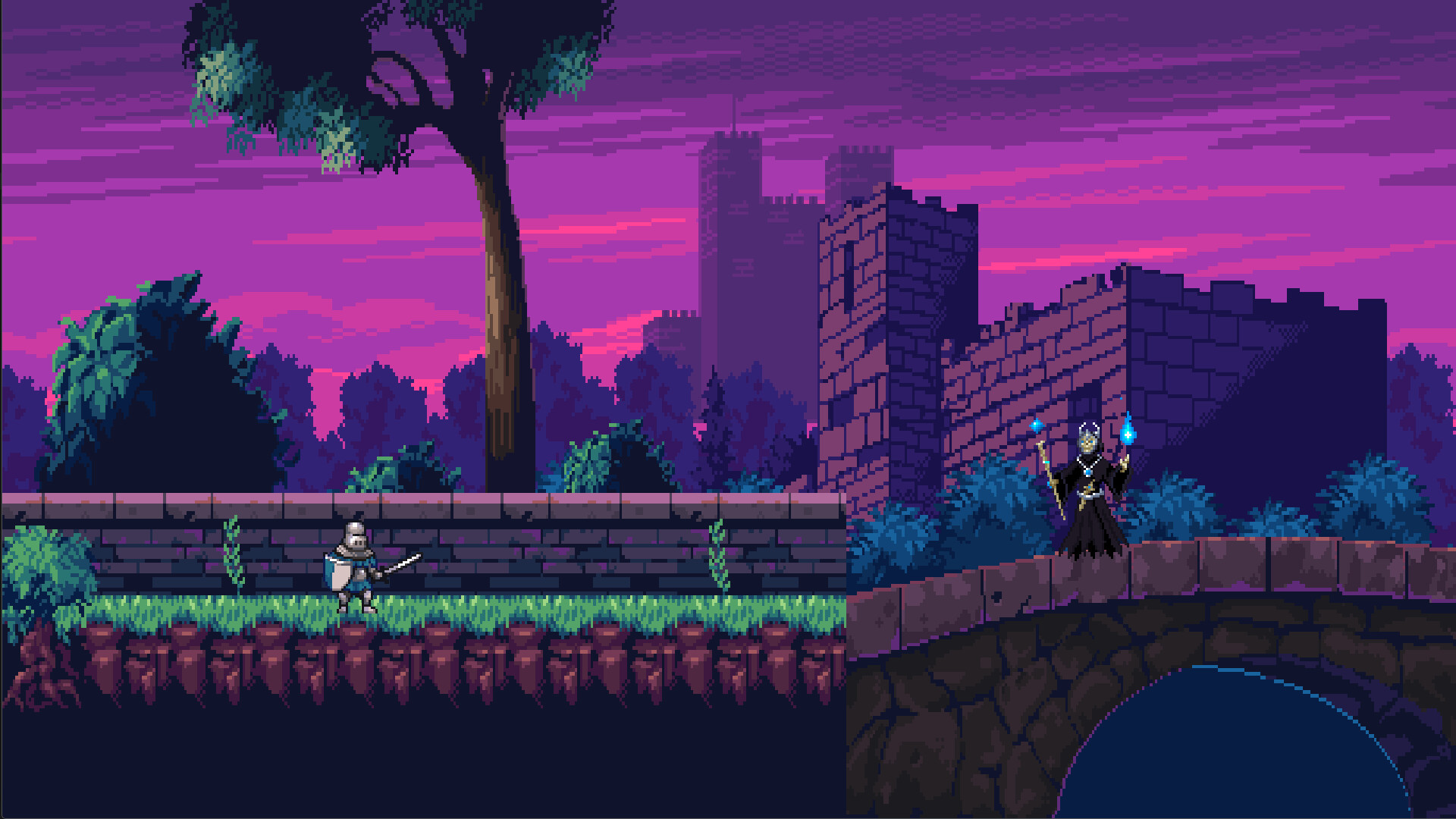
A knight confronts a staff-wielding lich across a bridge, one of the game's side-view encounter scenes rendered in the same pixel-art style as its cutscenesImage: RG GameDev, LLC via Steam