Game review
The Spirit of Twelve Review
6.5 / 10
- Developer
- STANDER Games
- Publisher
- STANDER Games
- Released
- 10 August 2026
- Platforms
- ["Windows", "Mac", "Linux"]
- Genre
- RPG
A Twenty-Second Consecutive Launch Without a Single Review
The Spirit of Twelve released on Steam on 10 August 2026 and has zero user reviews at the time of writing, extending this stretch's run of unreviewed launches to twenty-two — now well over a month since release, which is a longer unreviewed gap than most titles in this run. That's a genuine surprise given the scope on display here: this isn't a quick, cheap experiment but a fully-realized narrative RPG with ten playable champions, forty-odd hand-painted locations, and a full second game mode layered on top of the campaign. This review is built entirely from the developer's own store page description, not from verified play.
Dice on the Table, No Hidden Math
The combat pitch is unusually transparent for an RPG: turn-based fights run on an "old-school tabletop register," rolling a d20 against a character's Might, Grace or Wits stat with "every hit, crit and miss on the table, no hidden math." That's a meaningfully different design philosophy from the probability curves most digital RPGs hide behind flashy animations — a design choice that trusts players to understand and accept genuine tabletop-style variance rather than smoothing it into something that always feels fair. Strikes, guards, and invocations are represented as cards, with fight-winners choosing new cards to shape "each hero's hand" over time, layering deckbuilding-style choice on top of the dice-driven resolution rather than replacing it.
That transparency is a double-edged design commitment, though. Most digital RPGs hide their dice behind damage ranges, hit-chance percentages tucked into tooltips, or animation flourishes precisely because raw, visible variance can feel punishing rather than fair when a string of bad rolls swings a fight — a d20 against Might, Grace or Wits will occasionally produce a run of misses that no amount of deckbuilding can fully offset. Leaning into that variance rather than smoothing it over is a bold, old-school choice that tabletop veterans will likely appreciate as honest, but it also means the game is betting that its card-and-class systems give players enough agency to feel in control despite the dice, rather than at their mercy.
A Ward, a Kingdom, and Twelve Sleeping Powers
The story frames the player's party around Lily, "the Ward" — a child hiding twelve ancient powers (Stone and Flame, Tide and Dawn, Wrath and Mercy, among others) sleeping inside her, hunted since a thief pried open "the world's first wound" fifteen years earlier. Progression is tied directly to narrative stakes: fight by fight, the player "rouses" the sleeping Twelve into "world-turning invocations," meaning power growth and story revelation are explicitly the same mechanical thread rather than a levelling system running in parallel to an unrelated plot. That's a well-integrated structure on paper, tying the RPG's central hook (unlocking new invocations) directly to advancing the mystery of what the Twelve actually are and why Lily was hidden.
Ten Champions, Ten Class Decks
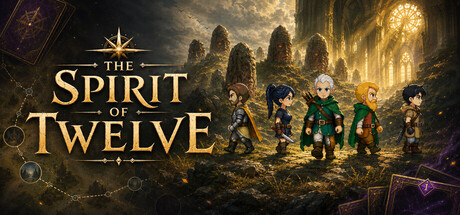
Six champions form the base roster available from the start — Lily herself, the archer Aaron, the axe-wielding Old Guard Regneel, the mastiff Dex (a genuinely unusual playable-dog inclusion with "a fighting deck of his own"), the trap-and-poison Saboteur Mirek, and the sword-forsaking knight Dain — with four additional champions (Breac, Veylan, Eirwen, and Pryderial) added free via the "Champions of the Road" update for a separate Endless Trial mode. Each champion carries "a class deck all its own," suggesting the ten aren't reskinned stat blocks but structurally distinct fighters, which matters for how much the game's card-and-dice combat can vary from one lineup to the next. Whether ten genuinely distinct decks translates into ten genuinely distinct playstyles, rather than several decks converging on similar optimal strategies, is the kind of balance question only extended play could answer.
A Painterly Map and an Endless Trial
The main campaign spans four regions and roughly forty painterly locations laid out on a branching travel map with story beats, optional elite fights, campsites, and lore stones — a fairly standard but well-scoped structure for a narrative RPG of this size. Once the main story concludes, the Endless Trial opens: a self-contained roguelike mode built on the same open d20-and-card combat, sending a chosen champion through "a branching gauntlet of fights, elites, shops and campfires that never ends," with deck-forging and relic-hoarding layered on top of the base combat system. That's a substantial amount of promised replay value bolted onto a campaign that already sounds sizeable on its own, and pairing a story-driven RPG with an entirely separate infinite mode is a more ambitious scope commitment than most titles in this zero-review stretch attempt. At NZ$23.49 with no discount at the time of writing, it's also the most expensive title covered in this run so far, a price that assumes real substance across both the campaign and the Trial to feel justified.
Verdict
The Spirit of Twelve pairs an unusually transparent d20-and-card combat system with a well-integrated narrative structure — ten distinct playable champions, a branching painterly world, and a bonus Endless Trial mode that effectively doubles the game's promised lifespan. It's one of the more scope-ambitious releases in this entire zero-review stretch, and its month-plus without a single review is genuinely harder to explain than for most titles here, given how much content and structural ambition is on display. Part of that gap may simply be a discoverability problem rather than a quality signal: a painterly, tabletop-styled RPG with visible dice rolls and cards is a specific, somewhat old-fashioned pitch that may not surface well in Steam's algorithmic recommendations for players browsing action-oriented or more visually flashy RPGs, even though its actual design ambitions — ten distinct class decks, a branching map, and a full second infinite mode — are considerably deeper than many higher-visibility releases manage. Whether the ten class decks are actually balanced against each other, and whether the tabletop-style dice variance feels satisfying rather than frustrating over dozens of hours, remain unverified questions a full playthrough would need to answer — this assessment rests entirely on the developer's own description rather than anyone's actual experience with the game.
Screenshots
-
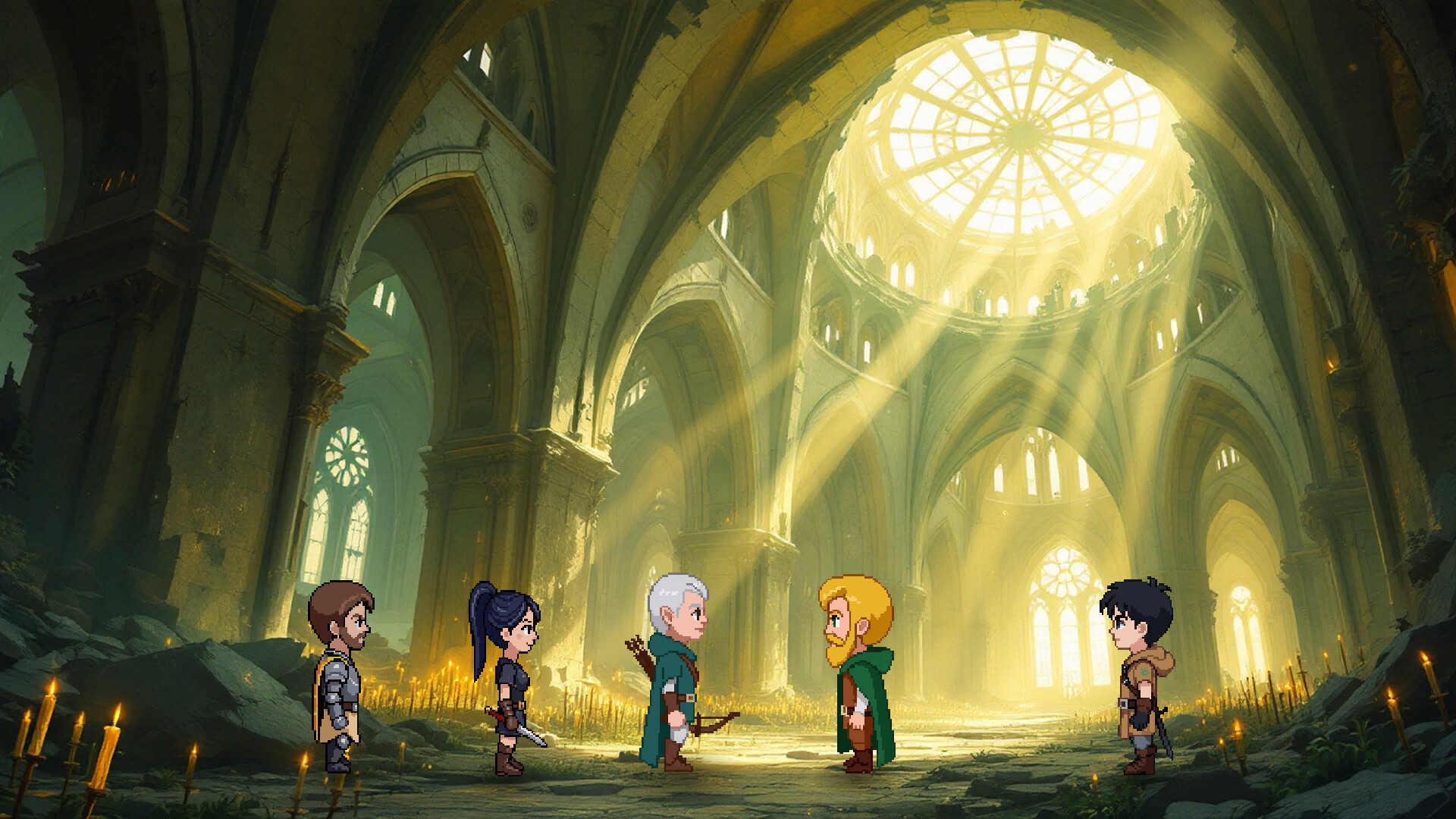
The party gathers inside a sunlit ruined cathedral, one of the game's hand-painted story locationsImage: STANDER Games via Steam -
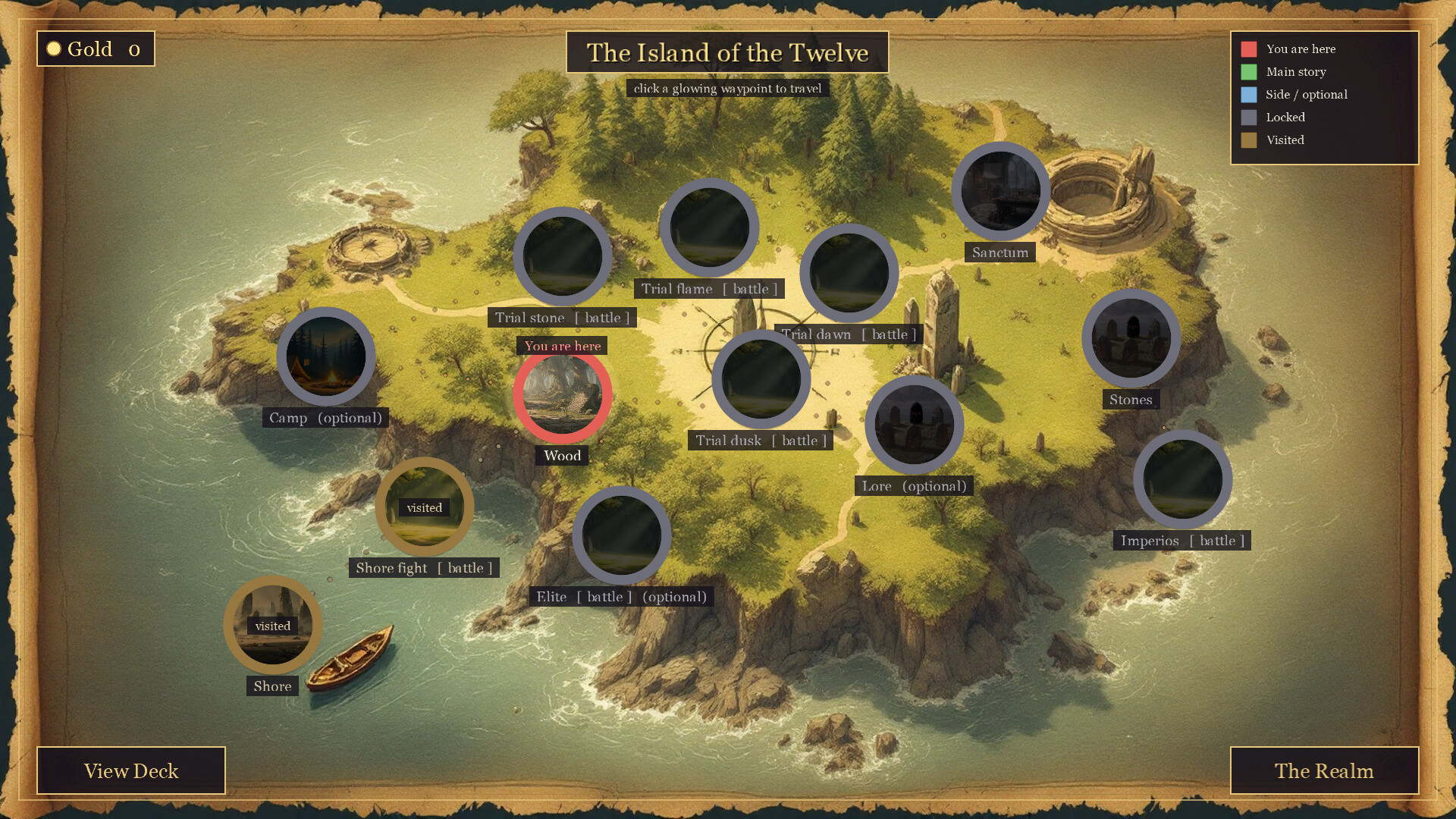
The branching travel map, marking mandatory story trials, optional elite fights, camps and lore stones across the regionImage: STANDER Games via Steam -
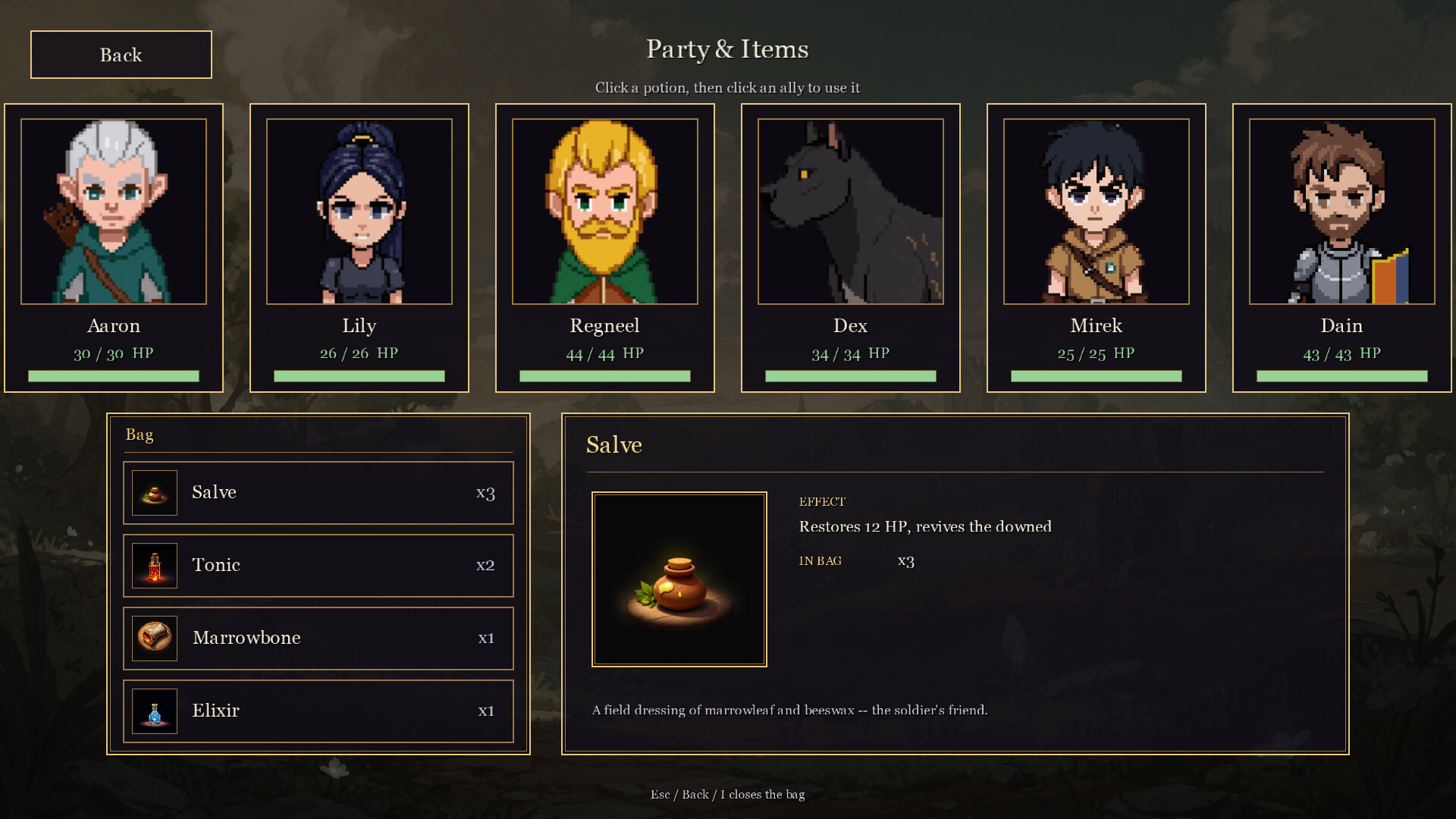
The party and inventory screen, showing all six starting champions — including the playable dog Dex — alongside the bag's healing itemsImage: STANDER Games via Steam