Game review
The Hunter's Inn Review
6 / 10
- Developer
- GGD3V
- Publisher
- GGD3V
- Released
- 7 September 2026
- Platforms
- ["Windows", "macOS"]
- Genre
- RPG
A Fifth Consecutive Unreviewed Launch
The Hunter's Inn released on Steam on 7 September 2026 and, like the last four titles covered in this run, currently has zero Steam user reviews. The same disclosure applies here as it has each time: this review is built entirely from the developer's own store page description, not from verified play, and there is no community feedback yet to confirm whether any of the systems described below actually deliver on their pitch. What follows should be read as an assessment of the game's stated design, not a report on how it plays in practice.
A Single Inn as the Last Refuge From a Demon King
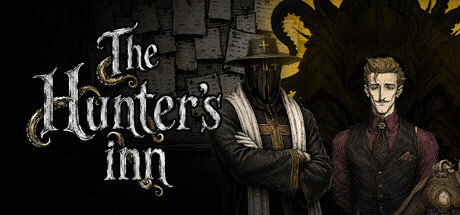
The setting is a fairly standard dark fantasy premise executed with a tighter focus than most: "monsters grow more aggressive across the land" under "the influence of the Demon King," and "a single inn remains as a refuge for the few surviving mercenaries, scholars, and fallen knights who still fight back." Rather than sprawling across a full world map, the player takes contracts from a local quest board as one more adventurer passing through, and the store page frames the inn's regulars as the real narrative core: "through quiet interactions with the regulars, you piece together the tragedies left behind by the dark forces threatening the realm," with personal missions built around confronting those individual pasts. That's a narrower narrative scope than a typical fantasy RPG attempts, built around a handful of named characters at a single location rather than a globe-spanning cast.
Dice-Based Exploration Leading Into Tactical Fights
Where the game's design gets more specific is in how exploration and combat are structured: "exploration relies on a dice-based board game loop, leading to random encounters, events, and tactical fights." That framing suggests something closer to a tabletop board-game adaptation than a traditional RPG overworld — presumably a dice roll determining movement along a board-like path, with the specific tile landed on triggering whatever encounter or event sits there, rather than free-roam exploration across a continuous map. Combat itself is described as built on "simultaneous turn mechanics," where "reading enemy patterns and managing timing matter more than brute force" — a system that, if it works as described, would put more weight on predicting and reacting to what an enemy is about to do than on simply having the higher stats, since both sides would be committing to actions at the same time rather than trading blows in a strict turn order.
Deep Freedom and No Padding Within a Tight, Linear Package
The store page is explicit that the game "does not force you into rigid roles," instead giving players "deep freedom within each discipline" to "tailor your skill tree and refine your specialization" as they see fit — a promise of build flexibility that's fairly ambitious for a game the developer also describes as "a concise, turn based RPG." That combination of a flexible skill tree within a tightly scoped package is worth noting because it cuts against the usual assumption that build depth requires a long campaign to justify it; here, the pitch is that meaningful specialization choices exist even within what the store page calls "a linear, focused experience lasting thirty to sixty minutes." Whether a 30-to-60-minute run leaves enough room to actually feel the impact of different build choices, rather than just picking one path and finishing before any real differentiation kicks in, is exactly the kind of question that would normally be answered by player reports — and there simply aren't any yet.
The store page is also unusually candid about what The Hunter's Inn is not trying to be: it explicitly states the game "does not hold your hand or stretch its duration with unnecessary filler, delivering a complete journey designed to be straightforward and engaging from start to finish." For a genre where scope creep and padded playtime are common complaints, a developer proactively committing to a short, complete experience rather than an artificially extended one is a reasonable selling point on its own — though it also means prospective buyers should go in expecting exactly what's advertised: a tight, one-sitting RPG rather than a sprawling adventure with dozens of hours of content.
A Budget Price That Matches a Deliberately Small Scope
At NZ$3.45 with no discount at the time of writing, The Hunter's Inn is priced squarely as an impulse-purchase-tier release, which lines up sensibly with its stated 30-to-60-minute runtime — there's no attempt here to charge a full-length-RPG price for a short, focused experience. There's also no mention on the store page of any monetisation beyond the base purchase. At this price point, the risk of a disappointing purchase is inherently lower than with the pricier unreviewed titles covered elsewhere in this run, which makes The Hunter's Inn a comparatively low-stakes way for dark fantasy RPG fans curious about its dice-board and simultaneous-turn combat systems to find out firsthand whether the pitch holds up, given that no one else has weighed in yet.
Verdict
The Hunter's Inn pitches a tightly scoped dark fantasy RPG built around a single inn, a dice-based exploration board, and simultaneous-turn tactical combat, wrapped in a deliberately short, unpadded 30-to-60-minute runtime. Like every other title covered in this stretch of the schedule, it remains completely unreviewed by Steam's user base at the time of writing, so its distinctive-sounding systems and promised build flexibility are unverified claims rather than confirmed strengths. Its low asking price at least keeps the risk of trying it modest compared to pricier unreviewed alternatives, making it a reasonable low-stakes pick for dark fantasy RPG fans specifically curious about its dice-board and simultaneous-turn combat ideas — with the same standing caveat that this assessment rests entirely on the developer's own description rather than anyone's actual playthrough.
Screenshots
-
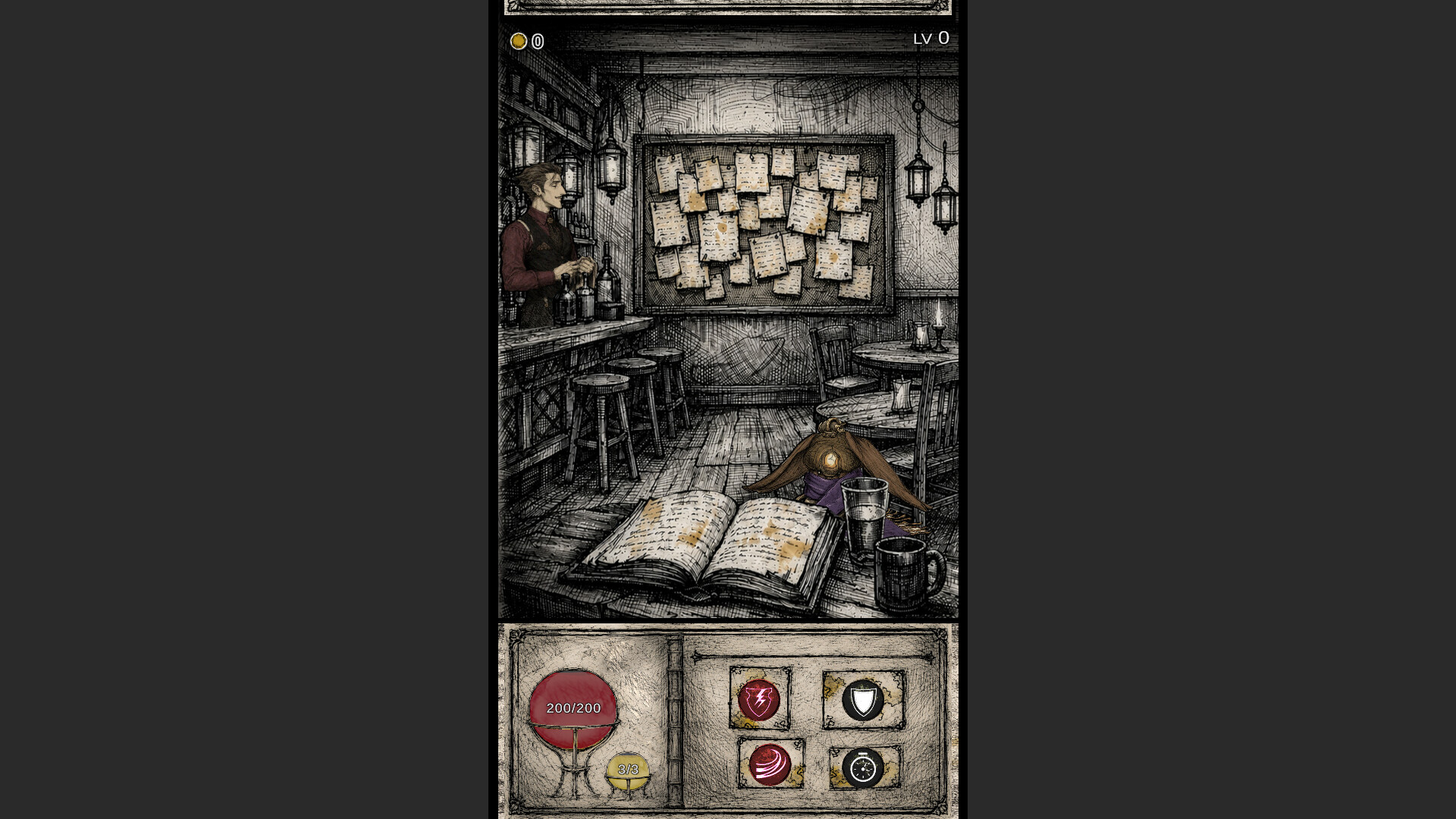
The inn's quest board and innkeeper anchor the hub screen, rendered in a detailed crosshatched pen-and-ink art styleImage: GGD3V via Steam -
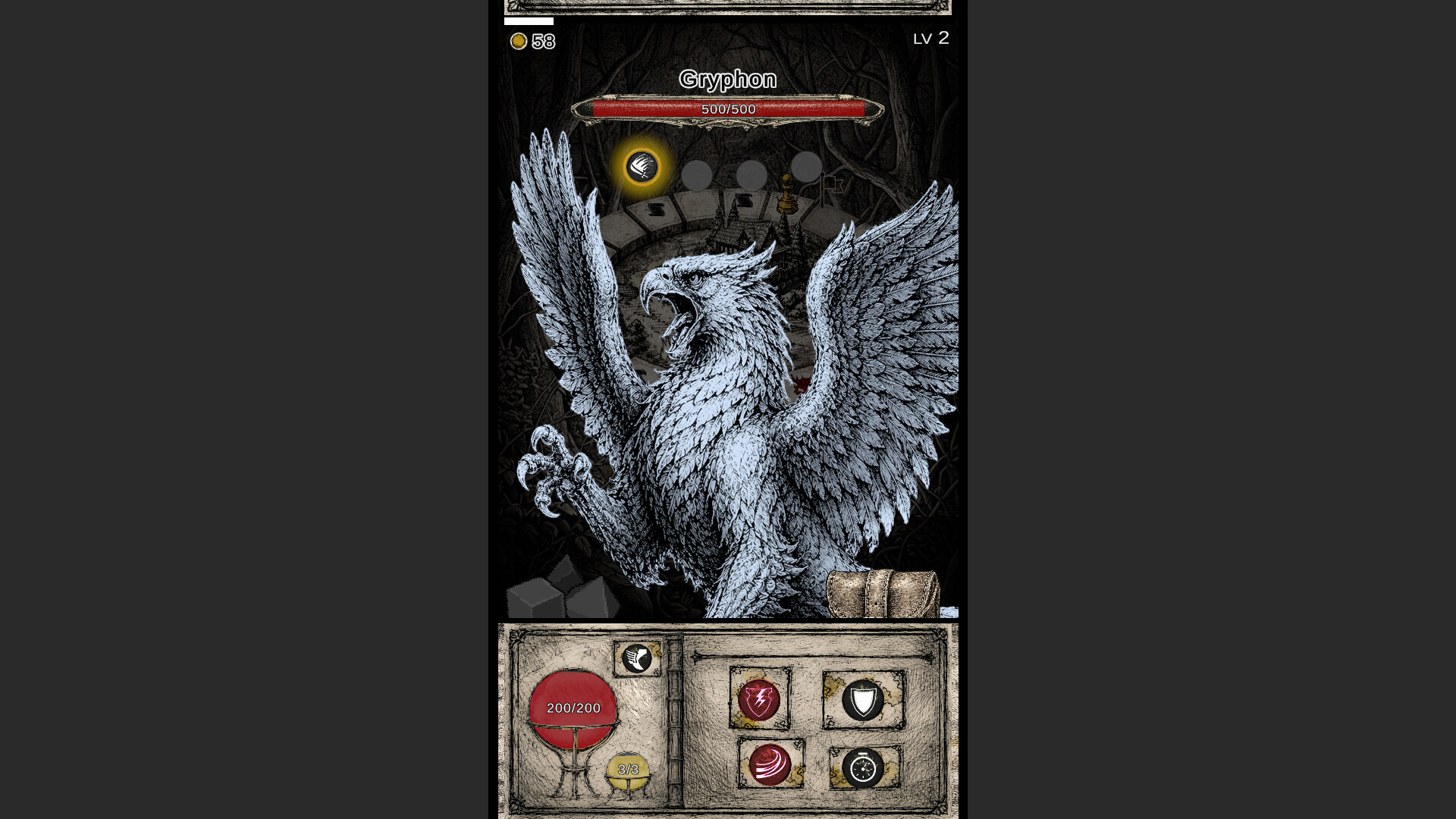
A tactical encounter against a Gryphon, with board-path tiles and ability icons tracking the fight above its health barImage: GGD3V via Steam -
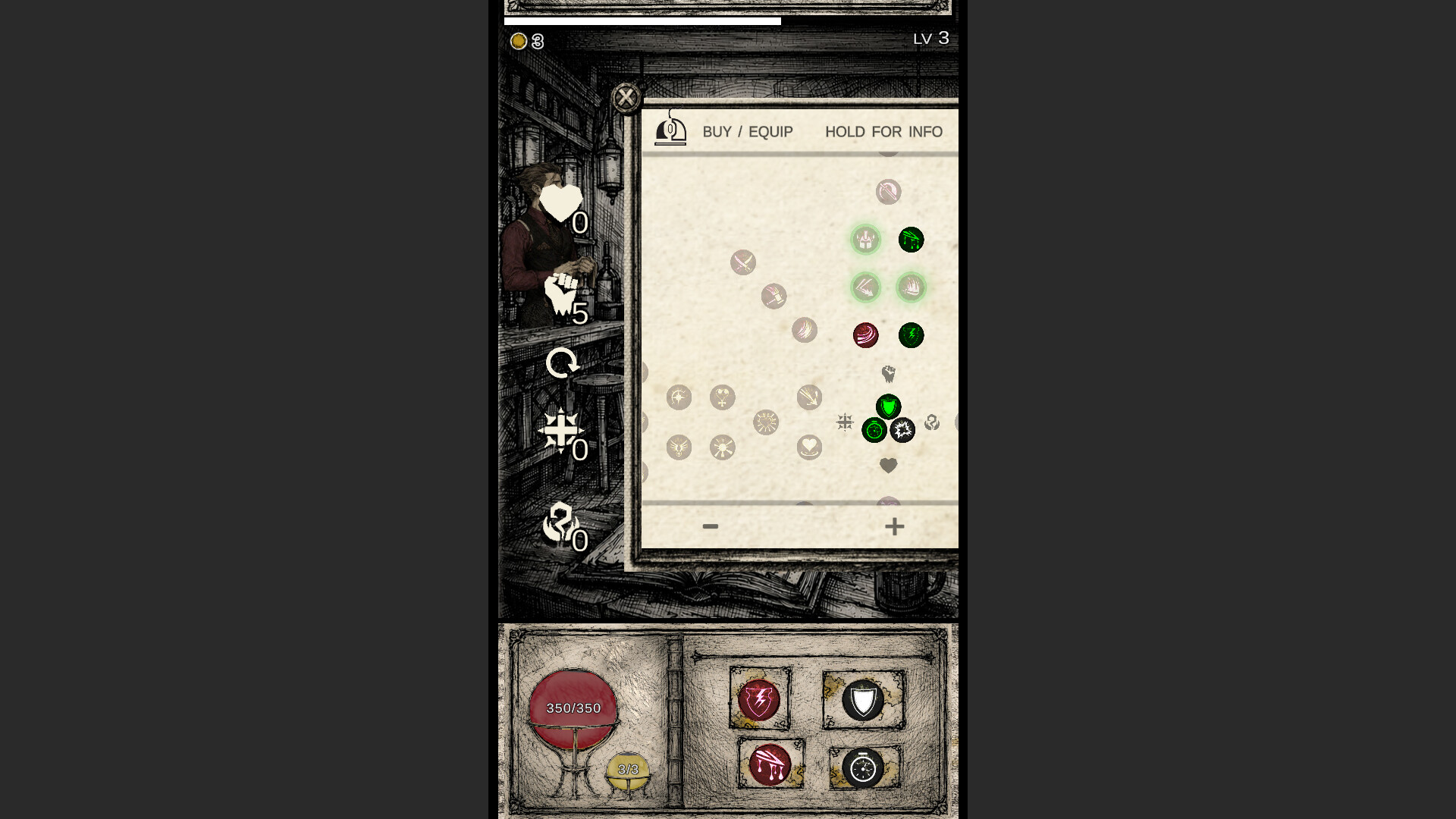
A buy-and-equip screen lets players shop for gear and abilities from a grid of icons between runsImage: GGD3V via Steam