
Game review
Astralis: Dawnblades Review
6 / 10
- Developer
- Studio Gravenoire
- Publisher
- Studio Gravenoire
- Released
- 10 September 2026
- Platforms
- ["Windows", "Linux"]
- Genre
- RPG
A Second Launch Reviewed With Zero Player Feedback
Astralis: Dawnblades released on Steam on 10 September 2026 and, at the time of writing, has not received a single Steam user review, positive or negative. As with any completely unreviewed release, that has to be stated up front rather than buried as a footnote: there is no community verdict to check the developer's claims against, no player report on whether the tactical combat holds up over a full campaign, and no way to confirm how the game performs outside of what Studio Gravenoire has written on its own store page. Everything below is drawn strictly from that official description and its published feature list, not from firsthand play or verified player testimony, and it should be read with that limitation squarely in mind.
Leading a Mercenary Company, Not a Lone Hero
The core premise Studio Gravenoire pitches is a heroic fantasy tactical RPG built around company management rather than a single protagonist: "you do not play a lone hero," the store page states, "you manage a company." Players recruit fighters, assign them into squads, and shape them "through classes, specializations, equipment and combat synergies" before ever taking a mission — a structure that puts as much weight on preparation between fights as on the fights themselves. The store page also frames this in narrative terms, describing choices "for a company caught between common folk, powerful rulers and legends that become very real," which suggests the game is aiming for more than a mechanical squad-builder layered over generic fantasy dressing, though without any player account of how that narrative actually lands in practice, that ambition remains an unverified claim rather than a confirmed strength.
A Stronghold and Node-Based Expeditions Built Around Risk
Between missions, the described game loop centres on a home base with four named facilities: a barracks for managing recruits and squads, an academy for unlocking tactical options, a guild bank for organising recovered gear, and a crucible for crafting and improving equipment. The store page is explicit that this hub "is not decoration" but rather "where loot becomes strategy," which lines up with a design philosophy common to squad-based tactical RPGs — the value of any given expedition being measured less by immediate combat wins and more by what gets hauled home and converted into the next squad upgrade. Recovered weapons, armour, accessories, and materials are described as feeding into builds for "durable frontline squads, burst damage teams, control-focused builds, or more balanced groups," which at least on paper promises a meaningfully different toolkit depending on which archetype a player leans into, though the actual balance and depth of that build variety is impossible to assess without any reviews to draw on. Expeditions themselves are described as unfolding across "connected maps filled with battles, events, choices and rewards," where individual nodes can drain resources, reveal needed materials, or punish a bad decision by leaving a squad too weak to finish a route. The stated design tension — "push deeper for better rewards, or retreat before wounds, losses and bad decisions cost too much" — is a familiar risk-management hook for the genre, closer in spirit to a push-your-luck roguelike layer bolted onto a more traditional tactical RPG shell than to a straightforward linear dungeon crawl. Combat itself is pitched as turn-based and "readable," built around "skill choices, cooldowns, positioning of roles, resistances and synergies between your mercenaries," with the store page framing every encounter as "a tactical problem" rather than a straightforward stat check.
An Optional Rhythm Layer Called MATB
The one genuinely distinctive mechanic the store page calls out by name is something it labels the MATB layer, described as "an optional layer over classic turn-based combat" where characters act once their skill charge bar fills, and where "musical tension creates timing windows that boost physical or magical attacks, with critical opportunities when those windows begin." The pitch is that players can leave MATB off "for a more classic pace" or switch it on "for extra pressure and mastery," effectively offering two different combat rhythms within the same tactical framework — a toggleable, music-timed input layer is an unusual enough addition that it's worth flagging as the game's most original stated feature, even though there's currently no player feedback available on whether it meaningfully changes how satisfying combat feels in practice or ends up as a gimmick most players switch off and forget.
A Fair Asking Price With a Wide-Open Question Mark
At NZ$15.75 with no discount at the time of writing, Astralis: Dawnblades sits in a reasonable price bracket for a single-player tactical RPG with a three-act campaign, and there's no mention anywhere on the store page of microtransactions, loot boxes, or any monetisation layer beyond the upfront purchase — a straightforwardly single-payment release on paper. The store page does note that "a Steam demo is available," which is a genuinely useful option for prospective buyers in this exact situation: with zero reviews to lean on, trying the demo before committing to the full price is a far more reliable way to judge whether the squad management, node-based expeditions, and optional MATB combat layer actually come together than taking the developer's own description at face value.
Verdict
Astralis: Dawnblades pitches an ambitious heroic fantasy tactical RPG built around commanding a mercenary company rather than a lone hero, backed by a genuinely detailed feature list spanning squad building, a four-facility stronghold, node-based risk-and-retreat expeditions, and an optional music-timed combat layer that stands out as its most original idea. None of that has been tested by a single Steam user review at the time of writing, though, which makes this an unusually provisional recommendation — everything here reflects the developer's own account of the game rather than verified play, and the existence of a free demo makes that the obvious, lower-risk way for genre fans to judge Astralis: Dawnblades for themselves before deciding whether the full asking price is worth it.
Screenshots
-
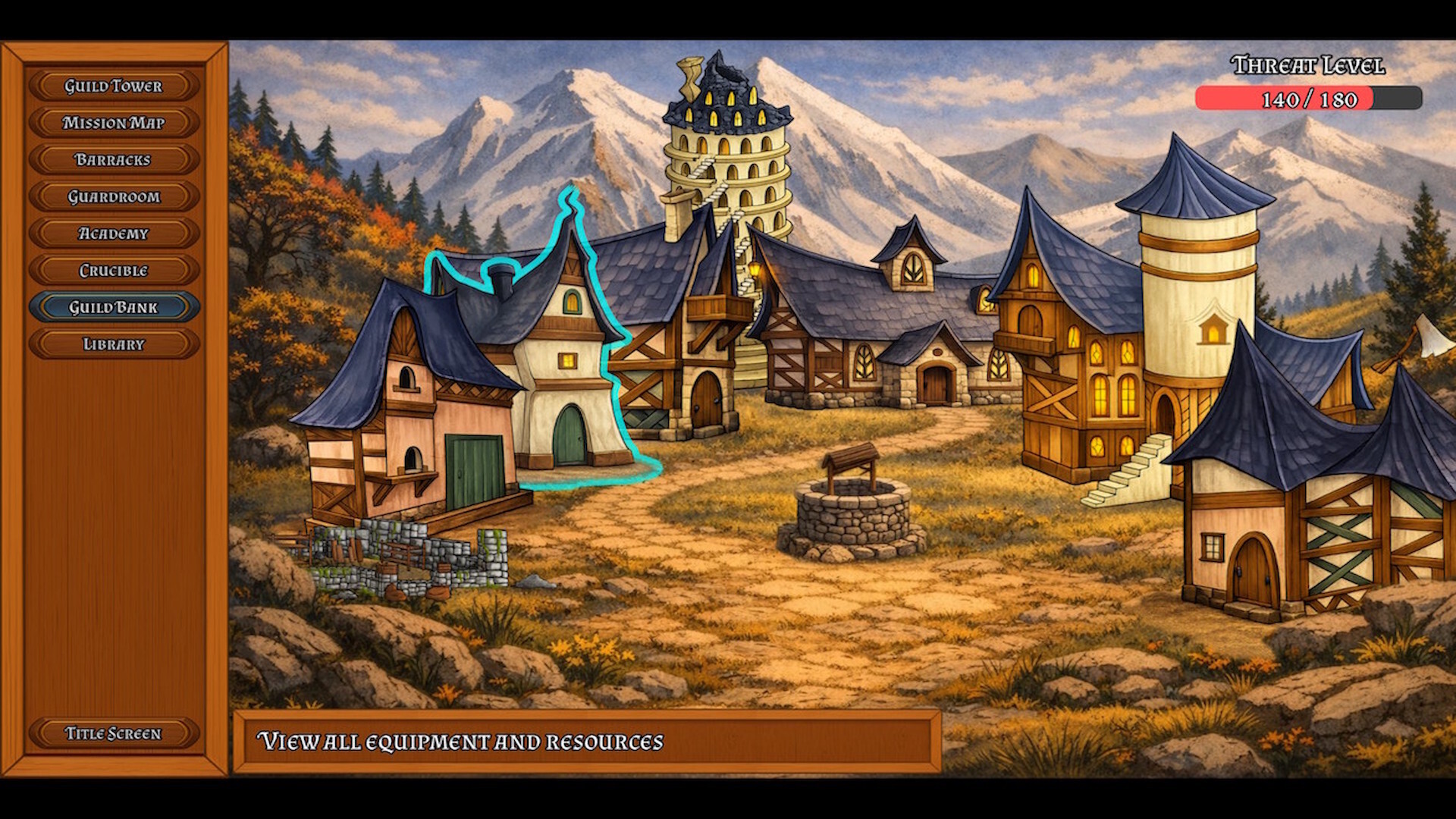
The stronghold hub ties every facility, from the Barracks to the Crucible, to a single painted village view, with a Threat Level meter tracking the wider campaignImage: Studio Gravenoire via Steam -
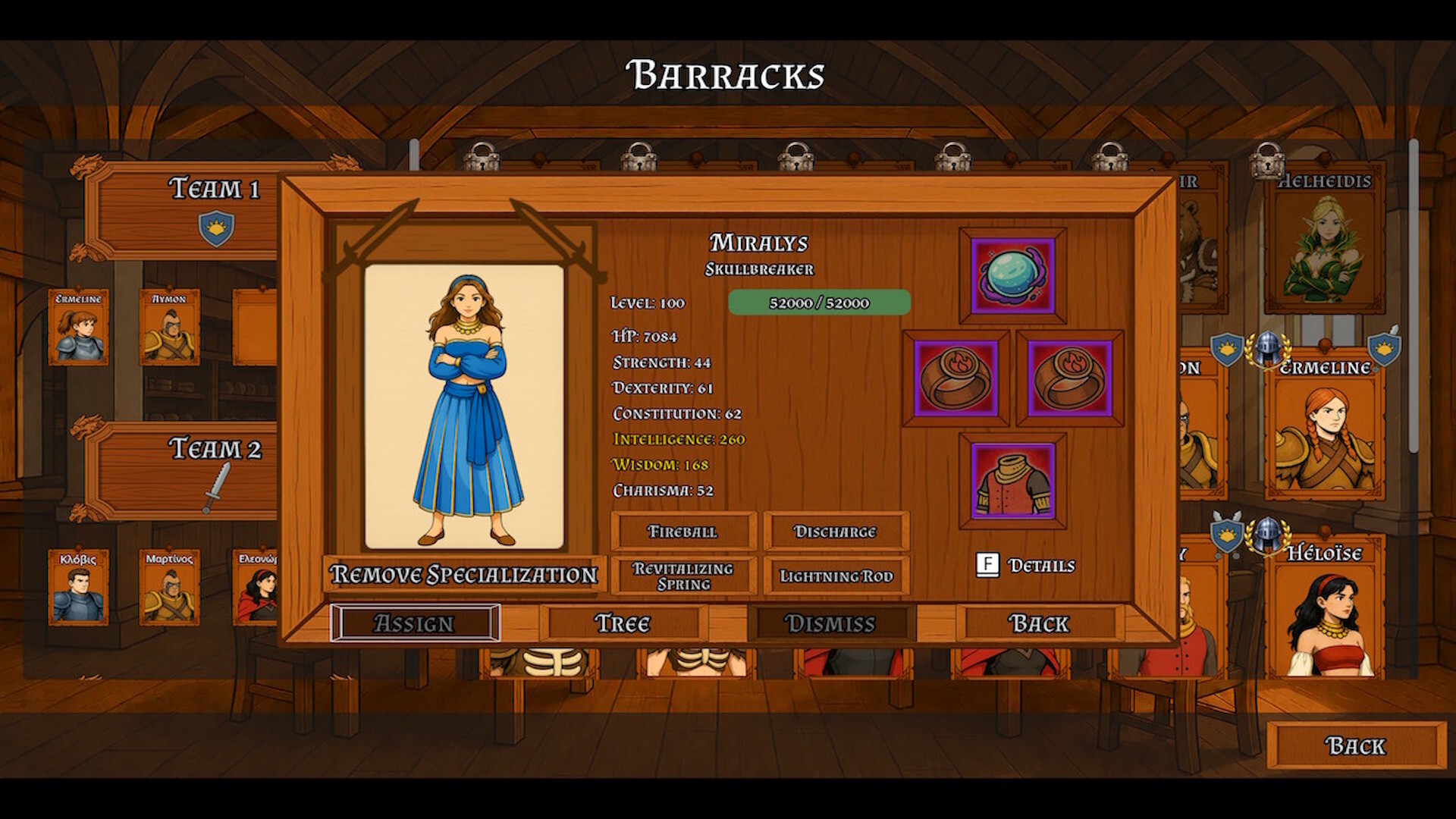
The Barracks screen lets players inspect and equip individual mercenaries, assigning spells and gear to squads before an expeditionImage: Studio Gravenoire via Steam -
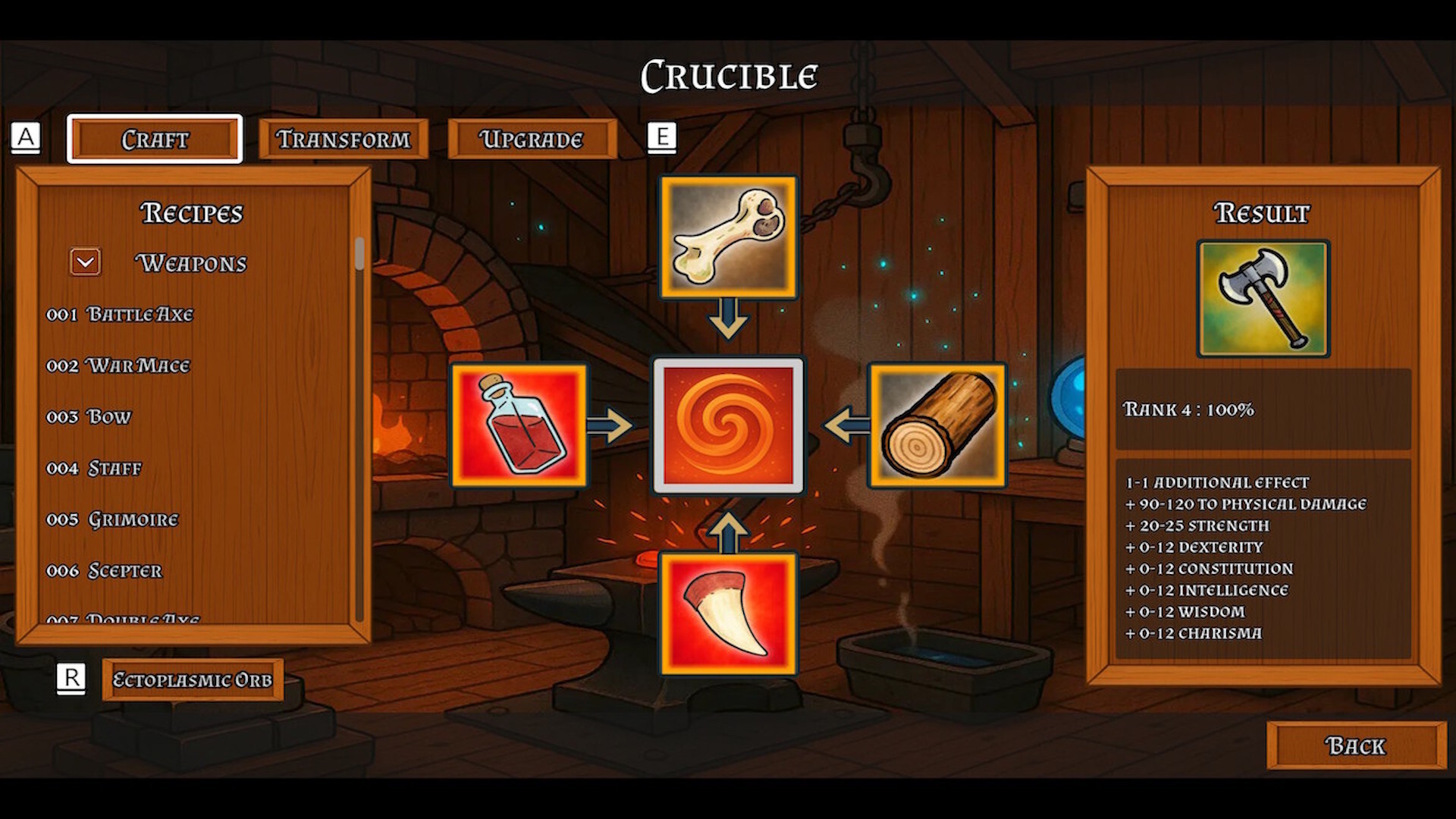
The Crucible converts recovered materials like bone and logs into crafted weapons, with results ranked by quality and stat bonusesImage: Studio Gravenoire via Steam