Game review
Souls Inferno Review
6.5 / 10
- Developer
- simulinati
- Publisher
- simulinati games
- Released
- 22 July 2026
- Platforms
- ["Windows"]
- Genre
- RPG
A Grindy, Souls-Lite Incremental Dungeon Crawler
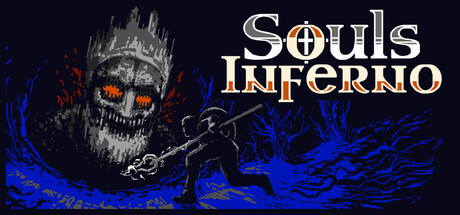
Souls Inferno drops the player into a cursed realm to fight through demonic knights and collect souls, building a character across a single-player dungeon-crawling campaign that leans openly into repetition as a feature rather than a flaw. One reviewer put the game's identity plainly: "Love the art, atmosphere and the gameplay. It's quite grindy, that's not a bad thing! It is incremental game after all." That framing matters for setting expectations — this isn't a tightly-paced action RPG, but a slower, numbers-driven grind where returning to town between runs to bank progress is the main feedback loop reviewers responded to. Reflecting that focus, the game ships with a lean feature set on the accessibility and control side too — Steam's category listing shows a Mouse Only option and support for play without timed input, alongside Steam Cloud saves and achievements, rather than the more elaborate control remapping and difficulty options found on bigger-budget dungeon crawlers.
Elemental Weapons and Shields: The Core Build Choice
Character building centres on assigning elements to weapons and shields, which becomes the main lever players have over their combat effectiveness — one detailed review noted that "the only thing you really choose is which elements to use for your weapons vs your shields," a comparatively narrow customisation system by dungeon-crawler standards but one that reviewers found engaging in the early-to-mid game regardless. That same reviewer, sitting at roughly 80% through the campaign at the time of writing, described the loop as "very addicting," with "your character's power grows quite a bit each time you return to town," even while flagging that traversing back across cleared zones — sometimes through as many as 15 fights to reach a previously-explored area — became a source of tedium they felt could be solved with a couple of additional upgrade camps on the map. That same reviewer had access to an earlier playtest build that included a system for finding "triggers plus effects" after battles, adding a further layer of customisation beyond the launch version's element-on-weapon-or-shield choice; they acknowledged the feature "had issues and would add to the tedium of going through 15 fights to travel" if it had shipped as originally implemented, suggesting a deliberate trade-off by the developer to simplify the build system for launch rather than ship an unfinished mechanic. Even so, they said they "miss some kind of additional character customization" in the final release, framing the current build options as comparatively thin next to what a genre-savvy dungeon-crawler audience typically expects, and expressed hope for a sequel that could pick the cut mechanic back up with more polish.
The Final Boss: Where the Late Game Breaks Down
The most serious criticism in the review sample is aimed squarely at the endgame. One reviewer who spent three of their five hours of total playtime specifically grinding for a build capable of beating the final boss described most of the game's systems as suddenly non-functional against it: "Spells and elemental weapons dont effect it. AOEs don't matter since its just one enemy, and the boss has extremely high armor and damage." Beating it, in their account, required not just a narrow specific build but also "somewhat lucky" crits and parries on top of that — a combination they called "a baffling design decision" after finding the rest of combat comparatively shallow and the atmosphere static across the whole runtime, with no story and little environmental variation to break up the grind.
A Demo Available Before You Buy
Souls Inferno ships with a playable demo, and reviewers point to it as an accurate representation of what to expect rather than a cut-down teaser: "Try the demo; gives you all the info you need." Given the sharp gap in reported experience between the early-to-mid game — described as addicting and rewarding — and the specific late-game friction around the final boss, trying the demo first is a genuinely useful way to judge whether the moment-to-moment loop appeals before committing, independent of how the ending is eventually received. It's a sensible way for a small solo-style studio to manage expectations at this price point, and it means the early-game hook that reviewers keep praising is something buyers can verify for themselves rather than take on faith.
A Cheap Price for a Short, Grindy Adventure
At NZ$7.89 with no discount and no additional monetisation, Souls Inferno is priced in line with a short, focused indie release rather than a full-length RPG, and every reviewer who commented on value felt the price was fair for what's on offer — "For this price you can't really go wrong with getting it." Nothing in the review sample suggests any paywall, IAP, or held-back content; the concerns raised are entirely about pacing and endgame balance rather than what buyers are being charged for.
Verdict
Souls Inferno delivers an addictive early-to-mid game built around incremental power growth, elemental weapon-and-shield customisation, and a cursed-realm dungeon crawl that reviewers consistently praise for its art and atmosphere at a low asking price. Where it runs into trouble is the back half — repetitive backtracking through cleared zones and, more seriously, a final boss that reportedly demands a narrow, specific build plus a dose of luck once most of the game's systems stop working against it. With a demo available to test the loop firsthand and a price low enough to absorb some risk, it's a reasonable pick for incremental-RPG fans willing to accept that the ending may not live up to the promising opening hours.
Screenshots
-
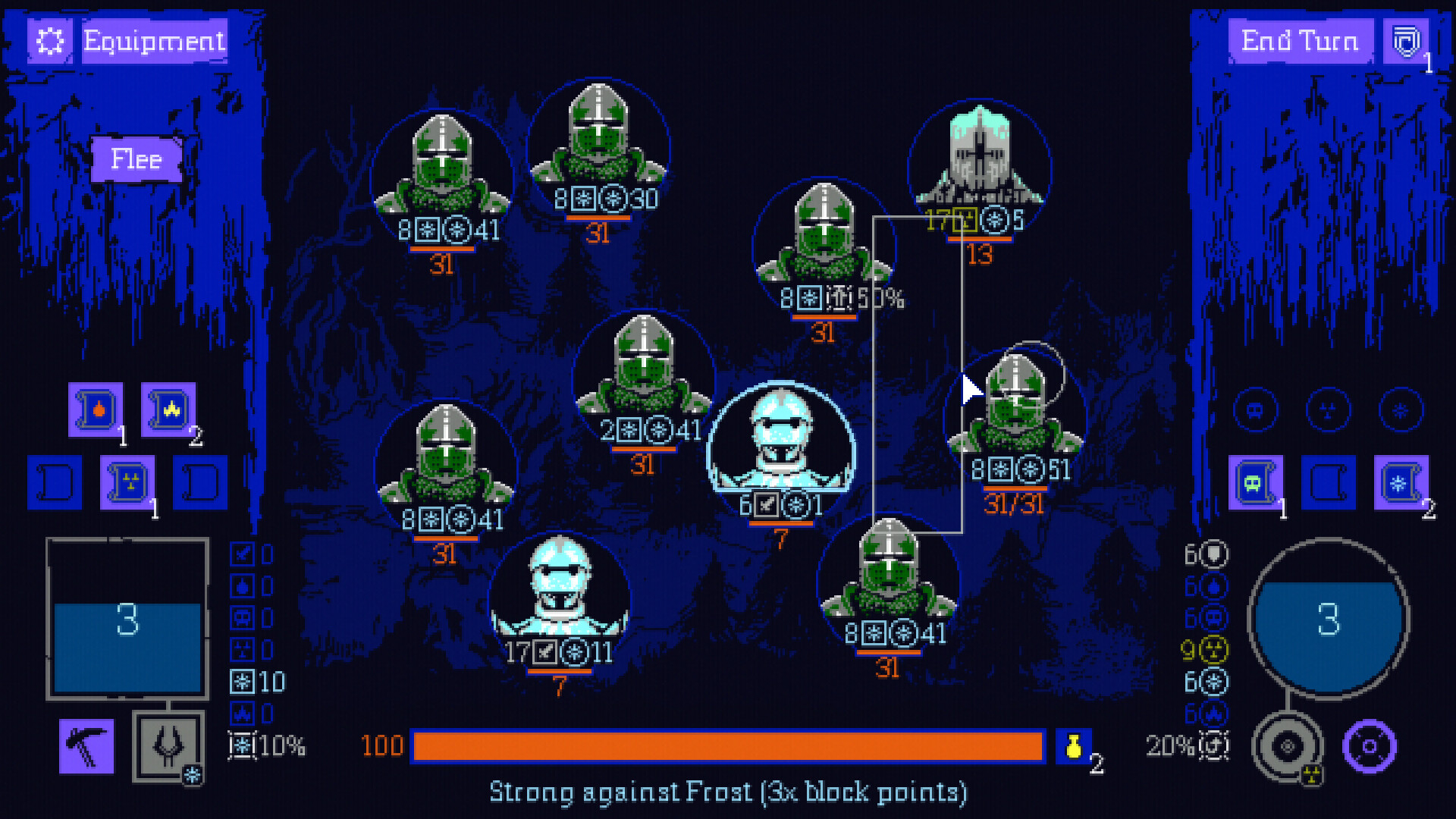
A single battle can pit the player against a dozen or more demonic knights at once, with elemental strengths and weaknesses shown on-screenImage: simulinati via Steam -
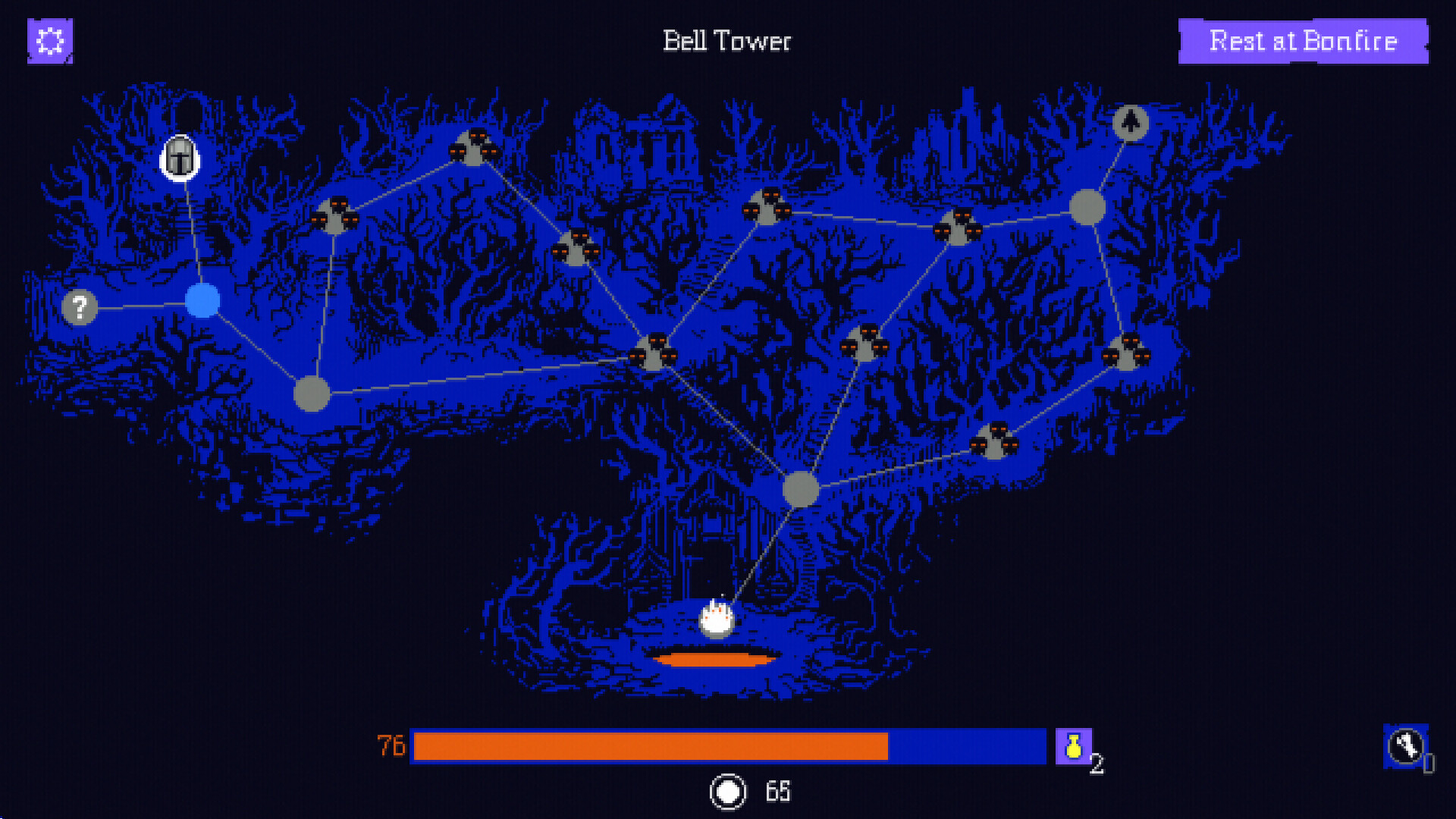
Runs unfold across branching node maps like the Bell Tower, with bonfires to rest at between fightsImage: simulinati via Steam -
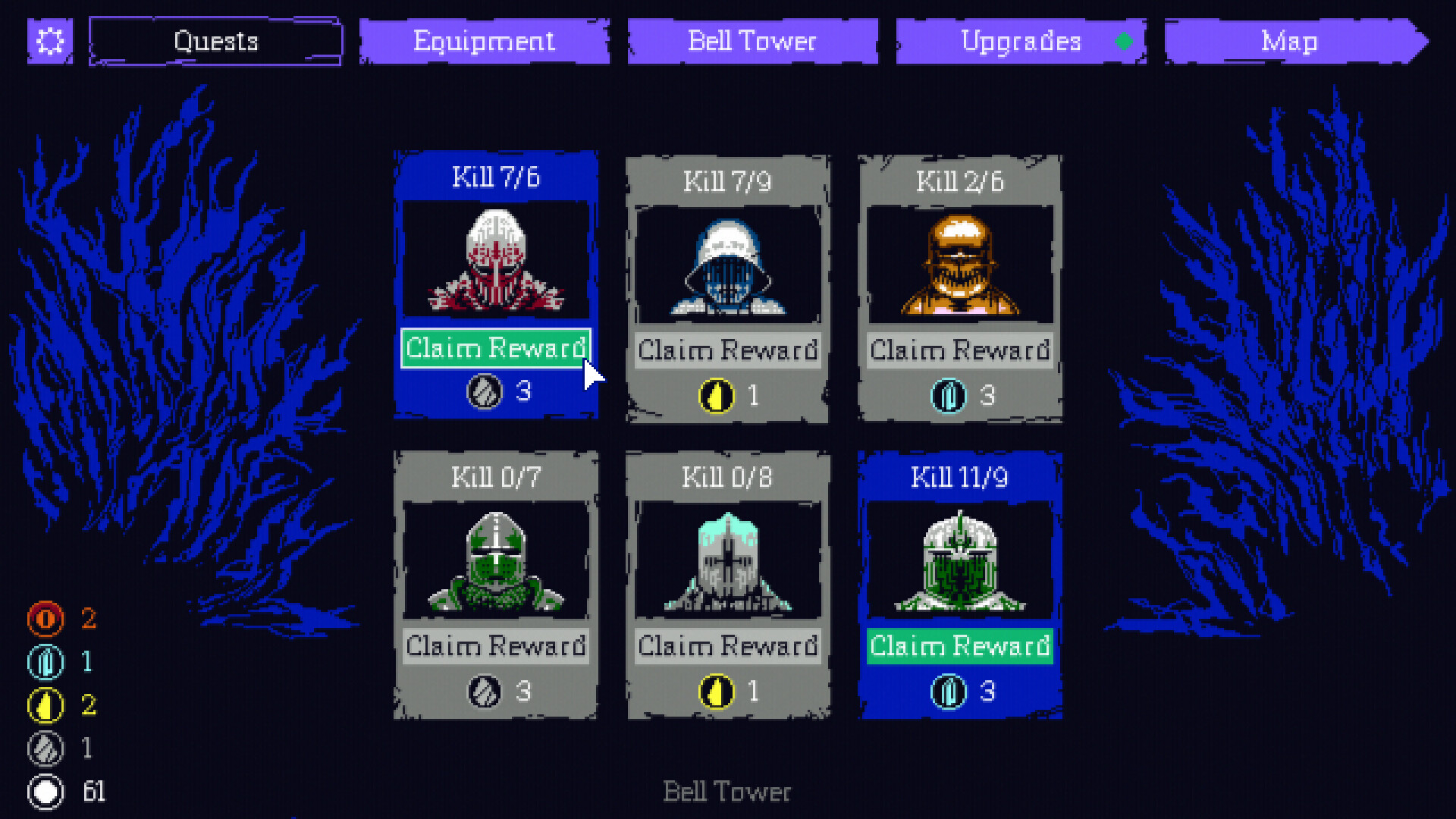
Kill-count quests hand out crafting resources, reinforcing the game's incremental, grind-driven structureImage: simulinati via Steam