Game review
The Lonely Miner Review
6.5 / 10
- Developer
- DuckDevStudios
- Publisher
- DuckDevStudios
- Released
- 23 July 2026
- Platforms
- ["Windows"]
- Genre
- RPG
Dropped on an Island With a Pickaxe and a Dream
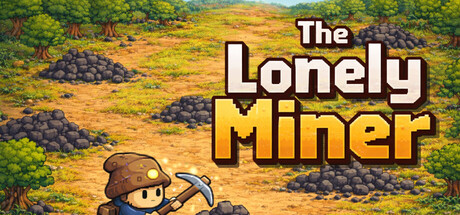
The Lonely Miner's premise is as stripped-down as its title suggests: a lone prospector lands on an island with nothing but a pickaxe, and the entire game is built around one repeating chain of actions — hit rocks, sell what's collected, spend the money on getting better at hitting rocks. It's a 2D pixel-art incremental clicker with idle elements rather than a full auto-battler, meaning the early game rewards clicking rocks directly before automation takes over the grind. Solo developer DuckDevStudios describes it plainly as a "satisfying cosy" mining game, and the review sample backs up the cosy half of that pitch more than the depth — one player called it "a quick but fun incremental mining game," while another was more measured, describing the loop as "simple and linear" with "no serious skill required."
A Skill Tree Reworked From a Simple Shop
What separates The Lonely Miner from the glut of generic rock-clicker games is that its progression system was visibly reworked before launch based on player feedback. A pre-release developer post explains that the original shop-based upgrade system was replaced with a full skill tree covering movement speed, mining power, and mining speed, specifically because the shop version "didn't feel meaty enough" during the demo period. Hired workers — called Collectors and Autominers — do the mining automatically once purchased, and a patch note confirms the developer buffed autominer upgrades late in development so that "each upgrade will apply to all current autominers and any newly purchased miners," making them "dramatically faster than previously" after player reports that the scaling felt weak. A separate fix addressed Collector AI so the hired workers would path more sensibly instead of "just run[ning] around following each other."
Prestige, Speed Runs, and Four Tiers of Rock
Beyond the core loop, the full release adds a prestige system with its own dedicated skill tree, letting a player reset progress for permanent bonuses once the first playthrough runs its course — a standard incremental-genre structure, but one the developer built in response to demo players asking for a longer-term goal. Four tiers of rock types unlock as a run progresses, giving the resource-selling loop some visible escalation rather than a single flat commodity throughout. A speed run mode unlocks after a player's first prestige, letting them start a fresh run and race to prestige again as quickly as possible, with times logged to an in-game leaderboard — a light structural nod to speedrunning conventions on top of what is otherwise a purely single-player idle experience. Steam's category list also confirms two Achievements were part of the shipped feature set, alongside the more incremental-genre-typical inclusion of a leveling system that ties experience gains directly to selling resources.
A Transparent, Feedback-Driven Solo Development
The Lonely Miner's Steam news history reads less like standard marketing copy and more like a public changelog for a first-time commercial release. The developer states directly that this is "my first commercial release, and I am a solo dev," and repeatedly credits community suggestions gathered through Discord for specific mechanical changes — the autominer buff, the Collector AI fix, and the skill-tree rework among them. One reviewer who played across the demo-to-release transition confirmed the practical effect of that process firsthand: "In the full release the skill tree has been completely reworked with the addition of being able to Prestige now. Honestly the speed at which you gain power is great, not too fast and not too slow either." That kind of visible, incremental improvement between a public demo and a paid release is worth noting for a genre where shovelware releases are common, even if it doesn't erase the fact that the underlying loop remains a familiar one.
Small, Positive, and Honest About Its Limits
Reviews are unanimous in the positive column — seven reviews, all recommending the game — but several are candid about how far that recommendation stretches. One reviewer flagged that reaching 100% of the achievements took roughly 2.5 hours, calling the loop "simple and linear" with "no serious skill required" to progress faster. Another, who noted playing since the demo, praised the pacing of power gains but was upfront that they didn't know at time of writing "if there is any 'ending' or if it is endless." A third reviewer's take doubled as the clearest single-line summary available: "The gameplay and graphics are a nice change of pace and stand out from the usual look of idle games," pointing to the pixel-art presentation as the game's most distinguishing feature rather than any single mechanic. None of the available reviews report bugs, crashes, or performance issues, consistent with a small, focused release that had already been through a public demo period before launch.
Verdict
The Lonely Miner doesn't try to reinvent the rock-clicker formula, and it doesn't need to — at NZ$4.79 with no in-app purchases, it's asking for a small amount of money in exchange for a tight, visibly polished loop of mining, selling, upgrading, and eventually prestiging. What elevates it slightly above the average shovelware idler is the transparency of its development: a solo developer who ran a public demo, read the feedback, and shipped concrete mechanical improvements — a reworked skill tree, buffed autominers, a prestige system, and a speed run mode — rather than just adding a coat of paint. It's not going to hold anyone's attention for dozens of hours, and more than one reviewer is candid that the ceiling is low once the achievements are done. But for a lunch-break idle game with honest scope and a developer who's clearly listening, The Lonely Miner delivers exactly what it promises.
Screenshots
-
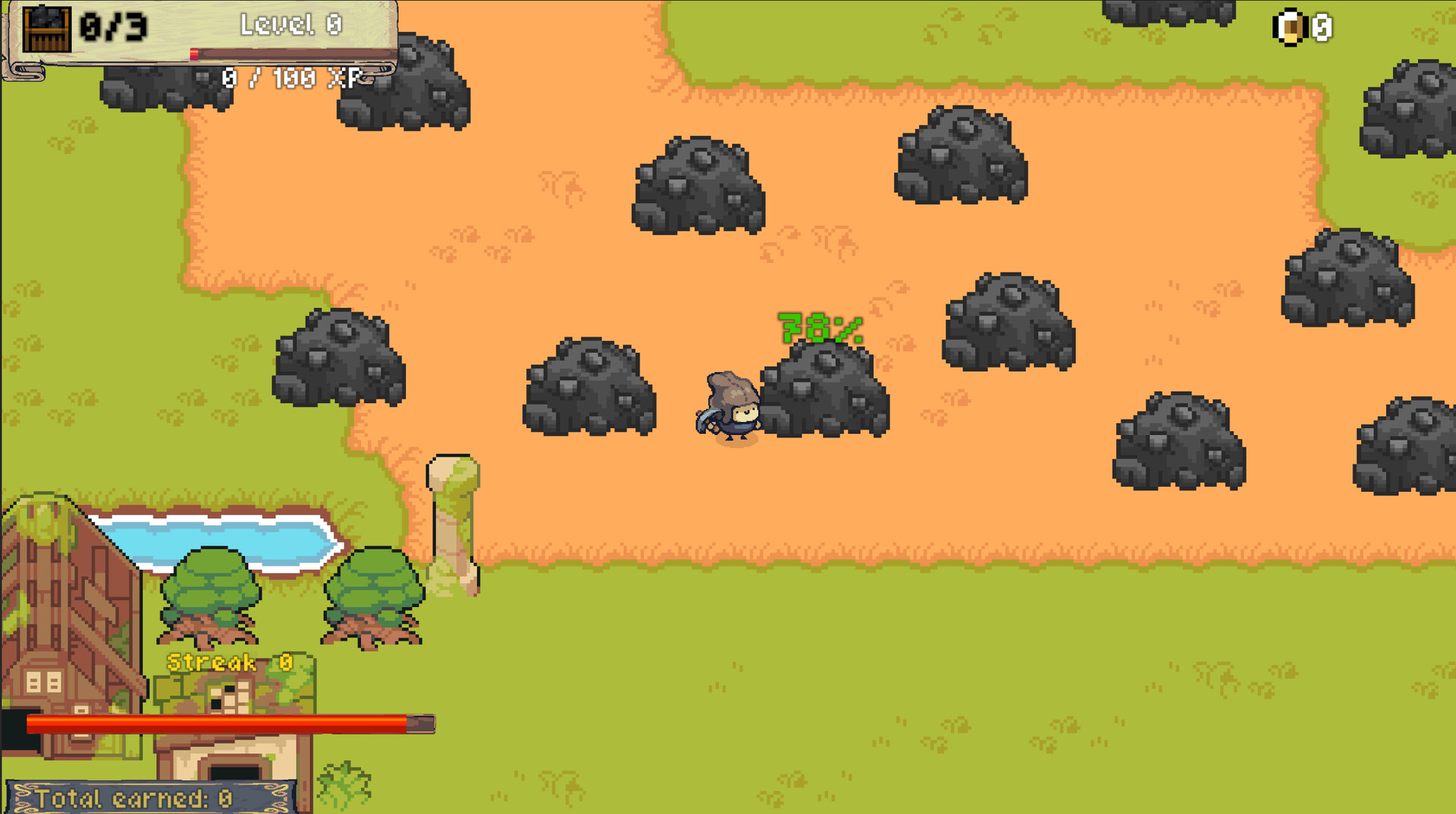
Early mining near the starting camp, with the level-up XP bar and hit-streak counter visibleImage: DuckDevStudios via Steam -
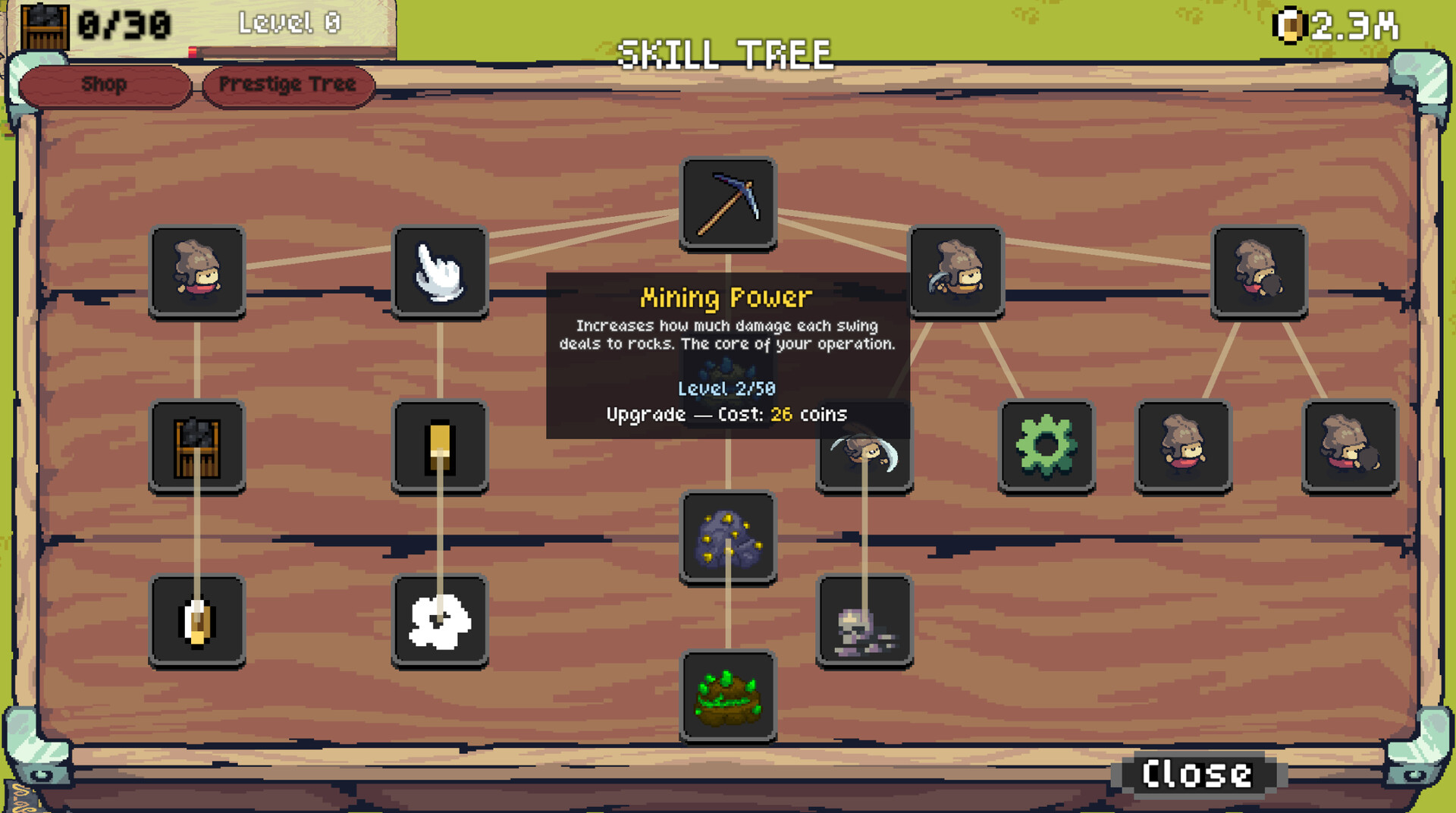
The reworked skill tree, with Mining Power as the central upgrade branching out to hired workersImage: DuckDevStudios via Steam -
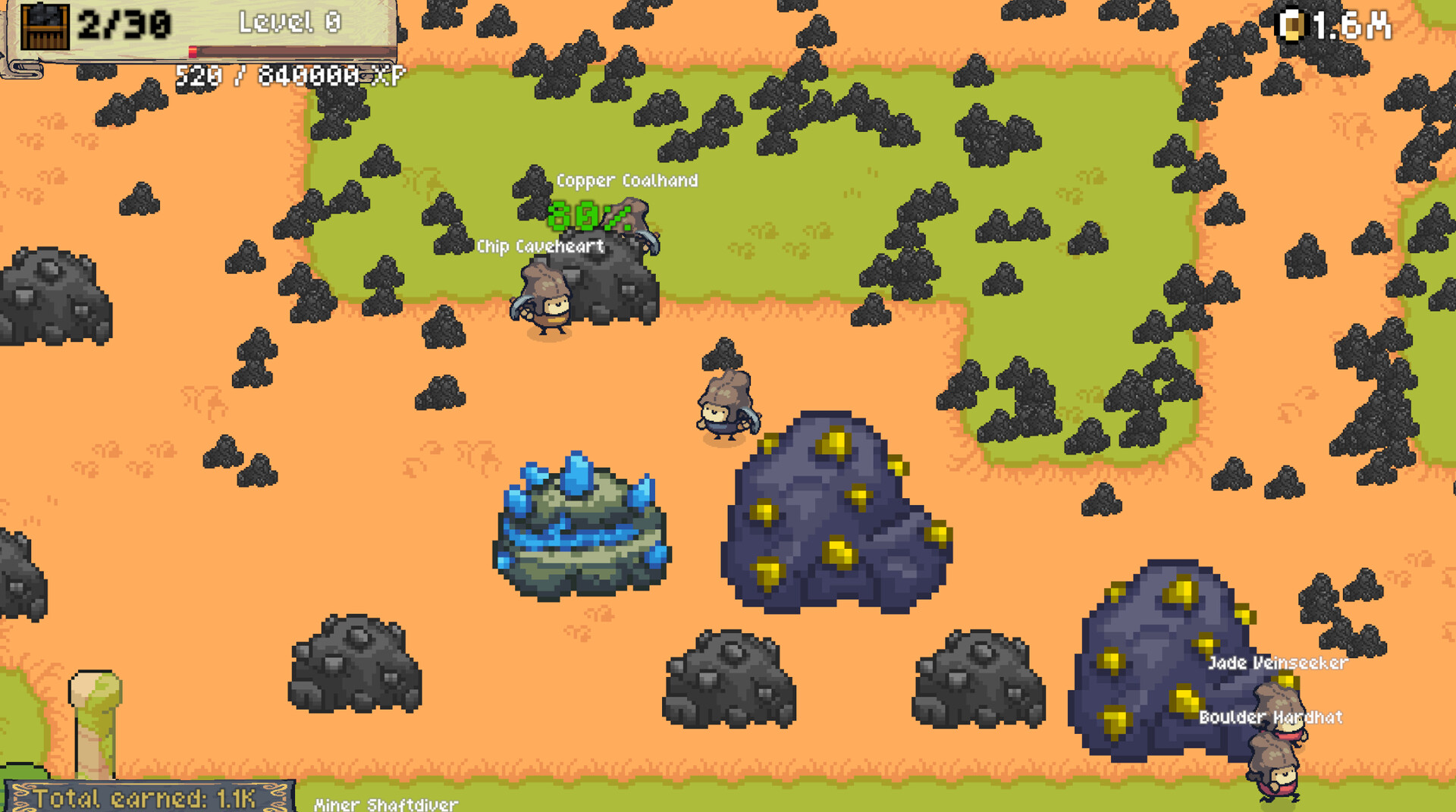
Hired Autominers and Collectors, each named, working higher-tier copper and jade ore nodes automaticallyImage: DuckDevStudios via Steam