Game review
PartyScape Chronicles Review
7.3 / 10
- Developer
- Xonzer!
- Publisher
- PartyScape Development Inc.
- Released
- 1 September 2026
- Platforms
- ["Windows"]
- Genre
- RPG
An Idle RuneScape, Except Everyone Else Is Logged In Too
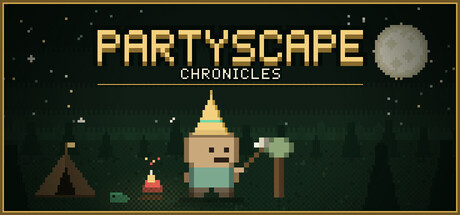
PartyScape Chronicles wears its inspiration on its sleeve. It's a free idle RPG that borrows its skill names, its numbers-go-up structure, and a good chunk of its identity from Old School RuneScape, then runs the whole thing through an idle-game engine so your character keeps training, fishing, or fighting while the tab is closed, you're at work, or you're asleep. Reviewers clock the resemblance instantly and mostly don't mind: "It's legit Runescape but in Melvor Idle style. But this one is online and interactable with players," one wrote, nodding to Melvor Idle, the genre's most obvious point of comparison and the game PartyScape most directly has to differentiate itself from.
That differentiation comes down to one core pitch: everyone is playing in the same persistent world, at the same time, on the same server. Prices in the Auction House move because real players are buying and selling, not because a spreadsheet says so. Reception has been strongly positive out of the gate — all 18 English-language reviews are positive, and the wider all-language pool sits at 19 of 23 (83%). For a brand-new free-to-play idler from what appears to be a small team, that's a clean launch.
Twenty Skills That Actually Talk to Each Other
The skill list is long — woodcutting, mining, smithing, fishing, cooking, fletching, thieving, crafting, farming, runecrafting, enchanting, tailoring, herblore, prayer, slayer, plus the full melee/ranged/magic combat trio — and the pitch is that none of it exists in isolation. Chop the right logs to fletch the bow you'll carry into a boss fight; farm the herbs that go into the potions keeping you alive during that fight. Reviewers consistently single this interconnection out as the game's best trait: "The skill system is easily one of my favorite parts... progression feels much more meaningful," one wrote, while another called it "everything you'd want it to be and everything you would expect" from the genre.
Combat is server-authoritative, which reviewers note gives it more weight than the average idle-game fight resolution: forty-nine monsters ranging from a goblin outside town to bosses capable of ending an underprepared run, plus Slayer tasks that assign specific targets for extra rewards. Group content extends the loop further — parties can take on raid bosses together, world bosses draw a crowd when they spawn, and there's a dedicated arena for player duels. One reviewer, several thousand minutes deep already, called it "one of the best up and coming AFK/idle games so far this year," specifically praising how "hands on if you want it to be or afkable" the design allows it to be.
Free to Play, and Reviewers Actually Believe It
The monetization pitch is refreshingly blunt: no pay-to-win, no stat boosts for sale, no loot boxes, no ads interrupting actions — every item is earned by playing. This is exactly the kind of claim that usually earns instant reviewer skepticism, and it's notable how many reviewers explicitly walked back their own suspicion after trying it. "I thought this would be vibe coded slop but it seems really cool," one wrote, before praising the depth of the activity-bonus system that rewards active attention without punishing players who just want to let the game tick along. The game is fully cross-platform between browser and phone under one account, so a session started on a commute can be checked again from a desk with no progress lost — a practical convenience for exactly the audience an idle game is built for.
The flip side of a browser-based, in-development idler is a rougher production floor than a boxed RPG. There's no dedicated screenshot gallery worth of flashy setpieces here — this is spreadsheets and skill bars dressed in a RuneScape-adjacent art style, and reviewers treat the interface as functional rather than beautiful. Nobody in the review pool complains about it outright, but nobody calls it a looker either, which is a fair trade for a genre where legibility matters more than spectacle.
An Active Developer and a Game Still Finding Its Shape
What stands out most in the review pool isn't any single feature but the tone reviewers use to describe the studio behind it. Multiple reviews independently praise developer responsiveness — "the dev is a wonderful person very hands on with the community and answers our questions and lets us know whats in the works" — and the store page itself states that updates land most weeks, "usually from something a player asked for in chat." For a free idle RPG competing against an established incumbent like Melvor Idle, that kind of visible, fast-turnaround development is doing real work to win over skeptics who might otherwise write the game off as a clone.
The obvious caveat is that PartyScape Chronicles is still early. Reviewers describe it as "so early in development" while already recommending it, which cuts both ways: content depth (20 skills to level 99, 400+ items, 200+ recipes, 49 monsters) is respectable for a launch, but a shared-server idle RPG lives or dies on long-term content cadence and a healthy player-run economy, neither of which a handful of weeks of post-launch data can fully confirm yet.
Verdict
PartyScape Chronicles doesn't pretend to reinvent the idle RPG — it takes a shamelessly RuneScape-flavored skill list, wraps it in an idle-progression engine, and then adds the one ingredient most competitors in the genre lack: a genuinely shared, persistent world where other real players set the prices, show up to world bosses, and fight alongside you in raids. The interconnected skill system gives the grind actual texture instead of a dozen identical progress bars, and a free, no-pay-to-win monetization model that reviewers have stress-tested and come away trusting is a real point in its favor. It's rough around the edges as a young, still-weekly-updated live game, and anyone burned out on Melvor Idle clones should temper expectations about how different the moment-to-moment skilling actually feels. But at zero cost, with an active developer and a review pool this uniformly enthusiastic, it's an easy recommendation for idle-RPG fans who've been wanting an OSRS-flavored version with other people actually logged in.
Screenshots
-
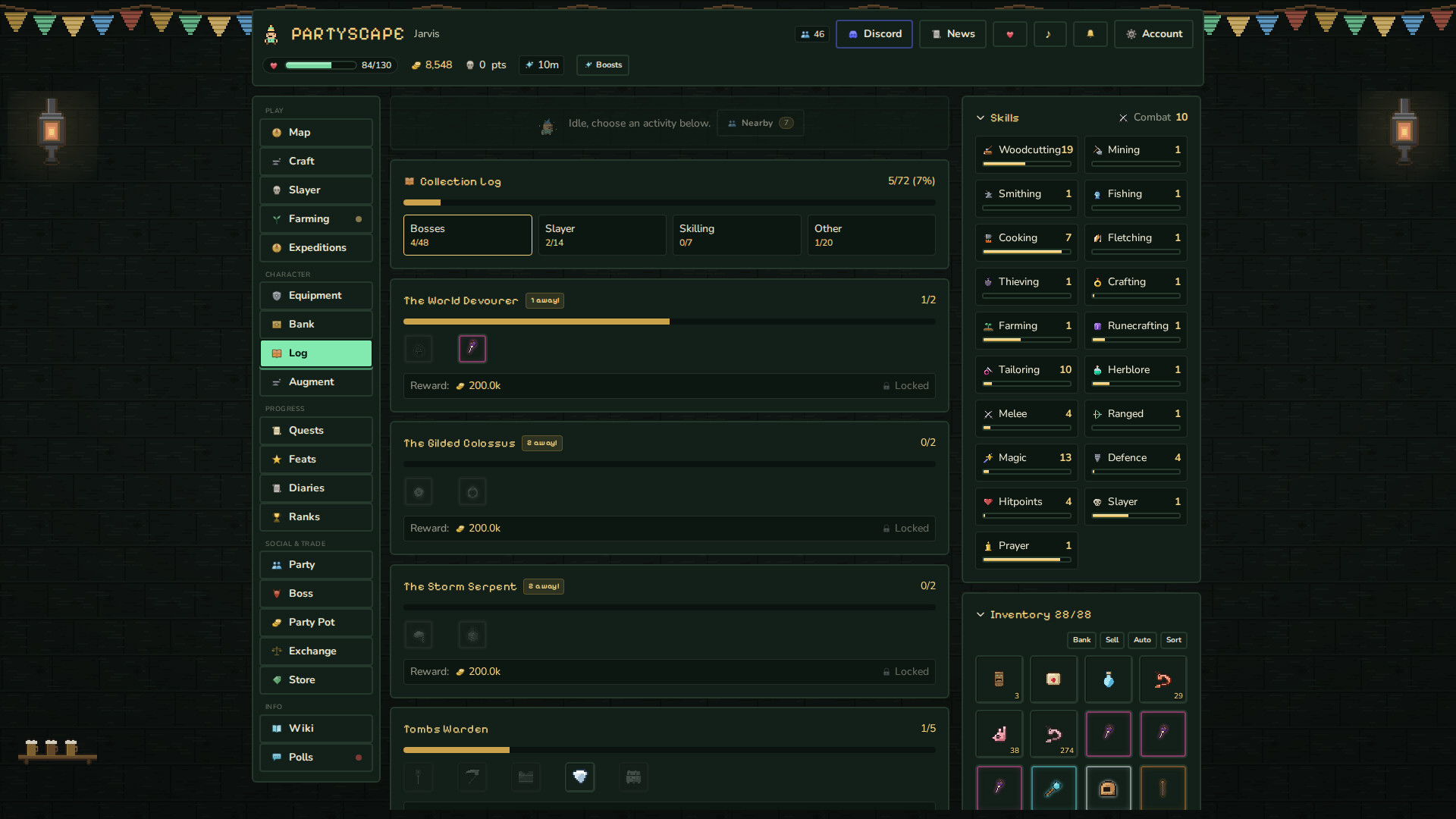
The Collection Log tracks boss kills, drops and milestones alongside a full twenty-skill panel that never stops ticking.Image: PartyScape Development Inc. via Steam -
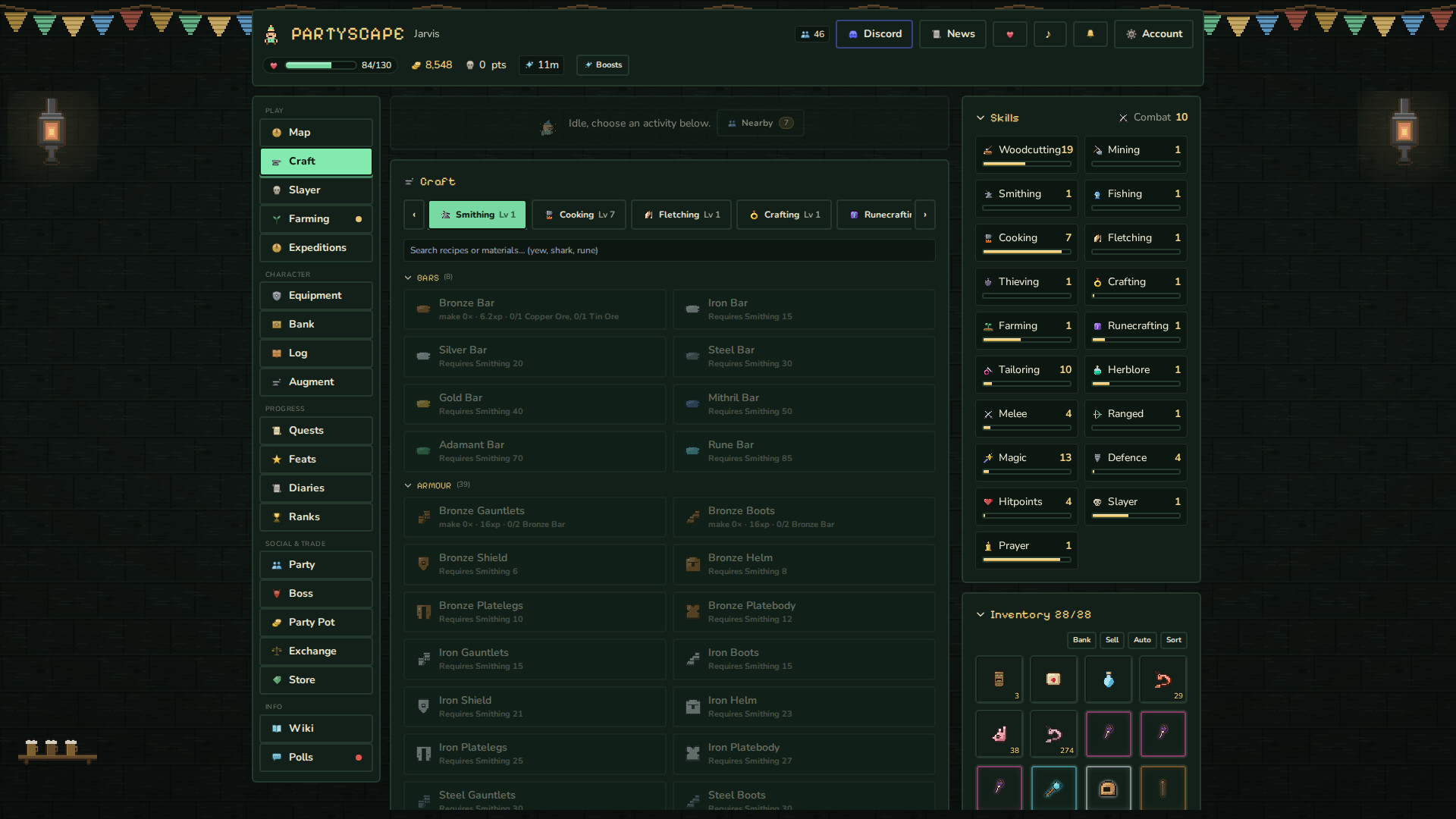
Crafting menus like this one lay out exactly how each skill's gear ladder connects to the next, from bronze bars to rune.Image: PartyScape Development Inc. via Steam -
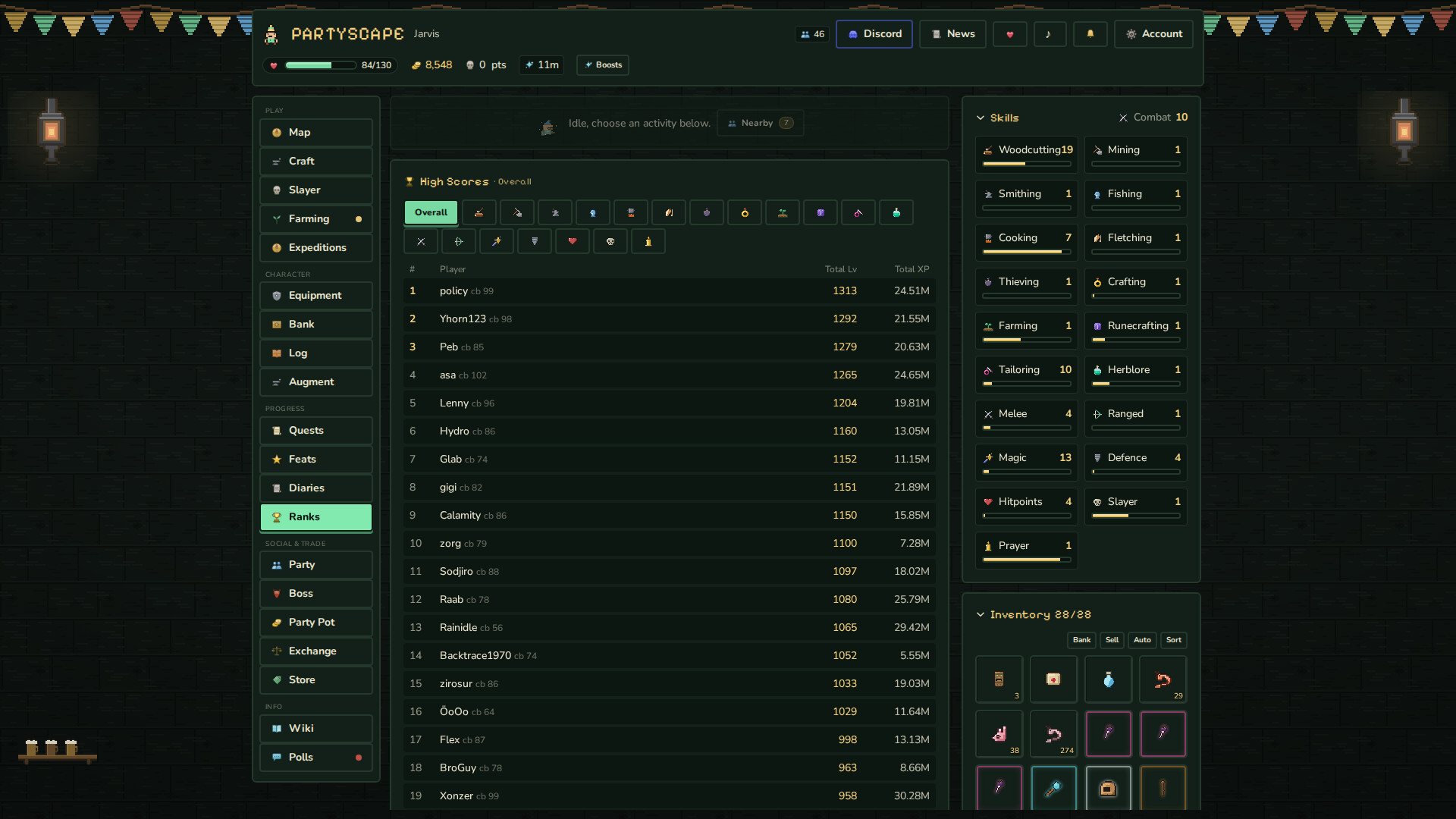
With everyone sharing one server, the leaderboard is a live snapshot of the whole community, not a solo scoreboard.Image: PartyScape Development Inc. via Steam