Game review
The Falconeer
6 / 10
- Developer
- Tomas Sala
- Publisher
- Wired Productions
- Released
- 10 November 2020
- Platforms
- Windows
- Genre
- Open-World Aerial Combat
- Monetisation
- Premium one-time purchase; no DLC or in-game purchases
- Players
- Single-player only
The short version
The Falconeer is the vision of a single developer, Tomas Sala, who built nearly every part of a beautiful, minimalist open world where giant war-birds duel airships over a steampunk- tinged archipelago — and the review sample agrees that vision is genuinely distinctive even where its execution falls short. Floaty, imprecise controls and a repetitive fly-fight-fly- back mission structure are the two complaints that recur most consistently, though a sustained, years-long "Revolution Remaster" effort has specifically targeted the control complaints reviewers raised at launch.
Biggest strengths
- The minimalist, painterly art style and overall world design draw consistent, specific praise as one of the most visually distinctive open worlds in this size of indie release
- Built almost entirely by a single developer aside from sound design, a scope reviewers repeatedly credit when weighing the game's rough edges against what one person actually accomplished
- Worldbuilding, lore and the steampunk-adjacent politics of the setting are praised even by reviewers who find the moment-to-moment gameplay repetitive, giving the world real texture beyond its looks
Biggest weaknesses
- Controls are widely described as floaty and imprecise, with a specific, repeated complaint that roll and dash share the same input, causing accidental actions during ordinary maneuvering
- The core mission loop is described almost identically across many independent reviews: fly across a large, mostly empty ocean, fight briefly, fly back, with several reviewers explicitly comparing multiple mission types to the same underlying pattern
- The story's structure, told through a shifting rotation of perspective characters, is reported as confusing and poorly organized by multiple reviewers, undercutting the strength of the worldbuilding around it
Who it's for: Players drawn to atmospheric, painterly open worlds and willing to accept looser, more arcade-adjacent flight controls than genre touchstones like Ace Combat or Crimson Skies deliver, more than players expecting tight, precise aerial combat.
Our recommendation: Worth a look on a deep sale for the world and art alone, and worth checking whether the Revolution Remaster's control changes have landed for your setup before assuming the launch-era complaints still apply in full.
6 / 10
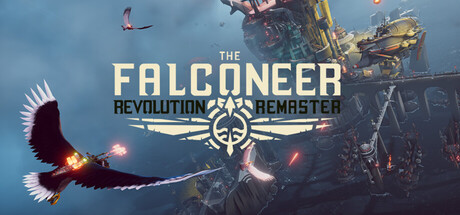
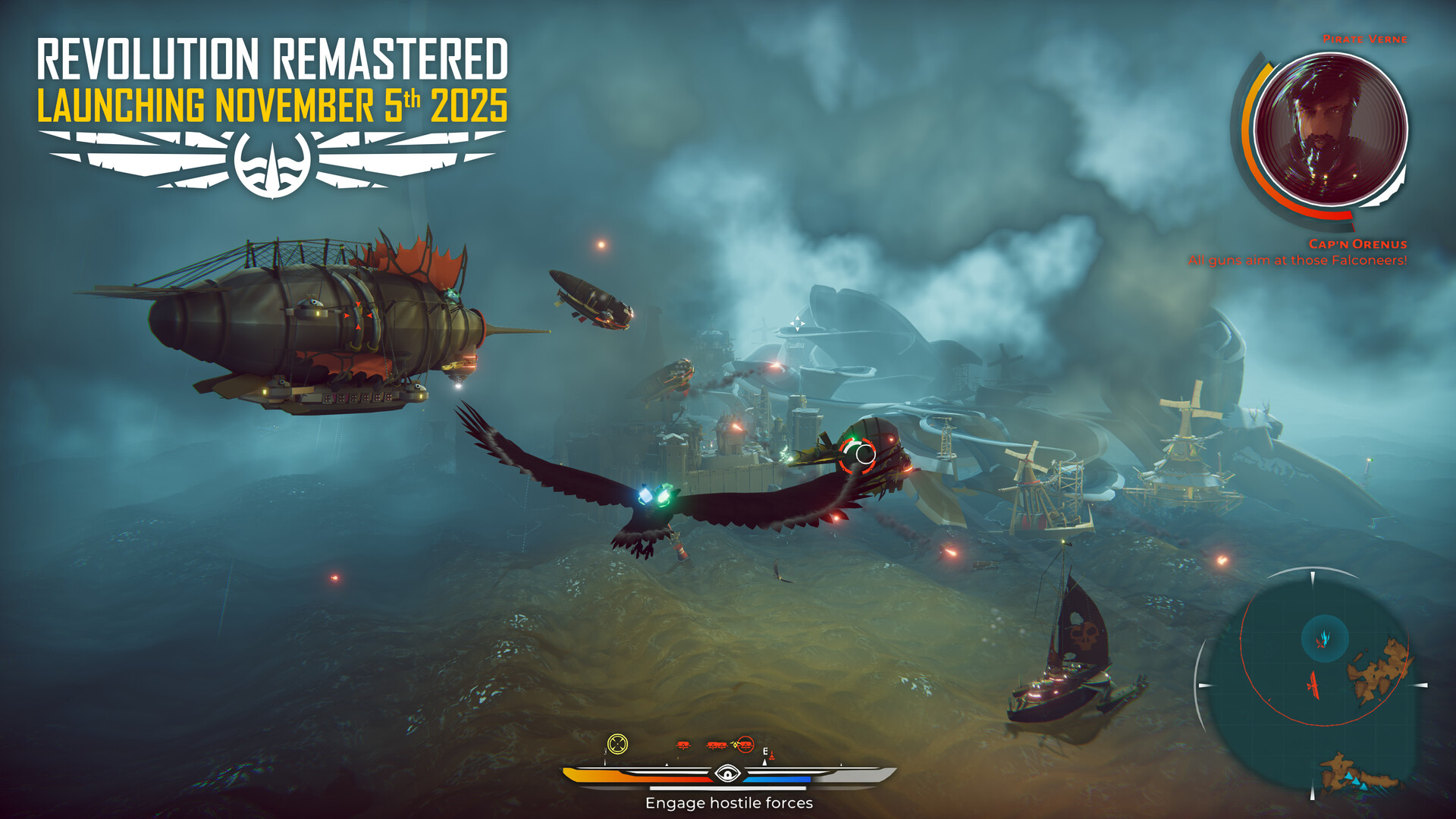
The Falconeer's pitch is almost entirely visual: ride a giant war-bird across an endless, painterly ocean archipelago, duel steampunk airships in open sky, and gradually uncover a world's worth of politics and lore along the way. It's the work of one developer, Tomas Sala, who built nearly everything in the game himself aside from sound design — a fact the review sample brings up constantly, and fairly, when weighing what does and doesn't work.
What one developer built
It's worth pausing on the scale of the achievement here before getting into what doesn't work. A fully realized open world, a branching cast of playable characters each with their own arc, an original soundtrack-adjacent audio design, dozens of named locations and factions, and a combat system built from scratch — all primarily the work of one person. That context doesn't excuse rough edges, but the review sample consistently treats it as directly relevant to how those rough edges should be weighed: a control quirk or a repetitive mission pattern reads differently coming from a solo studio's first major release than it would from a well-funded team with a much larger testing budget.
A world worth flying through
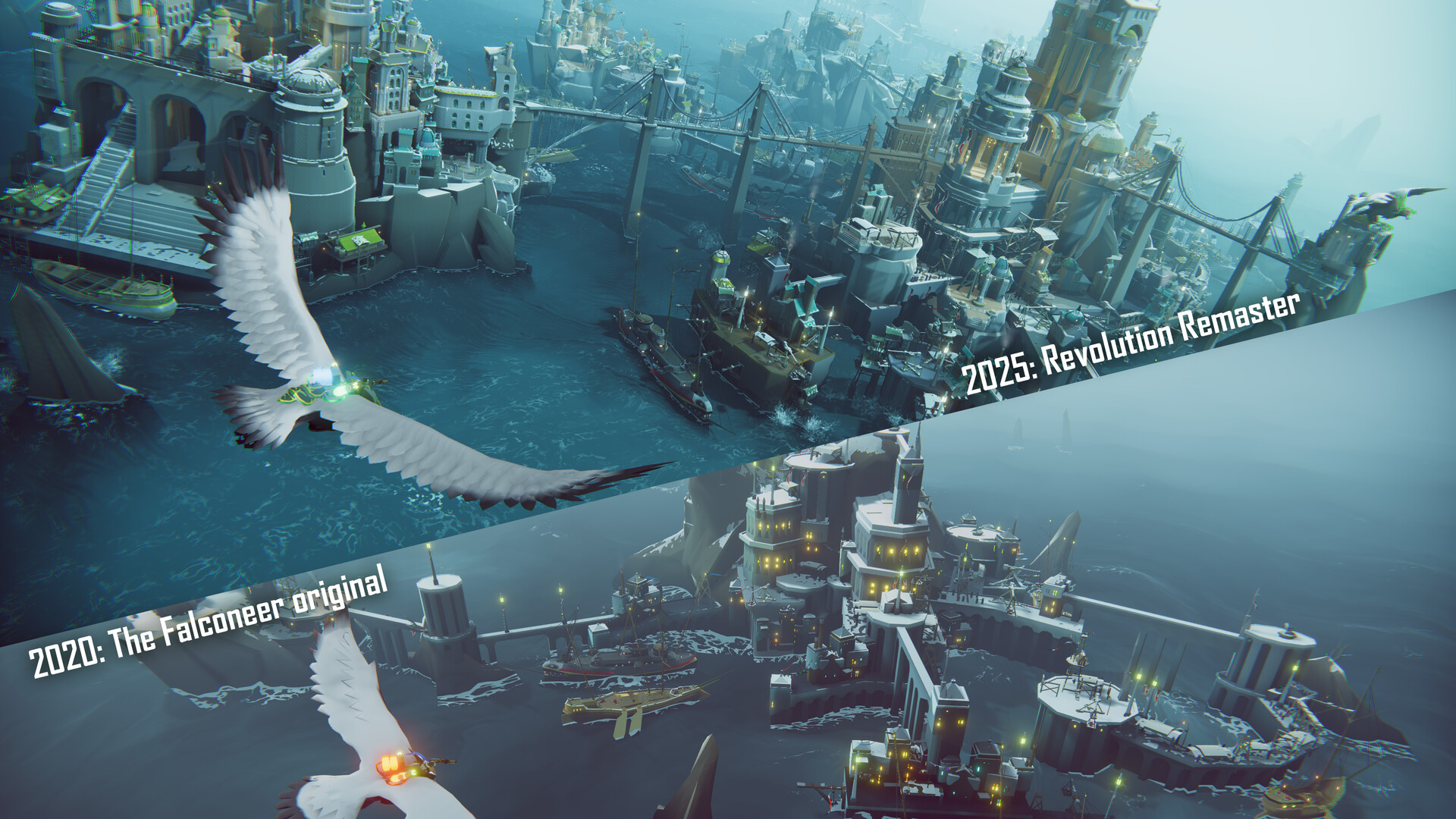
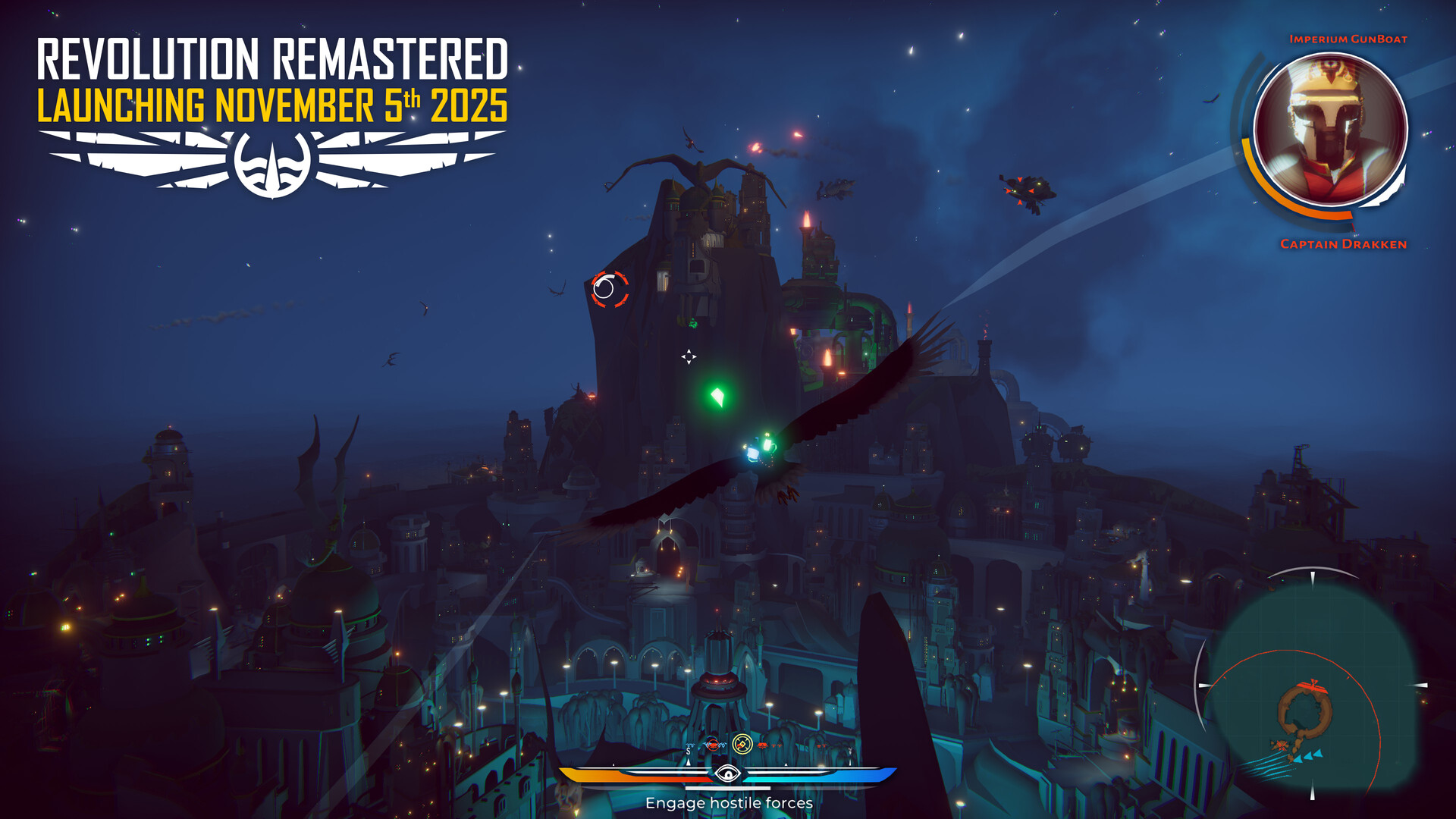
The art direction is the review sample's clearest point of agreement. Minimalist, atmospheric visuals repeatedly draw comparisons to some of the more striking indie worlds released that year, and the underlying lore — factions, politics, a steampunk-adjacent history layered over the setting — earns real praise even from reviewers who find the actual gameplay wearing thin. That's a meaningful compliment: worldbuilding strong enough to carry a review positive even when the moment-to-moment mechanics don't fully land is rarer than it sounds in this genre.
The complaint nearly everyone converges on
Where the reviews turn critical, they converge on almost identical language. Controls are described as floaty and imprecise, with a specific, repeated technical complaint: roll and dash share the same input, causing players to accidentally dash while trying to simply bank a turn. Mission structure draws its own version of the same convergence — fly across a large, mostly empty stretch of ocean, fight briefly, fly back, repeated across escort missions, delivery missions and combat missions alike, described in nearly the same words by reviewers who never read each other's accounts. Several reviewers also report being unable to deviate from an active mission's objective even to investigate something interesting spotted mid-flight, which compounds the repetition complaint into a more structural one about player freedom.
The story earns its own specific criticism: told through a rotating cast of perspective characters, several reviewers describe the narrative structure as genuinely confusing and poorly organized, a shame given how much the underlying lore is praised in isolation. Marketing framing draws a smaller but pointed complaint too — several reviewers say a "Viking-in-an-industrial-age" pitch oversells what plays out as a fairly conventional age-of-sail fantasy setting once experienced directly.
A solo developer who kept working on it
What sets The Falconeer apart from many similarly-reviewed indies is how directly and personally the developer engaged with this exact feedback over years rather than treating launch as the finish line. Multiple reviewers describe receiving direct responses from Tomas Sala with guidance on playing the game better, and more than one explicitly revised their opinion upward afterward, out of respect for that engagement as much as any specific change. That engagement culminated years later in a full "Revolution Remaster" update targeting the exact control and aiming complaints raised at launch — automatic keyboard-and-mouse versus controller detection, dedicated aiming hotfixes, and Steam Deck compatibility fixes all shipped as part of a sustained, multi-year effort rather than a quick patch and abandonment.
Where players tend to stop
Global achievement data supports the shape of the repetition complaint at scale. While a majority of owners reach the first chapter's milestone, that figure drops sharply by the second chapter, with most later-game and completionist achievements sitting under 3%. That's consistent with a meaningful share of players enjoying the opening hours' novelty before the fly-fight-fly- back pattern sets in and momentum stalls, rather than a wall of difficulty stopping progress outright — nothing in the review sample suggests the later chapters are harder, just more of the same loop.
A free demo and a genre-adjacent alternative worth knowing about
Given how consistently the controls draw complaints, and how much that specific issue seems to determine whether a given player bounces off or settles in, trying the game's free demo before buying is a genuinely useful step this genre doesn't always offer. At least one reviewer also points newcomers toward Bulwark, a different but spiritually adjacent game praised for similarly striking, minimalist worldbuilding — useful context for anyone drawn to this specific aesthetic niche who wants to compare options before committing.
Verdict
Taken as a whole, The Falconeer is a genuinely distinctive vision let down at launch by controls and mission repetition that a wide, consistent share of its review base independently describes in nearly identical terms. What earns it real credit is what happened next: a solo developer who stayed personally engaged and eventually shipped a dedicated remaster specifically targeting those complaints, rather than moving on. Worth experiencing for the world and art on a deep sale, with realistic expectations set for the flying itself, launch-era or remastered alike — and worth trying the free demo first if the control complaints above are the specific thing giving you pause.
Pros and cons
Pros
- The minimalist, painterly art style and overall world design draw consistent, specific praise as one of the most visually distinctive open worlds in this size of indie release
- Built almost entirely by a single developer aside from sound design, a scope reviewers repeatedly credit when weighing the game's rough edges against what one person actually accomplished
- Worldbuilding, lore and the steampunk-adjacent politics of the setting are praised even by reviewers who find the moment-to-moment gameplay repetitive, giving the world real texture beyond its looks
- The developer has stayed personally engaged with the community, replying directly to critical reviews with guidance, and multiple reviewers specifically updated their opinions upward after that engagement
- A sustained, multi-year "Revolution Remaster" effort specifically targeted the control and aiming complaints raised at launch, including keyboard-and-mouse versus controller auto-detection and dedicated aiming hotfixes
Cons
- Controls are widely described as floaty and imprecise, with a specific, repeated complaint that roll and dash share the same input, causing accidental actions during ordinary maneuvering
- The core mission loop is described almost identically across many independent reviews: fly across a large, mostly empty ocean, fight briefly, fly back, with several reviewers explicitly comparing multiple mission types to the same underlying pattern
- The story's structure, told through a shifting rotation of perspective characters, is reported as confusing and poorly organized by multiple reviewers, undercutting the strength of the worldbuilding around it
- Missions are rigidly gated to the active campaign objective, with several reviewers reporting they couldn't deviate to investigate something interesting spotted mid-flight without abandoning their current mission
- Marketing and framing around a "Viking-in-an-industrial-age" premise oversells what several reviewers describe as a fairly standard age-of-sail-in-a-fantasy-world setting once the game's actual content is experienced directly
Screenshots
-
The FalconeerImage: Wired Productions via Steam -
The FalconeerImage: Wired Productions via Steam -
The FalconeerImage: Wired Productions via Steam -
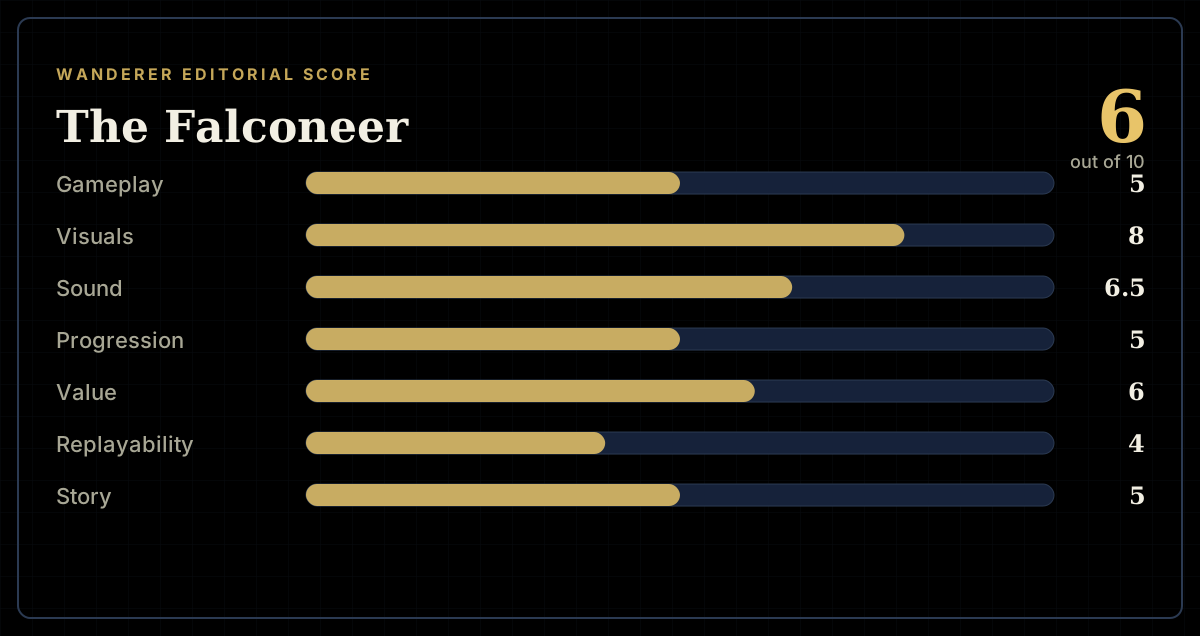
How the review scores each part of the gameWanderer Editorial -
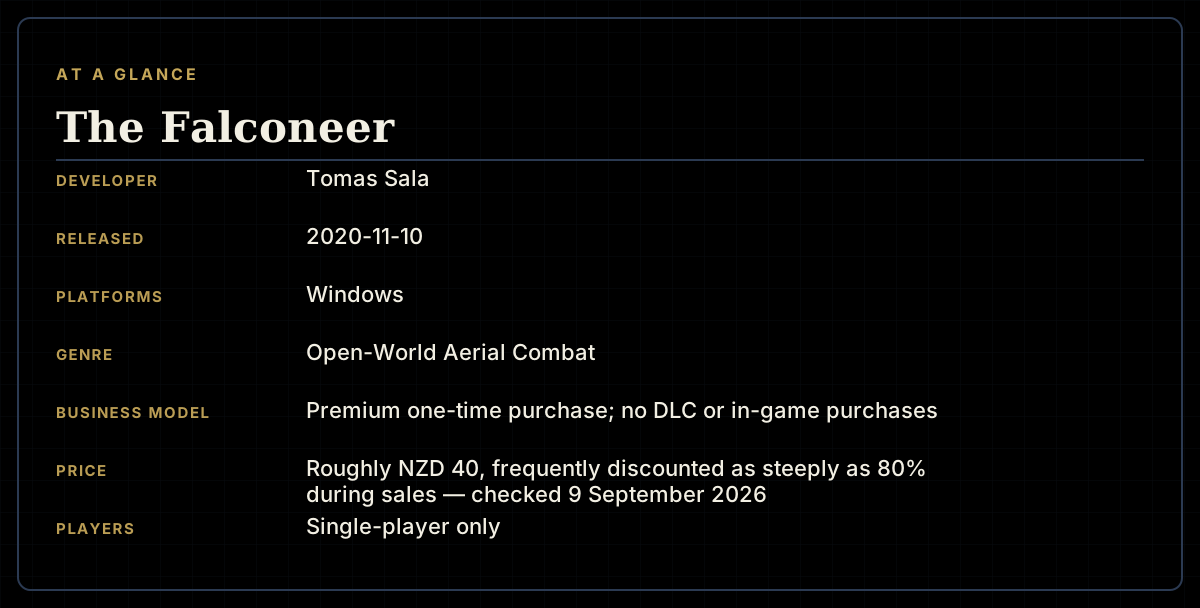
At a glanceWanderer Editorial -
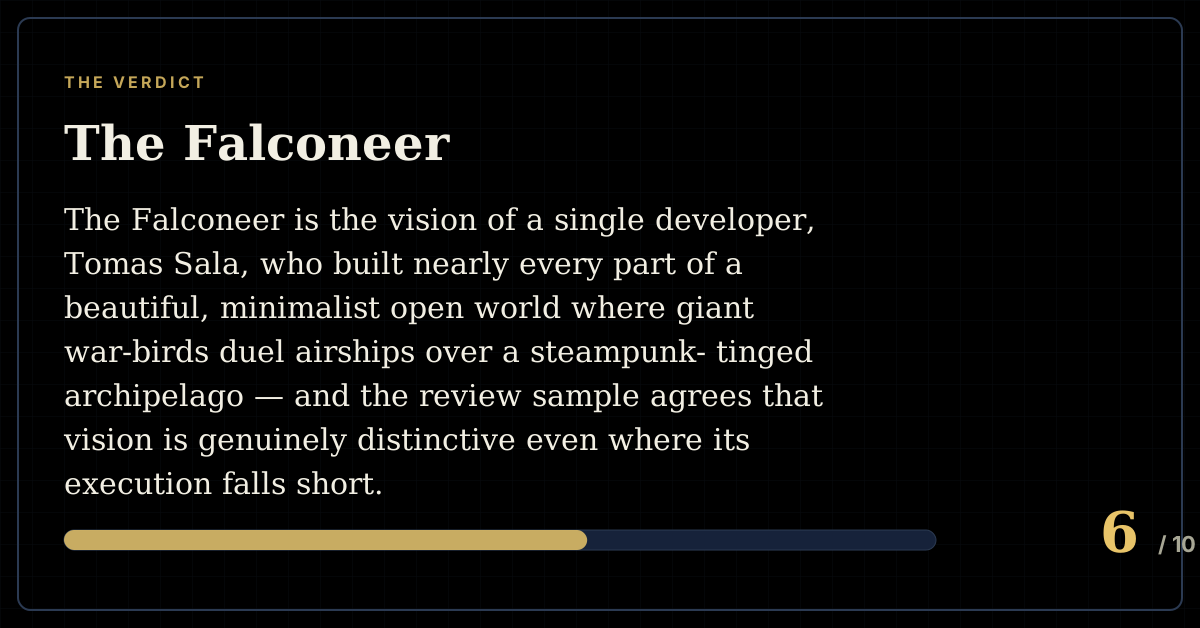
The short versionWanderer Editorial