Game review
Tales of Medieval Duelists
6.5 / 10
- Developer
- Alex
- Publisher
- Alex
- Released
- 25 August 2026
- Platforms
- Windows
- Genre
- RPG
A Fifty-Eighth Consecutive Launch Without a Single Review
Tales of Medieval Duelists launched on Steam on 25 August 2026 from solo developer Alex, and at the time of writing it has zero user reviews. That's a significant gap for a game whose entire pitch rests on one specific, hard-to-fake claim — that its swordfights are genuinely physics-simulated rather than pre-baked animations wearing a physics costume — since that distinction is exactly the kind of thing that only holds up once a real audience has spent hours pushing the combat system in unpredictable directions.
Swords With Mass: A Fully Physics-Driven Duel
The core hook is a 2D fighting RPG built entirely around real-time physics-driven combat, with the store page explicit that there are no pre-baked animations — every clash, slash, and parry is described as simulated live, giving the sword itself mass and momentum rather than snapping through a fixed animation sequence. The control scheme reflects that commitment directly: an overhead slash requires holding the up key, then releasing and immediately pressing down to time the swing, while a thrust needs a similarly precise hold-then-release-and-press sequence on a separate pair of keys, rather than a single button producing a guaranteed animation. Defense follows the same logic, with separate blocks for slashes and thrusts and a dedicated parry window that staggers an opponent and opens them up if timed correctly. That's a genuinely demanding, skill-expression-heavy control scheme for a genre that often settles for simpler input-buffered combos, and it puts real weight on execution rather than menu-driven stat checks to decide who wins a duel — though a physics-first combat system built by a solo developer is also exactly the kind of ambitious technical bet that can feel inconsistent or exploitable before a wider audience has had the chance to stress-test its edge cases.
Gearing Up Through a Living World and a Paper-Doll System
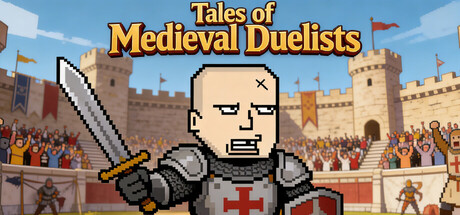
Progression is built around a hand-crafted core story delivered through main quests, side missions, and standalone challenges, with the store page framing player actions as directly shaping in-game reputation. Screenshots confirm this is a genuinely explorable world rather than a menu of discrete arena fights: the overworld map invites players to "wander at will" and names specific locations, including an Arena Compound and a Blackwood Forest, while an in-combat map icon and a separate book icon sit alongside the health bar, pointing to a real navigation and quest-tracking layer running underneath the duels themselves. Equipment comes from merchants found while exploring, and a paper-doll customization system lets armor and weapons purchased from those merchants visibly change the duelist's appearance rather than sitting as invisible stat sticks — a detail that matters for a game built around watching a physically simulated character move and fight, since visible gear changes give that physical presence something to actually show off. Gold earned from quests funds those purchases, tying the RPG's economic loop directly back into strengthening the character for harder duels ahead, which is a straightforward but functional way to make exploration and combat feed into each other rather than operating as separate systems bolted together. Screenshots also reveal a visual tone gap worth flagging honestly: the key art uses a flat, cartoonish chibi style, while the actual combat scenes shown are rendered in a more painterly, semi-realistic art style complete with visible blood spatter during fights — a noticeably grittier presentation than the marketing image suggests, which could either pleasantly surprise or mismatch expectations depending on what a prospective buyer takes away from the storefront thumbnail alone.
A High-Risk Win Streak as the Fastest Path to Power
The most distinctive systemic hook is the Reward Multiplier, which climbs with each consecutive victory and is explicitly framed as making high-risk, high-skill play the fastest route to meaningful power gains. Tying a run's best rewards to an unbroken winning streak, in a game whose combat is built on live physics simulation rather than predictable animation timing, raises the stakes of every individual duel in a way a simpler flat-reward system wouldn't — a single mistimed parry doesn't just cost that fight, it resets the multiplier a player may have spent several consecutive wins building up. That's a meaningfully different risk-reward curve from the genre norm of grinding safely for incremental gear upgrades, and it rewards exactly the kind of precise physics-based execution the combat system is built to test.
An Honest Disclosure About AI-Assisted Story Generation
The store page is unusually direct about a specific technical ambition: an AI-assisted story generation system that the developer states can already produce complete narratives with interconnected quests, dialogue, and unique characters, but which currently demands heavy computing resources to run. Rather than shipping that system at launch, the developer states the game instead launches with two expertly crafted, presumably hand-written core story campaigns, with the AI-driven custom story generator planned for a later unlock based on player feedback — meaning any dynamically generated quests, NPCs, or plot elements are explicitly a stated future feature rather than something present in the launch build. That's a notably transparent way to frame an ambitious but currently resource-constrained feature, drawing a clear line between what a solo developer has shipped today and what remains a stated goal, rather than blurring the two together in marketing copy. At NZ$14.75 with no discount, English-only support with full audio, and no accessibility options called out on the store page, the launch package itself looks appropriately scoped for what a single developer can realistically deliver and support.
Verdict
Tales of Medieval Duelists bets its entire identity on a physics-driven combat system with no pre-baked animations, backed by a precise, hold-and-release control scheme, gear that visibly changes a duelist's appearance, and a high-risk win-streak multiplier that rewards exactly the kind of careful execution the combat demands. The developer's own disclosure about an AI-assisted story generation system being held back for a future update, rather than shipped half-finished at launch, is a refreshingly transparent way to separate a stated ambition from what two hand-crafted campaigns can actually deliver today. Screenshots back up the promised open-world structure with named locations like the Arena Compound and Blackwood Forest, though they also reveal a tonal gap between the cartoonish key art and the grittier, bloodier combat actually shown in motion. Whether the physics simulation holds up under real player pressure without feeling inconsistent or exploitable, and whether the paper-doll gear and quest structure carry enough depth across two campaigns to justify the asking price, remain unverified questions for a solo-developed launch with zero user reviews so far.
Screenshots
-
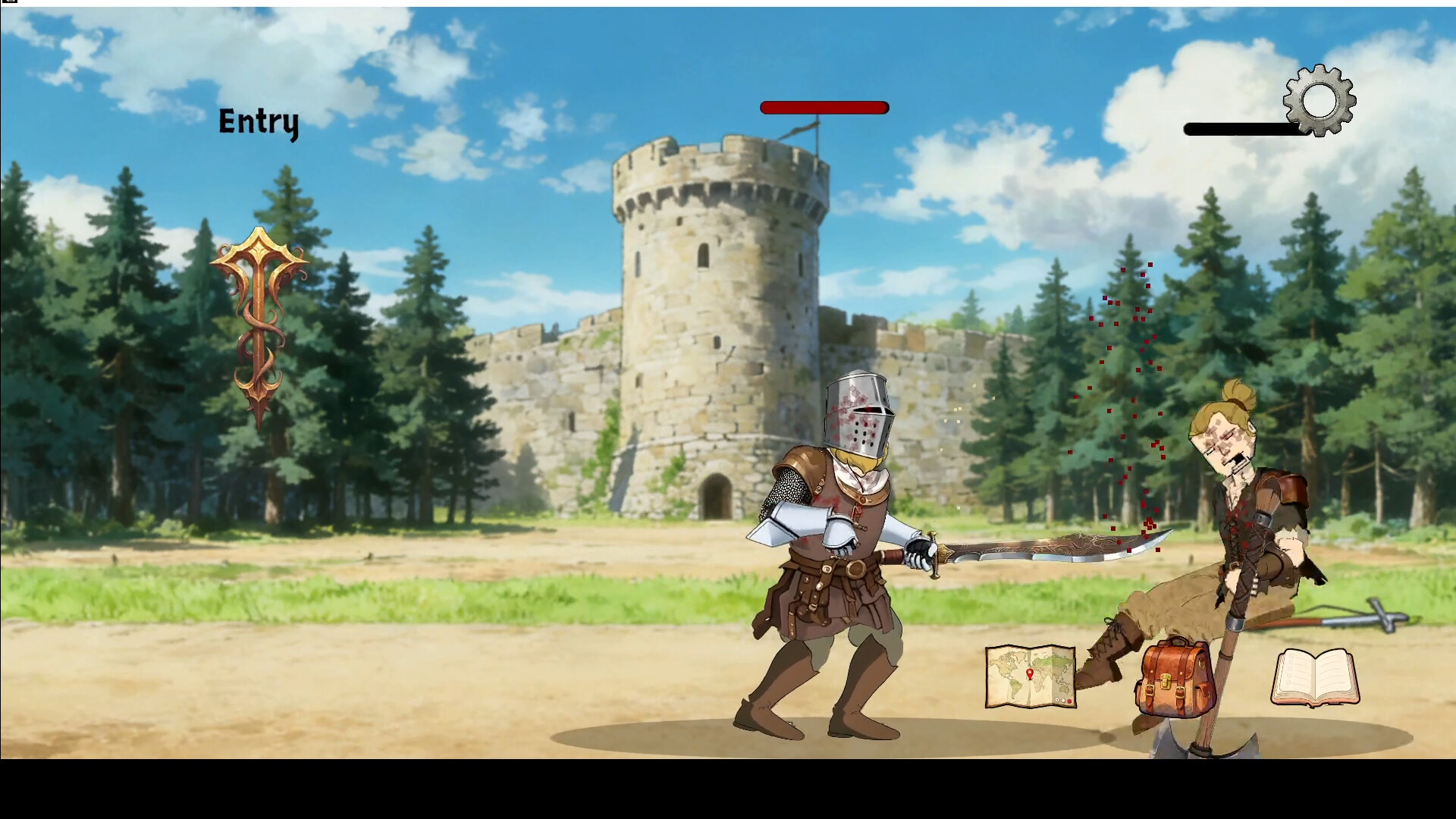
A painterly, more graphic combat scene near a castle, with a map icon and book icon visible for navigation and quest tracking.Steam store page -
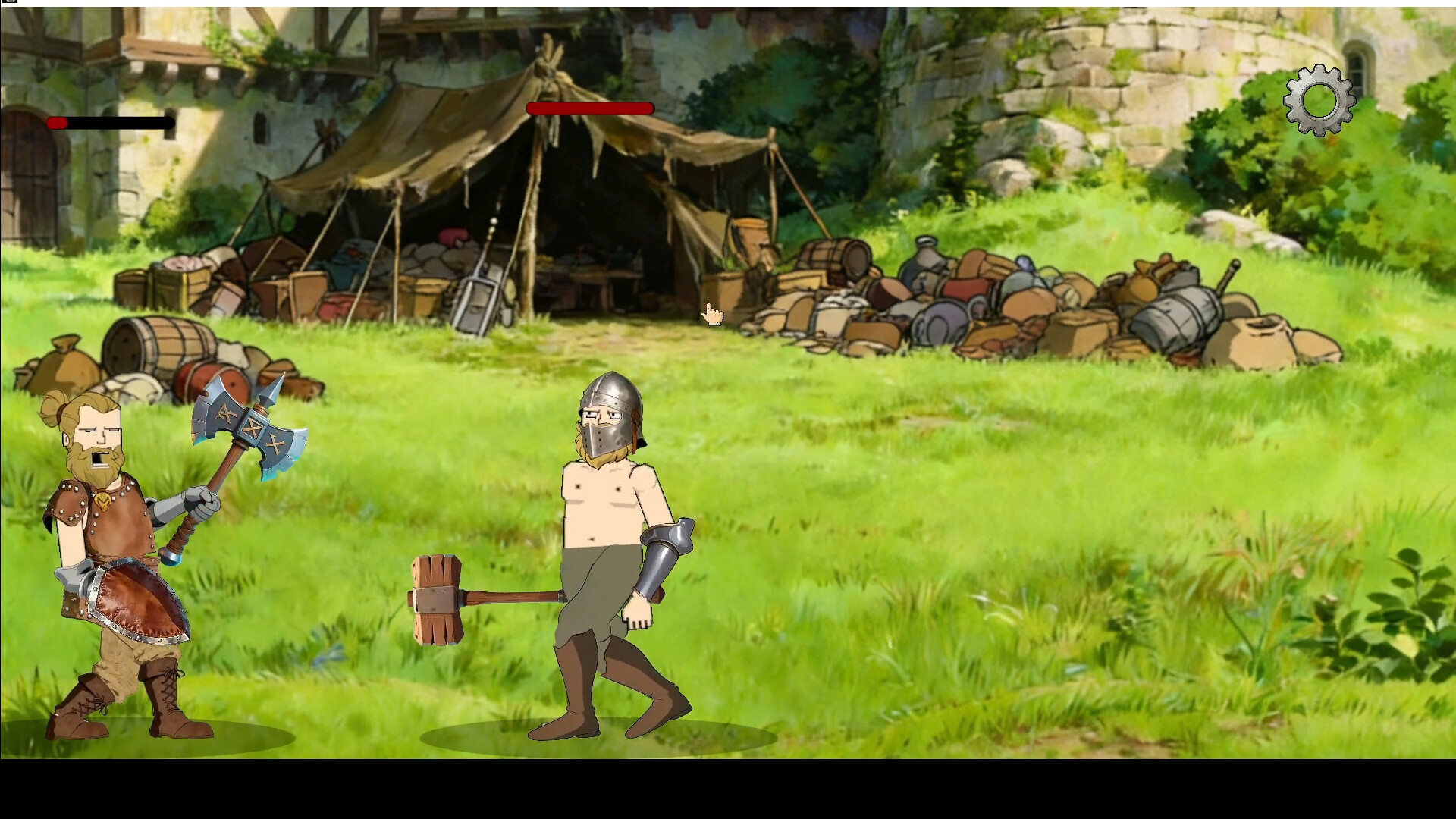
A pre-duel matchup in a supply camp, each fighter carrying a distinct weapon and shown with an individual health bar.Steam store page -
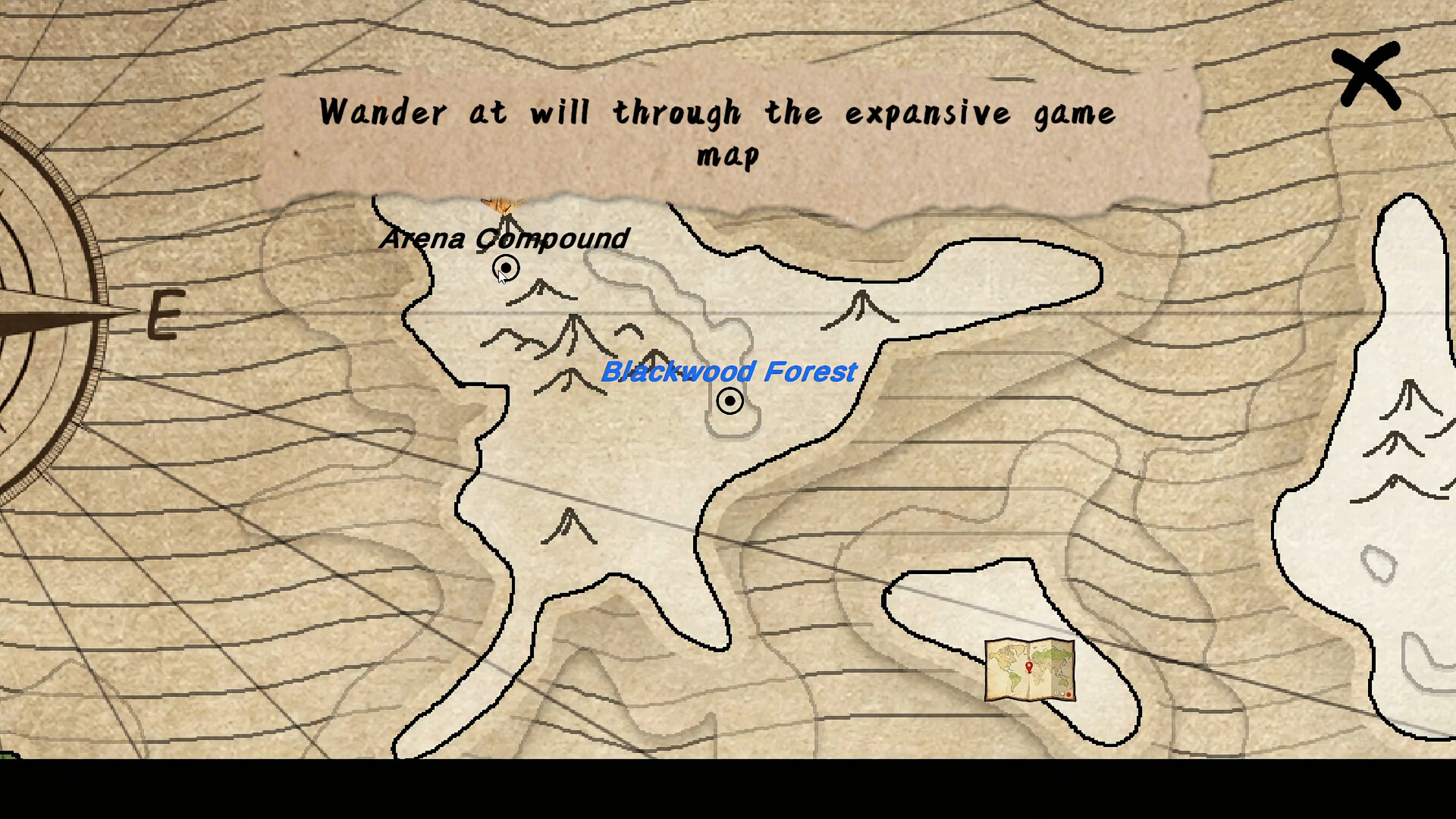
The overworld map names specific locations like Arena Compound and Blackwood Forest, confirming a real explorable world rather than a menu of levels.Steam store page