
Game review
Super Lesbian Animal RPG
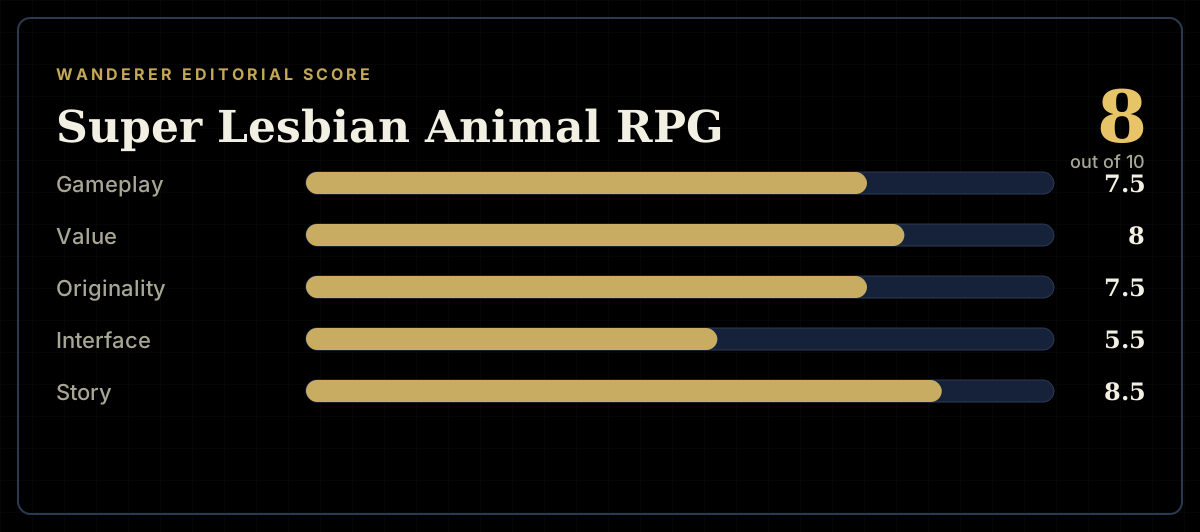
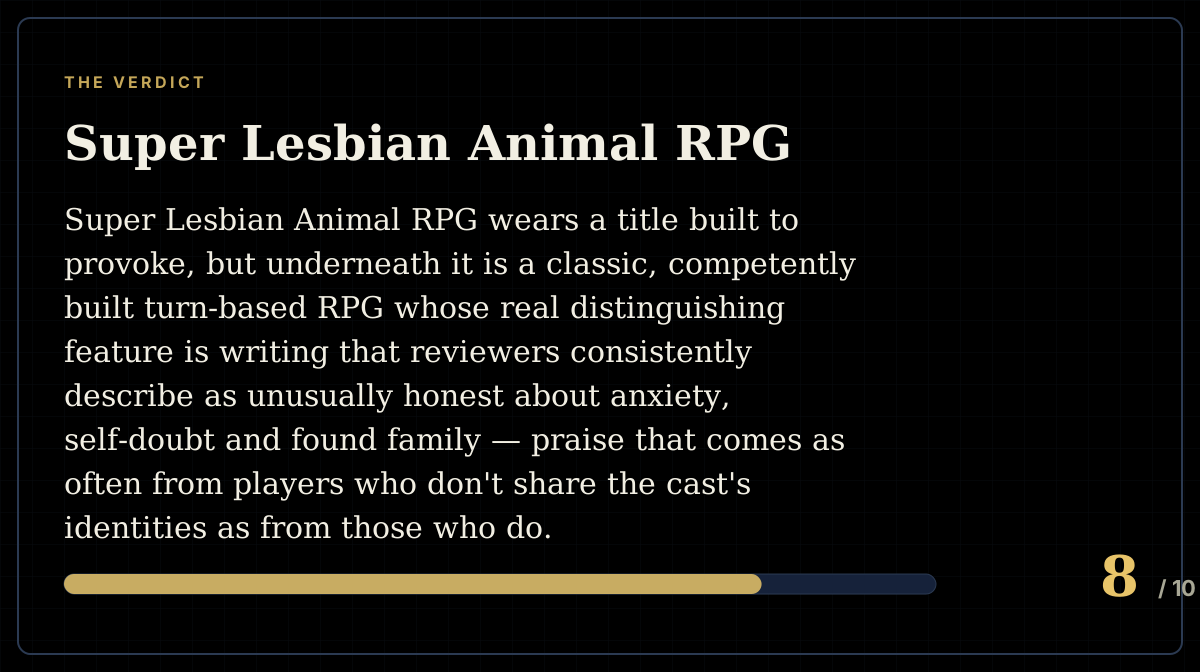
8 / 10
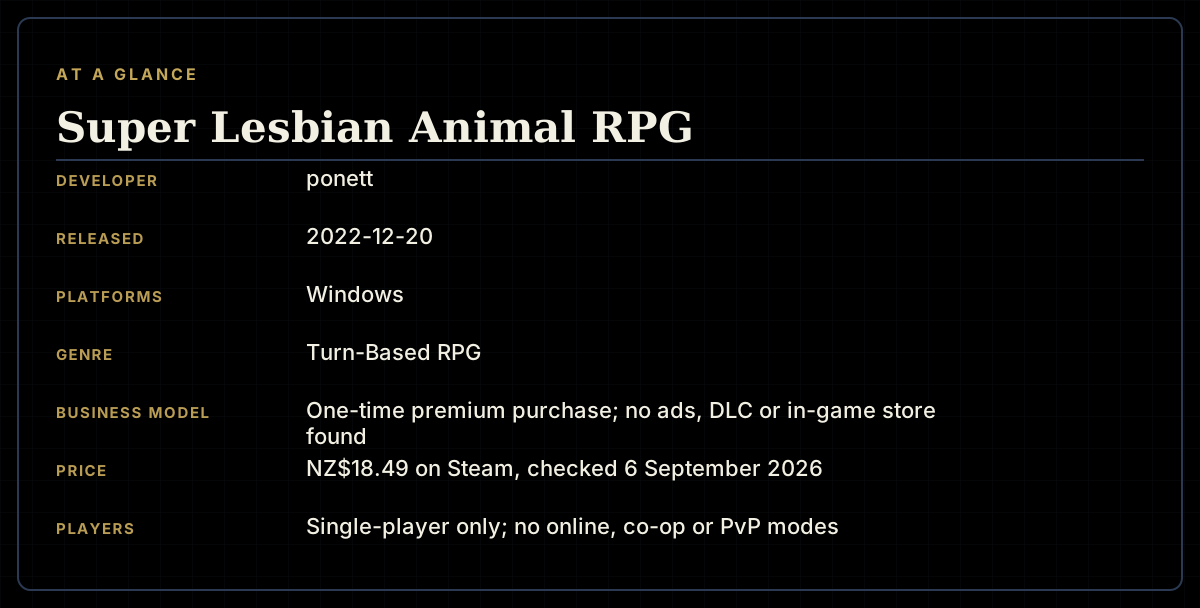
- Developer
- ponett
- Publisher
- ponett
- Released
- 20 December 2022
- Platforms
- Windows
- Genre
- Turn-Based RPG
- Monetisation
- One-time premium purchase; no ads, DLC or in-game store found
- Players
- Single-player only; no online, co-op or PvP modes
The short version
Super Lesbian Animal RPG wears a title built to provoke, but underneath it is a classic, competently built turn-based RPG whose real distinguishing feature is writing that reviewers consistently describe as unusually honest about anxiety, self-doubt and found family — praise that comes as often from players who don't share the cast's identities as from those who do. Combat built around spellbooks and party-specific special points gives the turn-based side real texture without reinventing the genre, and the soundtrack draws separate, specific praise on its own merits.
Its most consistent practical complaints trace back to its RPG Maker foundation rather than its writing: a fullscreen display bug some players needed to manually work around, no way to rebind movement keys (a real accessibility problem for non-standard keyboard layouts), and inconsistent Steam Deck compatibility. A smaller, more divided group of reviewers also find the story's emotional register overwrought once its third act raises the stakes, a legitimate matter of taste rather than a flaw with an objective answer.
Biggest strengths
- Writing repeatedly praised by reviewers across a wide range of backgrounds as unusually honest and specific about anxiety, self-doubt and found-family relationships, without needing to share the cast's identities to connect with it
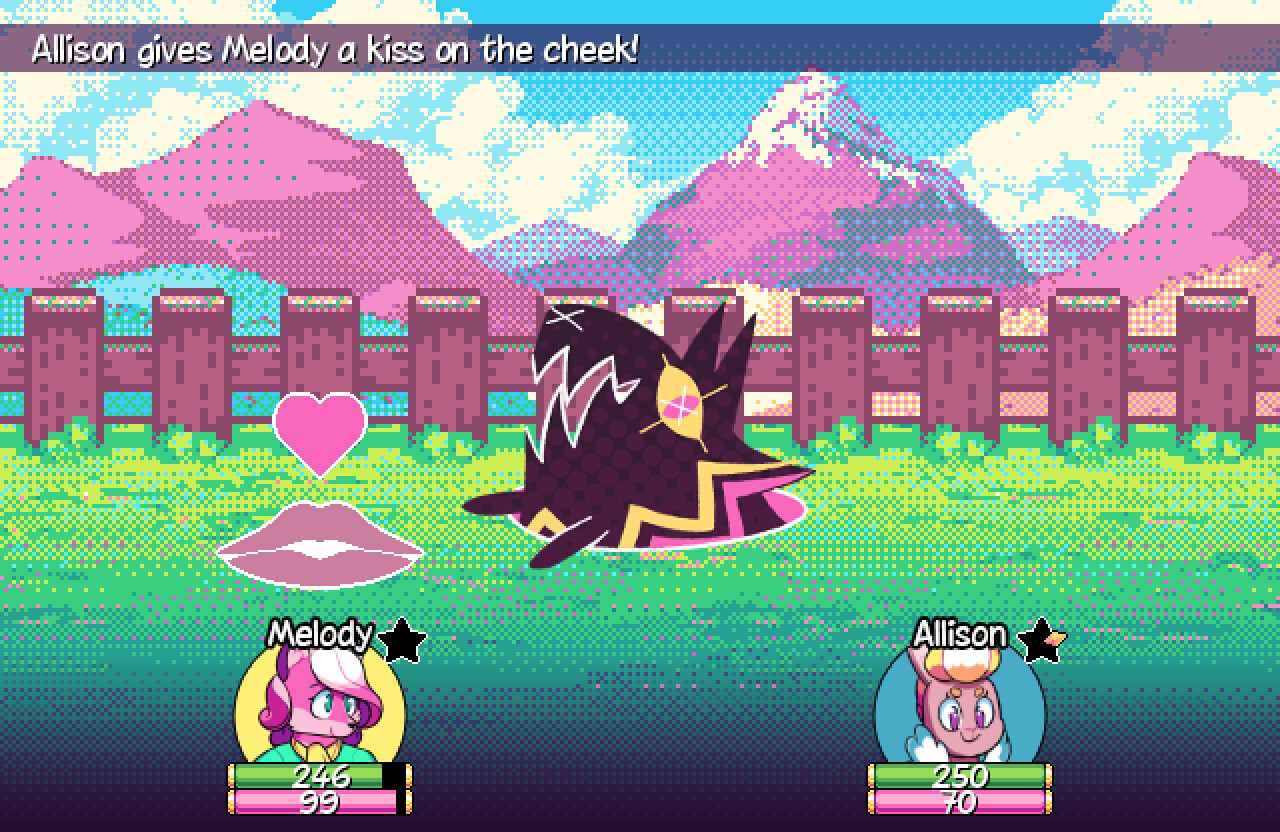
- A turn-based combat system built around character-specific spellbooks and special points earned by fulfilling party roles, giving genuine build variety without overcomplicating a classic structure
- An original soundtrack by Beatrix Quinn singled out repeatedly as standing on its own outside the game, not just serviceable background music
Biggest weaknesses
- Built in RPG Maker, and inherits that engine's real limitations: a fullscreen display bug that required manual workarounds for some players, and no way to rebind movement keys, a concrete problem for players using compact keyboards without dedicated arrow keys
- Steam Deck compatibility is inconsistent by multiple accounts, ranging from playable-with-caveats to reportedly unable to launch at all for some players
- A minority of reviewers find the story's emotional register overwrought, particularly once the third act raises its dramatic stakes, describing scenes that read to them as manufactured rather than earned tension
Who it's for: RPG fans who want combat as a frame for character writing rather than the main event, and who connect with (or are simply open to) a sincere story about anxiety and queer identity. Less suited to Steam Deck-only players or anyone using a keyboard layout without dedicated arrow keys, given the engine's rebinding limits.
Our recommendation: A strong recommendation for anyone drawn to character-driven turn-based RPGs, provided you can play on a standard keyboard and desktop setup where the engine's rough edges are least likely to bite.
8 / 10
A title built entirely to provoke a reaction runs the risk of the actual game getting lost behind it. Super Lesbian Animal RPG mostly avoids that trap. Underneath the deliberately blunt name is a competently constructed, classic-styled turn-based RPG whose real calling card — repeated across an unusually consistent and wide range of reviewers — is writing that handles anxiety, self-doubt and found family with a level of honesty that reviewers describe connecting with regardless of whether they share anything else in common with its cast.
A healer joins the party
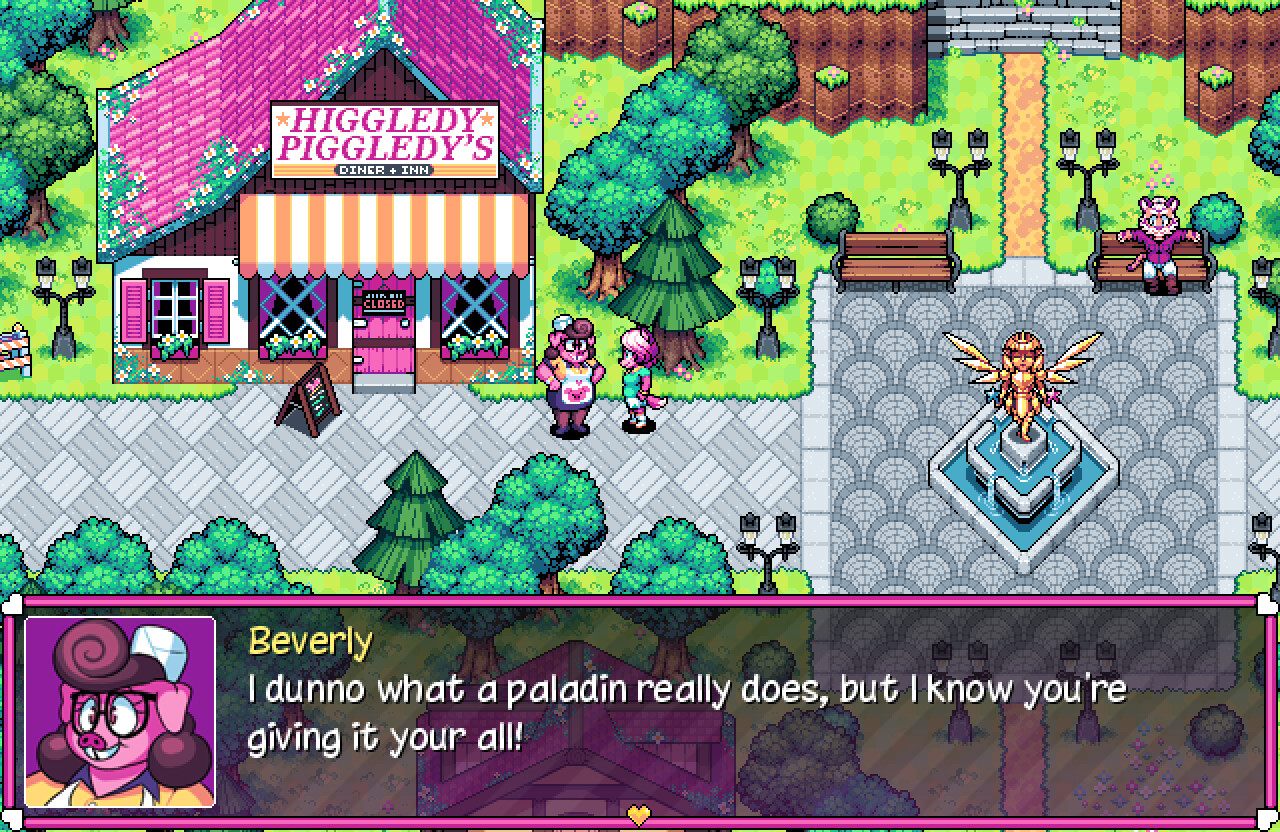
The setup is simple: Melody, a healer, joins her girlfriend Allison's adventuring party alongside a small cast of friends, fighting through dungeons full of "funny looking monsters" while the game's real weight sits in how the characters process anxiety, inferiority and their relationships with each other. Combat runs on a familiar turn-based structure, but reviewers highlight real texture in the specifics: character-specific "spellbooks" that can substantially change a party member's available moveset, and special points earned specifically by fulfilling a role in battle — healing, attacking, tanking damage — that reward playing a character according to their strengths rather than defaulting to one dominant strategy. It isn't a reinvention of the genre, but reviewers consistently describe it as well-executed rather than merely serviceable, giving the writing room to be the actual centerpiece without the combat feeling like an afterthought.
That writing is what earns the game its Overwhelmingly Positive reception at a scale (1,936 reviews, roughly 99% positive) unusual for a solo-developer RPG Maker release. What stands out across the review sample isn't just praise from players who share the cast's queer and trans identities — though there's plenty of that, and clearly heartfelt — but a recurring pattern of reviewers explicitly noting they don't share those identities and were still moved by how specifically the game depicts anxiety and self-doubt. That range of connection is a genuinely strong signal that the writing is working as character writing first, representation second, rather than the reverse.
Where the RPG Maker foundation shows
The most consistent practical criticism in this review's research has nothing to do with the writing and everything to do with the engine underneath it. Multiple reviewers report a fullscreen display bug requiring a manual file-level fix to resolve, and a more structural complaint: the game offers no way to rebind movement keys, which becomes a genuine accessibility problem for players using compact keyboards without dedicated arrow keys, to the point that at least one reviewer specifically refunded over it. Steam Deck compatibility is reported inconsistently across reviews, ranging from "playable with caveats" to accounts of the game failing to launch entirely. None of this touches the writing or combat design directly, but for a game increasingly likely to be picked up on Deck or with non-standard hardware, it's a real, practical barrier worth knowing about before buying rather than discovering afterward.
A second, smaller thread of criticism is more a matter of taste than a technical flaw: a minority of reviewers find the story's emotional register tips into melodrama once its third act raises the stakes, describing scenes that read to them as manufactured rather than earned. This is a legitimate reaction distinct from a coordinated backlash — it shows up in isolated, thoughtful reviews rather than as an organized pattern — and worth flagging as a genuine difference in how individual players respond to the story's more intense later beats, not a consensus flaw.
A soundtrack worth mentioning on its own
Composer Beatrix Quinn's original score draws specific, repeated praise separate from the writing and gameplay, with reviewers describing it as strong enough to stand on its own outside the game — enough so that the developer released a physical vinyl and CD edition of the soundtrack nearly a year after the game's original launch. That's a small but concrete signal of both the score's quality and the continued audience investment in the project well past its initial release window.
A real, sustained first year
SLARPG's own patch history shows a genuine, dense support effort through its first year: near-daily changelog updates through the two weeks immediately following its 20 December 2022 launch, followed by a steady cadence of numbered updates through most of 2023, concluding with a version 1.2.3 changelog in late October 2023 and the soundtrack release the following month. Public update activity has been quiet since, consistent with a smaller narrative RPG reaching a natural, complete state rather than requiring ongoing content support — a different, and entirely reasonable, shape of "finished" compared to games built around continuous live content.
Reading the review corpus itself
One more thing worth naming plainly: at least one reviewer who identifies as being squarely in the game's target audience makes a pointed observation about the review corpus itself, arguing that a large share of the most-upvoted positive reviews focus on the game's themes and representation rather than assessing its mechanical quality directly. That's a fair, self-aware point to flag for anyone trying to judge this game's gameplay specifically from its Steam review page — the top-voted positive reviews skew toward celebrating what the game represents rather than dissecting its combat or pacing, which this review has tried to do more directly. It doesn't make the celebratory reviews wrong or illegitimate, but a reader comparing scores across different RPGs should know that SLARPG's review corpus reads differently than a typical genre entry's, and adjust expectations about what its aggregate score is actually measuring.
At roughly fifteen to twenty hours for a full playthrough by most accounts, and priced in line with other mid-length premium indie RPGs, the game's value proposition rests almost entirely on how much its writing lands for a given player — reviewers who connected with the story consistently describe it as one of their favourite games in recent memory, while the handful who didn't connect with the writing style report a much more middling experience, since the combat alone isn't positioned to carry the game on its own.
Where it lands
Super Lesbian Animal RPG earns its unusually strong reception on the strength of writing that a remarkably broad range of players describe connecting with, wrapped around solid, if unremarkable, turn-based combat mechanics that never get in the way of the story they're serving. Its real, documented weaknesses are almost entirely engine-level — fullscreen bugs, inflexible key rebinding, inconsistent Steam Deck support — rather than anything wrong with the game's core design or writing. For anyone playing on a standard desktop setup, those limitations are minor friction against an otherwise well-regarded, sincerely written RPG.
Pros and cons
Pros
- Writing repeatedly praised by reviewers across a wide range of backgrounds as unusually honest and specific about anxiety, self-doubt and found-family relationships, without needing to share the cast's identities to connect with it
- A turn-based combat system built around character-specific spellbooks and special points earned by fulfilling party roles, giving genuine build variety without overcomplicating a classic structure
- An original soundtrack by Beatrix Quinn singled out repeatedly as standing on its own outside the game, not just serviceable background music
- A real, sustained patch history through most of its first year, plus a physical vinyl and CD soundtrack release nearly a year after launch, suggesting a developer still invested in the project well past its initial launch window
- A cast reviewers describe as feeling genuinely human despite an anthropomorphic-animal presentation, avoiding the trap of species design standing in for character depth
Cons
- Built in RPG Maker, and inherits that engine's real limitations: a fullscreen display bug that required manual workarounds for some players, and no way to rebind movement keys, a concrete problem for players using compact keyboards without dedicated arrow keys
- Steam Deck compatibility is inconsistent by multiple accounts, ranging from playable-with-caveats to reportedly unable to launch at all for some players
- A minority of reviewers find the story's emotional register overwrought, particularly once the third act raises its dramatic stakes, describing scenes that read to them as manufactured rather than earned tension
- Combat, while serviceable and occasionally inventive, is described by some critical reviewers as a secondary attraction that can drag by the later hours compared to the strength of the writing carrying it
Screenshots
-
Super Lesbian Animal RPGImage: ponett via Steam -
Super Lesbian Animal RPGImage: ponett via Steam -
Super Lesbian Animal RPGImage: ponett via Steam -
How the review scores each part of the gameWanderer Editorial -
The specsWanderer Editorial -
The short versionWanderer Editorial