Game review
Signs of the Sojourner
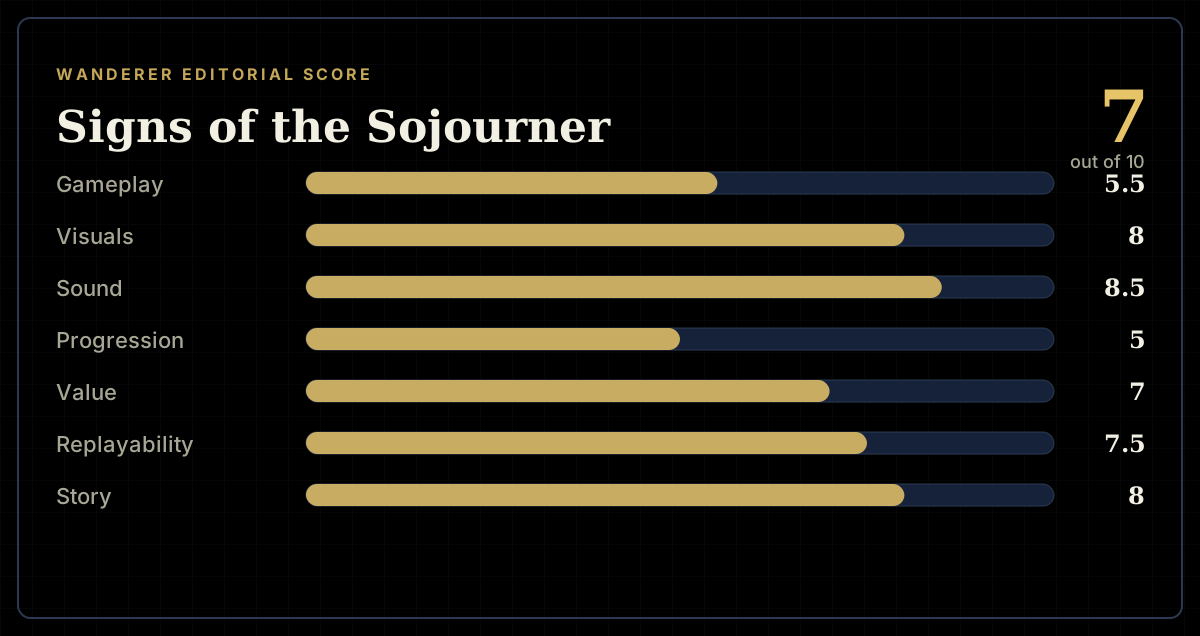
7 / 10
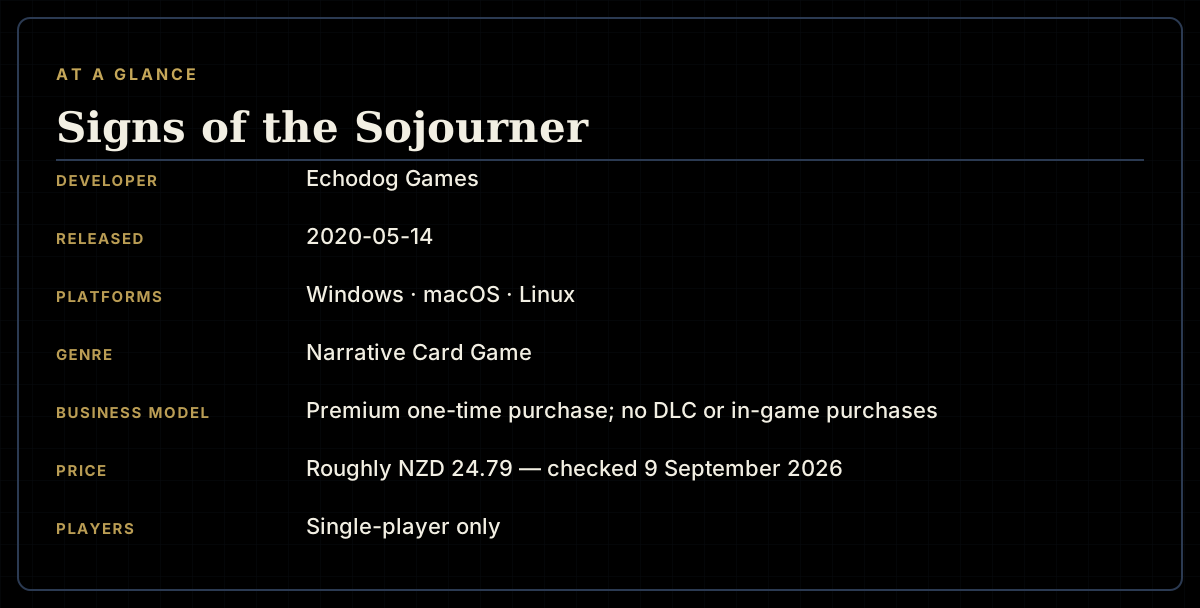
- Developer
- Echodog Games
- Publisher
- Echodog Games
- Released
- 14 May 2020
- Platforms
- Windows, macOS, Linux
- Genre
- Narrative Card Game
- Monetisation
- Premium one-time purchase; no DLC or in-game purchases
- Players
- Single-player only
The short version
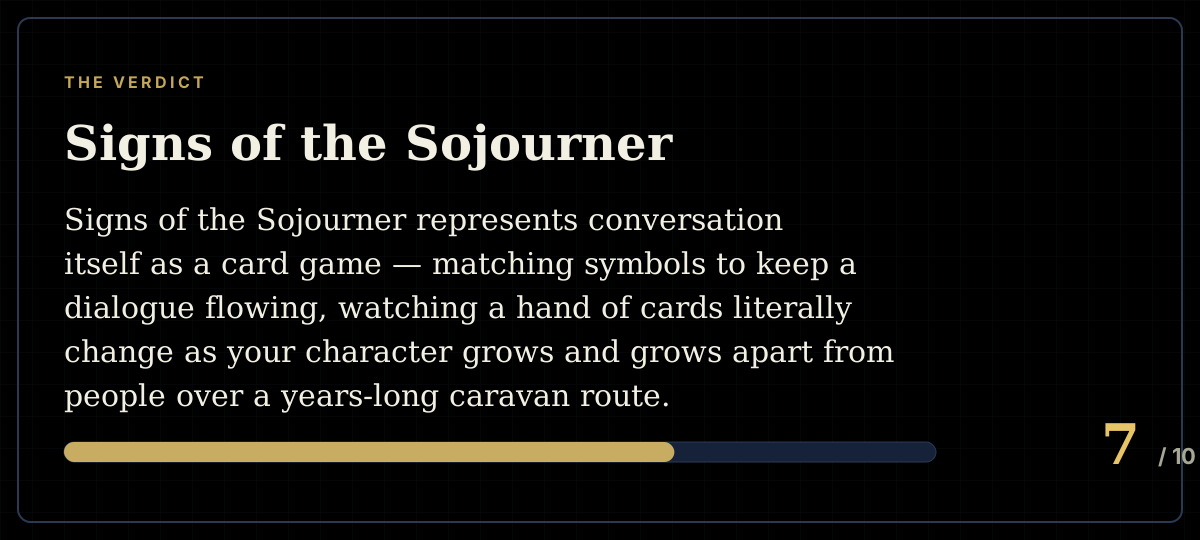
Signs of the Sojourner represents conversation itself as a card game — matching symbols to keep a dialogue flowing, watching a hand of cards literally change as your character grows and grows apart from people over a years-long caravan route. A meaningful share of its review sample calls it a masterclass in mechanics reinforcing story, moved to tears by how directly the system mirrors the ache of changing and losing touch with people you love. A smaller but serious group reports the opposite experience: card-type complexity compounding faster than most players can adapt to, turning that same mechanic into something that feels punishing rather than meaningful.
Biggest strengths
- The core conceit, representing conversations as symbol-matching card play that literally reshapes your hand as your character changes over time, is repeatedly described as one of the more inventive marriages of mechanics and theme in the genre
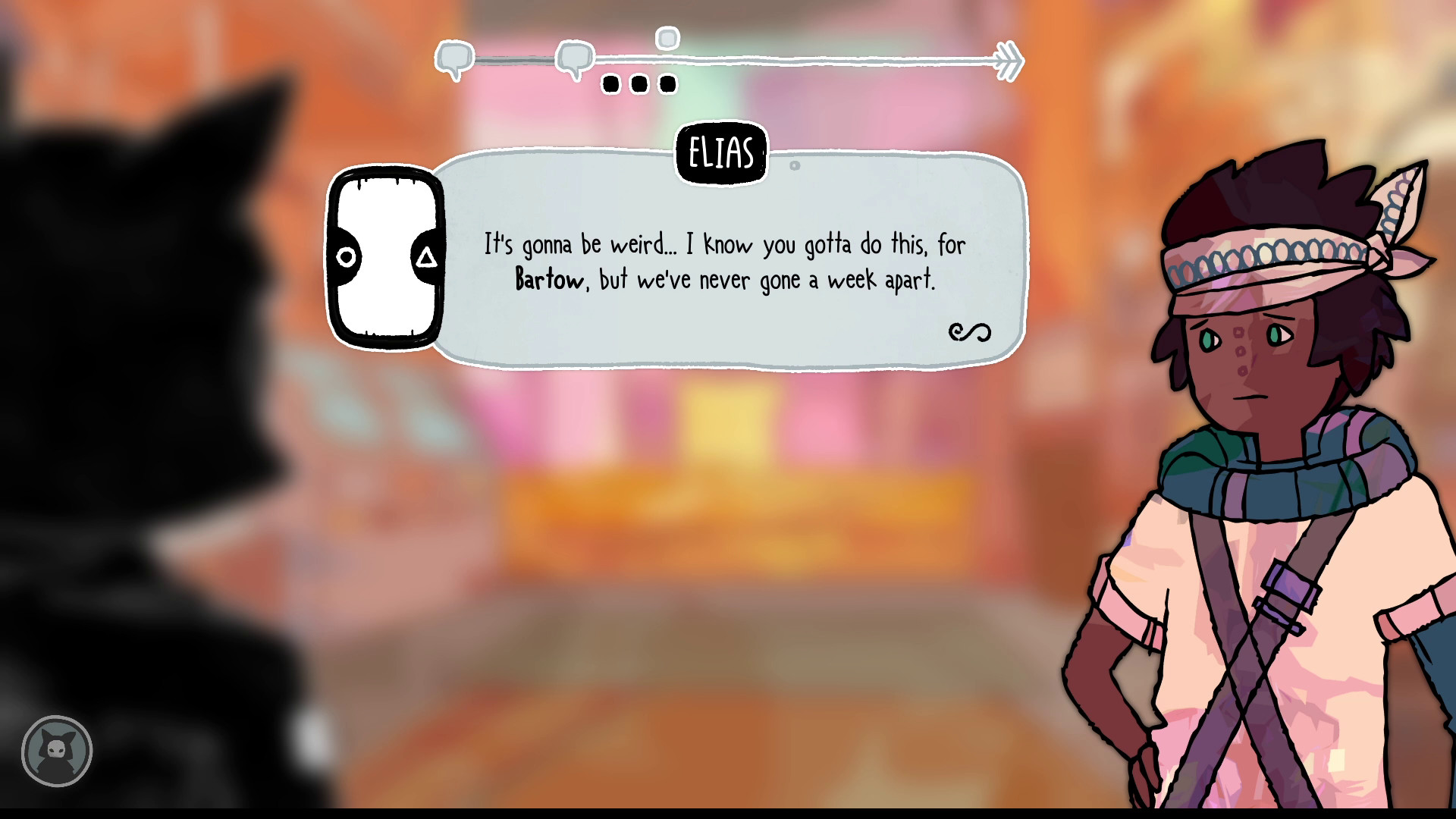
- Writing and character work draw deep, specific praise, with multiple reviewers describing genuinely emotional reactions to how the game handles change, distance and the passage of time in relationships
- Art direction and score are both singled out as beautiful, holding up even in the reviews most critical of the underlying gameplay
Biggest weaknesses
- A substantial minority of reviewers report that new card types are introduced faster than most players can realistically adapt to, describing later encounters as compounding into a state where failure feels unavoidable regardless of skill or attentiveness
- Several detailed reviews specifically distinguish this from intentional narrative-reinforcing difficulty, arguing the balance genuinely breaks down rather than meaningfully mirroring the story's themes about change and loss
- Some reviewers report a specific structural confusion: certain encounters only reveal what cards were actually needed after the conversation has already been resolved, undermining the ability to learn from a failure in the moment
Who it's for: Fans of narrative-forward indies like Night in the Woods or Pyre who want a game willing to make failure feel emotionally significant rather than just a fail state, more than players who want conversation mechanics to reward mastery in a conventional sense.
Our recommendation: Worth experiencing for the writing, art and music alone, and worth trying the free prologue first specifically because it's the clearest way to find out which side of the mechanical divide you land on before committing to the full purchase.
7 / 10
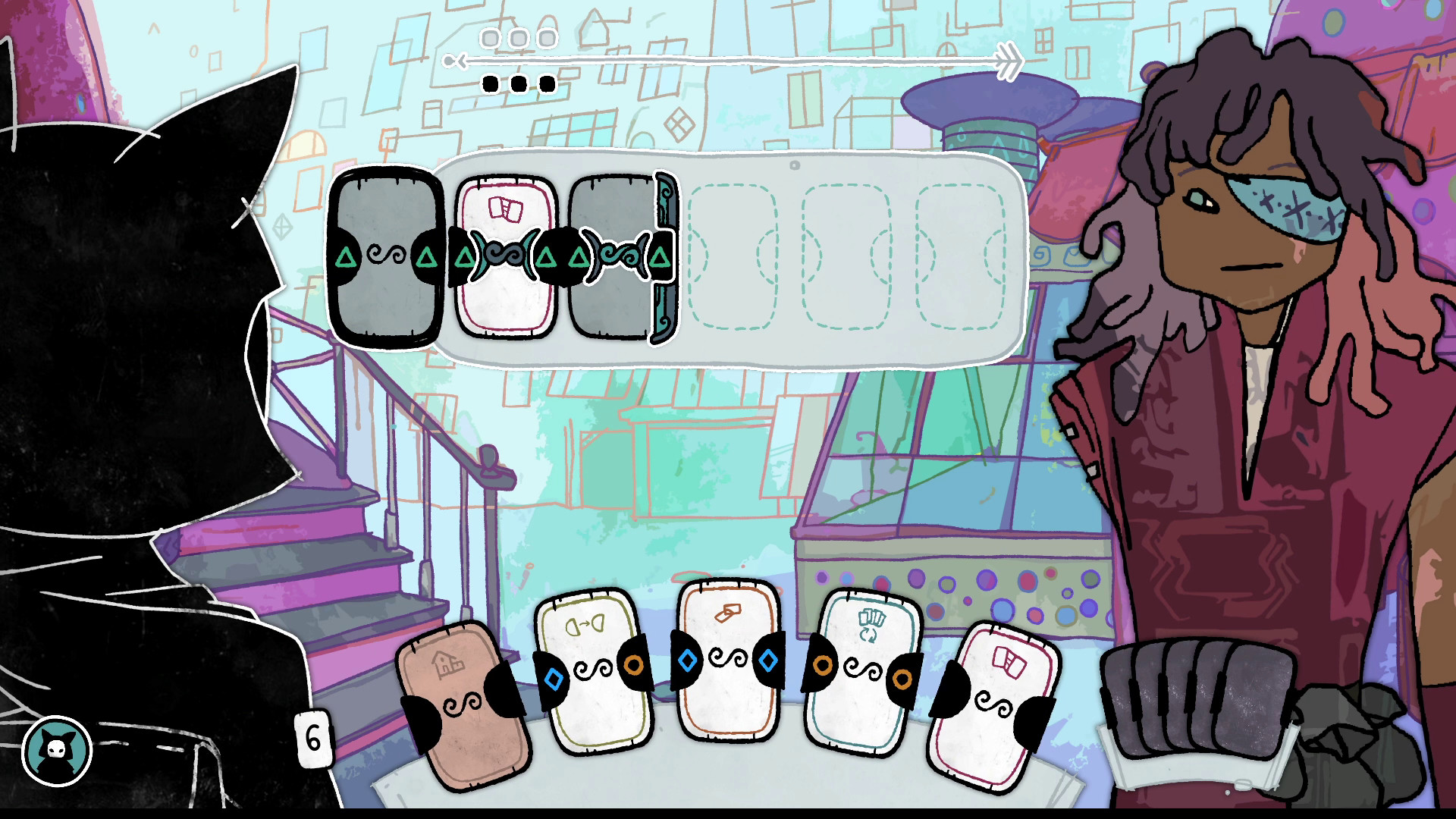
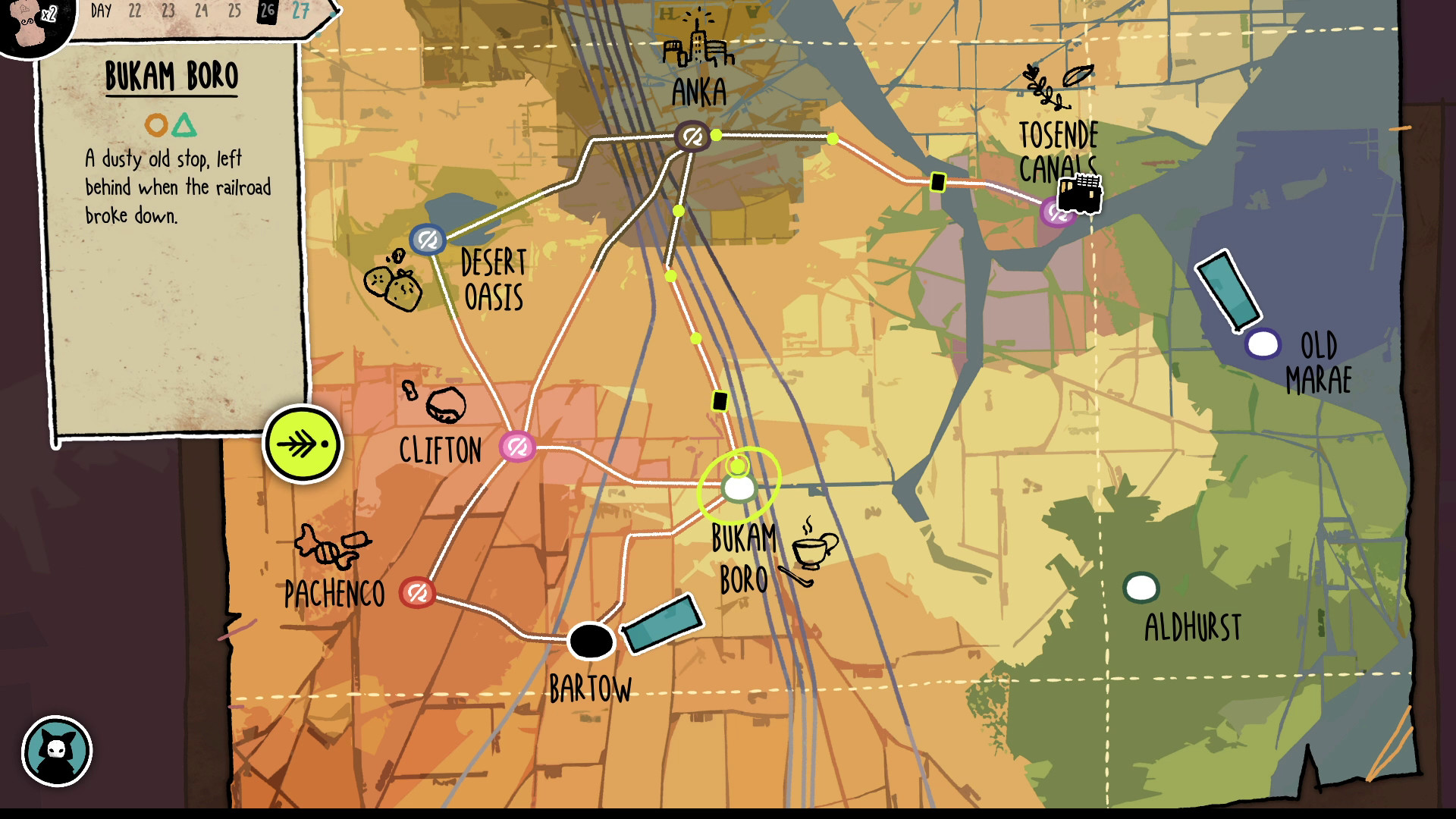
You inherit your mother's caravan and her trading route between towns, and every conversation you have along the way — with old friends, new acquaintances, people you'll see once and people you'll see for years — plays out as a card game. Each card carries a symbol representing a conversational tone; matching symbols keeps the exchange flowing, mismatches let it falter. It's an unusual premise for a narrative game, and the review sample treats it as either one of the smartest marriages of mechanics and theme in the genre or a fundamentally broken system wearing a beautiful story as camouflage — sometimes within the same detailed review.
A mechanic several reviewers call a genuine breakthrough
For a real and vocal share of the audience, the card system isn't just a clever gimmick, it's the entire point, and it works. Your hand of cards literally changes as your character grows, learns new ways of relating to people, and — crucially — loses access to the cards that used to define old relationships, mechanically representing drifting apart from someone in exactly the way it actually feels to lose touch with a friend over years. Multiple reviewers describe being moved to real tears by this, not by a cutscene or a line of dialogue but by watching their own hand of cards change and realizing what that meant about who their character had become. That level of mechanical-narrative integration is rare enough that several reviewers call it a genuine design achievement independent of the story layered on top, which itself draws deep, specific praise for its handling of change, distance and the passage of time.
Where a serious minority says the same system breaks down
Set against that, a substantial and detailed minority reports a very different experience with the identical mechanic. New card types are introduced, by several accounts, faster than most players can realistically internalize, and later encounters compound that complexity until failure starts to feel unavoidable regardless of how carefully a player is paying attention. Crucially, several of these reviewers are explicit that they understand and even appreciate the intent — mirroring the difficulty of communication as relationships and identities shift — but argue the actual balance crosses from meaningful difficulty into simple unfairness. A more specific, structural complaint compounds this: some encounters only reveal which cards were actually needed after the conversation has already resolved, robbing failure of the chance to teach the player anything before the next attempt.
Global achievement data offers a useful, concrete anchor for how seriously to weigh this: the achievement tied to fully completing the caravan route successfully clears under 2% of all owners. That's an extraordinarily narrow band, and it's consistent with the balance complaints being a real, structural feature of the difficulty curve rather than a handful of players simply struggling with an intentionally hard game.
Two readings of the same intentional choice
Both camps are describing the same underlying system accurately; they simply land on different sides of whether its difficulty serves the story or undermines it. That's worth stating plainly rather than resolving artificially, because it's genuinely useful information for a prospective buyer: if the idea of a conversation system that can meaningfully punish you for growing and changing sounds like the exact kind of risk you want a narrative game to take, this delivers that fully. If you want mechanical fairness to track cleanly with narrative intent at all times, the frustration reports here are real and specific enough to take seriously as a mismatch rather than a skill issue.
Who this actually resembles
Reviewers reach for a specific, consistent cluster of comparisons when describing the game's tone and audience: Night in the Woods, Life is Strange, Pyre, Undertale and Slay the Spire all come up repeatedly, not because Signs of the Sojourner plays like any of them mechanically, but because it shares their commitment to treating a game's systems as inseparable from its emotional register. That's a useful shorthand for calibrating fit — if character-driven indie narratives in that specific lineage already appeal to you, the review sample suggests you're exactly who this was built for, mechanical frustrations notwithstanding.
A small studio that kept refining it
Echodog Games didn't ship the game once and disappear. A "Bug Fix Update" arrived within weeks of launch, followed by a broader "Update 2" and a "New Faces Update" adding content the following year, showing a small team continuing to invest in balance and content after release rather than treating launch as the finish line. That doesn't resolve the specific difficulty complaints raised above — reviewers describing the compounding-complexity problem post-date some of these updates — but it's worth knowing that the studio kept working on the game rather than abandoning it the way some other titles on this list did.
Verdict
Signs of the Sojourner takes a genuine risk few narrative games attempt — building its central mechanic to mirror the actual feeling of losing touch with people over time — and a meaningful share of players say it pays off completely, deeply enough to justify replaying it several times over. A serious minority reports the same mechanic breaking down into unfair difficulty rather than meaningful difficulty, and that critique deserves real weight rather than dismissal. Try the free prologue first; it remains the fastest, lowest-risk way to find out which experience you're actually going to have with the full release.
Pros and cons
Pros
- The core conceit, representing conversations as symbol-matching card play that literally reshapes your hand as your character changes over time, is repeatedly described as one of the more inventive marriages of mechanics and theme in the genre
- Writing and character work draw deep, specific praise, with multiple reviewers describing genuinely emotional reactions to how the game handles change, distance and the passage of time in relationships
- Art direction and score are both singled out as beautiful, holding up even in the reviews most critical of the underlying gameplay
- A roughly three-to-four-hour runtime with meaningfully different outcomes based on which cards and paths you choose gives it real, well-earned replay value, with several reviewers reporting three to five full playthroughs
- A free prologue exists specifically to let players test the core conversation mechanic before buying the full game, a genuinely useful, low-risk way to gauge fit
Cons
- A substantial minority of reviewers report that new card types are introduced faster than most players can realistically adapt to, describing later encounters as compounding into a state where failure feels unavoidable regardless of skill or attentiveness
- Several detailed reviews specifically distinguish this from intentional narrative-reinforcing difficulty, arguing the balance genuinely breaks down rather than meaningfully mirroring the story's themes about change and loss
- Some reviewers report a specific structural confusion: certain encounters only reveal what cards were actually needed after the conversation has already been resolved, undermining the ability to learn from a failure in the moment
- RNG plays a real role in which cards are available during a given conversation, and reviewers frustrated by this specifically note there's no in-game mechanism to reduce that randomness's impact on outcomes
- Global achievement data shows a genuinely difficult path to the most complete ending, with the achievement tied to fully succeeding the caravan route clearing under 2% of all owners, a figure consistent with the balance complaints rather than contradicting them
Screenshots
-
Signs of the SojournerImage: Echodog Games via Steam -
Signs of the SojournerImage: Echodog Games via Steam -
Signs of the SojournerImage: Echodog Games via Steam -
How the review scores each part of the gameWanderer Editorial -
At a glanceWanderer Editorial -
The short versionWanderer Editorial