Game review
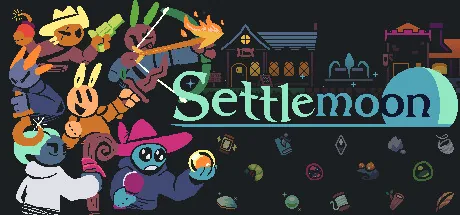
Settlemoon
7 / 10
- Developer
- Lepioid LLC
- Publisher
- Lepioid LLC
- Released
- 31 July 2023
- Platforms
- Windows
- Genre
- Idle, Town Builder, Fantasy Simulation
- Monetisation
- One-time purchase. One optional soundtrack DLC. No advertisements, no microtransactions, no premium currency.
- Players
- Single-player
The short version
Settlemoon is a real-time idle game from solo studio Lepioid LLC, released 31 July 2023, about growing a sidescrolling town that welcomes adventurers, sells them goods and sends them off on quests, while a moon-shaped mystery slowly unfolds in the background. It advances in real time whether the game is open or not, and it holds a lifetime Very Positive 86.1% across 288 reviews, with recent English sentiment settling slightly softer at 79%. What makes it worth a closer look is how deliberately it withholds explanation — there is close to no tutorial, and the developer's own store page frames that as the point rather than an oversight. This review's sample splits cleanly along exactly that line: reviewers who lean into the mystery describe one of the most distinctive, quietly moving idle games they've played, while 18 of the 39 most-helpful English negatives specifically cite the tutorial, or the lack of one, as the reason they bounced off.
Biggest strengths
- Genuinely progresses in real time while the game is closed, which is more than several higher-profile idle games in this library can claim, and multiple reviewers specifically credit it as "the anti-idle game" for inverting the genre's usual number-chasing pressure
- Distinctive, well-regarded pixel art and a soundtrack singled out by name in a large share of the positive sample, with a genuine sense of place rather than generic idle-game window dressing
- No microtransactions, no advertising and no premium currency anywhere in the game; the only optional purchase is a soundtrack
Biggest weaknesses
- Withholding almost all explanation is a deliberate design choice according to the developer's own store page, and this review's negative sample shows it working exactly as intended against a meaningful share of players — 18 of the 39 most-helpful English negatives cite the tutorial, or lack of one, by name
- Several reviewers who otherwise liked the presentation describe finishing the story and building every structure without ever understanding what several core systems were actually doing
- Update output has slowed considerably since mid-2025, with the most recent substantial patch landing over a year before this review
Who it's for: Idle-genre players drawn to atmosphere and genuine discovery over spreadsheets and number-go-up mechanics, and who are comfortable consulting a community guide if they get stuck; poorly suited to anyone who wants a game to explain its own systems.
Our recommendation: One of the more genuinely original idle games this review has covered, and worth the asking price for the right temperament — but look up what you're getting into first if cryptic, largely unexplained systems aren't something you enjoy untangling.
7 / 10
Introduction
Settlemoon is a real-time idle game about rebuilding a small inn into a bustling town after the moon itself has vanished from the sky. Developed and published by solo studio Lepioid LLC, it released 31 July 2023 and has been updated steadily since, most recently addressing exactly the complaint this review spends most of its time on. You attract wandering adventurers, stock your shops, post quests, and watch a sidescrolling settlement grow while a slow, half-explained mystery about the missing moon unfolds around you. Three years on, it sits at a lifetime Very Positive 86.1% across 288 reviews, with recent English sentiment settling a touch softer at 79%. This review reads the full English-language negative sample and a large share of the positive one, and finds a genuinely unusual idle game whose greatest strength and its most consistent complaint are the exact same design decision.
The rare idle game that actually idles
Set against several other idle titles in this library, Settlemoon makes good on a promise the genre often only gestures at: its own store page states plainly that the town continues advancing in real time "even when the game isn't open," and this review's positive sample repeatedly confirms it in practice, with reviewers describing checking in once or twice a day to see what their town had done without them. That's worth stating clearly for shoppers, because it separates Settlemoon from idle games whose "offline progress" is really a background window that must stay running. One of this review's favourite lines from the positive sample calls it "the anti-idle game" — not an incremental number simulator chasing an illusion of explosive growth, but something closer to tending a small, living diorama that keeps existing whether or not you're watching. That framing holds up: there's no fail state, no countdown pressure, and very little in the way of the compulsion-loop mechanics that define most of the genre.
A game that will not explain itself
The flip side of that atmosphere-first approach is a near-total absence of onboarding, and this review's negative sample makes clear it's the single dominant complaint: 18 of the 39 most-helpful English negatives specifically name the tutorial, or the lack of one, as the reason they stopped playing. One reviewer, otherwise complimentary about the presentation, writes plainly that they have "absolutely no idea what is happening or why" from the opening minutes. Another calls the UI "so abstract that it's impossible to understand what anything means or does," adding that even finding the exit button proved confusing. This isn't a case of players skipping a tutorial that exists — several confirm they consulted community-written guides and still struggled to connect Settlemoon's visual language to its underlying systems. Crucially, this isn't launch-era feedback that's since aged out: the complaint recurs at a steady rate across every year in this review's sample, from 2023 through to 2025, which suggests it describes the game as it actually plays rather than a rough edge later patched away.
To the developer's credit, that's not for lack of trying. The patch history shows two updates aimed squarely at the problem — "Outlines and Onboards" in January 2025 and "Tidying Up(date)" the month before — and reviewers posting after those patches describe a somewhat gentler curve than the ones who bounced off the 2023 launch build. But the core design philosophy hasn't changed, and shouldn't: several of the game's most enthusiastic defenders are explicit that puzzling out Settlemoon's rules for yourself is the actual point, not a barrier to it. One widely-upvoted positive review frames it as a deliberate kindness rather than a flaw — a world that "keeps reaching out to you with more clues" without ever pressuring or punishing slow progress. Whether that reads as generous design or frustrating obscurity depends entirely on the player, and this review can't resolve that tension on anyone's behalf. It can say plainly that a meaningful share of buyers land on the wrong side of it.
Progression, story and how far players actually get
Steam's achievement data gives a useful, if imperfect, read on how far players get once they commit. The earliest milestone, constructing a first building, clears 92.1% of the tracked population, and befriending an early visitor clears 63.3% — most buyers do get past the opening confusion one way or another. From there the curve falls away steadily rather than cliffing sharply: roughly a quarter to a third of players reach mid-game boss encounters and town-expansion milestones, and the achievement for finishing the main story sits at 11.7%, with two additional post-completion tiers at 3.5% and 2.7% suggesting a small dedicated core that plays well past the credits. That's a reasonably healthy shape for a game this openly uninterested in holding anyone's hand, and it's consistent with a corpus that skews positive overall while carrying a real, dateable minority who never got past the front door.
Presentation and value
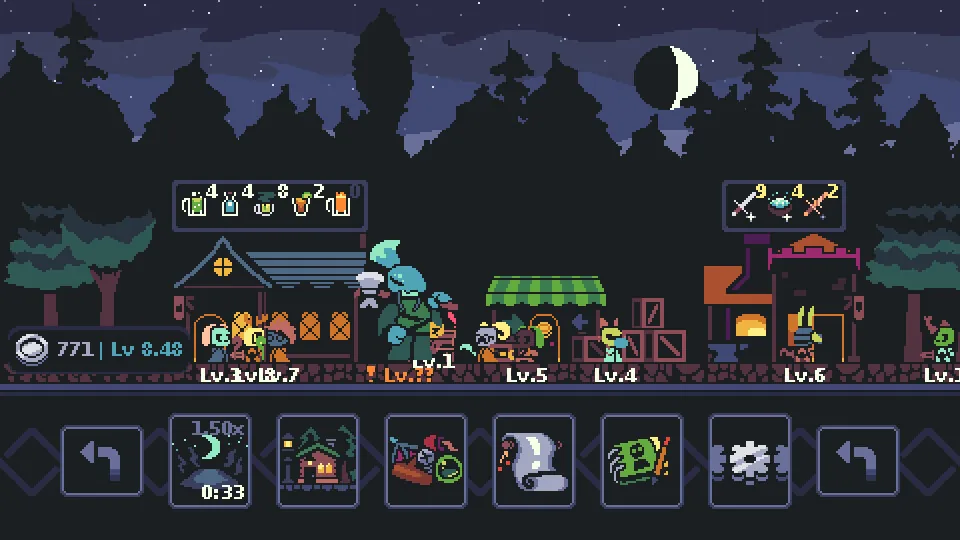
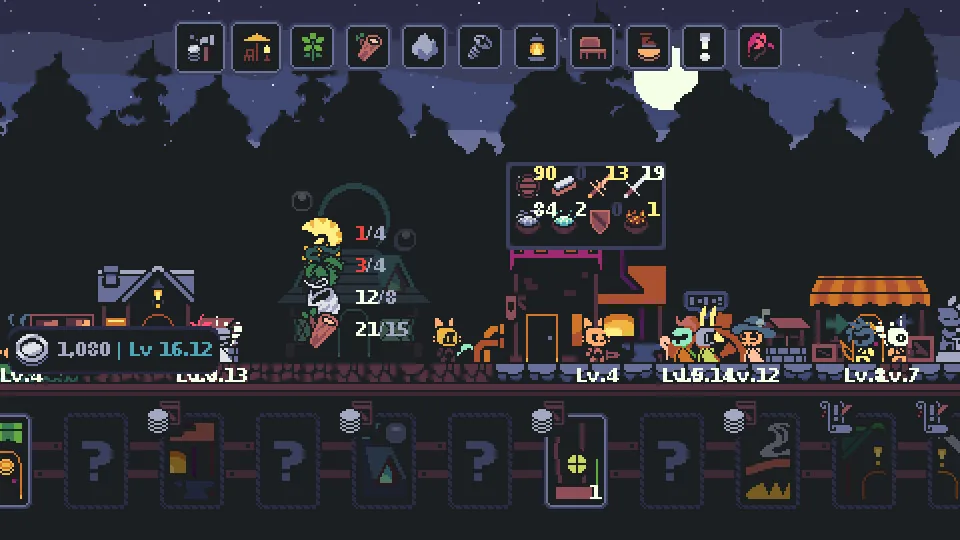
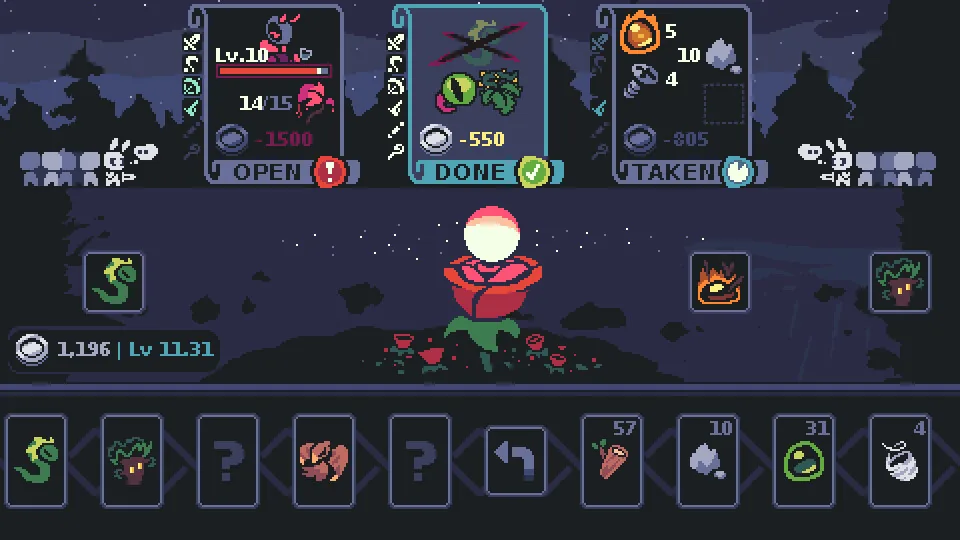
Almost nobody in this review's sample, positive or negative, criticises how Settlemoon looks or sounds — the pixel art and the wandering visitors' little musical themes come up as a genuine strength across both camps, including from several reviewers who otherwise recommend against buying it. At NZ$21.99 with no advertising, no premium currency and only a soundtrack as an optional extra, the monetisation is about as clean as this genre gets; the open question is purely whether its slow, mystery-first pace justifies the price for a given player, since there's limited mechanical depth to return to once its central story beats are uncovered. Update output has slowed markedly since mid-2025, with the most recent substantial patch now over a year old, which is worth factoring in if ongoing support matters to a purchase decision — though the game plays as a complete experience today rather than an unfinished one.
Final Verdict
Settlemoon earns its Very Positive rating by being something this library sees rarely: an idle game whose central hook is patience and genuine mystery rather than escalating numbers, and one that actually delivers on the offline-progress promise the genre so often only implies. It loses points, fairly, for a design philosophy that locks out a real share of its own audience — not through a bug or an unfinished system, but through a deliberate choice to explain almost nothing, which nearly half of this review's negative sample names directly as the reason they quit. If slow discovery and consulting a guide now and then sound like a fair trade for genuine atmosphere, this is one of the more distinctive idle games available. If you want a game that teaches you its own rules, look elsewhere in the genre.
Players who like the idea of a settlement that keeps ticking along whether they're watching or not, but want its systems explained rather than hidden, may find Wanderer's own approach to offline progression a more forgiving entry point.
Pros and cons
Pros
- Genuinely progresses in real time while the game is closed, which is more than several higher-profile idle games in this library can claim, and multiple reviewers specifically credit it as "the anti-idle game" for inverting the genre's usual number-chasing pressure
- Distinctive, well-regarded pixel art and a soundtrack singled out by name in a large share of the positive sample, with a genuine sense of place rather than generic idle-game window dressing
- No microtransactions, no advertising and no premium currency anywhere in the game; the only optional purchase is a soundtrack
- The developer has visibly responded to the onboarding complaints, shipping "Outlines and Onboards" and "Tidying Up(date)" patches in late 2024 and early 2025 aimed directly at legibility
Cons
- Withholding almost all explanation is a deliberate design choice according to the developer's own store page, and this review's negative sample shows it working exactly as intended against a meaningful share of players — 18 of the 39 most-helpful English negatives cite the tutorial, or lack of one, by name
- Several reviewers who otherwise liked the presentation describe finishing the story and building every structure without ever understanding what several core systems were actually doing
- Update output has slowed considerably since mid-2025, with the most recent substantial patch landing over a year before this review
- At NZ$21.99 with limited replay incentive once its central mystery is solved, value depends heavily on whether its slow, atmosphere-first pace suits the individual player
Screenshots
-
SettlemoonImage: Lepioid LLC via Steam -
SettlemoonImage: Lepioid LLC via Steam -
SettlemoonImage: Lepioid LLC via Steam -
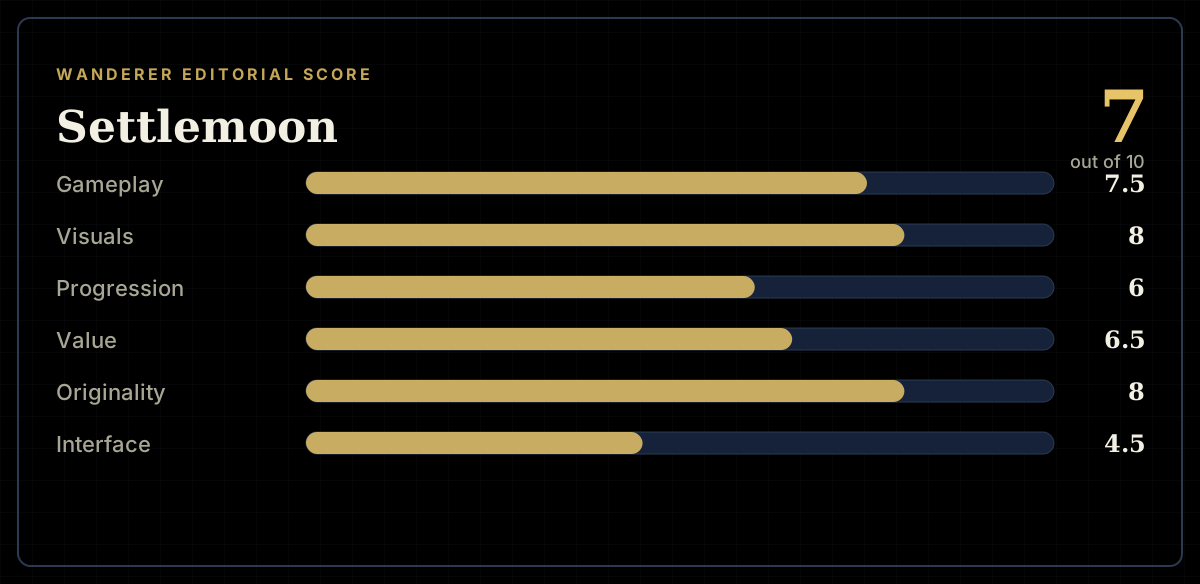
How the review scores each part of the gameWanderer Editorial -
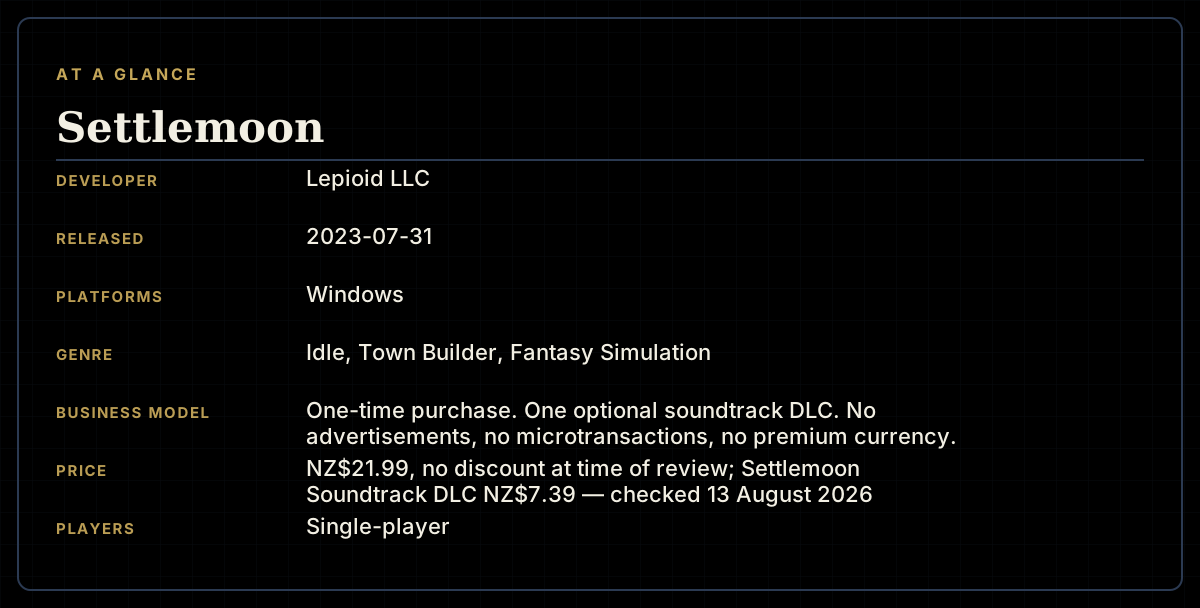
The essentials at a glanceWanderer Editorial -
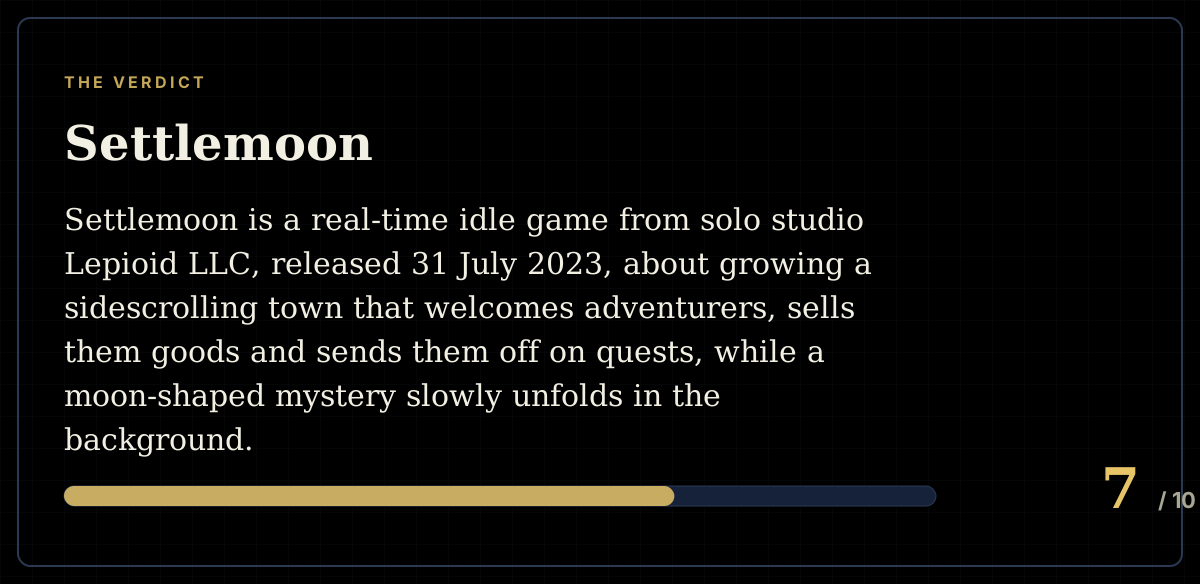
The short versionWanderer Editorial