Game review
SanctuaryRPG: Black Edition
6.5 / 10
- Developer
- Black Shell Media
- Publisher
- Plug In Digital
- Released
- 29 April 2014
- Platforms
- Windows, macOS, Linux
- Genre
- ASCII Roguelike RPG
- Monetisation
- One-time premium purchase; no DLC, no in-app purchases. This Black Edition release is an expanded, remastered version of the original 2014 SanctuaryRPG
- Players
- Single-player only; no online, co-op or PvP modes
The short version
SanctuaryRPG dresses genuinely deep RPG systems — crafting, a persistent town hub, class builds, and witty, self-aware writing — in a DOS-style ASCII interface that reviewers with roots in old BBS door games and MUDs recognize immediately and love. Underneath the simple presentation is real, specific mechanical depth that a large majority of reviewers say holds up far better than the graphics suggest at a glance.
A real, detailed critical thread argues the game's permadeath framing works against everything else it's trying to do: one meticulous, level-80 account describes both tank and DPS builds failing against certain late bosses due to specific, stacking mechanics that bypass ordinary defenses entirely, while a separate reviewer argues the core loop is less roguelike tension and more an easy, repetitive loot grind that occasionally kills a complacent player by accident. A specific, citable interface flaw — accessing the in-combat help menu costs the player a full turn — compounds both complaints.
Biggest strengths
- Genuinely deep RPG systems — crafting, a persistent and detailed town hub, distinct class builds — hidden behind a simple ASCII presentation that reviewers consistently say undersells how much game is actually here
- Witty, self-aware writing and humor that draws consistent praise even from reviewers otherwise critical of the game's mechanics
- A well-regarded soundtrack that multiple reviewers specifically single out as a standout given the minimal visual presentation
Biggest weaknesses
- A detailed, technical account from a level-80 player describes both tank and DPS character builds becoming functionally unviable against certain late bosses, citing specific stacking mechanics (percentage-of-max-HP bleed and doom effects, heal-power degradation, combo resets, ultimate-immunity phases) that bypass conventional defensive stats entirely
- A separate, detailed reviewer argues the core loop isn't meaningfully roguelike tension at all, describing it instead as a repetitive, low-difficulty loot grind punctuated by occasional, avoidable deaths from player complacency rather than genuine challenge
- A specific, citable interface flaw: opening the in-combat help menu to check an unfamiliar status effect costs the player a full turn, a real design oversight in a permadeath game rather than a minor inconvenience
Who it's for: Fans of old-school ASCII roguelikes, BBS door games and MUDs who want real, modern RPG systems layered underneath a nostalgic presentation. Less suited to players who want permadeath stakes that feel earned rather than occasionally arbitrary, or who need a fully learnable, well-balanced endgame.
Our recommendation: A cheap, genuinely rewarding pickup for its crafting and exploration systems and writing, especially for players with a soft spot for text-based RPGs — just go in aware that the late-game balance and permadeath framing draw real, detailed criticism from experienced players who pushed furthest into it.
6.5 / 10
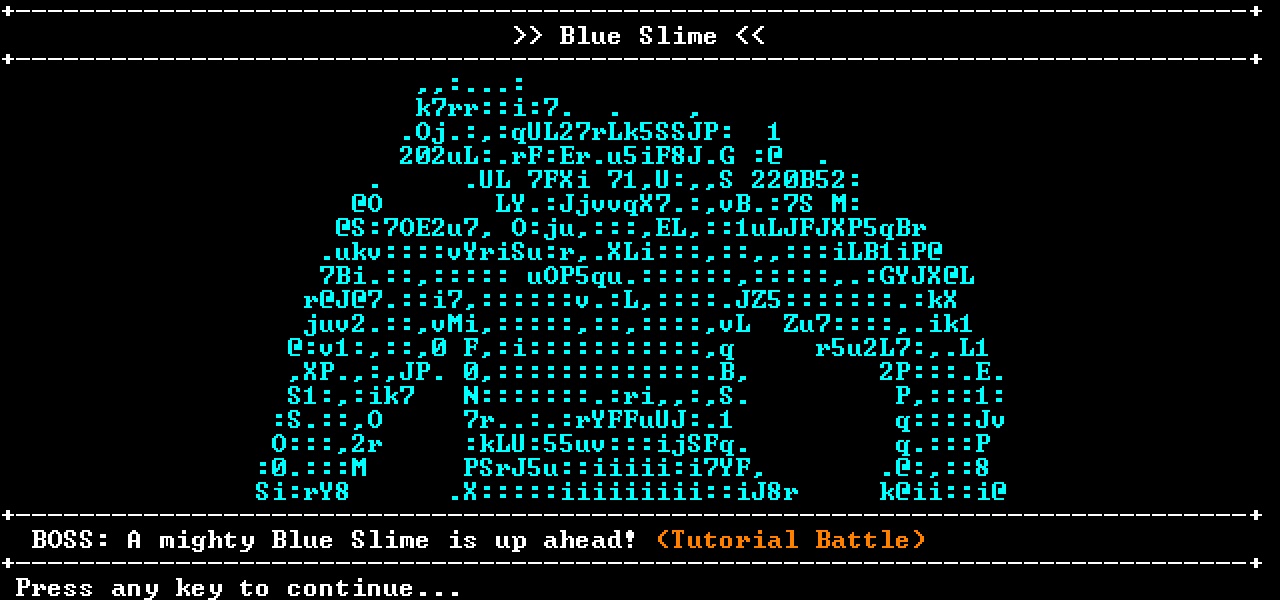
At a glance, SanctuaryRPG looks like a straightforward text adventure — DOS-style ASCII characters standing in for a dungeon, a town, and a cast of monsters. Reviewers who grew up on BBS door games, MUDs and terminal-based CRPGs recognize the presentation instantly, and several describe a genuine jolt of nostalgia just from booting it up. What consistently surprises reviewers who go in expecting a simple curiosity, though, is how much real, modern RPG design is layered underneath that presentation: crafting, a detailed and persistent town hub, distinct class builds, and witty, self-aware writing that draws praise even from the game's harshest critics.
Real depth behind a simple shell
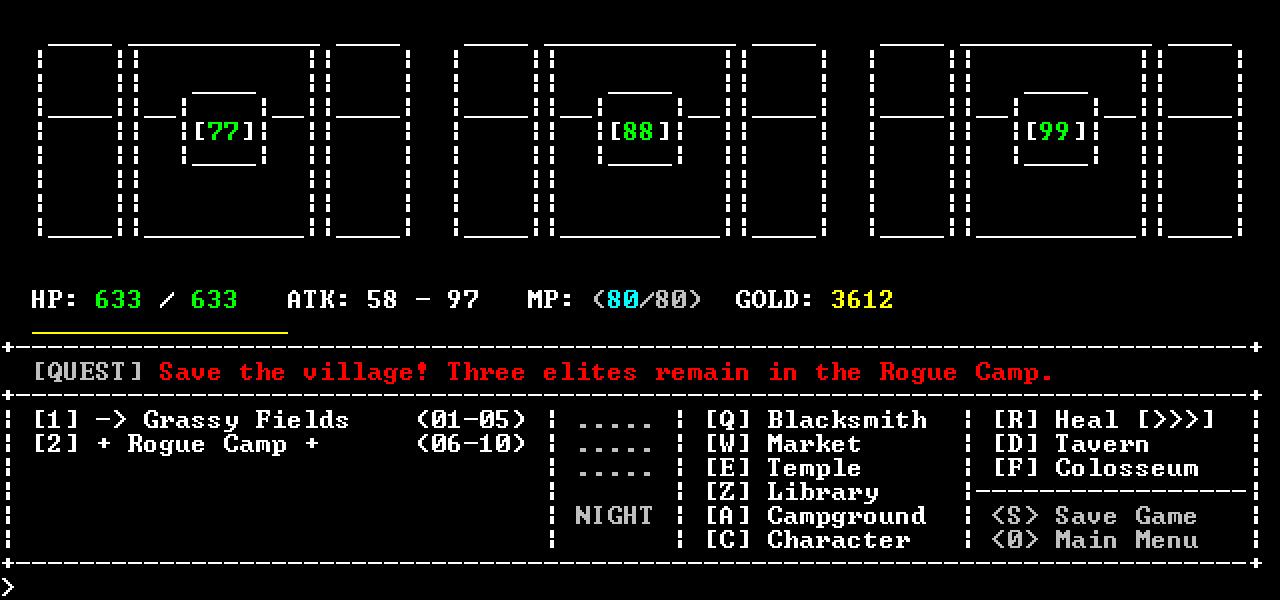
The praise here is specific rather than generic nostalgia. One detailed positive review lists the systems directly — a crafting system, a tavern to run, mining, exploration — concluding "so much love in this game and the DOS-like interface is hardly noticeable" once the player is a few hours in. The soundtrack draws consistent, unprompted mentions as a standout given how minimal the visual presentation otherwise is, and several reviewers frame the writing specifically as a highlight, describing genuinely funny, self-aware dialogue rather than the placeholder-feeling text a game this visually stripped-down might otherwise get away with.
A permadeath debate worth taking seriously
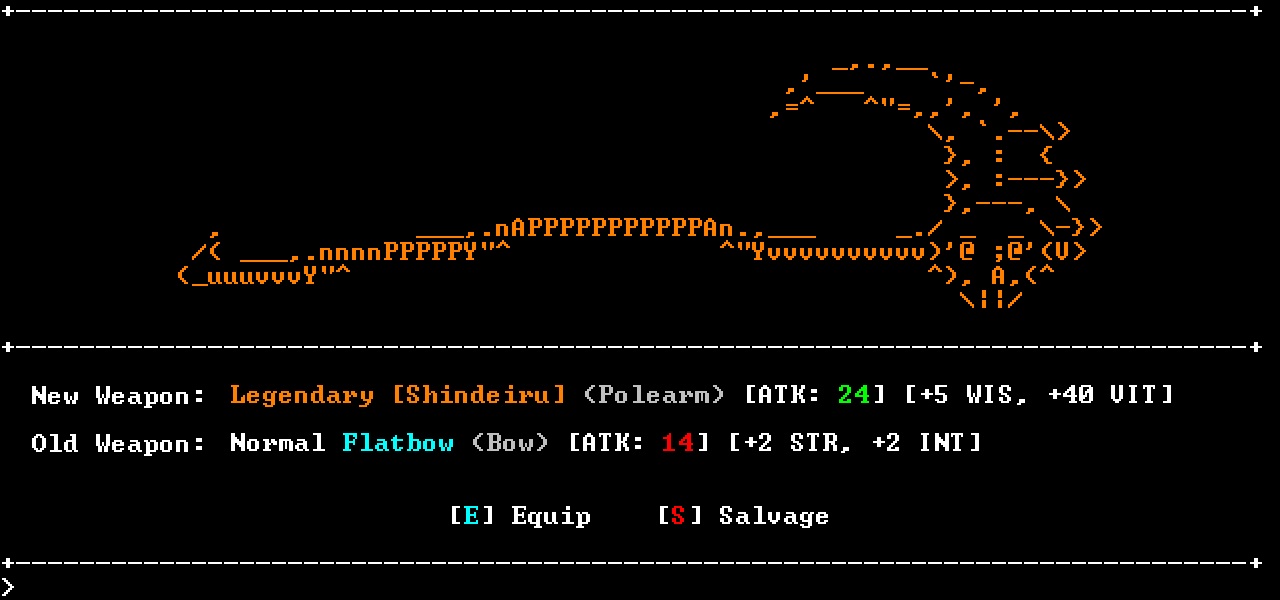
A real, detailed critical thread pushes back on how all that depth is framed. One widely-quoted review states the tension plainly: "It is a great game that simply shouldn't be a rogue-like," arguing the sheer amount of RPG investment — classes, crafting, customization, a deep narrative — sits uneasily against a permadeath structure that can erase all of it in one bad encounter. A separate, differently argued review goes further, contending the game isn't really delivering roguelike tension at all: describing the core loop as an easy, repetitive loot grind ("Is the loot I just found/made better than what I have? Yes? Equip it... Repeat Forever") punctuated mostly by accidental deaths from player complacency rather than earned difficulty, even after manually raising the combat difficulty setting. These aren't the same complaint — one argues permadeath undercuts genuine RPG investment, the other argues the difficulty barely justifies permadeath's stakes in the first place — but together they describe a real, unresolved tension in how the game frames its own central risk.
A detailed account of late-game balance breaking down
The most technically detailed review in this sample comes from a player who reached level 80 as a "Grandmaster" and describes both tank and damage-focused builds becoming functionally unviable against certain late bosses, for specific, stacking reasons: percentage-of-max-HP bleed and doom effects that bypass conventional HP, evasion and block entirely; healing abilities that degrade in power the more they're used within a single fight; combo systems that reset on heal and break against certain enemy types; and boss phases with outright immunity to the player's ultimate ability. This isn't a vague "the game is unbalanced" complaint — it's a specific, mechanically literate account of exactly which systems interact badly at high levels, from someone who clearly invested the time to map the problem precisely. A separate reviewer corroborates the broader point with a specific example: one particular ability is described as capable of instantly killing a well-built, high-level character from an ordinary enemy encounter, at odds with the stakes permadeath is supposed to represent.
A specific, avoidable interface flaw
One more concrete, citable complaint is worth naming directly: multiple reviewers report that opening the in-combat help menu — the natural response to encountering an unfamiliar status effect mid-fight — costs the player their entire turn, effectively punishing the exact moment a player most needs information. In a permadeath game, that's a real design oversight rather than a minor annoyance, and it compounds the broader "is permadeath actually earned here" debate above.
A genre lineage worth naming explicitly
Several of the most enthusiastic reviews in this sample come from a specific, identifiable background: players who ran or played on BBS systems, door games like Trade Wars and Legend of the Red Dragon, or early MUDs. One reviewer addresses that audience directly: "If you played any door games in the past... do yourself a favor, and buy this right now, you don't need to read further." That's a meaningfully different endorsement than generic praise — it's a specific claim that this game successfully channels a particular, now-rare style of text-driven play that had mostly disappeared from modern game design, and reviewers with that specific background consistently confirm the resemblance is real rather than superficial.
No completion data to independently check against
Because this release predates or simply never implemented Steam Achievements, there's no completion-curve data available to independently corroborate how far a typical player actually gets before hitting the balance issues described above, or how common the permadeath-related "autopilot death" pattern one reviewer describes really is across the broader playerbase. That's a genuine limitation on this review's ability to quantify those complaints beyond what reviewers report directly, and it's worth naming rather than working around with data that doesn't exist for this game.
Where it lands
SanctuaryRPG's crafting, writing and BBS-era presentation earn it a real, specific following, and its Very Positive score reflects genuine affection rather than novelty alone. But the detailed technical account of late-game balance failing under specific stacking mechanics, alongside a real, unresolved debate over whether permadeath suits a game this systems-heavy, and a concrete interface flaw that punishes players for seeking information mid-fight, are all specific enough to weigh seriously against the praise. It's a genuinely worthwhile, cheap pickup for the systems and writing — just don't expect the deep investment those systems encourage to always be treated fairly by the mechanics governing when a run ends.
Pros and cons
Pros
- Genuinely deep RPG systems — crafting, a persistent and detailed town hub, distinct class builds — hidden behind a simple ASCII presentation that reviewers consistently say undersells how much game is actually here
- Witty, self-aware writing and humor that draws consistent praise even from reviewers otherwise critical of the game's mechanics
- A well-regarded soundtrack that multiple reviewers specifically single out as a standout given the minimal visual presentation
- Real resonance with players who grew up on BBS door games, MUDs and terminal-based CRPGs, several of whom describe it as scratching a specific nostalgic itch nothing else currently on Steam does
- Extremely cheap, with reviewers consistently describing getting far more content than the price implies
Cons
- A detailed, technical account from a level-80 player describes both tank and DPS character builds becoming functionally unviable against certain late bosses, citing specific stacking mechanics (percentage-of-max-HP bleed and doom effects, heal-power degradation, combo resets, ultimate-immunity phases) that bypass conventional defensive stats entirely
- A separate, detailed reviewer argues the core loop isn't meaningfully roguelike tension at all, describing it instead as a repetitive, low-difficulty loot grind punctuated by occasional, avoidable deaths from player complacency rather than genuine challenge
- A specific, citable interface flaw: opening the in-combat help menu to check an unfamiliar status effect costs the player a full turn, a real design oversight in a permadeath game rather than a minor inconvenience
- At least one specific ability is called out as dramatically overtuned relative to permadeath stakes, capable of one-shotting a well-built high-level character from a normal enemy encounter
- No achievement schema exists for this release, removing one of the usual ways to independently corroborate how far the typical player actually progresses
Screenshots
-
SanctuaryRPG Black EditionImage: Plug In Digital via Steam -
SanctuaryRPG Black EditionImage: Plug In Digital via Steam -
SanctuaryRPG Black EditionImage: Plug In Digital via Steam -
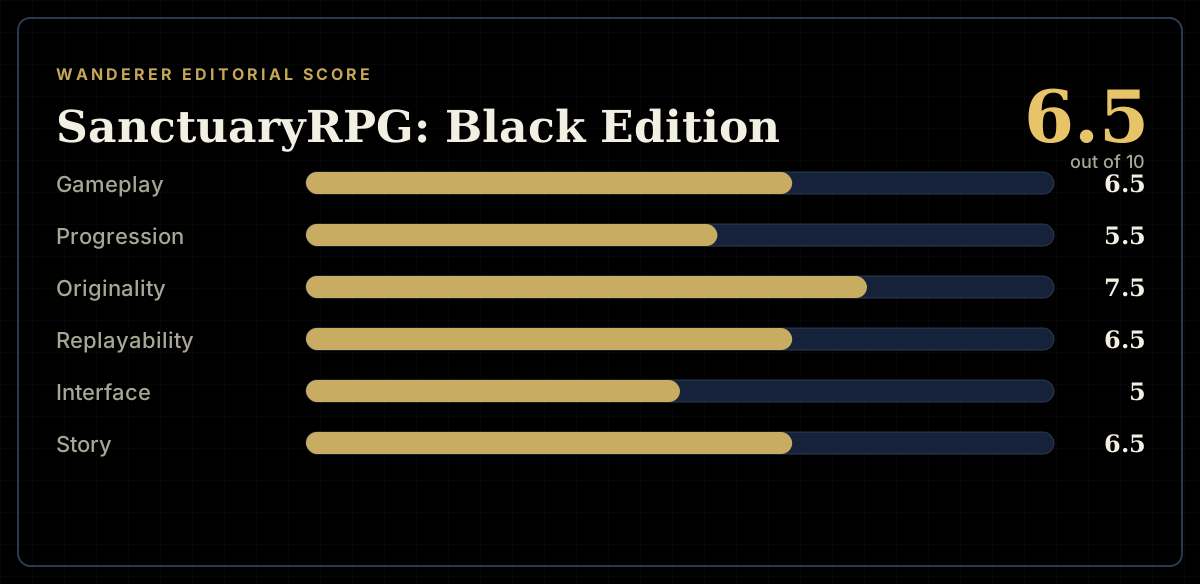
How the review scores each part of the gameWanderer Editorial -
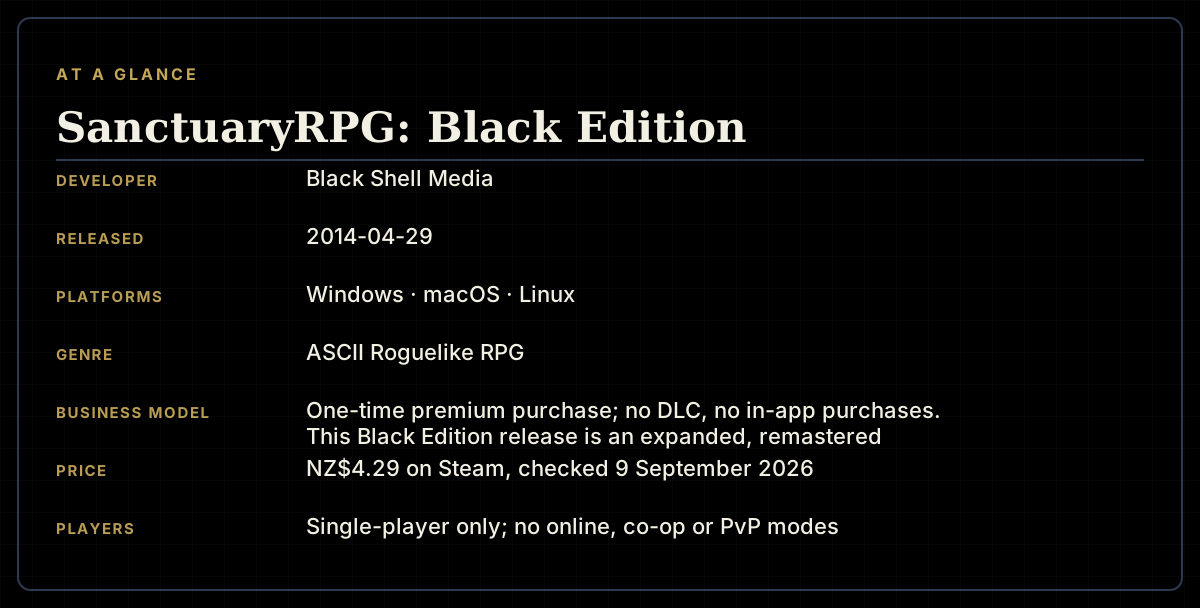
The specsWanderer Editorial -
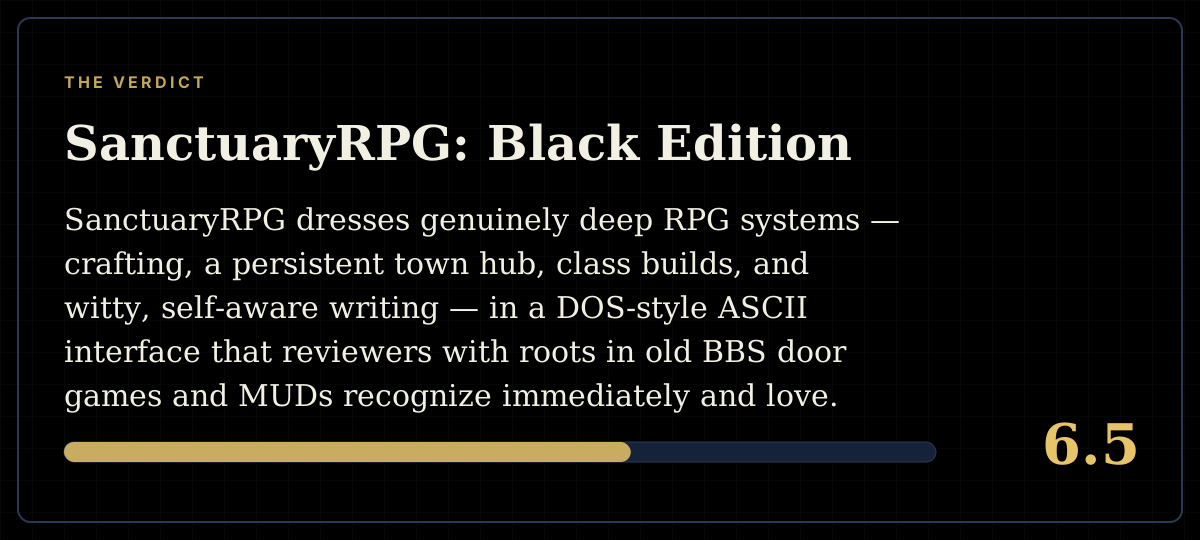
The short versionWanderer Editorial