Game review
Sailing Era
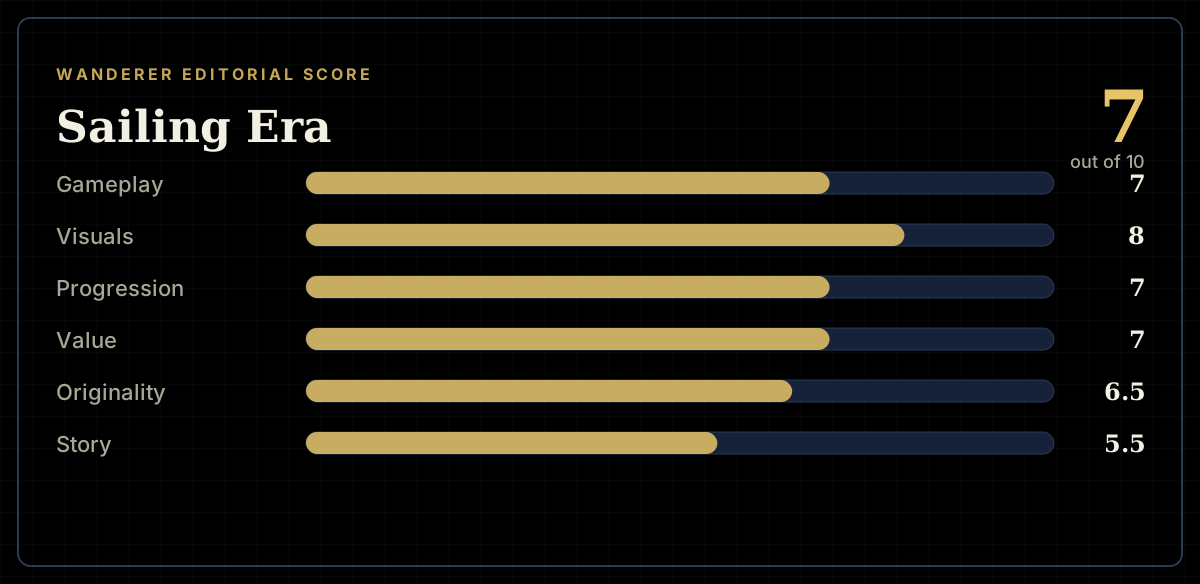
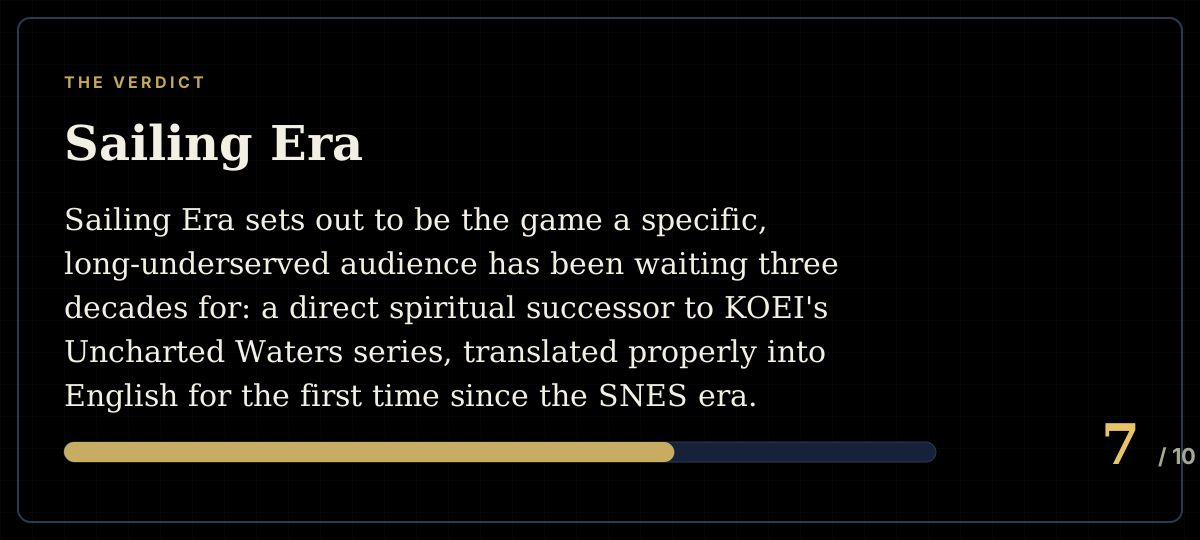
7 / 10
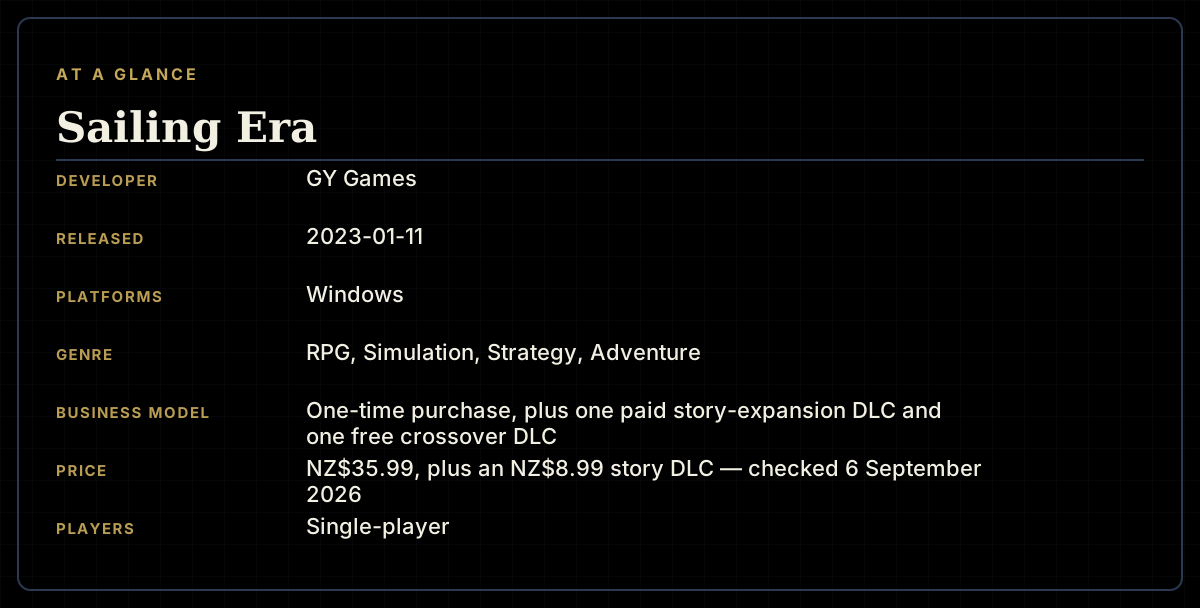
- Developer
- GY Games
- Publisher
- bilibili
- Released
- 11 January 2023
- Platforms
- Windows
- Genre
- RPG, Simulation, Strategy, Adventure
- Monetisation
- One-time purchase, plus one paid story-expansion DLC and one free crossover DLC
- Players
- Single-player
The short version
Sailing Era sets out to be the game a specific, long-underserved audience has been waiting three decades for: a direct spiritual successor to KOEI's Uncharted Waters series, translated properly into English for the first time since the SNES era. Released 11 January 2023 by GY Games and published by bilibili, it lands Very Positive with its English-speaking review sample — 366 positive against 75 negative, an 83% rate notably higher than its all-language lifetime score. Four playable captains sail a real-world-scale ocean, trading goods, fighting pirates and chasing treasure across genuinely lovely 2D character art, and reviewer after reviewer describes finally getting the itch scratched that Sid Meier's Pirates! and decades of pretenders never quite managed. What holds it back from the top tier is consistent: an interface that makes routine actions like departing port needlessly slow, a supply system several reviewers call punishing rather than tense, and a story and cast several reviewers call noticeably thinner than the genre's best-loved entries.
Biggest strengths
- Reviewer after reviewer, independently, identifies this as the spiritual successor to KOEI's Uncharted Waters series that English-speaking fans have wanted since the SNES and Genesis era, several calling it the game they've been waiting on since the 1990s
- The 2D character art and full-screen story illustrations draw specific, repeated praise, with multiple reviewers calling them a highlight distinct from the more ordinary 3D ocean visuals
- Four separate playable captains with their own storylines and starting circumstances, plus a fifth added in the paid DLC, give real reason to replay rather than treating one campaign as the whole game
Biggest weaknesses
- The interface draws the most consistent specific complaint in the sample: one reviewer counts two menu pages, two loading screens and three clicks just to depart a port, a friction point that compounds badly given how often the game asks you to do exactly that
- The supply-management system is criticised by several reviewers as unrealistically punishing: ships burn through supplies quickly relative to how slowly they can be turned or resupplied, to the point one detailed review calls it "unsustainable" rather than a meaningful resource decision
- Multiple reviewers who know the wider genre — Uncharted Waters, Port Royale, Eve Online — argue the trading economy is comparatively static: a profitable trade route tends to stay profitable indefinitely, without the dynamic, war-driven market shifts those other games are known for
Who it's for: Anyone who grew up on Uncharted Waters, Sid Meier's Pirates!, or Tradewinds and has been waiting years for a modern, properly localised successor.
Our recommendation: A genuine must-play for genre veterans starved of a real successor for thirty years; newcomers with no nostalgia for the format should try the free demo first, since the interface and pacing complaints are real and worth judging for yourself before buying.
7 / 10
Introduction
For a very specific kind of player, Sailing Era arrives thirty years late and is still one of the best things to happen to their favourite genre in a decade. Released 11 January 2023 by GY Games and published by bilibili, it sets its sights directly on KOEI's Uncharted Waters series — a franchise of age-of-exploration sailing RPGs that never got a proper, fully-localised successor after its SNES and Genesis heyday. Reading through this game's English-language review sample, which sits at a genuinely strong 83% Very Positive across 441 reviews, that specific nostalgia does most of the heavy lifting, and it's earned: reviewer after reviewer independently describes finally getting an itch scratched that Sid Meier's Pirates! and years of pretenders never quite managed.
Four captains, one very large ocean
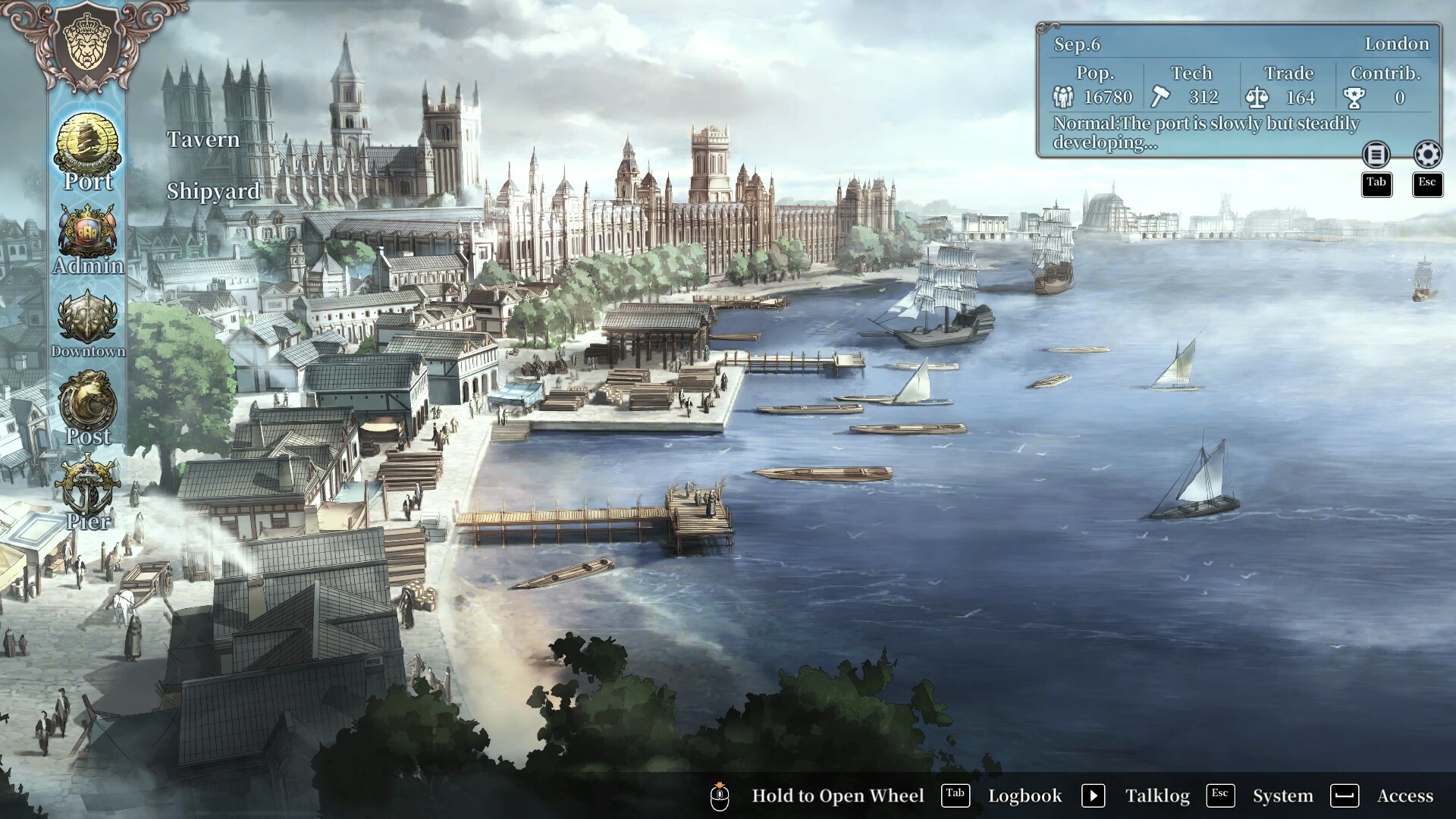
The pitch is straightforward: pick one of four playable captains, each with their own starting circumstances and personal story, and sail a real-world-scale ocean trading goods, hunting treasure, fighting pirates and building a merchant guild. One reviewer with 8,169 hours logged still describes finding new things to explore after completing all four campaigns; several others specifically credit the game with letting you lean into whichever part appeals — pure trading, combat-focused piracy, or exploration-driven treasure hunting — without forcing a single playstyle. The 2D character art and full-screen story illustrations come up unprompted across dozens of reviews as a genuine highlight, distinct from the more workmanlike 3D ocean visuals used for actual sailing. A single paid DLC, "Edge of the World," adds a fifth captain and a new Northern European campaign; a second, free crossover DLC adds bilibili's own mascot characters as a lighter bonus.
The interface everyone complains about
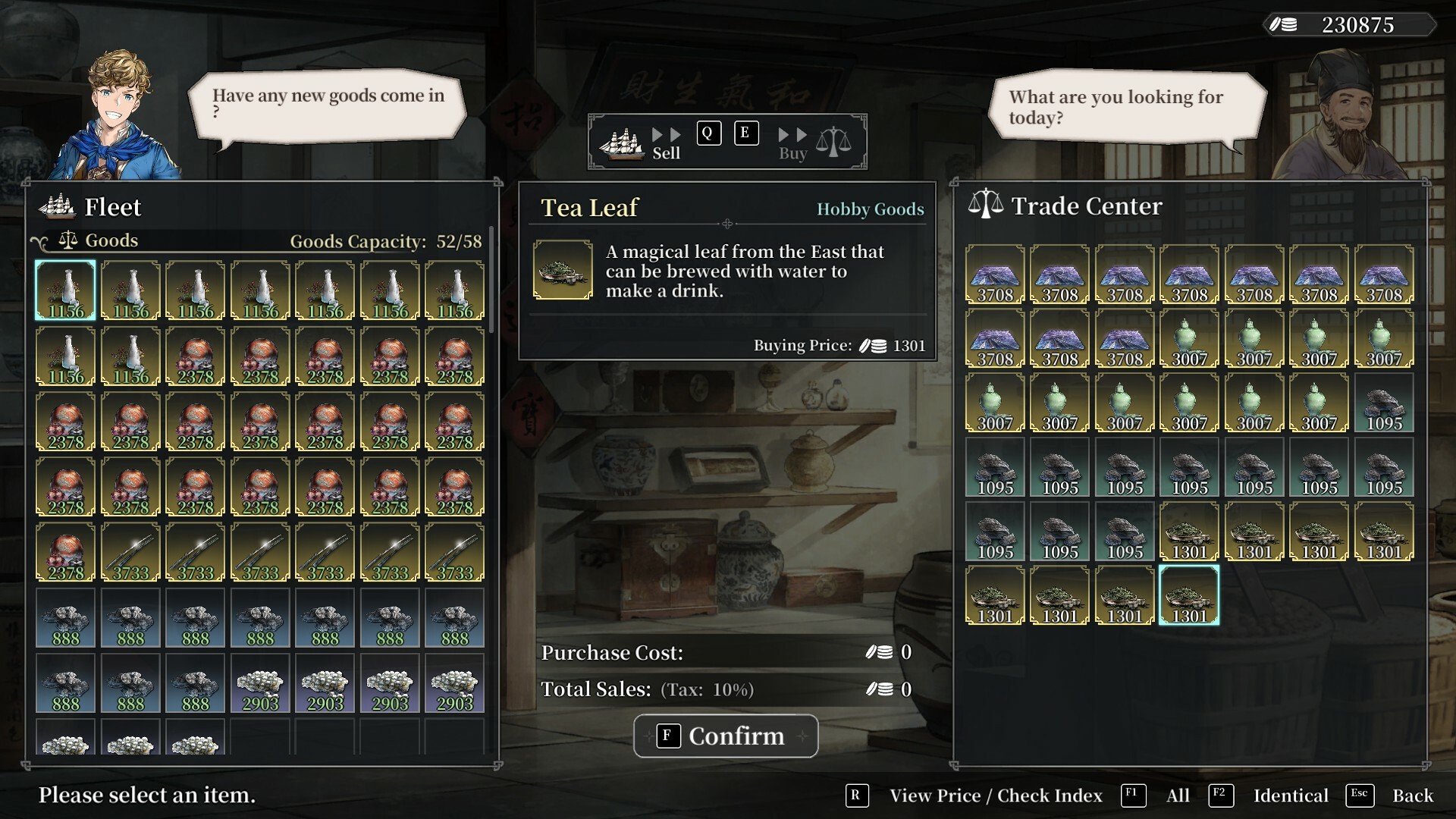
Set against that goodwill, one specific complaint recurs constantly and specifically enough to take seriously: the interface makes routine actions unnecessarily slow. One reviewer counts the exact toll of leaving port — two menu pages, two loading screens, three separate clicks — and argues that when departure is something the game asks you to do constantly, that overhead stops being a minor annoyance and starts actively working against the loop it's attached to. A second, related complaint concerns supply management: ships burn through provisions quickly relative to how sluggishly they can manoeuvre or resupply, which one detailed review calls "unsustainable" for anyone attempting a longer voyage exactly as the genre's trading fantasy usually invites. A handful of reviewers who know the wider trading-sim space well — citing Port Royale, Eve Online and the Anno series by name — make a sharper structural critique: the in-game economy doesn't really evolve. A profitable trade route discovered early tends to stay profitable indefinitely, without the market shocks or war-driven shifts that give those other games their long-term tension.
A thinner story than the games it's chasing
Several reviewers, independently, describe the story and its four leads as noticeably thin — one calls them "four less than likable characters with 1-dimensional goals," each defined by little more than a single stated ambition. One unusually well-informed English-language review goes further and offers a genuinely useful explanation for why the game's Chinese-language reception runs measurably more critical than its English one: Chinese players had legal, localised access to Uncharted Waters 2, 3 and 4, including the fourth entry's much-loved, story-heavy design, while English-speaking players historically only ever got the second game translated. Judged against UW4's storytelling specifically, this reviewer argues, Sailing Era can only come up short — a comparison English-speaking reviewers, lacking that same baseline, mostly aren't making. It's a rare case of a review sample's regional split having a concrete, checkable explanation rather than being a mystery.
Not everyone bounces off the same things
It's worth noting how much the negative reviews in this sample disagree with each other about where the problems actually lie, which is itself a useful signal about how personal a fit this genre is. One reviewer who tried and disliked the game specifically calls out the naval combat as below average, with escort captains locked into fixed strategies you can't adjust mid-fight; a different, more positive reviewer describes the same combat system as "roughly the same" as Sid Meier's Pirates! and treats that as a compliment rather than a shortcoming. Several reviewers recommend trying the free demo before buying precisely because of this split — one states plainly that many of the negative reviews look like they came from people who skipped the demo, which covers a genuine, representative slice of the early game. On the technical side, multiple reviewers independently confirm solid performance on Steam Deck and full controller support throughout, details worth knowing for anyone hoping to play this away from a desk.
Final Verdict
Sailing Era earns its Very Positive reception honestly: it is, by the account of dozens of reviewers who have been waiting decades for exactly this, a real and mostly successful spiritual successor to a genre that's had almost nothing new added to it since the 1990s. The 2D art is genuinely lovely, four separate campaigns give it real legs, and the sailing-trading-treasure loop lands for almost everyone who tries it. What keeps it from a higher score is equally consistent across the sample: an interface that fights the pacing of its own core loop, a trading economy that doesn't evolve the way the genre's best examples do, and a story that comes up short next to the specific entry in its own inspiration series that many of its most disappointed reviewers grew up on. Try the free demo first if you're new to the format; if you've been waiting for this game since the SNES era, it's very likely already exactly what you hoped for.
Pros and cons
Pros
- Reviewer after reviewer, independently, identifies this as the spiritual successor to KOEI's Uncharted Waters series that English-speaking fans have wanted since the SNES and Genesis era, several calling it the game they've been waiting on since the 1990s
- The 2D character art and full-screen story illustrations draw specific, repeated praise, with multiple reviewers calling them a highlight distinct from the more ordinary 3D ocean visuals
- Four separate playable captains with their own storylines and starting circumstances, plus a fifth added in the paid DLC, give real reason to replay rather than treating one campaign as the whole game
- The core sailing, trading and exploration loop is repeatedly described as "addicting" and engaging even by reviewers who are otherwise critical of specific systems
- Full controller support and confirmed good performance on Steam Deck, per multiple reviewers
Cons
- The interface draws the most consistent specific complaint in the sample: one reviewer counts two menu pages, two loading screens and three clicks just to depart a port, a friction point that compounds badly given how often the game asks you to do exactly that
- The supply-management system is criticised by several reviewers as unrealistically punishing: ships burn through supplies quickly relative to how slowly they can be turned or resupplied, to the point one detailed review calls it "unsustainable" rather than a meaningful resource decision
- Multiple reviewers who know the wider genre — Uncharted Waters, Port Royale, Eve Online — argue the trading economy is comparatively static: a profitable trade route tends to stay profitable indefinitely, without the dynamic, war-driven market shifts those other games are known for
- The story and its four leads are called thin and one-dimensional by more than one reviewer, in contrast to the more story-driven entries in the series this game is chasing
- At least one detailed, well-sourced review explains why Chinese-language reception runs noticeably more critical than the English sample: Chinese players had access to Uncharted Waters 2, 3 and 4 — including the beloved, story-heavy fourth entry — while English-speaking players historically only got the second, giving each audience a different, unequal baseline to judge this game against
- The English localisation was reportedly incomplete at launch, with some menus left untranslated and at least one reviewer initially unable to get the game to load in English at all
Screenshots
-

Sailing EraImage: bilibili via Steam -
Sailing EraImage: bilibili via Steam -
Sailing EraImage: bilibili via Steam -
How the review scores each part of the gameWanderer Editorial -
The essentials at a glanceWanderer Editorial -
The short versionWanderer Editorial