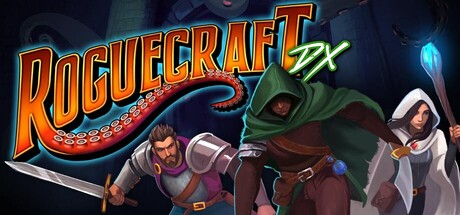
Game review
Roguecraft DX
5.6 / 10
- Developer
- Badger Punch Games
- Publisher
- Thalamus Digital
- Released
- 10 September 2026
- Platforms
- PC
- Genre
- Roguelike, Indie, RPG
- Monetisation
- Premium (one-time purchase)
- Players
- false
The short version
Roguecraft DX doesn't pretend to be anything more than a straight port-plus of a decades-old Amiga dungeon crawler, and it's better off for the honesty. The loop is stripped down to almost nothing — find the key, find the door, don't die — but for a handful of short, tense runs that simplicity is exactly the point. Just don't expect the depth to hold up much beyond a first clear.
Biggest strengths
- Faithful, charming retro pixel art and a genuinely catchy Commodore-style soundtrack
- Compact, honest run length — most reviewers clear a full run in well under two hours
- Full controller, keyboard, and mouse/touch support with a clean, simple interface
Biggest weaknesses
- Extremely shallow systems — three playable classes and a handful of potion effects are essentially the whole game
- Secret rooms are rarely worth the detour, usually hiding only enemies and a random potion
- Once you've beaten it with one class, there's little reason to come back beyond curiosity
Who it's for: Fans of old-school 8- and 16-bit dungeon crawlers and anyone who wants a short, cheap roguelike that respects their time rather than demanding a meta-progression grind.
Our recommendation: Recommended, especially at a discount, for players who want a quick, honest throwback rather than a modern roguelike with layers of unlockable systems.
5.6 / 10
From Amiga Homebrew to Steam, By Way of a Handheld Cartridge
Roguecraft DX has an unusually well-travelled history for a game only just arriving on Steam. It started life as a homebrew title on the Commodore Amiga, was later polished up and released on the retro-focused Evercade handheld, and has now been rebuilt again in Unity for a PC release that adds new potions, new game modes, and a caged companion creature — the badger of the title — that briefly assists you in a fight. Several reviewers in the sample already knew the game from one of its earlier platforms and specifically bought the Steam version to support the developer or to play the definitive edition, which says something about the goodwill this small, unpretentious project has built up over its various re-releases.
That lineage matters for understanding what Roguecraft DX actually is. This isn't a modern roguelike dressed up in retro clothing for aesthetic appeal — it's the genuine article, built to the design sensibilities of 1980s and early-90s dungeon crawlers, where the entire rule set can be explained in a sentence: find the key, find the door down, survive as long as you can. One reviewer who's played it across three separate platforms put the whole appeal succinctly: "it's a great rogue-ish game for people who aren't great at rogue-ish games."
A Loop Stripped to Its Bones — On Purpose
The core gameplay loop couldn't be simpler. Each dungeon level is revealed room by room as you explore it, monsters block your path, and colour-coded potions offer random effects that stay consistent within a run but reshuffle every time you start over. Pick a class — fighter, rogue, or the unlockable mage — and work your way down fifteen levels toward a final boss, using potions, hearts, and stat-boosting diamonds along the way. That's essentially the entire feature list, and reviewers are almost unanimous that this is a deliberate design choice rather than a limitation the developers ran out of time to address.
Several reviews frame this bluntly as a strength rather than something to apologise for. "The game is simple and doesn't give you the illusion of there being more than what you can see," reads one detailed review, going on to note that once you've played through with either the fighter or the rogue, "you've basically seen it all" — and that this isn't a criticism so much as an honest description of the product. Another reviewer makes the comparison explicit: "in the world of roguelikes, the simplicity of this one reminds me of the early days of FTL and Rogue Legacy," with quick 30-minute runs cited as a genuine selling point rather than a shortfall against more systemically dense competitors.
Randomised Potions Do a Surprising Amount of Heavy Lifting
The one system with any real texture to it is the potion economy, and it's doing more work than the rest of the minimal ruleset combined. Every colour of potion has a different effect — haste, invisibility, extra armour, HP regeneration, and several others — but which colour does what resets with each new run, meaning players have to re-learn the mapping every single time rather than relying on memorised knowledge from a previous attempt. One reviewer's advice for newcomers captures how central this becomes to actually surviving: "keep a list of potion colours and what they do — as this changes each run," alongside watching the health bar "like a hawk" since a badly timed potion gamble can be fatal.
It's a clever way to inject genuine tension into an otherwise skeletal system, and it's the single mechanic most reviewers single out as elevating Roguecraft DX above a pure nostalgia exercise. That said, it has real limits — one more critical but still positive review points out that secret rooms, the game's one concession to exploration reward, "always included enemies and a yellow potion — nothing more," meaning a bad random roll on that potion can make an entire detour feel pointless. For a game this stripped-down, small missed opportunities like that stand out more than they would in a busier roguelike with more systems to fall back on.
Where the Simplicity Turns Some Players Off
Not everyone in the sample is on board with the trade-off, and it's worth taking the dissent seriously rather than dismissing it as a mismatch of expectations. A trio of more critical reviews describe the difficulty as arbitrary rather than earned — one flatly states "this game is just a major disappointment" after struggling specifically with controller input, while a sharper critique goes further: "it is completely brain dead with 0 strategy... there are no new enemies after level 10." A third negative review describes the whole experience as feeling "clearly a mobile game with garbage resolution that hurt the eyes," which, while an outlier take given the otherwise consistent praise for the pixel art, does point at a real design tension between the deliberately retro presentation and modern display expectations.
Interestingly, one of the more positive reviews in the sample seems to anticipate exactly this kind of pushback: "I fear any negative reviews that come will be from any preconceived expectations not being aligned with what's on the box." That's a fair read of the divide — reviewers who came in wanting a compact, honest throwback are largely delighted, while those expecting a roguelike with the depth of something like Hades or Slay the Spire are always going to come away disappointed, because that was never what this game was trying to be.
A Short Ride, Priced to Match
Length and price are where Roguecraft DX earns back a lot of goodwill. Most reviewers report finishing a full run in the two-to-ten-hour range depending on how many attempts it takes to beat the final boss, and once that's done, there's little pull to come back beyond curiosity about a different class. Crucially, almost nobody in the sample frames this as a flaw — one reviewer put it plainly: "for the time it lasts, it's worth it if you can get it cheap," and at its NZ$15 discounted price (down from NZ$18.75), that calculus holds up well. Controller, keyboard, and mouse/touch support are all present and functional for most players, with one Steam Deck owner specifically calling out how well it plays handheld, though the earlier controller-frustration complaint shows that experience isn't universal.
Verdict: Know What You're Buying, and It Delivers
Roguecraft DX succeeds by refusing to be more than it is. It's a faithful, lovingly rebuilt Amiga dungeon crawler with charming retro presentation, a genuinely catchy soundtrack, and one clever randomised system carrying most of the strategic weight — and it knows better than to pad that formula out with modern roguelike trappings like meta-progression trees or run-persistent unlocks that would dilute its old-school directness. The trade-off is real: once you've cleared it, there's very little reason to return, and players expecting depth rather than a short, focused throwback will likely land with the small but vocal group who found it shallow or arbitrary.
For anyone who grew up on or has affection for 1980s and early-90s dungeon crawlers, though, this is close to the ideal modern package — cheap, honest about its scope, and built by a small studio that's clearly been refining this exact recipe across three different platforms already. Buy it for a handful of good runs, not for a hundred hours, and it's an easy recommendation.
Pros and cons
Pros
- Faithful, charming retro pixel art and a genuinely catchy Commodore-style soundtrack
- Compact, honest run length — most reviewers clear a full run in well under two hours
- Full controller, keyboard, and mouse/touch support with a clean, simple interface
- Randomised potion effects each run add a light layer of resource-management tension despite the minimal ruleset
Cons
- Extremely shallow systems — three playable classes and a handful of potion effects are essentially the whole game
- Secret rooms are rarely worth the detour, usually hiding only enemies and a random potion
- Once you've beaten it with one class, there's little reason to come back beyond curiosity
- A vocal minority of reviewers find the difficulty arbitrary rather than strategic, calling parts of it "brain dead" or repetitive
Screenshots
-
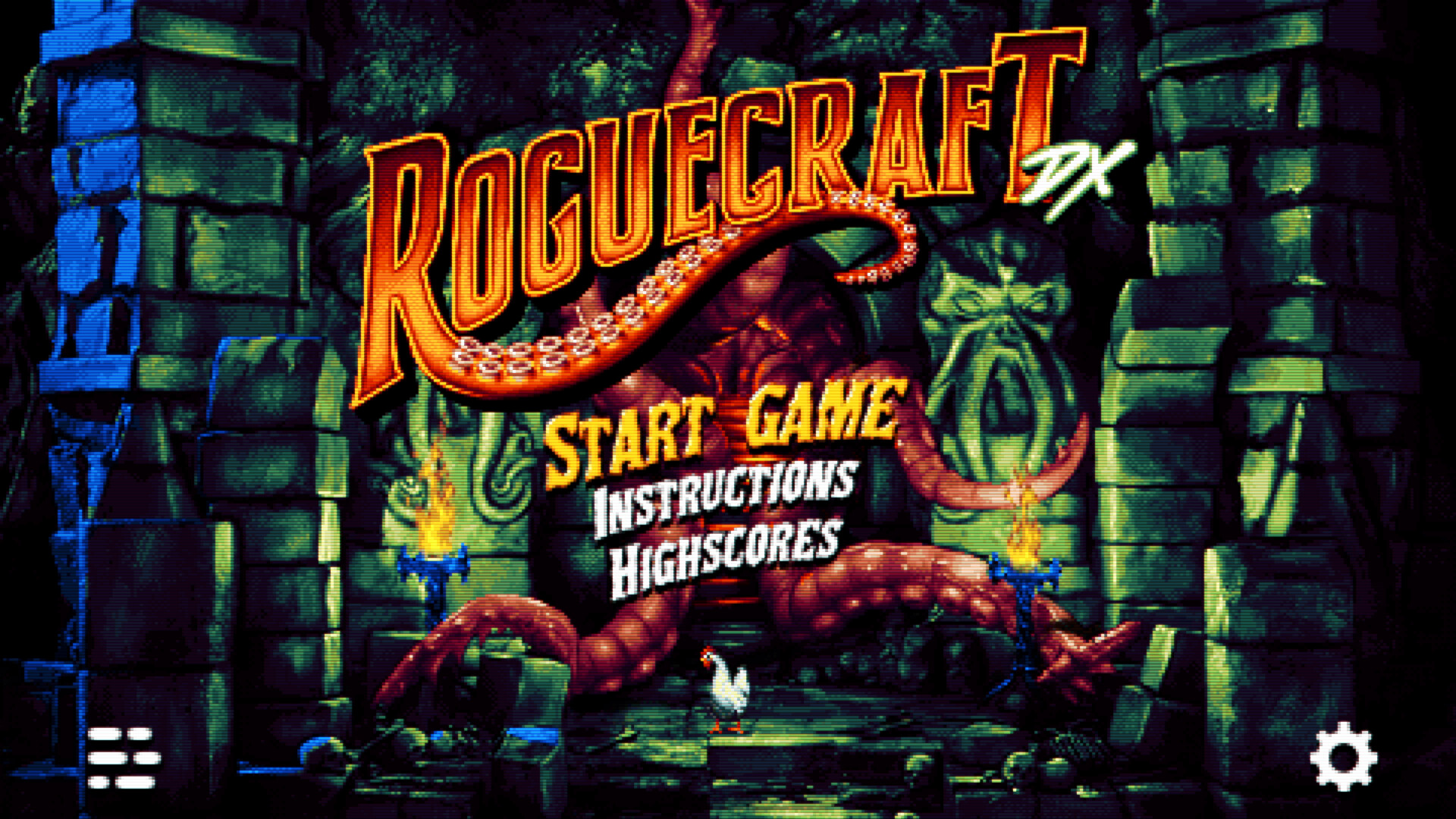
The pixel-art presentation and title-screen aesthetic are a direct callback to the game's original Amiga homebrew release.Thalamus Digital -
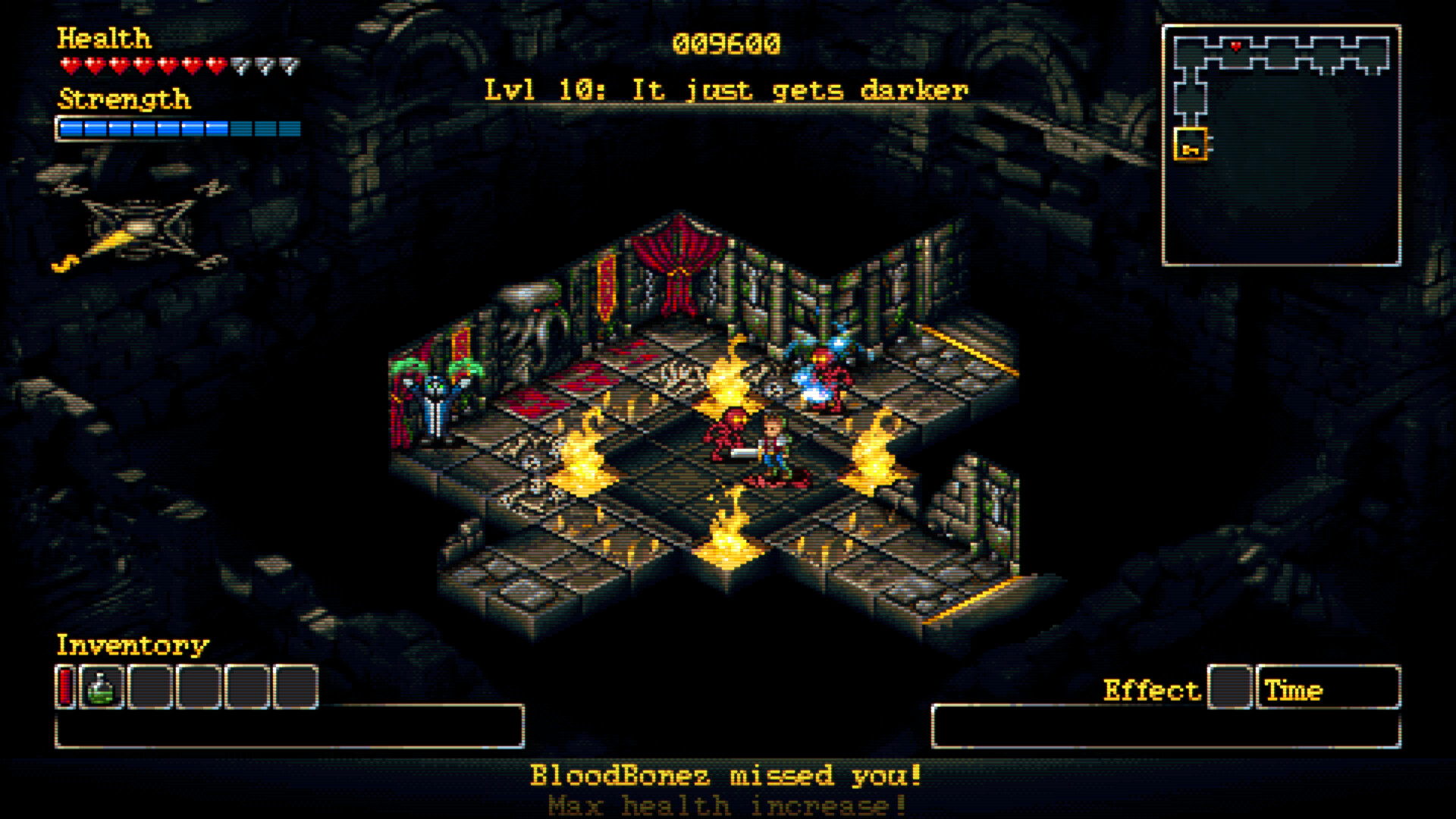
Combat and the health/strength interface stay deliberately minimal, part of the design reviewers say keeps runs quick and tense.Thalamus Digital -
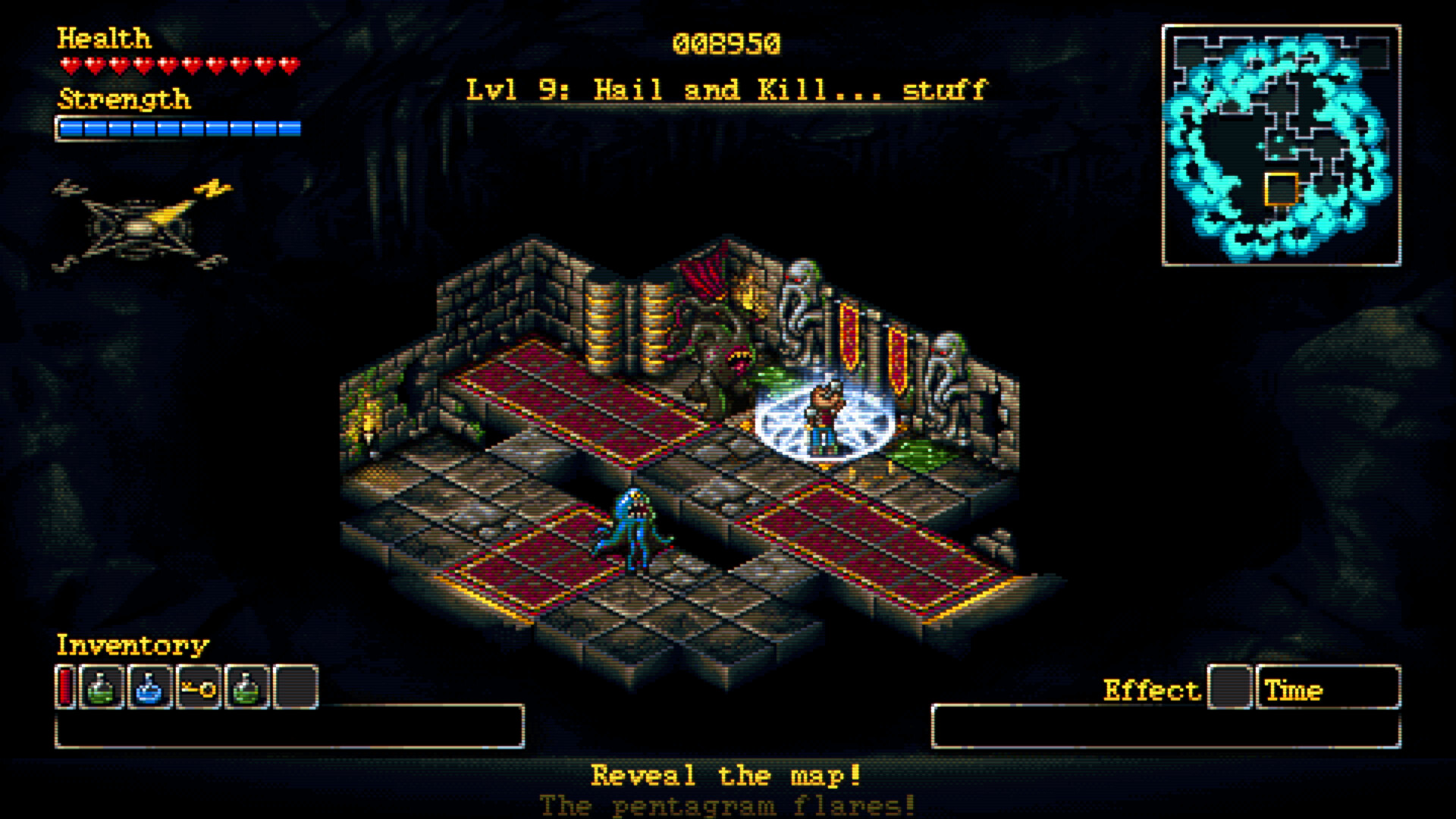
Randomised potion effects reshuffle every run, the one system reviewers consistently credit with adding real tension to the otherwise minimal ruleset.Thalamus Digital -
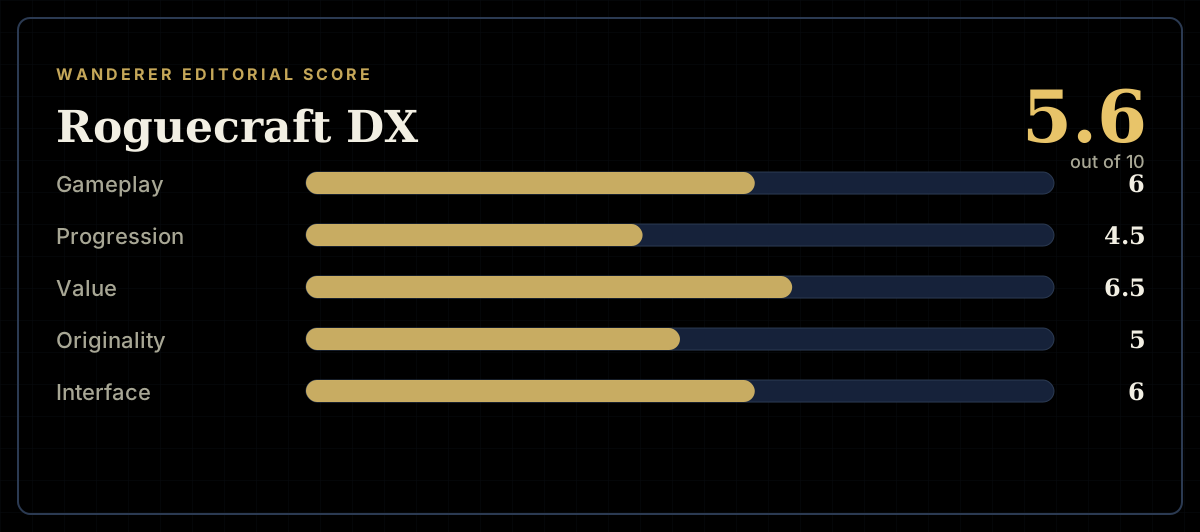
How the review scores each part of the gameWanderer Editorial -
The short versionWanderer Editorial