Game review
Dunchess
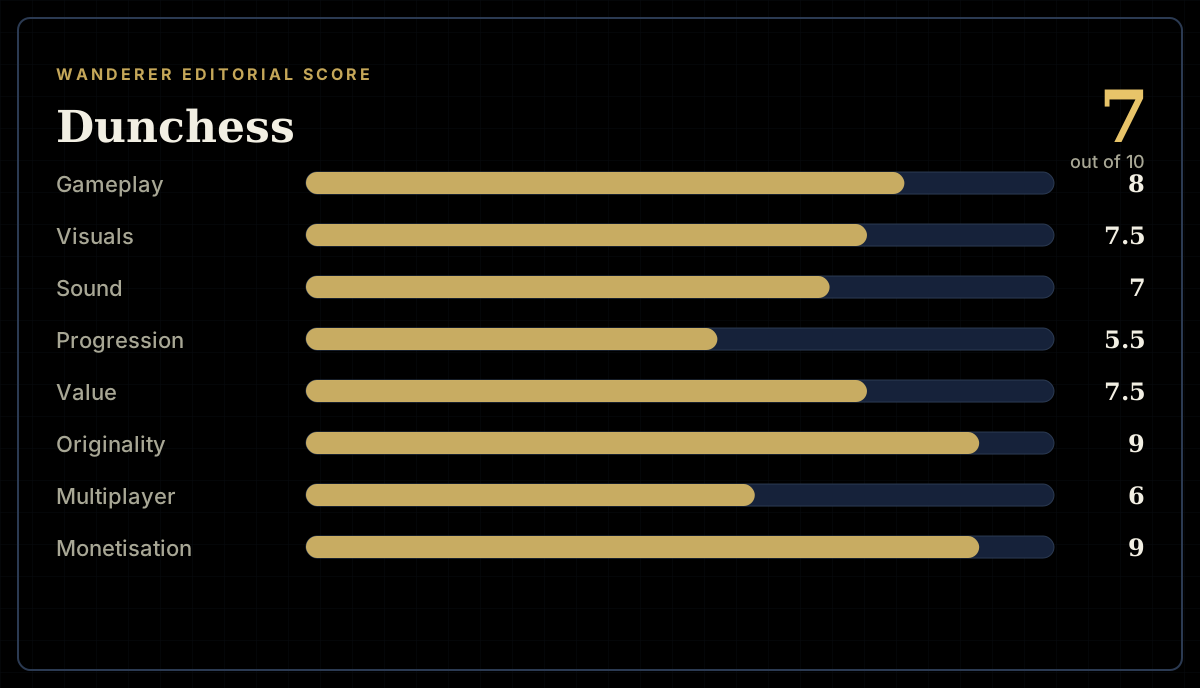
7 / 10
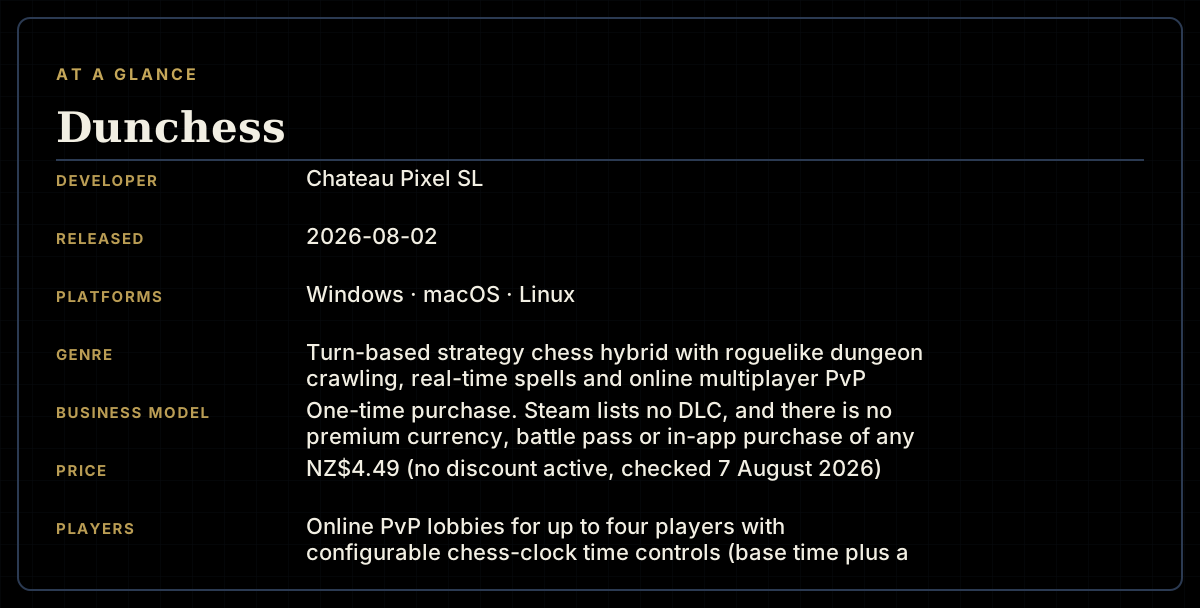
- Developer
- Chateau Pixel SL
- Publisher
- Chateau Pixel SL
- Released
- 2 August 2026
- Platforms
- Windows, macOS, Linux
- Genre
- Turn-based strategy chess hybrid with roguelike dungeon crawling, real-time spells and online multiplayer PvP
- Monetisation
- One-time purchase. Steam lists no DLC, and there is no premium currency, battle pass or in-app purchase of any kind on the store page
- Players
- Online PvP lobbies for up to four players with configurable chess-clock time controls (base time plus a per-move increment); a single-player mode against AI opponents with selectable personalities shipped two days after launch. No local or split-screen mode is listed
The short version
Dunchess keeps the chessboard and the piece names and throws out almost everything else. Pieces carry hit points instead of dying to one capture, each piece type sees a different radius through a dungeon fog that hides most of the map, and a mid-turn real-time window lets you burn a cooldown spell — jump repeatedly for 2.5 seconds, conquer a vision crystal, transform a piece with a found item — before the turn passes. It's a genuinely different game wearing chess's rules as a skeleton, not a card game with chess pieces glued on. Five days into Early Access it already has working online lobbies, a single-player mode against AI that arrived two days after launch, and a developer patching multiple times a day. What it doesn't have yet is many people playing it, any Steam achievements, or a second Steam release from the studio to point to as a track record.
Biggest strengths
- A mid-turn real-time window (jump repeatedly for 2.5 seconds, capture a vision crystal, use a found item on a cooldown) layered onto otherwise-legal chess moves produces moments no standard variant offers, and the developer's own screenshots confirm the systems are live rather than promised
- Per-piece hit points, individually named units and a fog-of-war radius that differs by piece type give the board real RPG texture instead of reskinning the same 32 pieces with new sprites
- Eight updates in the first five days of Early Access, including a working single-player mode against AI opponents that arrived two days after launch, show a developer building at the pace its own FAQ promises
Biggest weaknesses
- The Steam achievement schema is entirely empty and the single-player mode is only days old, so there's currently very little structure to measure progress or completion against
- Chateau Pixel SL has no other Steam listing, so there's no back catalogue to judge whether the year-long roadmap — story mode, a player-facing dungeon editor, match replay, player history stats — will actually land
- Online lobbies support up to four players with real chess-clock increments, but a same-day player-count reading of zero and a review corpus of eleven suggest there's barely anyone queued to fill them yet
Who it's for: Chess players who want the rules kept honest while everything built on top of them changes, and roguelite/tactics fans who'd rather learn a system with genuine depth than a chess reskin with damage numbers.
Our recommendation: At NZ$4.49 with no DLC and no in-app purchases, the price is low enough that the Early Access risk is mostly about your own patience rather than your wallet — the open question is whether the online queue fills in before the novelty of playing the AI wears off.
7 / 10
Dunchess starts from a real chessboard and asks what happens if a capture stopped being a guaranteed kill. The eight-by-eight grid survives mostly intact — a knight still jumps in an L, a bishop still can't leave its colour, a rook still can't turn a corner — but every piece now carries hit points instead of dying to the first hit, each piece type sees through a dungeon's fog to a different radius, and there's a real-time window mid-turn where a cooldown spell lets you act outside the normal one-move-per-turn rhythm before the clock passes back to your opponent. It's the rare "chess, but" pitch that isn't wearing the name for marketing. The rules underneath are genuinely different, and five days into Early Access there's already more happening on the board than the store page's short description gives it credit for.
A capture that doesn't always kill
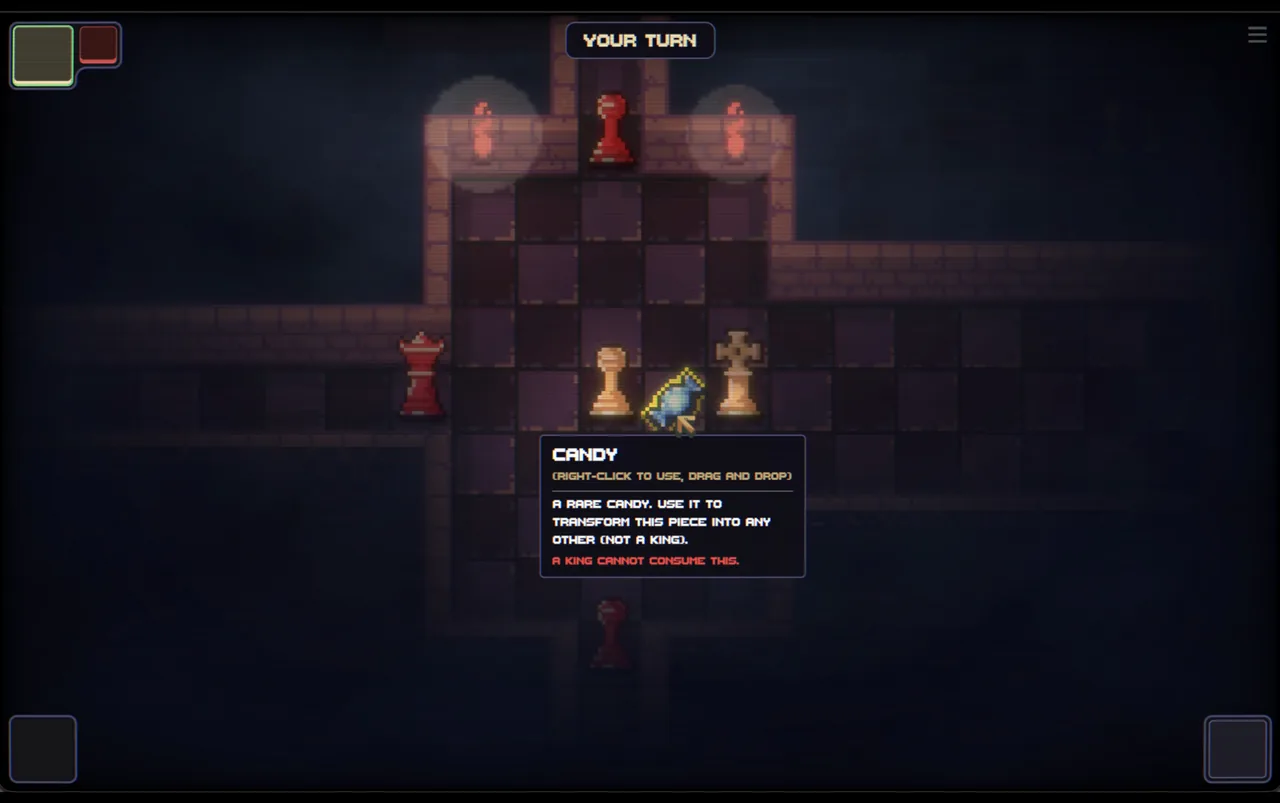
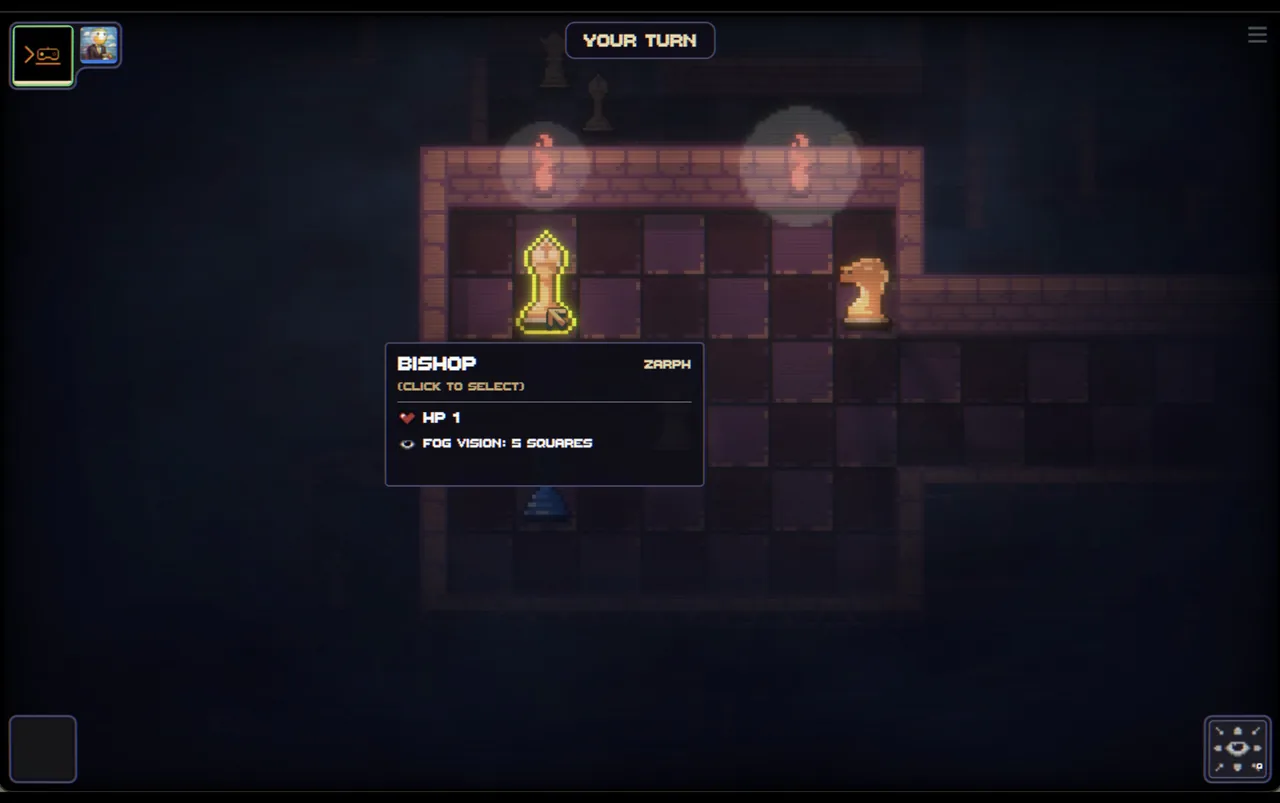
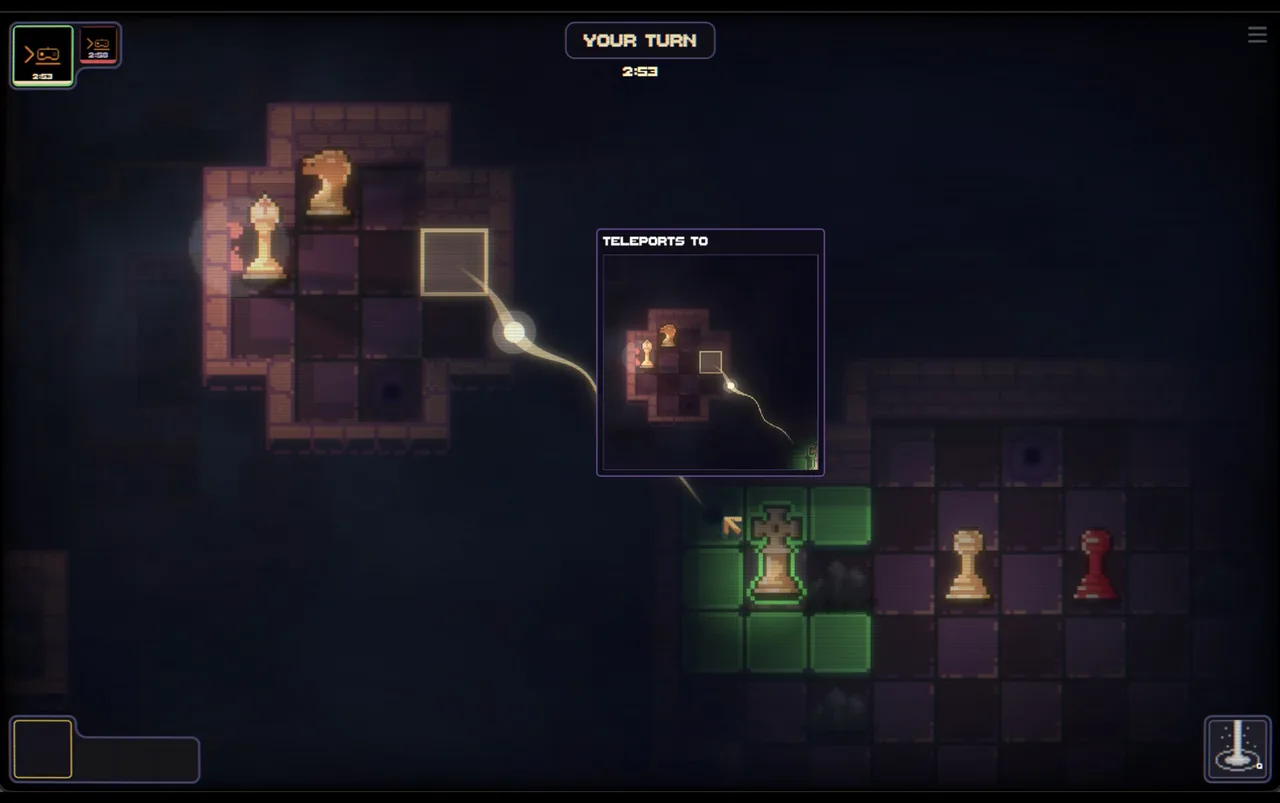
The mechanical hook is specific enough to describe from the developer's own promotional screenshots rather than just its marketing copy. A Bishop shown mid-match, flavour-named "Zarph," carries 1 HP and a fog-vision radius of 5 squares — meaning pieces are individually statted, not just reskinned with the same instant-death rules chess has always used. A "Candy" item found on the board can transform the piece holding it into any other piece except a king, right-clicked and dragged like an RPG consumable. A "Crystal" tile can be conquered to grant your side vision of the surrounding fog while denying it to the opponent, on a five-turn cooldown. And a teleport square shows a live preview window of exactly where it leads before you commit to stepping on it — a genre convenience chess itself has never needed, because chess never had fog to get lost in.
The real-time piece is the boldest addition. A "Berserk" spell lets a piece jump between legal squares as fast as you can click for a fixed 2.5-second window, on a seven-turn cooldown, with an explicit rule printed on the tooltip: casting a spell ends your turn immediately, and you can only cast one per turn. It's a small, deliberately bounded intrusion of real-time action into a turn-based game, and the bounding matters — a piece that can dash five squares in under three seconds could break chess's entire tempo model if it weren't capped this tightly.
Multiplayer that's built, and mostly empty
Online play is structured properly: a lobby screen shows named, flavoured maps (one reviewed is called "Templars," described in-game as "a holy formation marches as one, break their ranks to topple the king"), a configurable clock with a base time and a per-move increment in the Fischer style, and room for up to four players rather than a strict 1-versus-1. That's a genuinely different proposition from ordinary online chess, and the interface for setting it up already looks finished rather than placeholder.
The catch is that almost nobody appears to be using it yet. A same-day check of Steam's live player-count endpoint returned zero, and the review corpus sits at eleven total — five English, five Spanish, one Russian, every single one positive. Steam's own store page puts it plainly: the review summary widget reads "Need more user reviews to generate a score," which is Valve's own admission that the sample is too small to trust. None of those eleven reviews are complaints, and several are notably enthusiastic from players who say ordinary chess never grabbed them, but eleven opinions and a zero player-count snapshot aren't evidence that the four-player lobbies and PvP matchmaking hold up under real load. One reviewer described losing to the AI eight times running before their first win and called it "an unforgiving dark souls of chess against the PC" before adding that PvP is where the game "really opens up" — which is a promising review to read, and also the entire visible evidence for how PvP actually plays right now.
What's actually finished, versus what's promised
Chateau Pixel SL's own Early Access FAQ, printed on the store page, is unusually candid about the split. "Playable right now," in the developer's words: online multiplayer matches, all pieces with their spells, found items, the interactive elements (vision crystals, crowns, teleports), and the current set of dungeons with the fog system. Two warnings follow directly from the developer: online play needs a server connection even to play against other people, and because progression systems are still being built, any saved match history "can be reset while we're in Early Access." The roadmap for the year ahead — the developer says "roughly a year," with the caveat that it depends entirely on player feedback — lists a story mode built around dungeons that explain "why chess is the way it is today," a dungeon editor the developers currently use internally and want to hand to players, match replay, and player history stats. None of it is promised outright; the FAQ says explicitly that any of it "may change or get dropped depending on how development and feedback go."
That candour is worth taking at face value, and the patch log backs it up so far: eight updates landed between the 2 August launch and 6 August, including a working single-player mode against AI opponents added just two days after release, AI personalities added the day after that, and in-game chat and further localisation the day after that. That's a developer visibly working the roadmap it wrote down, not one that posted a wishlist and went quiet. What it can't yet offer is a track record — Dunchess is the only Steam listing from Chateau Pixel SL, so there's no earlier project to check whether an ambitious year-long Early Access period from this studio tends to land where it says it will.
One community signal is worth flagging rather than trusting outright: Steam's vote-weighted tag list includes "Level Editor" with 156 votes, ahead of "Board Game" and "Singleplayer." The developer's own FAQ, though, still describes the editor as a plan — "we use it ourselves… we'd like to put it in players' hands" — not a shipped feature. Community tags on a fresh Early Access listing can run ahead of what's actually live, and this looks like one of those cases.
Two chess hybrids, one launch day
Dunchess shares its 2 August 2026 release date with Rookspell, another small-studio chess hybrid reviewed here the same week, and the pairing makes an unusually clean comparison. Rookspell keeps chess's rules completely untouched and builds a spell-card economy on top of captures, leaning single-player and PvE-first with zero recorded Steam reviews and a zero player count at the time it was checked. Dunchess goes further into the chessboard itself — hit points, fog of war, a real-time cast window — and launched multiplayer-first, with a small but entirely positive review corpus and working PvP lobbies already built. Neither studio has an established audience yet. The difference is in what each one is betting its Early Access period on: Rookspell is betting players will come for a spell-card meta layer over a board they already trust completely; Dunchess is betting they'll accept more changes to the actual rules of chess in exchange for a real dungeon underneath it.
Value and monetisation
There's very little to analyse here, which is itself worth saying plainly: NZ$4.49, one-time purchase, no DLC listed on the store page, no premium currency, no battle pass, no cosmetic store. The developer's FAQ warns that the price is likely to rise once the game leaves Early Access and gains the content its roadmap describes, which is a standard and fair way to reward early buyers rather than a pressure tactic. At this price, the purchase risk is almost entirely about whether the game holds your interest and whether the studio delivers on its roadmap — not about your wallet.
Final verdict
Dunchess earns a 7.0 for doing something genuinely rare in this genre: changing chess's actual rules — hit points, individualised fog of war, a bounded real-time spell window — while keeping the underlying piece logic honest enough that a chess player's instincts still mostly work. The presentation is confident for a five-day-old build, the developer is patching multiple times a day and has already shipped a promised single-player mode ahead of most expectations, and the price asks almost nothing in return. It doesn't score higher because there's currently no achievement structure at all, no track record from the studio to lean on, and — most importantly — barely anyone visibly playing it yet, which matters enormously for a game whose four-player lobbies and PvP matchmaking are half the pitch. Buy it now if the rules-first pitch appeals and you're comfortable being an early voice in a small community; wait a few months if what you actually want is confirmation that the queue fills up and the yearlong roadmap survives contact with a larger audience.
Pros and cons
Pros
- A mid-turn real-time window (jump repeatedly for 2.5 seconds, capture a vision crystal, use a found item on a cooldown) layered onto otherwise-legal chess moves produces moments no standard variant offers, and the developer's own screenshots confirm the systems are live rather than promised
- Per-piece hit points, individually named units and a fog-of-war radius that differs by piece type give the board real RPG texture instead of reskinning the same 32 pieces with new sprites
- Eight updates in the first five days of Early Access, including a working single-player mode against AI opponents that arrived two days after launch, show a developer building at the pace its own FAQ promises
- A one-time NZ$4.49 purchase with no DLC and no in-app purchases of any kind, cheaper than almost anything else attempting this kind of hybrid
- Every review posted in the first week is positive, several from players who say ordinary chess never held their attention until a fog-shrouded dungeon and a jump-happy knight got involved
Cons
- The Steam achievement schema is entirely empty and the single-player mode is only days old, so there's currently very little structure to measure progress or completion against
- Chateau Pixel SL has no other Steam listing, so there's no back catalogue to judge whether the year-long roadmap — story mode, a player-facing dungeon editor, match replay, player history stats — will actually land
- Online lobbies support up to four players with real chess-clock increments, but a same-day player-count reading of zero and a review corpus of eleven suggest there's barely anyone queued to fill them yet
- The developer's own FAQ states plainly that match history and saved stats can be reset at any point before 1.0, and that the price is likely to rise once Early Access ends
- A "Level Editor" community tag with real votes sits on the store page well ahead of the developer's own FAQ, which still describes a player-facing dungeon editor as something it wants to build, not something that's shipped
Screenshots
-
DunchessImage: Chateau Pixel SL via Steam -
DunchessImage: Chateau Pixel SL via Steam -
DunchessImage: Chateau Pixel SL via Steam -
How the review scores each part of the gameWanderer Editorial -
The game at a glanceWanderer Editorial -
The short versionWanderer Editorial