
Game review
Rogue Fable IV
6.5 / 10
- Developer
- Pixel Forge Games
- Publisher
- Pixel Forge Games
- Released
- 26 January 2024
- Platforms
- Windows
- Genre
- Traditional turn-based roguelike
- Monetisation
- One-time purchase, no DLC or microtransactions
- Players
- Single-player only
The short version
Rogue Fable IV continues a traditional turn-based roguelike series that asks players to storm the lair of an immortal wizard across dense, tactically demanding one-hour runs with no permanent meta-progression. This review's sample confirms the core combat and class variety earn genuine, sometimes extraordinary devotion, with several reviewers logging thousands of hours, but a large, specific negative-review theme describes near-constant rebalancing that has repeatedly nerfed once-viable builds into uselessness, alongside a real, detailed complaint from series veterans that this fourth entry feels too similar to its predecessor to justify buying again.
Biggest strengths
- The core tactical combat earns extraordinarily specific and sustained praise, with multiple reviewers logging tens of thousands of minutes and describing genuinely rewarding positional and resource-management decision-making
- Steam's own partner-events feed documents an exceptionally dense, near-continuous update cadence, with 38 named updates spanning new bosses, difficulty settings, and major mechanical overhauls sustained from the January 2024 Early Access launch through late 2027
- Several reviewers specifically credit the game's approachable-yet-deep design as a genuine entry point into the traditional roguelike genre for players who found other entries in the space too obtuse
Biggest weaknesses
- A large, specific, and repeated negative-review theme describes near-constant rebalancing as actively eroding the game over time, with multiple reviewers independently citing specific talent and class nerfs that pushed previously viable builds toward uselessness
- Several reviewers with substantial playtime report encountering run-ending bugs, with at least one describing development as introducing new bugs faster than existing ones are fixed
- A detailed, specific complaint from series veterans argues this fourth entry is too similar to Rogue Fable III, with multiple independent reviewers describing matching music, sprites, and core systems, and noting a free browser version of the earlier game already exists
Who it's for: Fans of hardcore traditional roguelikes like NetHack, DCSS, or ToME looking for a dense, skill-rewarding tactical combat system without an overwhelming amount of systems to memorize; not a fit for newcomers to the genre expecting meta-progression, or existing Rogue Fable III owners hoping for a substantially different sequel.
Our recommendation: Worth a purchase for traditional roguelike fans new to the series specifically, but existing Rogue Fable III players should temper expectations around how much has actually changed, and everyone should expect character builds to keep shifting under ongoing rebalancing.
6.5 / 10
Rogue Fable IV sends players storming the lair of the immortal wizard Yendor across dense, tactically demanding runs that typically last under an hour, continuing a series with a genuine cult following among traditional roguelike fans. This review's sample confirms the core combat system remains a real, deeply engaging draw for dedicated players — and identifies a large, specific set of complaints about how that system keeps changing under them.
Combat that keeps players coming back for thousands of hours
The praise for the tactical core here is unusually sustained and specific. "Over 400 hours with this game, too late to write 'kinda okay'... It's complex enough with so many classes, races, generated areas and items found during a run," one reviewer writes. Another, with over 162,000 minutes logged, states plainly: "I have been a big fan of RF3 for years, and RF4 has taken that game and made it even better!" A third reviewer with over 34,000 minutes credits the developer directly: "Always recommend this game as the developer of this game is extremely dedicated to each of the games in this series." That level of extraordinary, sustained playtime across the sample is itself a strong signal of the core loop's real depth.
A specific, repeated complaint about rebalancing
Set against that devotion, this review's negative sample raises a detailed, recurring complaint about how the game changes over time. "What started out as an approachable game has become a nightmare slog as the developer keeps making tedious 'balance' changes," one reviewer with over 5,000 minutes logged writes, citing a specific example: a starting talent removed from a class, forcing reliance on random dungeon drops instead. Another reviewer with over 4,600 minutes agrees: "'Every run is viable' is 100% nonsense. Half the roster is useless, and the other half will continue to be nerfed until they are useless too." This review's own check of the partner-events feed confirms the pattern directly: multiple updates are explicitly labeled "Major Rebalance" and "Major Talent Rework," confirming the game has indeed undergone repeated, substantial systemic changes exactly as these reviewers describe.
A detailed complaint about similarity to its predecessor
Several reviewers with direct experience of Rogue Fable III raise a specific, detailed comparison. "I bought this forgetting I had RF 3 in my library. Whilst I understand that this will change as the game develops, I cannot in all honesty recommend the game to anyone who has RF 3. To me at present they are virtually indistinguishable," one reviewer writes. Another goes further, noting a free alternative exists: "You can find free version of the game online, to play in browser... 10$ is crazy for this." That's a specific, checkable comparison from reviewers with direct series history, and worth flagging plainly for existing fans deciding whether this entry represents new value.
Real, specific bugs
Beyond balance and similarity concerns, at least one reviewer with over 9,000 minutes logged raises a serious technical complaint: "There are enough run ending bugs that I think this just isn't really enjoyable... I feel like the development is introducing more bugs rather than fixing the existing." That's a specific, detailed account from an experienced player rather than a first-impression complaint, and it's worth taking seriously alongside the otherwise very active patch record.
What the update record confirms
Steam's own partner-events feed leaves no doubt this is an extraordinarily actively developed Early Access title: 38 named updates span from the January 2024 launch through late 2027, at a pace of roughly one substantial update per month, including new bosses, difficulty settings, custom game modes, and multiple explicitly-labeled major overhauls. That level of sustained investment directly explains both sides of this review's split reception — genuine, ongoing improvement for dedicated fans, and genuine, repeated disruption for players who'd settled into a build or strategy that a subsequent update then changed.
A split reaction to design philosophy
Beyond specific balance complaints, reviewers reveal a deeper disagreement about the game's fundamental design philosophy that helps explain why the same mechanics land so differently for different players. One reviewer frames the lack of meta-progression as a feature rather than a flaw: "A roguelike lacking in any sort of meta-progression. Moderate skill floor, no big tutorial to teach you the mechanics. You will die a lot as you learn. By all accounts, I shouldn't like this. But I do. A lot." Another reviewer specifically appreciates the flexibility in how deeply players can engage with the tactical layer: "You can overthink each turn while in combat, or you can spam fireball. Your choice. Both work just fine." That range of valid approaches — from careful positional play to more straightforward aggression — suggests the core system has real accessibility built in for players willing to meet it partway, even as the specific rebalancing complaints raised elsewhere in this review remain legitimate.
Encounter design as a specific point of contention
Beyond the broader balance debate, at least one detailed reviewer identifies a specific encounter type as a particular sticking point: "Click Clock keep. Bombs spawn that do 36 damage, while the immortal clock sentry spawns 10 flying enemies to swarm you. Please make options for us not throw us into numbers game with wave spam, especially when melee is so easily countered." That's a specific, named example of the broader "wave-based ambushes undermine tactical play" complaint raised elsewhere, and useful concrete detail for prospective buyers trying to gauge exactly what kind of difficulty spikes to expect.
Final verdict
Rogue Fable IV delivers genuinely deep, rewarding tactical combat that has earned extraordinary devotion from dedicated players, and this review's sample confirms that core strength is real and substantial. But a large, specific negative-review theme describes real frustration with near-constant rebalancing eroding build viability, and a detailed, credible complaint from series veterans argues this entry doesn't yet do enough to distinguish itself from its predecessor. Newcomers to the traditional roguelike genre specifically should find real value here; existing Rogue Fable III owners should weigh the similarity complaints carefully before buying again.
Pros and cons
Pros
- The core tactical combat earns extraordinarily specific and sustained praise, with multiple reviewers logging tens of thousands of minutes and describing genuinely rewarding positional and resource-management decision-making
- Steam's own partner-events feed documents an exceptionally dense, near-continuous update cadence, with 38 named updates spanning new bosses, difficulty settings, and major mechanical overhauls sustained from the January 2024 Early Access launch through late 2027
- Several reviewers specifically credit the game's approachable-yet-deep design as a genuine entry point into the traditional roguelike genre for players who found other entries in the space too obtuse
- A dedicated ranked mode and custom game settings, added via documented updates, give competitive and experimental players real additional structure beyond the core campaign
- The developer's sustained, multi-year commitment to a single Early Access title without introducing paid content is specifically noted approvingly by at least one long-time reviewer
Cons
- A large, specific, and repeated negative-review theme describes near-constant rebalancing as actively eroding the game over time, with multiple reviewers independently citing specific talent and class nerfs that pushed previously viable builds toward uselessness
- Several reviewers with substantial playtime report encountering run-ending bugs, with at least one describing development as introducing new bugs faster than existing ones are fixed
- A detailed, specific complaint from series veterans argues this fourth entry is too similar to Rogue Fable III, with multiple independent reviewers describing matching music, sprites, and core systems, and noting a free browser version of the earlier game already exists
- There is no meta-progression between runs by design, which several reviewers explicitly flag as a barrier for players expecting the genre-standard escalating power curve found in more roguelite-adjacent titles
- Reviewers describe specific encounter design complaints, including enemy summoners that heal faster than they can be damaged down and wave-based ambushes that some argue undermine careful, tactical play in favour of raw output checks
Screenshots
-

Rogue Fable IVImage: Pixel Forge Games via Steam -

Rogue Fable IVImage: Pixel Forge Games via Steam -

Rogue Fable IVImage: Pixel Forge Games via Steam -
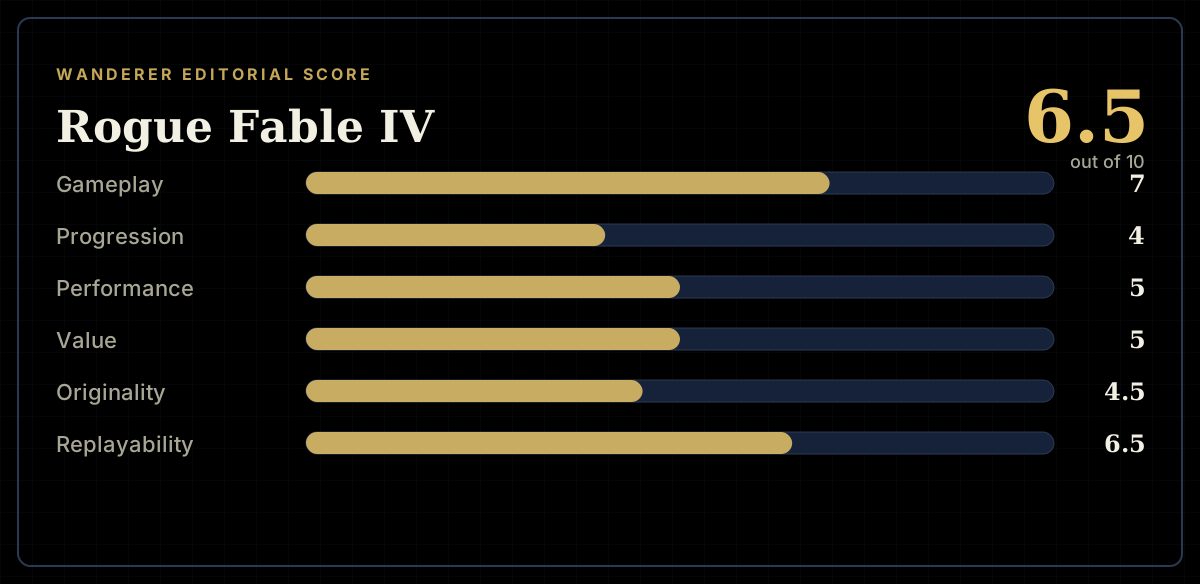
How the review scores each part of the gameWanderer Editorial -
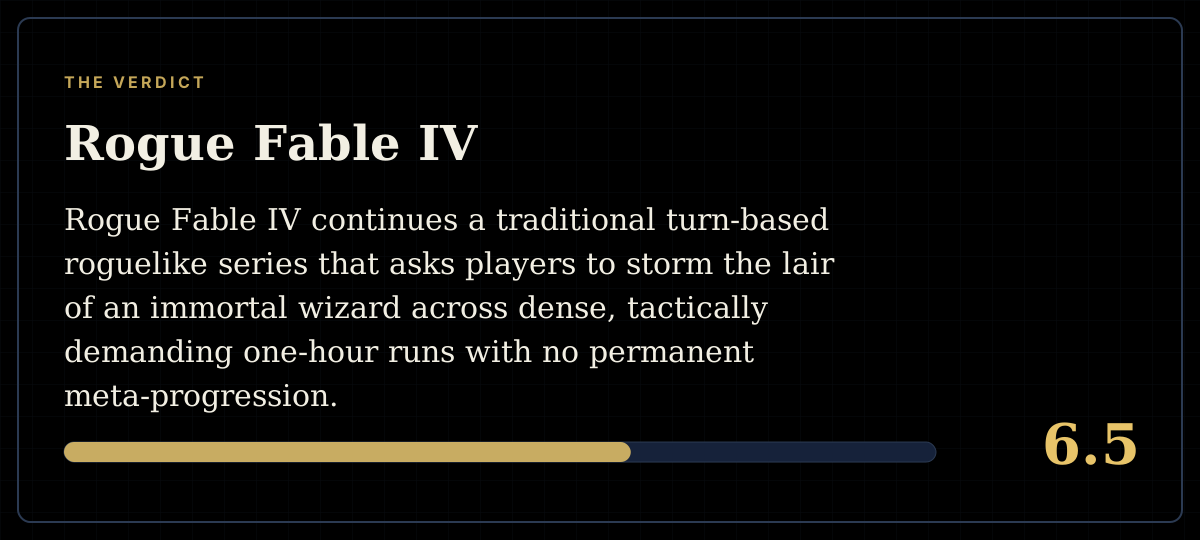
The short versionWanderer Editorial