
Game review
Dungeon Deck
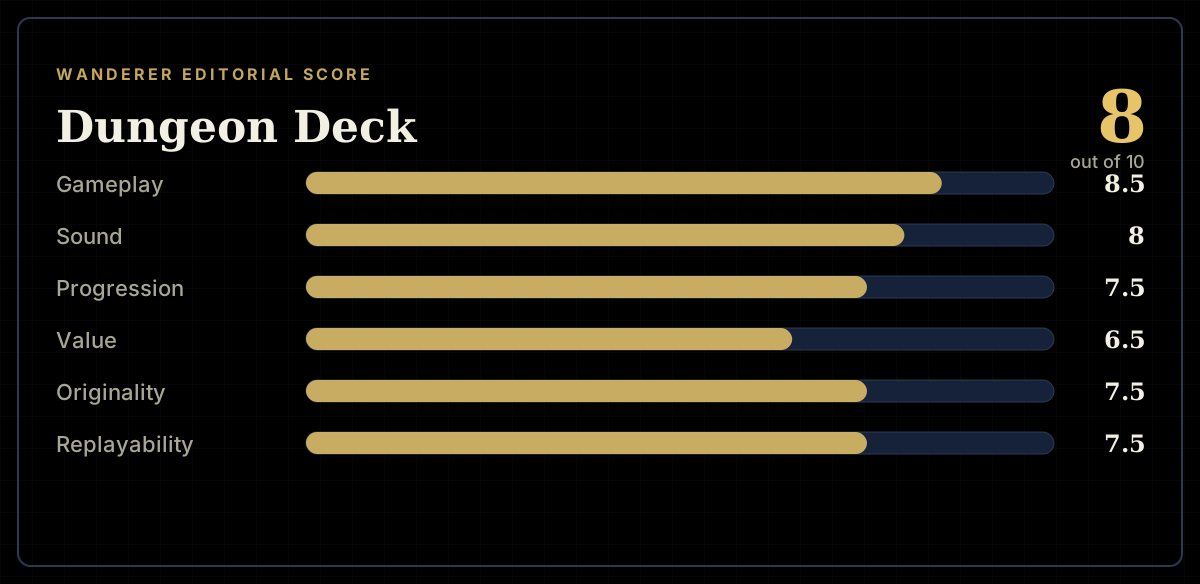
8 / 10
- Developer
- Incinious
- Publisher
- Incinious
- Released
- 28 November 2024
- Platforms
- Windows
- Genre
- Cozy card-based dungeon-crawling roguelike
- Monetisation
- One-time purchase, no in-game store or additional currency purchases
- Players
- Single-player only
The short version
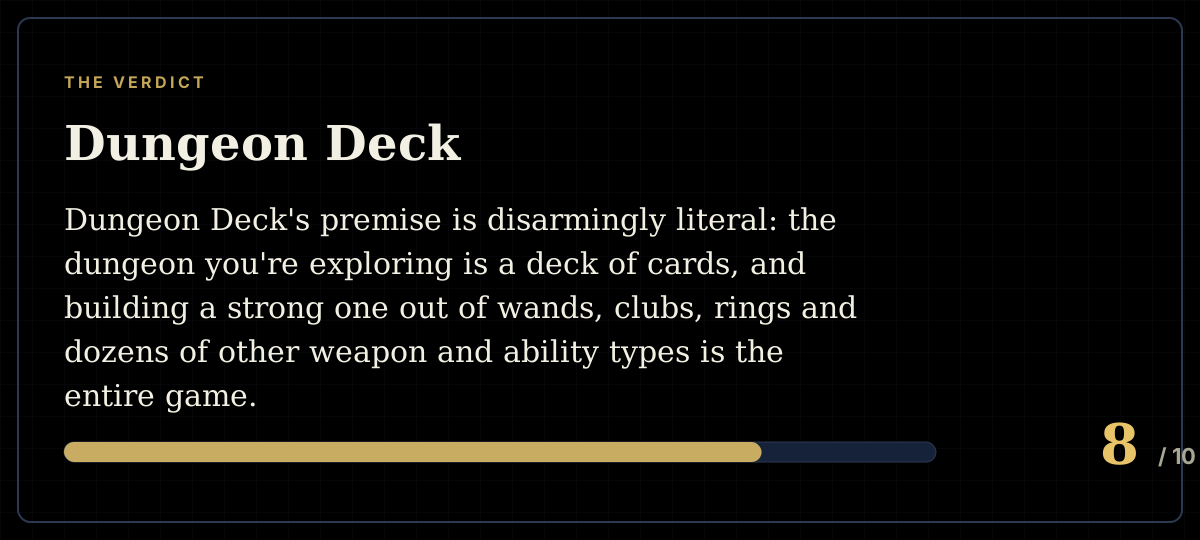
Dungeon Deck's premise is disarmingly literal: the dungeon you're exploring is a deck of cards, and building a strong one out of wands, clubs, rings and dozens of other weapon and ability types is the entire game. Reviewers, many of whom followed the game through years of free prototype builds on itch.io before its paid Steam release, describe the deckbuilding as genuinely unrestricted compared to the genre's usual guardrails, and the presentation — cards and coins that visibly roll and slide across a tabletop — draws consistent, specific praise as a small but meaningful touch of physicality most digital card games skip. Every one of the game's 31 lifetime Steam reviews recommends it, and the developer has backed that reception with well over a year of substantial content updates, including a full "Challenges" expansion in May 2025.
Biggest strengths
- Deckbuilding is repeatedly described as genuinely unrestricted compared to other games in the genre, with a wide range of weapon types — wands, clubs, rings and more — all described as viable rather than a handful of dominant strategies drowning out the rest
- The tactile presentation of cards and coins that visibly roll and slide across a virtual tabletop is a small, specific touch multiple reviewers single out unprompted, giving the game a physical feel unusual for a digital card game
- Reviewers who came to the paid release after following free prototype builds on itch.io consistently confirm the full version represents genuine, substantial new content rather than a repackaged demo, citing new card mechanics and an expanded story
Biggest weaknesses
- Launch was reported as "a bit buggy" by at least one early reviewer, who specifically describes a card causing "a weird animation loop" in certain interactions, though the developer's own patch history shows a dense run of bugfix updates in the weeks immediately following release
- Several reviewers independently flag the price as slightly ambitious relative to the game's modest technical footprint, with one noting the full game is only about 30MB, even while concluding they still felt they got their money's worth
- The narrative framing is intentionally minimal, and while most reviewers treat this as appropriate for a game built around its card mechanics rather than story, it leaves little for players specifically seeking a stronger narrative hook
Who it's for: Deckbuilder fans who want a calmer, more forgiving entry point than genre benchmarks like Inscryption, and who appreciate genuine build freedom over tightly gated, archetype-locked deckbuilding systems.
Our recommendation: A confident recommendation, especially for players newer to the deckbuilder genre looking for something cozy rather than punishing. The price sits slightly higher than its modest technical footprint might suggest, but the amount of content added since launch makes a strong case that it's been earned since.
8 / 10
Dungeon Deck takes its title literally: the dungeon isn't a map or a level, it's a deck of cards, and building the right one out of wands, clubs, rings and dozens of other weapon and ability types is the entire game. It's a small conceptual pivot on the deckbuilding roguelike formula, but it's executed with enough care and consistency that all 31 of the game's lifetime Steam reviews, at the time of this check, recommend it — a genuinely rare thing for any release, let alone a small studio's paid debut.
Freedom the genre doesn't always offer
The most repeated specific compliment concerns how open-ended deck construction feels compared to genre norms. "It feels less restricted compared to a lot of deck builders out there in what cards it gives you to build your deck around," one reviewer writes, a sentiment echoed by another who calls it "a lightweight, simple, surprisingly cozy deckbuilder" where "almost every weapon set is viable." A third reviewer, whose entry point into the genre was the notoriously demanding Inscryption, frames the comparison directly: Dungeon Deck is "a lot more forgiving," making it "a great introduction for anyone new" to deckbuilders rather than a punishing genre showcase. That combination — real build variety without a steep entry cost — is the throughline connecting almost every positive account in the sample.
A deck you can almost feel
A smaller, more specific detail draws surprisingly consistent praise: cards and coins visibly roll and slide across a tabletop surface as you play, rather than snapping cleanly into place the way most digital card games render their interfaces. One reviewer calls this out directly as part of what makes the game feel special, and another goes further, joking that they "kind of think the cards might be alive" given how tactile the presentation feels, adding "every time I drop a card on the table it bleeds red." It's a small piece of production polish, but it's the kind of detail that shows up unprompted across reviews rather than needing to be pointed out, which is usually a sign it's landing exactly as the developer intended.
A demo with a real following, and a full release that delivered on it
Several reviewers specifically mention following the game's free prototype builds on itch.io for months or years before the paid Steam release, and their verdict on whether the full version justified that wait is consistently positive. One long-time follower, weighing the specific question of whether "enough new content been added" to justify a paid release after a free demo, answers plainly: "absolutely, and probably," pointing to a large number of new cards, entirely new card mechanics, and an expanded (if still minimal) story. That's a useful signal for any buyer wondering whether a "cozy indie deckbuilder" claim is backed by real substance or just a pleasant aesthetic — reviewers who'd already spent significant time with earlier builds are the ones best positioned to judge, and they consistently say the paid version earned its price.
Real, if modest, rough edges
The criticisms in the sample are notably mild given the unanimous recommendation rate, but they're specific rather than empty. One early reviewer reports the launch build was "a bit buggy," citing a specific card that triggered "a weird animation loop" in certain interactions. A recurring, more measured concern is price-to-footprint: at least two reviewers note the finished game is a small download — one estimates around 30MB — and wonder whether the asking price is slightly ambitious for that scale, even while both conclude they got their money's worth regardless. A slower on-ramp is also mentioned by at least one player, who describes an early run built from adding any available card indiscriminately leading to a weak deck, before a second, more deliberate attempt went considerably better — a fair warning that some early trial and error is part of learning the system rather than a sign of poor balance.
A developer who kept building on a strong foundation
What elevates Dungeon Deck from "well-liked launch" to a genuinely strong recommendation is what happened afterward. The events feed shows a dense cluster of bugfix patches in the weeks immediately following the 28 November 2024 launch — plausibly addressing the animation-loop bug reported above — followed by a substantial "Challenges Update" in May 2025 that added the bonus challenge-run content referenced on the store page, and further quality-of-life improvements as recently as December 2025. That's over a year of continued, substantive support for a small indie release, matching the pattern of the sample's most enthusiastic long-session reviewers, several of whom report well over 100 hours logged.
What the achievement curve says about pacing
Steam's own achievement data backs up the shape of the experience reviewers describe. Clearing the game's early biomes sits comfortably above 70-87% completion, meaning the large majority of buyers who start the game do reach its core content without getting stuck early — consistent with reviewer reports that the game clicks quickly once its basic deckbuilding logic is understood. The curve then drops sharply for the hardest challenge-tier achievements, sitting at 0.9% to 3.1% for full completion, no-damage clears, and endurance-mode milestones. That gap between an accessible core game and a genuinely demanding optional challenge layer matches how reviewers describe the game overall: cozy and forgiving by default, with real difficulty available for players who specifically go looking for it in the post-launch Challenges content rather than baked into the standard run.
Final verdict
Dungeon Deck earns its unanimous review sample the straightforward way: a genuinely flexible, well-balanced deckbuilding system, a small but real physical presentation touch that reviewers keep bringing up unprompted, and a developer who's kept adding substantial free content for well over a year since launch. The price runs slightly ahead of the game's modest technical scale, and the narrative is intentionally minimal, but neither complaint shows up as a serious reservation anywhere in the sample. For players wanting a calmer, more generous entry point into deckbuilding roguelikes than the genre's harder benchmarks offer, this is one of the stronger, best-supported small releases covered in this lane this year.
Pros and cons
Pros
- Deckbuilding is repeatedly described as genuinely unrestricted compared to other games in the genre, with a wide range of weapon types — wands, clubs, rings and more — all described as viable rather than a handful of dominant strategies drowning out the rest
- The tactile presentation of cards and coins that visibly roll and slide across a virtual tabletop is a small, specific touch multiple reviewers single out unprompted, giving the game a physical feel unusual for a digital card game
- Reviewers who came to the paid release after following free prototype builds on itch.io consistently confirm the full version represents genuine, substantial new content rather than a repackaged demo, citing new card mechanics and an expanded story
- The developer shipped a genuinely large "Challenges Update" in May 2025, adding the bonus challenge-run content referenced on the store page, followed by further quality-of-life improvements as recently as December 2025
- Long-session reviewers report extraordinary engagement, including accounts logging over 6,000 and 7,700 minutes, a strong signal that the roguelike's randomised decks and events genuinely sustain repeat play rather than becoming repetitive
Cons
- Launch was reported as "a bit buggy" by at least one early reviewer, who specifically describes a card causing "a weird animation loop" in certain interactions, though the developer's own patch history shows a dense run of bugfix updates in the weeks immediately following release
- Several reviewers independently flag the price as slightly ambitious relative to the game's modest technical footprint, with one noting the full game is only about 30MB, even while concluding they still felt they got their money's worth
- The narrative framing is intentionally minimal, and while most reviewers treat this as appropriate for a game built around its card mechanics rather than story, it leaves little for players specifically seeking a stronger narrative hook
- At least one reviewer notes that certain build strategies only become viable with the right card draws, meaning a run can occasionally feel constrained by what's on offer rather than purely a product of player choice
- A slow start is reported by at least one player before the deckbuilding possibilities click into place, with an early run built from indiscriminately adding any available card described as leading to a notably weak deck before better strategy set in
Screenshots
-

Dungeon DeckImage: Incinious via Steam -

Dungeon DeckImage: Incinious via Steam -

Dungeon DeckImage: Incinious via Steam -
How the review scores each part of the gameWanderer Editorial -
The short versionWanderer Editorial