
Game review
Rogue Blight
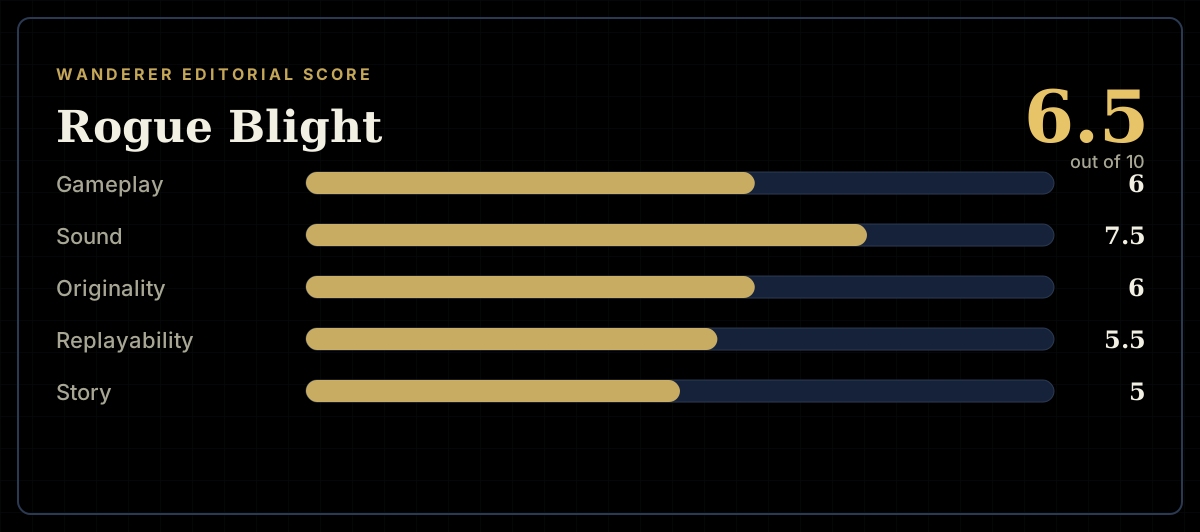
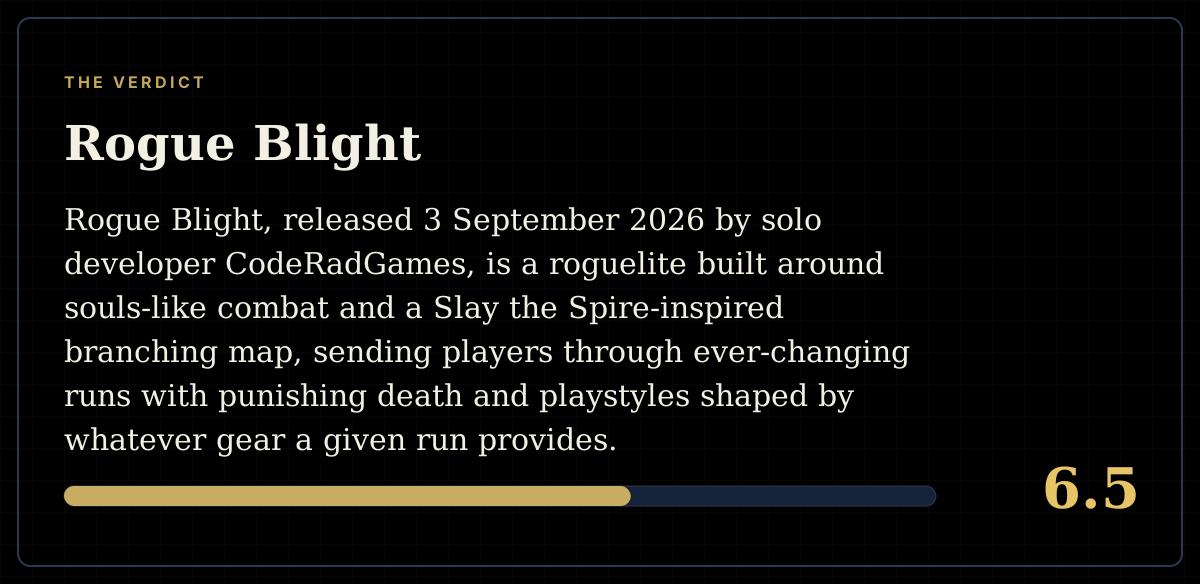
6.5 / 10
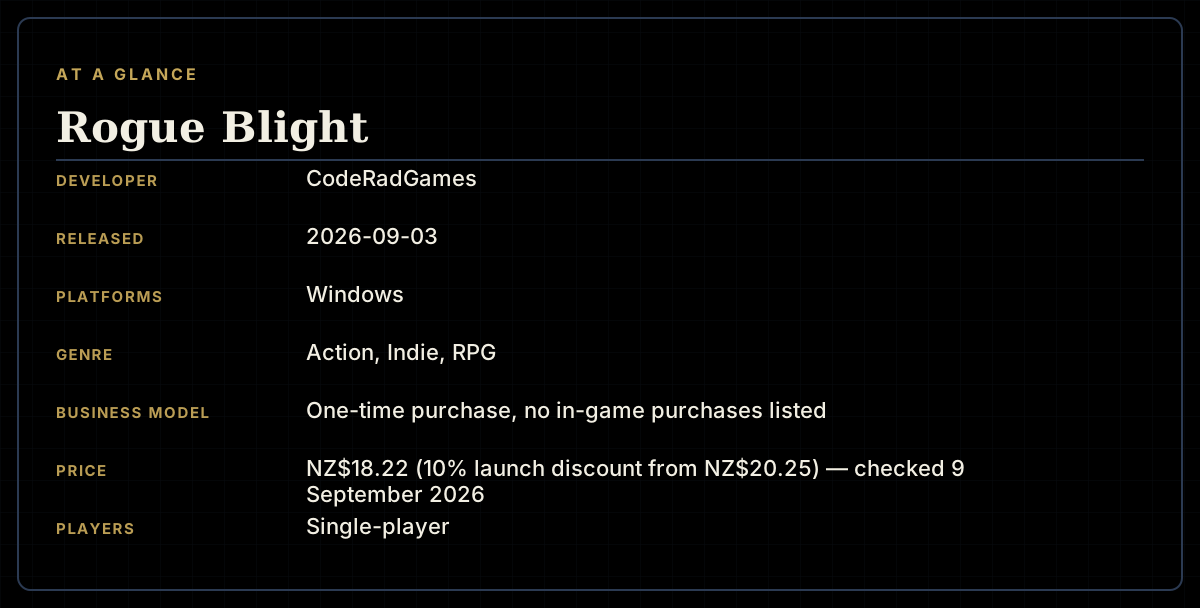
- Developer
- CodeRadGames
- Publisher
- CodeRadGames
- Released
- 3 September 2026
- Platforms
- Windows
- Genre
- Action, Indie, RPG
- Monetisation
- One-time purchase, no in-game purchases listed
- Players
- Single-player
The short version
Rogue Blight, released 3 September 2026 by solo developer CodeRadGames, is a roguelite built around souls-like combat and a Slay the Spire-inspired branching map, sending players through ever-changing runs with punishing death and playstyles shaped by whatever gear a given run provides. It sits Very Positive with a sample of 144 reviews, and reading widely through it reveals near-universal praise for art, atmosphere and boss variety sitting alongside a smaller but genuinely detailed and credible minority critique of the underlying combat and build systems. Reviewers consistently and specifically praise the game's visual presentation, comparing it favourably to Salt and Sanctuary, and multiple reviewers express real astonishment that the project comes from a single developer working alone. Set against that praise, this review found one especially detailed, methodical negative review, written after the reviewer had substantially completed the game, that documents specific, concrete flaws: a basic moveset with no combos or heavy attacks, a dodge mechanic effectively always available regardless of stamina cost, and a build system that reviewer describes as offering no real synergies, since matching a weapon's scaling stat to its corresponding armour set is consistently and measurably the only strong approach. Multiple other reviewers separately corroborate that fighting the same handful of bosses repeatedly across runs becomes tedious well before a full playthrough concludes. This review also found a reported ultrawide-display bug that briefly softlocked at least one player, which the developer fixed within 24 hours.
Biggest strengths
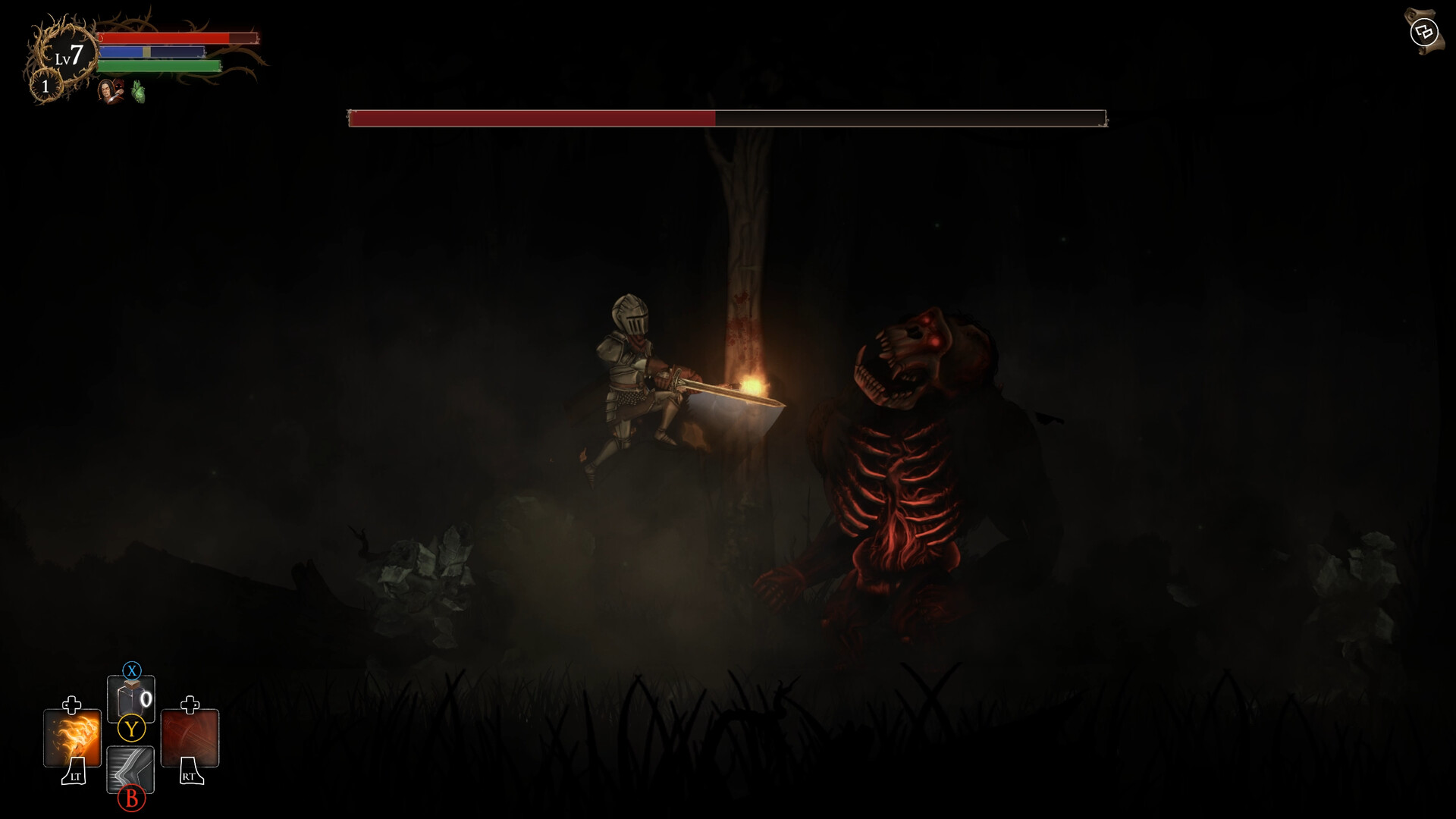
- Visual presentation and atmosphere draw overwhelming, specific praise, with reviewers repeatedly comparing the art style favourably to Salt and Sanctuary and describing genuinely striking, hand-crafted, non-AI-generated artwork as a clear standout
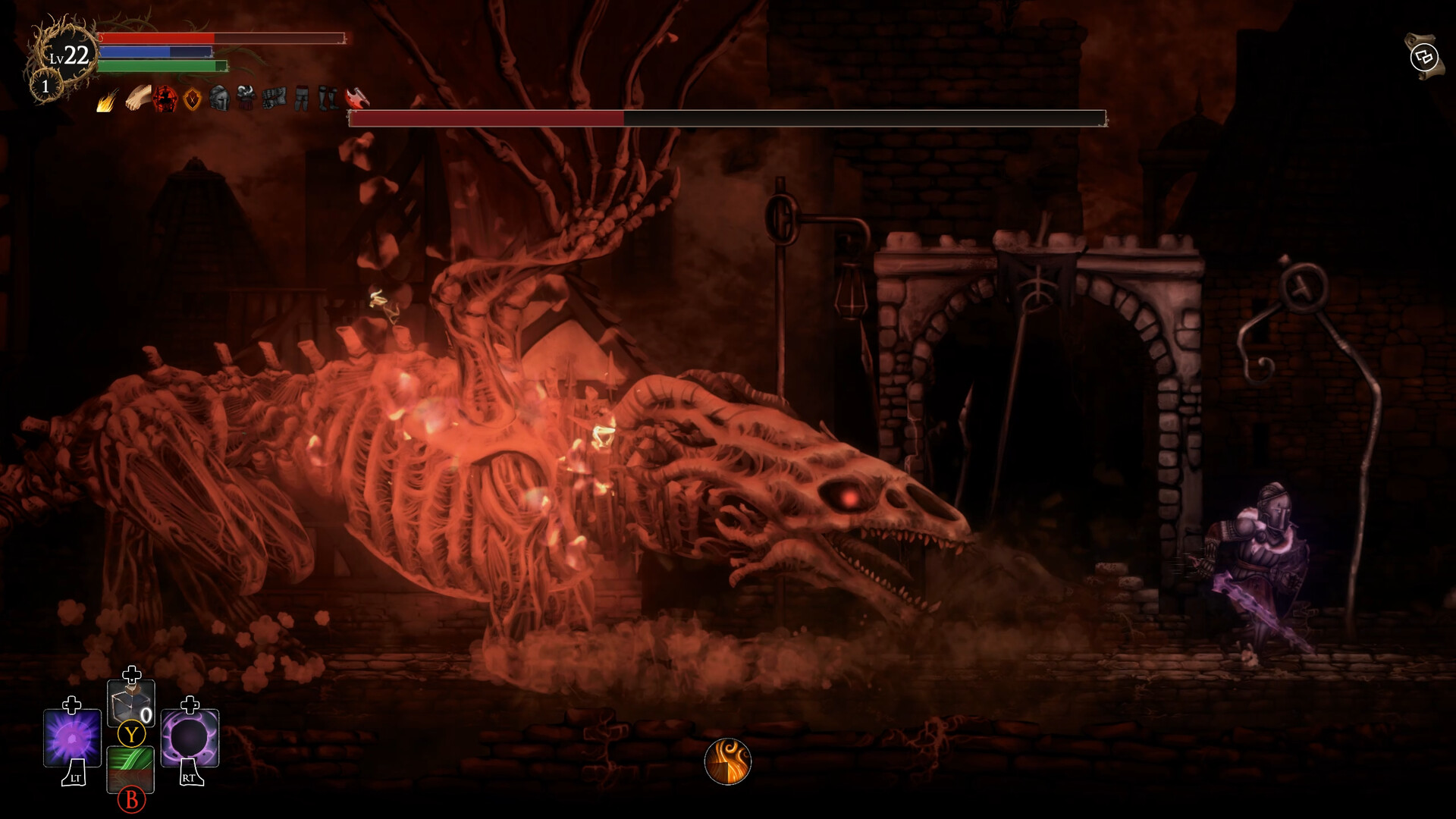
- Boss quantity and variety draw consistent praise, with reviewers describing real surprise at how many distinct bosses populate each stage, and unlockable additional boss encounters that reward repeated playthroughs
- Multiple reviewers specifically express disbelief that the game was built by a single developer, describing production values and content volume that read as the work of a considerably larger team
Biggest weaknesses
- At least one highly detailed, methodical reviewer who substantially completed the game documents specific, credible combat flaws: a basic moveset without combos or heavy attacks, and a dodge mechanic effectively always usable regardless of stamina cost, removing much of the intended resource-management tension
- The same detailed reviewer reports a near-total absence of meaningful build synergy, describing every viable "build" as simply matching a weapon's scaling stat to its corresponding armour set, with hybrid or experimental builds consistently measured as weaker across difficulty 5 runs
- Multiple separate reviewers corroborate that fighting the same handful of bosses repeatedly across successive runs becomes tedious, describing individual encounters as unremarkable once experienced three or more times
Who it's for: Souls-like and roguelite fans who prioritise atmosphere, art direction and boss variety over deep build customisation, who are prepared for combat that several detailed, experienced reviewers describe as mechanically shallow once the initial hours wear off.
Our recommendation: Worth it at this price for genre fans specifically drawn to the art and atmosphere; players hoping for Hollow Knight or Dead Cells-level combat depth and build variety should temper expectations significantly.
6.5 / 10
Introduction
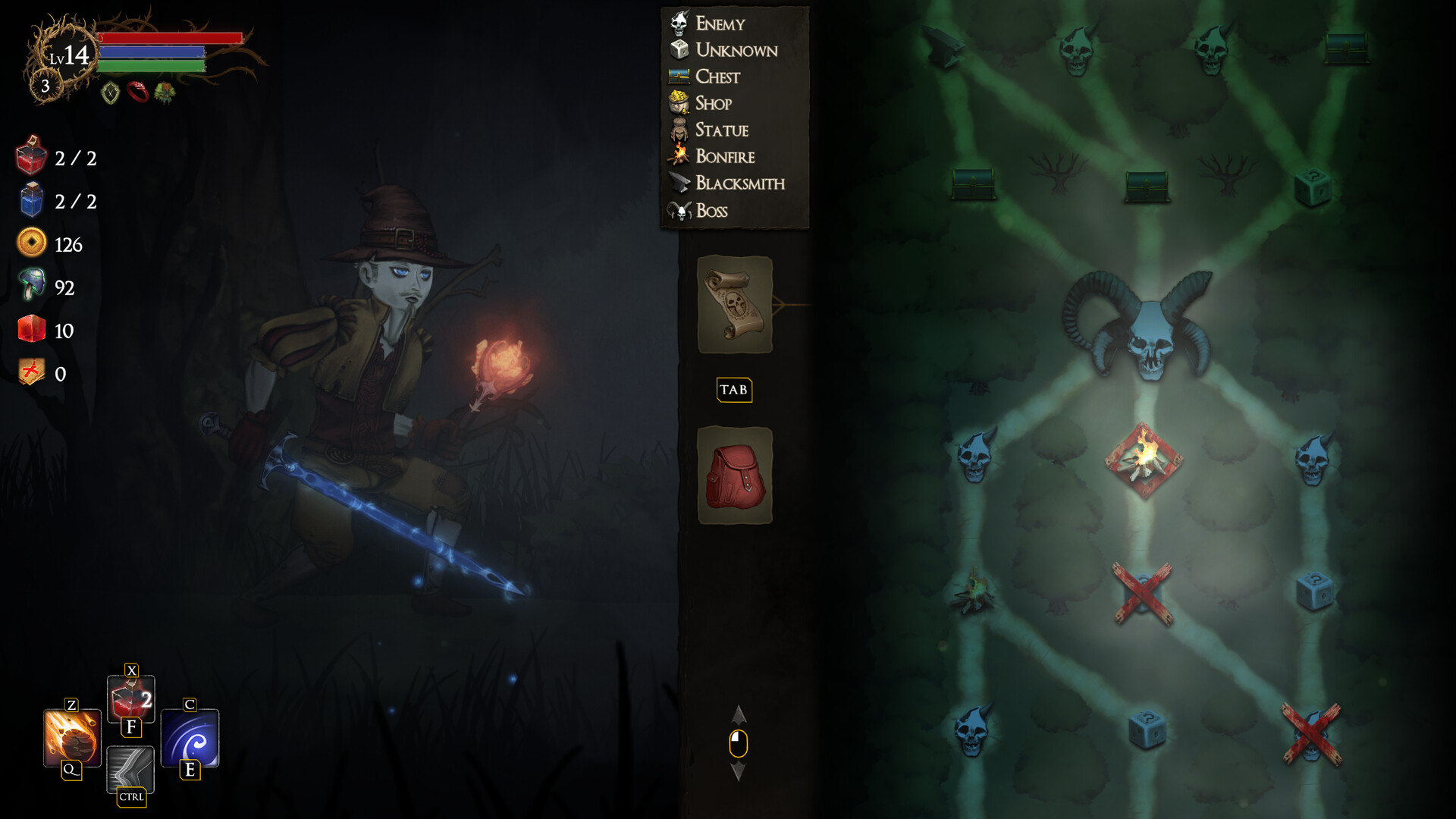
Rogue Blight, released 3 September 2026 by solo developer CodeRadGames, is a roguelite built around souls-like combat and a Slay the Spire-inspired branching map, sending players through ever-changing runs where death is punishing and playstyle is shaped largely by whatever gear a given run happens to provide. It sits Very Positive with a sample of 144 reviews, and reading widely through it reveals near-universal praise for art, atmosphere and boss variety sitting alongside a smaller but genuinely detailed, credible minority critique of the underlying combat and build systems this review found worth taking seriously.
Art and atmosphere reviewers consistently single out
The clearest, most consistent praise across this sample concerns presentation. Reviewers repeatedly and specifically compare the visual style favourably to Salt and Sanctuary, describing genuinely striking, hand-crafted artwork, and at least one reviewer specifically notes with appreciation that the art is "non-AI," framing real human craft as refreshing given broader industry trends this review's research has documented elsewhere this year. Boss quantity and variety draw their own consistent praise, with reviewers describing real surprise at how many distinct encounters populate each stage, and unlockable additional bosses that reward repeated playthroughs beyond a single completed run.
A remarkable achievement for a solo developer
Multiple reviewers specifically express disbelief that Rogue Blight comes from a single developer working alone, describing production values, content volume and overall polish that read as the work of a considerably larger studio. That specific framing recurs often enough across this sample to read as a genuine, distinguishing factor in how positively many reviewers weigh the game's other qualities, and the developer draws separate, specific praise for responsiveness, with at least one reviewer reporting a reported ultrawide-display bug that had briefly softlocked their save was fixed within 24 hours of being flagged.
A detailed, credible critique of the underlying combat
Set against that praise, this review found one especially detailed, methodical negative review, written by a reviewer who had substantially completed the game across difficulty five before posting their assessment, documenting specific and concrete combat flaws. That reviewer describes a basic moveset limited to upward and downward slashes, low-range wand projectiles, a simple jump, and a dash, with no combos or heavy attacks layered on top. The same reviewer specifically notes the dodge mechanic remains usable so long as a player has even a single point of stamina, effectively removing the resource-management tension the stamina system is ostensibly meant to create.
Near-zero build synergy, according to extensive play
The same detailed reviewer reports a near-total absence of meaningful build variety or synergy, describing every genuinely strong "build" as simply matching a weapon's scaling stat to its corresponding armour set, with status effects like poison and fire consistently weaker than ice, water or shock regardless of playstyle. Critically, that reviewer specifically tested hybrid and alternative builds suggested by the developer's own public streams and found them consistently weaker across repeated difficulty-five runs — a concrete, tested claim rather than a first-impression guess, which this review reads as meaningfully more credible than a similar complaint from a less experienced player would be.
Repetitive bosses, corroborated across the sample
Beyond that single detailed account, this review found separate, independent corroboration of at least one specific related complaint: multiple reviewers report fighting the same handful of bosses repeatedly across successive runs becomes tedious well before a full campaign concludes, describing individual encounters as unremarkable once experienced three or more times. This isn't simply the detailed critical reviewer's isolated opinion — it recurs across otherwise unconnected, more moderately-worded reviews throughout the sample.
A single unverified suspicion, reported for transparency
This review found one reviewer raising a low-confidence, unverified suspicion that some positive reviews in this sample might not be genuine. This review found no independent corroboration of that specific claim elsewhere in its own research, and reports it here only as a single, documented but unproven observation rather than a confirmed pattern, distinct from the much more thoroughly corroborated gameplay complaints detailed above.
Weighing genuine craft against genuine mechanical limitations
Taken as a whole, this review reads Rogue Blight as a case where presentation, atmosphere and content volume meaningfully outpace the depth of the underlying combat and build systems supporting them. The detailed critique this review found credible doesn't claim the game is badly made — quite the opposite, it specifically credits the visual and structural achievement while arguing the actual moment-to-moment mechanics don't hold up against the genre's best-known names over an extended playthrough.
Why one detailed dissent carries real weight here
It's worth explaining directly why this review treats a single, heavily-caveated negative review as meaningfully informative against a backdrop of 138 positive ones. The reviewer in question didn't bounce off the game early or judge it from a first impression — they achieved most of the game's achievements, reached difficulty five, defeated the final boss multiple times, and specifically tested alternative builds the developer had publicly suggested before concluding those builds were measurably weaker. That's a fundamentally different, more rigorous kind of evidence than a quick negative first-hour review, and it directly addresses the specific mechanical claims — build variety, combat depth, synergy — that this genre's audience cares most about, rather than a vaguer complaint about difficulty or bugs. This review weighs that specificity accordingly, treating it as a genuine, substantiated counterweight to the broader positive consensus rather than dismissing it simply because it's outnumbered.
What the next major update would most need to add
Reading across this sample as a whole, this review can identify the specific, concrete directions that would most directly address the credible critique documented above. Introducing genuine cross-stat hybrid builds that are actually competitive with pure single-stat scaling, rather than consistently weaker as the detailed reviewer found through extensive testing, would directly resolve the single most substantive complaint in this review's research. Expanding the base moveset with combo options or heavy attacks beyond the current basic slash-and-dash toolkit would address the combat-depth complaint without requiring a fundamental redesign. Neither fix is trivial, but both are specific and addressable rather than requiring the game to be rebuilt from scratch, which is consistent with how much genuine respect even this game's harshest detailed critic extends toward its underlying art and structural achievement.
Final Verdict
Rogue Blight succeeds remarkably as a visual and structural achievement for a solo developer, delivering genuinely striking Salt and Sanctuary-inspired art, real boss variety, and a responsive developer actively fixing reported issues. What holds this score back is a detailed, credible and partially corroborated critique of shallow combat mechanics, near-absent build synergy, and boss encounters multiple reviewers independently find repetitive well before a full campaign concludes. Worth it at this price for genre fans specifically drawn to the atmosphere and art; temper expectations if deep build variety and evolving combat mechanics matter most to you.
Pros and cons
Pros
- Visual presentation and atmosphere draw overwhelming, specific praise, with reviewers repeatedly comparing the art style favourably to Salt and Sanctuary and describing genuinely striking, hand-crafted, non-AI-generated artwork as a clear standout
- Boss quantity and variety draw consistent praise, with reviewers describing real surprise at how many distinct bosses populate each stage, and unlockable additional boss encounters that reward repeated playthroughs
- Multiple reviewers specifically express disbelief that the game was built by a single developer, describing production values and content volume that read as the work of a considerably larger team
- The developer draws specific praise for responsiveness, with at least one reviewer reporting a reported ultrawide-display softlock bug was fixed within 24 hours of being flagged
Cons
- At least one highly detailed, methodical reviewer who substantially completed the game documents specific, credible combat flaws: a basic moveset without combos or heavy attacks, and a dodge mechanic effectively always usable regardless of stamina cost, removing much of the intended resource-management tension
- The same detailed reviewer reports a near-total absence of meaningful build synergy, describing every viable "build" as simply matching a weapon's scaling stat to its corresponding armour set, with hybrid or experimental builds consistently measured as weaker across difficulty 5 runs
- Multiple separate reviewers corroborate that fighting the same handful of bosses repeatedly across successive runs becomes tedious, describing individual encounters as unremarkable once experienced three or more times
- At least one reviewer describes skills and spell-focused playstyles as largely filler, reporting they're both harder to acquire and consistently weaker than simply investing in basic stat scaling and attacking directly
- At least one reviewer reports an ultrawide-display bug that briefly softlocked their save file inside a shop menu, and a separate reviewer raises an unverified, low-confidence suspicion that some positive reviews might not be genuine, though this review found no independent corroboration of that specific claim
Screenshots
-
Rogue BlightImage: CodeRadGames via Steam -
Rogue BlightImage: CodeRadGames via Steam -
Rogue BlightImage: CodeRadGames via Steam -
How the review scores each part of the gameWanderer Editorial -
The essentials at a glanceWanderer Editorial -
The short versionWanderer Editorial