
Game review
Persona 4 Golden
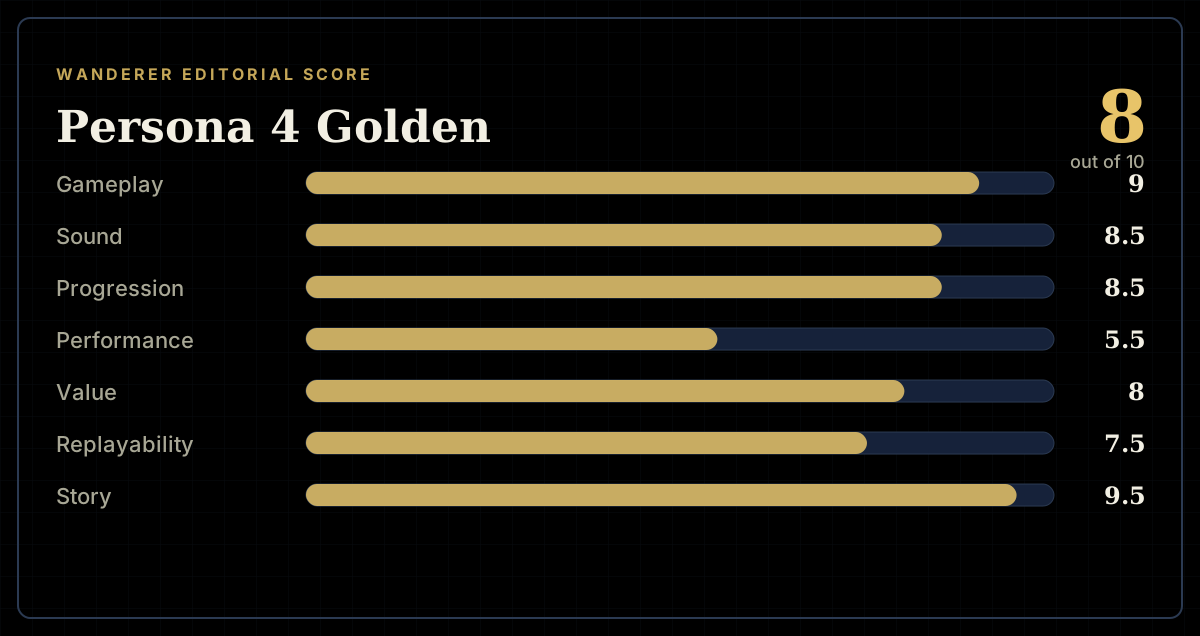
8 / 10
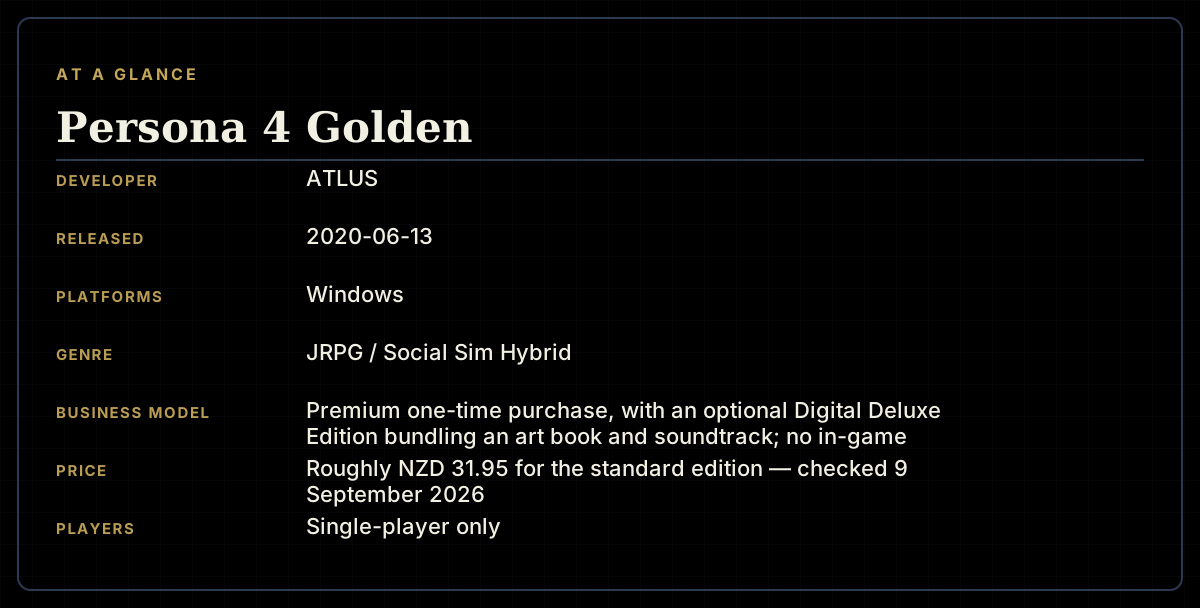
- Developer
- ATLUS
- Publisher
- SEGA
- Released
- 13 June 2020
- Platforms
- Windows
- Genre
- JRPG / Social Sim Hybrid
- Monetisation
- Premium one-time purchase, with an optional Digital Deluxe Edition bundling an art book and soundtrack; no in-game purchases or DLC
- Players
- Single-player only
The short version
Persona 4 Golden earns its 97% positive score honestly: the murder-mystery story, the cast of Social Links, and the Pokemon-meets-roguelike dungeon system combine into one of the most effective coming-of-age JRPGs ever made, and its own review sample is full of people who insist they don't normally like this genre. What keeps the score from matching that acclaim is a persistent, specifically-documented crash bug — worse for some AMD GPU owners — that a meaningful and consistent slice of reviewers report years after launch, only partly mitigated by a 2023 patch that finally added a quicksave feature the port launched without.
Biggest strengths
- The calendar-driven Social Link system and the turn-based Persona-fusion dungeon combat combine into a structure many reviewers say they've never seen done this well anywhere else
- A large number of reviewers explicitly describe converting from "I don't like JRPGs/anime" to calling this one of their favourite games of all time
- The PC port adds real technical upgrades over the Vita original — arbitrary resolutions and framerates, supersampling, full controller remapping and dual audio
Biggest weaknesses
- A specific, independently corroborated crash bug affecting some AMD GPU owners is reported by multiple reviewers as unresolved years after launch, with at least one describing it as still present roughly four years on
- Before the 2023 patch, no quicksave feature meant a mid-dungeon crash or a lost boss fight could erase hours of unsaved progress, and several detailed reviews describe losing exactly that much
- Denuvo DRM is a recurring complaint, both for occasional crash reports some reviewers attribute to it and for its periodic online-verification requirement on an otherwise fully single-player game
Who it's for: Newcomers to JRPGs as much as genre veterans — the review sample is unusually full of people who say they don't normally play turn-based RPGs or watch anime and loved this anyway, which says something real about how approachable the writing and pacing are.
Our recommendation: Buy the standard edition rather than the Digital Deluxe bundle, make sure you're on the post-January-2023 build for quicksave support, and save manually and often regardless of your GPU vendor until you've confirmed the crash issue doesn't affect your setup.
8 / 10
Persona 4 Golden had already been a cult classic for eight years — a 2012 PlayStation Vita expansion of a 2008 PlayStation 2 game — before it reached PC in June 2020. What's striking about its Steam review sample isn't that longtime fans showed up to confirm it's good. It's how many reviewers explicitly say they don't normally play JRPGs, don't watch anime, and don't enjoy turn-based combat, and still call this one of the best games they've ever played. That kind of crossover conversion, repeated independently across dozens of the most-upvoted reviews, is a genuinely unusual signal for a 12-year-old game arriving on a new platform.
A murder mystery wrapped in a calendar
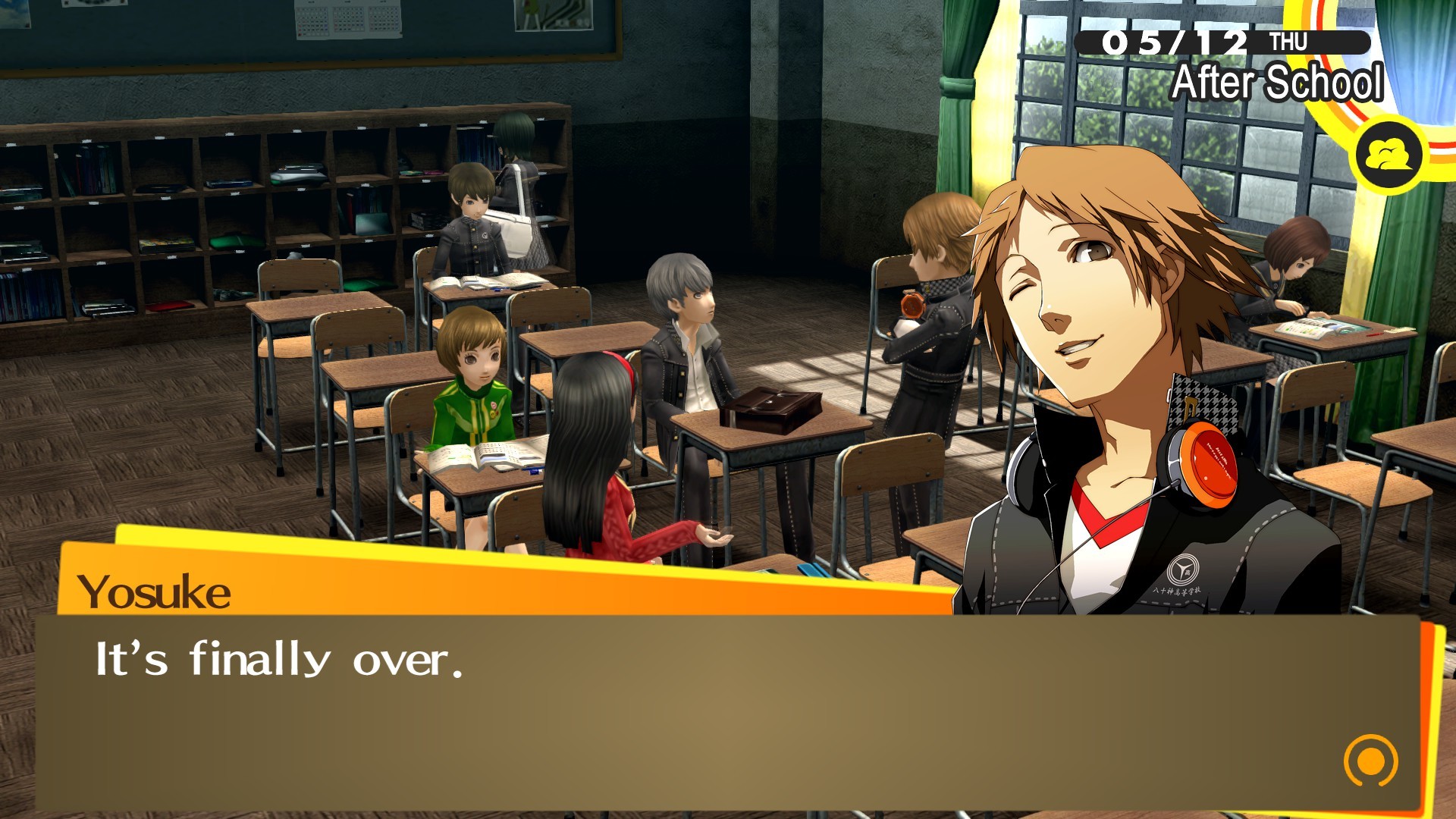
The structure is the whole trick. You play a transfer student in a small town where a string of murders is unfolding, and every in-game day is a resource to spend: study, work a job, hang out with a friend, or head into a dungeon that only exists inside a television set. Building relationships — Social Links, in the game's own terms — directly strengthens the Persona-fusion combat system, so the coming-of-age half of the game and the turn-based dungeon half aren't separate modes bolted together, they actively feed each other. One widely-quoted review breaks the influences down cleanly: JRPG combat structure, roguelike-style regenerating dungeon floors, a Pokemon-esque collection-and-fusion system for Personas, and a raising-sim calendar underneath all of it. That's an unusual number of genres to braid together successfully, and the review sample's near-unanimous verdict is that ATLUS pulled it off.
The murder-mystery plot escalates with real patience, and the cast of Social Link characters — routinely singled out by name across the review sample — carries a genuine emotional weight by the story's second half that a lot of reviewers say caught them off guard given how slow and low-stakes the opening hours feel.
What the PC port actually adds
Judged purely as a port, the technical upgrades over the Vita original are real and well documented: arbitrary rendering resolutions and framerates, built-in supersampling, properly remappable PC controls, dual English/Japanese audio, and high-resolution 2D UI assets. For players who'd only had the option of an eight-year-old handheld screen, this is a legitimate and substantial visual and performance upgrade, and multiple reviews frame the price as more than fair for finally getting the definitive version of the game on a platform most people already own.
The crash bug the acclaim doesn't erase
That said, this review has to take seriously a specific, technical complaint that recurs often enough across independent reviewers, spanning years, to be treated as a real and current issue rather than an isolated hardware quirk. Multiple reviewers separately report a crash — several specifically tie it to AMD graphics hardware — that consistently strikes at the same rough point in the game for different players, with reports of the issue persisting for roughly four years after launch according to more recent reviews. Combined with the port's original absence of any quicksave feature, several detailed reviews describe losing ten, fifteen, even twenty hours of unsaved progress to a single crash, in a genre where that kind of loss stings far more than in a shorter game.
To ATLUS's credit, this wasn't left entirely unaddressed. A January 2023 update — confirmed directly through the developer's own Steam announcement — moved the game from a 32-bit to a 64-bit executable, added several new subtitle languages, and, notably, introduced a Quick Save feature allowing suspension from any point in the game. That single addition directly answers the most damaging version of the crash complaint: even if the underlying instability some AMD users report hasn't been eliminated, the amount any single crash can cost a player has been substantially reduced. It's a genuine, verifiable improvement, even though it arrived roughly two and a half years after launch and reviewers as recent as this year still reference crash problems on some systems.
Denuvo DRM draws its own smaller but recurring complaint thread — some reviewers blame it directly for crashes, and separately, more than one flags its periodic online-verification requirement as an unwelcome layer on an entirely single-player, story-driven game with no multiplayer component to justify it.
A smaller gripe worth flagging before you buy
One narrower but specific and checkable complaint concerns the Digital Deluxe Edition rather than the base game: its bundled soundtrack is reported as a modest handful of tracks at compressed, sub-CD-quality bitrate, buried inside the game's own installation folder rather than offered as a clean standalone download the way most game-soundtrack bundles work. Anyone buying primarily for the score should budget for a separate, properly mastered release rather than expecting the Deluxe Edition to deliver one.
Where it sits next to the rest of the series
Persona 4 Golden's Steam success directly shaped what came next — several reviewers note in their own updates that the game's overwhelming reception was a visible factor in ATLUS bringing Persona 5 Royal to PC as well, effectively treating this 2020 port as a proof of concept for the series' entire PC future. For anyone deciding where to start with Persona, that history is worth knowing: this is the older, shorter, less mechanically elaborate entry, but its slower pace and tighter small-town setting are exactly what a large share of its reviewers say they prefer over the series' later, glossier instalments.
Verdict
Persona 4 Golden's reputation as one of the best JRPGs ever made holds up under scrutiny — the Social Link and dungeon-fusion systems reinforce each other in a way that keeps converting players who thought this genre wasn't for them, and the story earns the emotional weight it spends its first act building toward. What keeps this from a top-tier score is a real, independently corroborated technical problem: a crash bug that outlasted a proper fix for years, mitigated but not eliminated by a welcome 2023 quicksave patch. Buy it, play the base edition, and just make sure you're saving deliberately until you've confirmed your own hardware isn't one of the ones still affected.
Pros and cons
Pros
- The calendar-driven Social Link system and the turn-based Persona-fusion dungeon combat combine into a structure many reviewers say they've never seen done this well anywhere else
- A large number of reviewers explicitly describe converting from "I don't like JRPGs/anime" to calling this one of their favourite games of all time
- The PC port adds real technical upgrades over the Vita original — arbitrary resolutions and framerates, supersampling, full controller remapping and dual audio
- A January 2023 update added a long-requested Quick Save feature, a 64-bit executable and several new subtitle languages, directly addressing the port's most damaging early complaint
- Content volume is enormous for the price — a 60-to-100-hour main story with New Game Plus support and multiple distinct endings gives it real replay value
Cons
- A specific, independently corroborated crash bug affecting some AMD GPU owners is reported by multiple reviewers as unresolved years after launch, with at least one describing it as still present roughly four years on
- Before the 2023 patch, no quicksave feature meant a mid-dungeon crash or a lost boss fight could erase hours of unsaved progress, and several detailed reviews describe losing exactly that much
- Denuvo DRM is a recurring complaint, both for occasional crash reports some reviewers attribute to it and for its periodic online-verification requirement on an otherwise fully single-player game
- The Digital Deluxe Edition's bundled soundtrack is criticised as low-bitrate and awkwardly packaged inside the game's own file structure rather than offered as a proper standalone download
- No native Mac or Linux support, meaning Steam Deck and non-Windows play relies on compatibility layers rather than an officially supported build
Screenshots
-

Persona 4 GoldenImage: ATLUS via Steam -
Persona 4 GoldenImage: ATLUS via Steam -
Persona 4 GoldenImage: ATLUS via Steam -
How the review scores each part of the gameWanderer Editorial -
At a glanceWanderer Editorial -
The short versionWanderer Editorial