Game review
Orna: A Fantasy RPG
7.5 / 10
- Developer
- Northern Forge Studios
- Publisher
- Northern Forge Studios
- Released
- 1 June 2018
- Platforms
- Android, iOS
- Genre
- Location-based RPG / MMO
- Monetisation
- Free to play with consumable microtransactions (raid keys, XP/loot boosters, crafting hammers, arena tokens); no subscription
- Players
- Kingdoms (guilds), world raids, kingdom raids, PvP arena, real-time chat
The short version
Strip away the GPS layer and Orna is a startlingly complete classic RPG: seventy-five classes across nine tiers, a real gear-upgrading ladder, kingdoms, raids, PvP and a story that keeps getting told. Keep the GPS layer and it becomes something no menu-driven RPG can be — a game that turns your commute into a dungeon crawl.
The catch is the one built into the premise. Progression is paced by distance walked, and two players with identical skill will have wildly different experiences depending on whether one lives in a dense city and the other in a rural cul-de-sac. The monetisation itself is honest; the geography isn't.
Biggest strengths
- Seventy-five classes across nine tiers give genuine long-term build variety, not a handful of reskinned starting choices
- The gear-upgrading ladder (forging, runeforging, adornment sockets) rewards planning rather than just grinding
- Kingdoms, kingdom raids and world raids give solo exploration a reason to turn into group content
Biggest weaknesses
- Levelling speed is tied directly to how much ground you cover, which turns geography into a difficulty setting nobody chose
- Rural and low-density-area players hit the same walls faster-moving city players never notice
- The pixel-art presentation has aged past charming into plain in places, especially the older UI screens
Who it's for: RPG players who already walk a lot, commute on foot or by transit, or want a reason to. Less suited to anyone hoping to sit still and let a phone game come to them.
Our recommendation: Install it free and judge it against your own neighbourhood before judging it against the genre. If your area has monuments and dungeons within a short walk, this is one of the deepest free RPGs on either store; if it doesn't, temper expectations early rather than three tiers in.
7.5 / 10
What Orna actually is
Most "location-based RPG" pitches turn out to be a thin skin over a very small game — walk to a pin, tap a monster, watch a number go up. Orna is not that. Underneath the map is a turn-based RPG with the bones of something like a browser MMO from fifteen years ago: three starting classes that branch into seventy-five, nine class tiers unlocking roughly every twenty-five levels, over three thousand items, hundreds of monster families and boss encounters, a gear-forging system with its own sub-mechanics, guild-scale kingdoms that go to war with each other, and world raids that pull dozens of players from anywhere into the same fight. None of that is dressing on top of the walking. It's the actual game, and the walking is how you feed it.
That's the honest starting point for judging Orna, because the two halves pull in different directions. The RPG systems are ambitious enough to sustain years of play — the game has been live since 2018 and is still on a monthly content cadence. The GPS layer that gates access to those systems is not something the developer designed and is not something it can balance. It's your actual street.
The classic-RPG spine
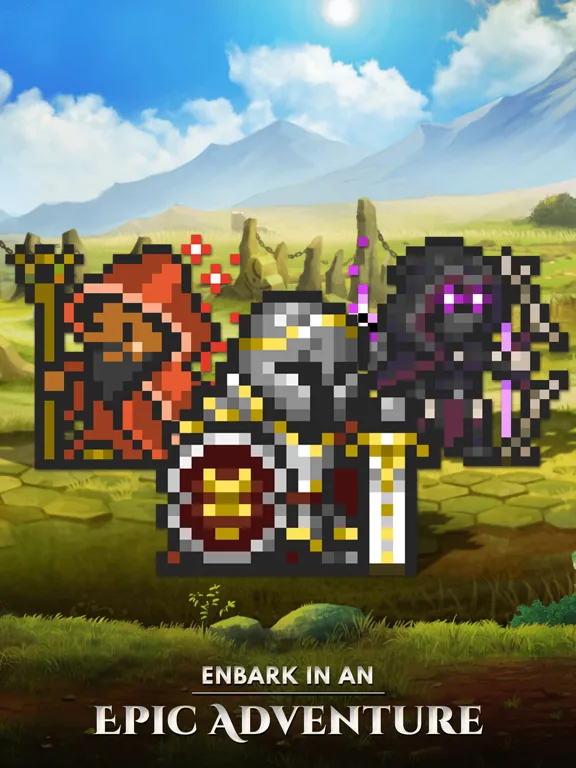
Start a new character and you pick from Warrior, Mage or Thief — a deliberately plain opening that undersells what's coming. Each of those branches into specialisations as you level, and by the higher tiers you're choosing between genuinely distinct playstyles: summoners running pet armies, necromancers trading survivability for damage over time, dedicated healers, hybrid casters that build around specific elemental damage types. Reaching a new tier isn't cosmetic — new passives, new stat priorities and, often, a reason to rethink your gear entirely.
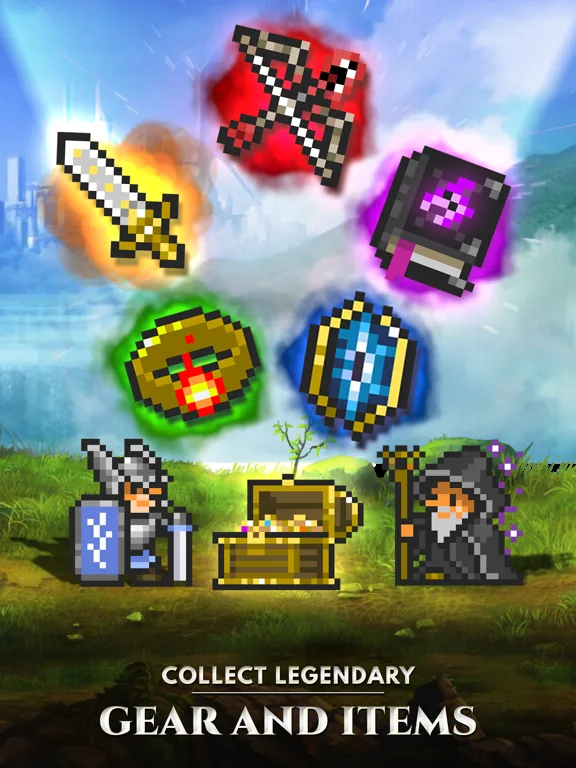
Gear itself has more depth than the genre typically bothers with. Items come with a base quality, can be upgraded with gold and orns (Orna's two core currencies), and once an item reaches a high enough forge level it can take adornments — gem-like sockets that let you tune stats rather than just inflate them. It's not a system that rewards impatience; it rewards players who plan a build several tiers ahead and hunt for the specific drops that complete it. For a mobile game that most people play in short bursts between errands, that's a surprisingly deep commitment to ask for, and it's the strongest evidence that Orna wants to be judged as an RPG first and a novelty second.
Kingdoms function as the guild layer: join one at level 25, and up to fifty players share kingdom wars, kingdom-exclusive raid bosses and shared objectives. World raids sit above that again, opening portals that pull in players from anywhere to fight the same boss together, with rewards scaled to participation rather than requiring a full clear. None of this needs anyone nearby — it's built to work with a community spread across the entire globe, which is the one place the location-based framing actually stops mattering.
The geography problem
Here's where the review has to stop being generous by default. Orna's pacing — how fast you level, how often you find new dungeons, how much loot you see in a session — is a direct function of distance travelled. The game reads your GPS position, spawns encounters within a couple of hundred metres of you, and effectively pauses your progress when you stop moving. That's the entire pitch, and for the right player it's genuinely magical: your daily walk becomes a dungeon crawl, a commute becomes a resource run, a weekend hike becomes an entire play session's worth of loot.
It's also a difficulty setting nobody consented to. A player in a dense city with a monument, a dungeon and a dozen other Travelers within walking distance is playing a fundamentally different, faster game than a player in a rural area where the nearest points of interest are a car trip apart. Both are following the same rules. Only one of them is being rewarded at a reasonable rate for their actual effort. This isn't a bug the developer can patch — it's the necessary consequence of tying an RPG's core loop to real-world density, and it's the single biggest thing to weigh before installing this over any menu-driven alternative.
Player sentiment reflects the split. Long-time accounts frequently describe the game shifting, over years of updates, toward systems that work from a couch — kingdom management, crafting queues, raid participation — precisely because relying purely on footsteps stopped being sustainable for players who'd already covered their local map. That drift says something honest about the design: the walking hook gets you in, but the game itself has had to build workarounds for the people it can't keep moving forever.
Combat and the loop, moment to moment
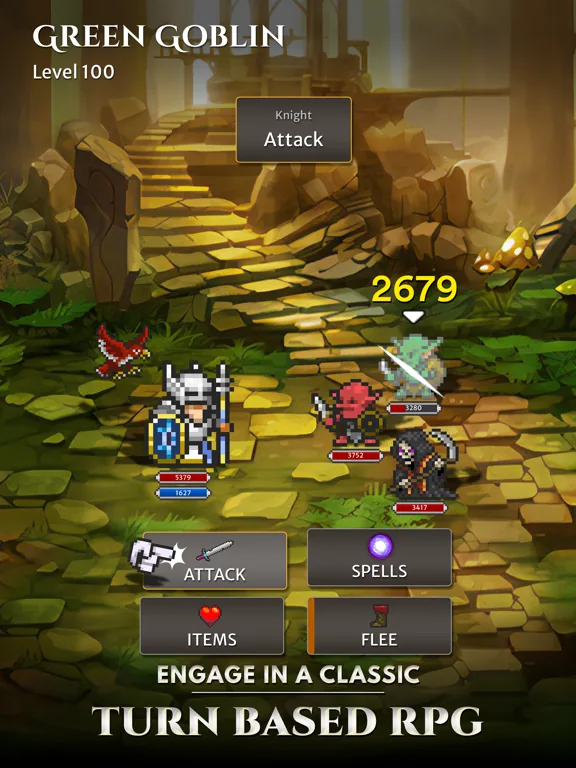
Fights are traditional turn-based exchanges — pick an action, resolve it against enemy stats and elemental match-ups, repeat until one side is down. It's not fast and it's not flashy, and it doesn't try to be; the tactical weight sits in preparation rather than execution, which suits a game you're often playing one-handed while walking. Encounters scale to the area you're in, so low-level zones stay approachable while denser regions with unlocked monuments throw tougher packs and bosses at you. The loop of walk, fight, loot, upgrade, walk again is simple enough to hold up over the long haul that Orna clearly expects from its players, and repetitive enough that anyone looking for combat depth on par with the class system will find it thinner than everything wrapped around it.
Monetisation, precisely
Checked 30 July 2026: Orna is free with no subscription tier and no energy system gating how much you can play. The shop sells small, mostly consumable items in roughly the US$0.99–US$9.99 range — things like luck and wisdom shrines that temporarily boost drop rates or experience, arena tokens for PvP entries, crafting materials such as Galar's Hammers, and gauntlet keys that grant extra attempts at raid content. None of it is a currency you subscribe to; it's closer to a menu of one-off convenience purchases than a gacha economy, and every one of those items can also be earned through ordinary play.
That matters for the pay-to-win question, and the honest answer is: not directly. Buying gauntlet keys buys more chances at raid loot, and raid loot includes some of the game's best gear, so money does shorten the road to strong equipment for players who'd rather spend cash than grind for extra attempts. It doesn't buy levels, doesn't buy walking distance, and doesn't let anyone skip the class and gear systems outright. Compared to the median free-to-play mobile RPG, this is restrained monetisation — no loot boxes dressed as mystery, no forced ads, and the developer has publicly framed community trust as core to how the studio operates. The sharper edge in player sentiment is less about individual purchases and more about a "constant barrage" of small prompts across raids, events and seasonal content, which is a fair criticism of frequency even where the individual prices are modest.
The sister game
Northern Forge's second title, Hero of Aethric, launched in Early Access in November 2022 and answers Orna's biggest structural complaint directly: it's the same class and gear framework built into a handcrafted continent instead of a real map, playable from a couch with up to three other players. It's worth knowing about specifically because it clarifies what Orna is choosing to be. The systems the studio has built are portable — they don't need GPS to work — which means the location layer in Orna is a deliberate identity, not a technical necessity. If the geography problem above is a dealbreaker, Hero of Aethric is the same design team's answer to it, and it's a separate purchase decision rather than something this score should be adjusted for.
Presentation and accessibility
Orna's pixel art is functional rather than a highlight — clean enough to read at a glance, plain enough that some of the older interface screens look their age next to the newer content built around them. The environmental initiative layered into recent updates, where players can nominate real litter hotspots to become in-game cleanup sites, is a genuinely unusual use of the location data and one of the more interesting things a mobile RPG has done with its premise recently.
Accessibility is where the format works against the game hardest. This isn't a controller question or a colour-contrast question; it's that meaningful progress requires physical mobility and free time to be outdoors, which a large share of the potential audience simply doesn't have on a given day. The game doesn't pretend otherwise, and later systems soften it, but nothing removes the core requirement.
Final verdict
Orna earns its score on the strength of a genuinely deep RPG that most players will underestimate until they're several tiers in — seventy-five classes, a gear system with real decisions in it, and enough kingdom and raid content to give a solo hobby a social ceiling worth reaching for. The monetisation is close to a model citizen for the free-to-play mobile space: convenience items, no subscription, nothing that outright buys the win. That's worth crediting plainly.
What keeps it at a very good score rather than an excellent one is the thing that makes it Orna in the first place. Pacing this much RPG behind real footsteps is a bold, distinctive choice, and for players with a walkable, well-populated area around them it's close to unbeatable — nothing else turns an ordinary day into content this well. For players without that, the same system is a soft wall between them and a game they'd otherwise love, and no amount of good design elsewhere quite answers that. Try it against your own neighbourhood, not against the review.
If the idea of a real place quietly generating progress even when you're only half paying attention appeals to you, that overlaps with why Wanderer exists — though Wanderer builds its road out of a fictional map rather than the one outside your door.
Pricing and monetisation checked 30 July 2026.
Pros and cons
Pros
- Seventy-five classes across nine tiers give genuine long-term build variety, not a handful of reskinned starting choices
- The gear-upgrading ladder (forging, runeforging, adornment sockets) rewards planning rather than just grinding
- Kingdoms, kingdom raids and world raids give solo exploration a reason to turn into group content
- Turning a walk to the shops into a dungeon crawl is a trick almost nothing else in the genre pulls off
- Microtransactions sell convenience items rather than a subscription, and the free path to everything sold stays open
Cons
- Levelling speed is tied directly to how much ground you cover, which turns geography into a difficulty setting nobody chose
- Rural and low-density-area players hit the same walls faster-moving city players never notice
- The pixel-art presentation has aged past charming into plain in places, especially the older UI screens
- Endgame content increasingly rewards raid-key purchases and stationary optimisation over the exploration the game is built to sell
- A game this systems-heavy front-loads a lot of menu literacy before it explains why any of it matters
Screenshots
-
Orna: Fantasy RPG AdventureImage: Northern Forge Studios Inc via the App Store -
Orna: Fantasy RPG AdventureImage: Northern Forge Studios Inc via the App Store -
Orna: Fantasy RPG AdventureImage: Northern Forge Studios Inc via the App Store -
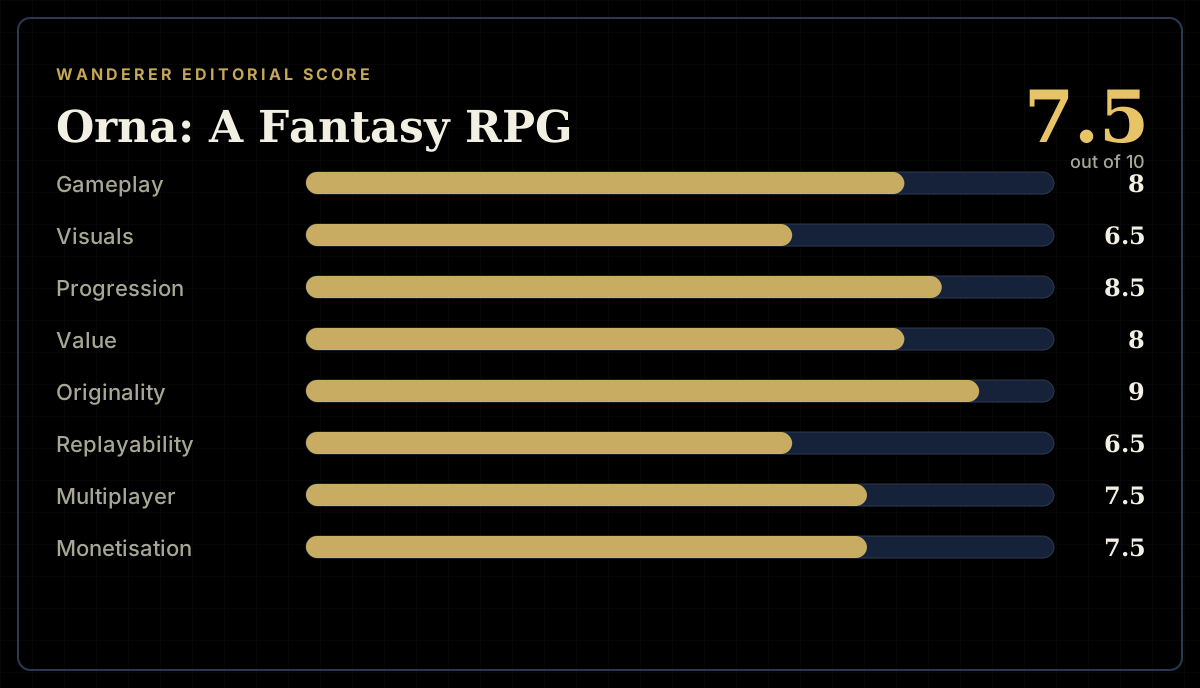
How the review scores each part of the gameWanderer Editorial -
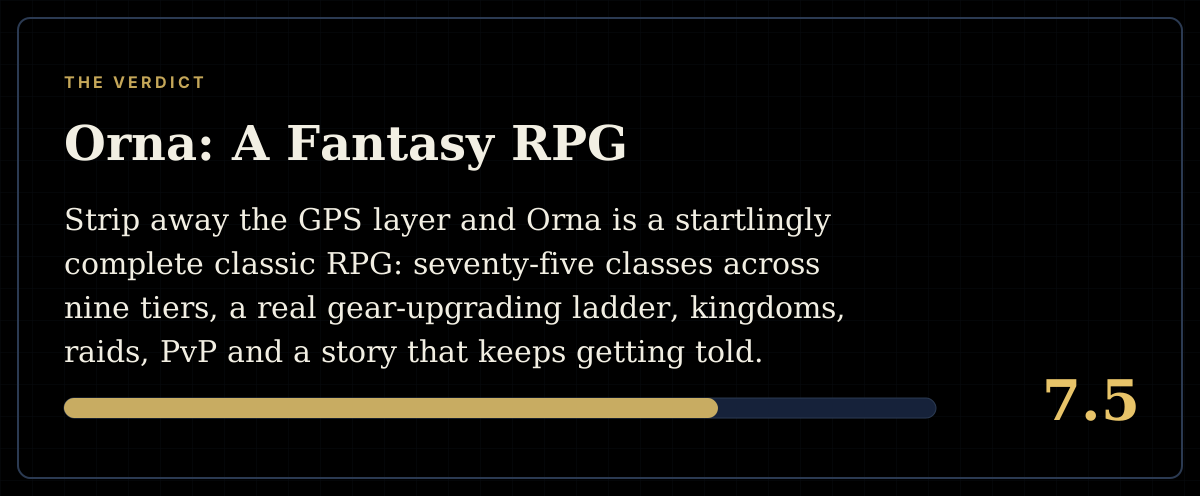
The short versionWanderer Editorial