Game review
Hero of Aethric
7 / 10
- Developer
- Northern Forge Studios Inc
- Publisher
- Northern Forge Studios Inc
- Released
- 15 November 2022
- Platforms
- Android, iOS
- Genre
- Turn-based fantasy RPG / MMORPG
- Monetisation
- Free to play with consumable microtransactions (XP and luck shrines, starter through champion bundles, gauntlet keys for raid attempts) plus a standalone purchase to unlock an extra class outright; no subscription
- Players
- Kingdoms (guilds), kingdom wars, world raids, player-authored Adventurer's Guild quests, cooperative dungeon and arena play
The short version
Hero of Aethric takes Northern Forge's class-and-gear framework — now past a hundred classes, deeper than Orna's own — and builds it into a fixed, hand-authored continent instead of the street outside your door. It answers Orna's most-cited complaint directly: nobody's progress is throttled by where they happen to live. Everyone gets the same map.
What it can't answer is the question that follows. Orna's best trick wasn't its class list, it was turning an ordinary commute into a dungeon crawl — and once that's gone, Aethric is just another well-made turn-based mobile RPG competing in the most crowded genre on either app store, on the strength of systems it shares almost entirely with its sibling.
Biggest strengths
- Over 100 classes give it more raw build variety than Orna's already-deep 75-plus, with its own progression tree
- Removing the GPS requirement removes Orna's single biggest fairness problem outright, since nobody's pace depends on their postcode
- Origin-town building adds a genuine system Orna doesn't have, giving idle time between sessions somewhere concrete to go
Biggest weaknesses
- Selling an "Additional Character Class" as a direct $9.99 purchase puts a price on content Orna gives away through ordinary levelling
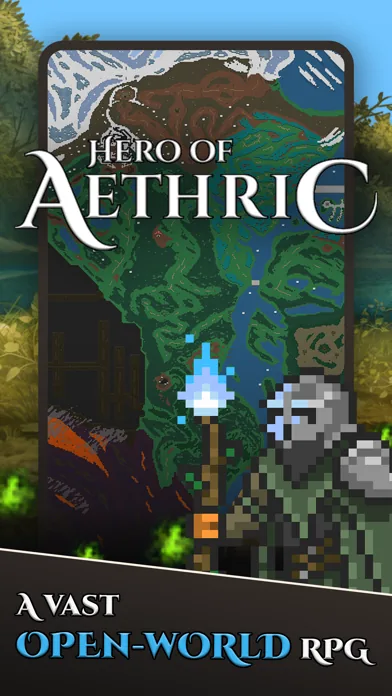
- A finite, hand-built map runs out of fresh ground in a way the real world never does, and nothing here replaces that sense of endless terrain
- App Store review volume sits under 2,000 against Orna's 71,000-plus, a real question mark over how populated kingdom wars and world raids feel outside peak tiers
Who it's for: Players who wanted everything Orna offers but were locked out by geography, or who want more classes and an actual home base to build. Less compelling for anyone who specifically valued Orna's real-world hook.
Our recommendation: Free to try, and the class and gear systems are worth the download on their own merits. Go in aware you're getting Orna's engine on a smaller, static map with a noticeably smaller crowd, and that one of its purchasable items sells something Orna gives away for free.
7 / 10
Take Orna's rulebook — the same forge-and-adorn gear ladder, the same tiered class tree, the same kingdom-and-raid endgame, now expanded rather than trimmed — and instead of pinning it to your actual street, hand it a map nobody has ever walked. That's the entire premise behind Hero of Aethric, and it plays less like a spin-off than a controlled experiment: keep everything that made Orna deep, remove the one thing that made it famous, and see whether what's left can still carry a game on its own.
The same studio, a deliberately different map
Aethric launched in Early Access on 15 November 2022, originally marketed as "Hero of Aethric: an Orna RPG" — a branding choice that told you exactly what it was before you'd installed it. Almost four years later, the storefronts have dropped that framing (it's "8 Bit Fantasy" on the App Store and "Turn Based RPG" on Google Play now), the version counter sits at 3.25.8, and there's no Early Access tag left on either listing. Northern Forge never staged a loud "we've left Early Access" moment for it; the label just quietly stopped applying somewhere in the middle of nearly four years of uninterrupted patches, which is a more honest signal of a finished live product than a press release would have been.
What's notable is how seriously the studio still treats it. Kingdom Evolution, the Wild Hunts seasonal events, the Astraltree daily/weekly reward system, even a full rework of the Mage class's skill tree — all of it ships to Orna and Aethric in the same patch notes, on the same week. This isn't a shell running last year's content while the flagship gets the attention; it's a genuine second front for the same design team, built on the same engine.
More classes, and a home base Orna never gave you
The class count is the first thing worth interrogating rather than just reporting. Aethric passed 100 classes some time ago, ahead of Orna's own tally, and on paper that reads as an obvious win. In practice, a bigger class list only pays off if the extra branches carry distinct identities rather than diluting an already-generous roster into smaller variations on the same few archetypes — and that's a harder thing to judge from outside than the raw number suggests. What's easier to credit outright is town-building, a system Orna has never had. Building and upgrading an origin town gives idle time between play sessions somewhere concrete to invest, rather than just waiting for the next commute to generate loot. It's a genuinely new mechanic layered onto a familiar frame, and it's the clearest evidence that Aethric isn't purely a port of Orna's systems onto a smaller map — it's had room to grow features its sibling structurally can't support.
The gear ladder underneath both games is identical in spirit: forging, runeforging, adornment sockets, drops that reward planning a build several tiers ahead rather than grinding blindly. If you found that satisfying in Orna, none of it has been lost here.
Combat without the excuse
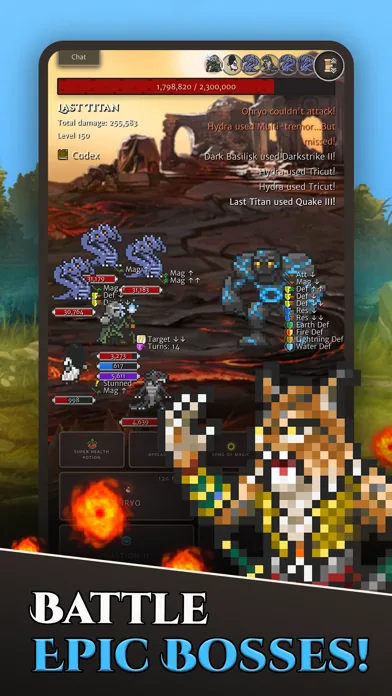
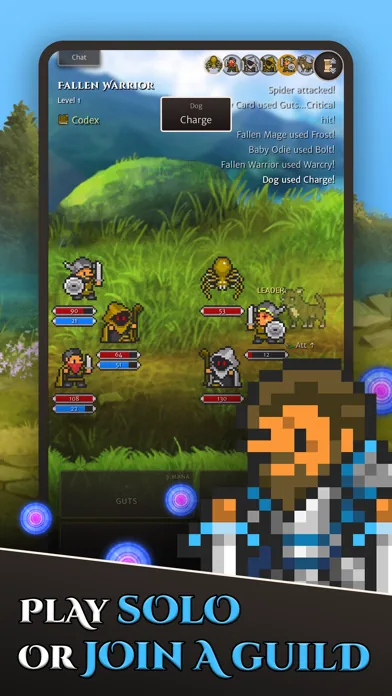
Here's the harder question, and it's the one that actually decides how this game should be judged. Orna's combat was never its selling point on its own merits — traditional turn-based exchanges, pick an action, resolve it against elemental match-ups, repeat. What made it interesting wasn't the combat itself; it was the context around it, the fact that every fight was something your actual day produced rather than something a menu served up on a timer. Strip that context away, as Aethric does by design, and the combat has to stand on what it actually is: solid, unhurried, tactically shallow compared to the class system wrapped around it, and now judged against every other turn-based mobile RPG on either store rather than against nothing at all. That's a much less forgiving comparison, and it's the central reason Aethric can't simply inherit Orna's score by sharing its engine. The systems are still good. They're no longer doing anything a dozen competitors aren't also trying to do.
Kingdoms and raids in a smaller room
Multiplayer here works the same way it does in Orna — kingdoms as the guild layer, kingdom wars as scheduled PvP, world raids pulling in players for shared boss fights, plus an Adventurer's Guild system letting players author their own quests for others to complete. Structurally it's a full match for its sibling. What's harder to assess from outside the game is scale: Aethric's App Store review count sits under 2,000 against Orna's more than 71,000, and while ratings volume is an imperfect proxy for active population, that gap is wide enough to be worth flagging rather than ignoring. A kingdom war or a world raid is only as good as the number of people showing up to it, and a noticeably smaller install base is a real factor in how alive those systems feel at any given tier, especially outside the most popular level ranges.
Monetisation, precisely
Checked 30 July 2026: Aethric is free with no subscription and no stamina system limiting session length. The shop mirrors Orna's almost item-for-item — Shrine of Wisdom and Shrine of Luck at $0.99 each for temporary XP and drop-rate boosts, starter through champion bundles between $2.99 and $5.99, gauntlet keys at $1.99 for extra raid attempts, and a $9.99 "Promotional Pack." All of that is consistent with the restrained, convenience-first model that earned Orna credit in this publication's review of it.
One line item breaks that pattern, and it's worth calling out precisely because the rest of the shop is so unobjectionable: an "Additional Character Class" purchase at $9.99. In Orna, every one of those hundred-plus classes is unlocked through ordinary levelling, no exceptions. Selling direct access to specific classes in Aethric — even if it isn't the only route to them, and nothing here suggests it is — is a materially different monetisation choice from its sibling, and a harder one to wave through without comment. It doesn't buy combat power the way a raw stat purchase would, but it does put a price tag on content type that Orna treats as free by design, and that's the one place this game's monetisation deserves a lower mark than the game it's built from.
Presentation
The "8-bit Fantasy" rebrand signals a deliberately chunkier, lower-resolution pixel style than Orna's already-modest art, and it reads as a considered choice rather than a technical shortcut — it leans into the nostalgia the marketing keeps naming rather than apologising for it. Whether that lands depends entirely on taste; players who found Orna's presentation merely functional are unlikely to come away from Aethric thinking it solved that problem.
Final verdict
Hero of Aethric earns real credit for what it fixes. Take Orna's biggest structural complaint — progress rationed by geography, faster for city players than rural ones through no fault of either — and Aethric simply removes it. Everyone gets the same continent, on the same terms. Layer on a larger class list, a genuine town-building system its sibling has never had, and the same disciplined convenience-first shop, and there's a strong RPG underneath all of it.
It settles at 7.0, a half-step below Orna, for reasons that all trace back to the same trade. Orna wasn't just a deep RPG; it was a deep RPG doing something nothing else on either store could do. Aethric keeps the depth and gives up the distinctiveness, which means it has to win on pure systems merit against a genre with no shortage of competent turn-based mobile RPGs, with a noticeably smaller crowd behind its multiplayer content and one monetisation choice — selling a class outright — that its sibling doesn't make. None of that makes it a bad game. It makes it a very good systems RPG standing in a much more crowded room than the one Orna built for itself.
Players who bounced off Orna specifically because of the GPS gate should absolutely give this one a look; the thing they were missing is fully intact here. Players who loved Orna precisely because it turned real life into content should expect to feel the absence immediately.
If what actually appeals is a persistent world that keeps building itself while you're away without demanding you walk anywhere to earn it, that's closer to how Wanderer is built — a different studio's answer to the same basic question these two games keep circling.
Pricing and monetisation checked 30 July 2026.
Pros and cons
Pros
- Over 100 classes give it more raw build variety than Orna's already-deep 75-plus, with its own progression tree
- Removing the GPS requirement removes Orna's single biggest fairness problem outright, since nobody's pace depends on their postcode
- Origin-town building adds a genuine system Orna doesn't have, giving idle time between sessions somewhere concrete to go
- Shares Orna's cross-game event calendar and monthly patch cadence rather than running on leftover attention
- No subscription and no energy system rationing how much of it can be played in one sitting
Cons
- Selling an "Additional Character Class" as a direct $9.99 purchase puts a price on content Orna gives away through ordinary levelling
- A finite, hand-built map runs out of fresh ground in a way the real world never does, and nothing here replaces that sense of endless terrain
- App Store review volume sits under 2,000 against Orna's 71,000-plus, a real question mark over how populated kingdom wars and world raids feel outside peak tiers
- Turn-based combat identical to Orna's loses its best justification once there's no commute or dog walk turning it into something new
- Deliberately chunkier "8-bit" pixel art will read as a stylistic choice to some players and as a downgrade from Orna's already-modest presentation to others
Screenshots
-
Hero of Aethric: 8 Bit FantasyImage: Northern Forge Studios Inc via the App Store -
Hero of Aethric: 8 Bit FantasyImage: Northern Forge Studios Inc via the App Store -
Hero of Aethric: 8 Bit FantasyImage: Northern Forge Studios Inc via the App Store -
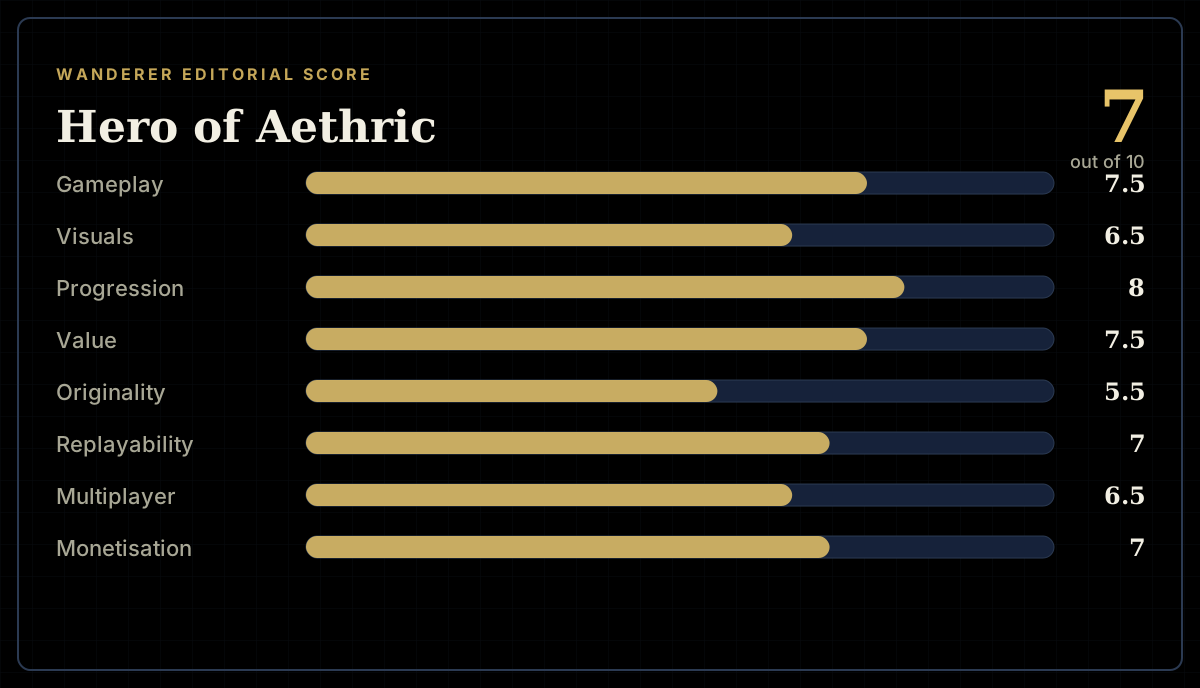
How the review scores each part of the gameWanderer Editorial -
The short versionWanderer Editorial