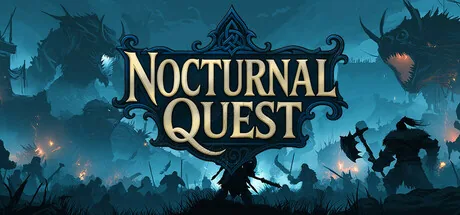
Game review
Nocturnal Quest: An Idle RPG Adventure
6.5 / 10
- Developer
- Lunarade OÜ
- Publisher
- Lunarade OÜ
- Released
- 31 March 2026
- Platforms
- Windows, macOS
- Genre
- Idle RPG
- Monetisation
- Free-to-play. Two optional supporter DLCs — a small buff-and-cosmetics pack and a cosmetics-only pack — sit on top of a base game with no energy system or premium currency
- Players
- Single-player
The short version
Nocturnal Quest gives away more character-building depth than most paid idle RPGs bother to sell — six classes, two specializations apiece, three spells per specialization, and a gear pipeline of enchanting, reforging and gem-socketing that actually rewards planning. For the first thirty-odd levels it is one of the more generous free entries in the genre.
Then the gold and rune economy stops scaling with the level curve, the "infinite levels" premise turns into a very long wait between meaningful upgrades, and a supporter DLC built around a progression-speed perk starts to look less optional than the store page suggests.
Biggest strengths
- Six classes and twelve specializations produce genuinely different parties rather than palette swaps
- Enchanting, reforging and gem-transfer systems give gear upgrades real decision weight instead of a single "equip better number" step
- Offline progression keeps advancing at a rate close to what active play delivers, so checking in periodically doesn't feel like a tax
Biggest weaknesses
- Gold income and rune costs stop tracking each other past roughly level 35, turning gear upgrades into a long grind for small gains
- Stuttering, frame hitches and visual flickering are common enough in player feedback to look like an engine problem rather than isolated hardware issues
- Gear modifier rolls are pure RNG with no reroll safety net, so bad luck can waste a scarce crafting resource outright
Who it's for: Idle and incremental players who want a real build to fiddle with rather than a single upgrade tree, and who are willing to treat the first month as the good part.
Our recommendation: Worth installing — it's free and the class system alone is worth a look. Go in expecting the back half of the level curve to slow to a crawl, and decide up front whether the Supporter Pack's buff is a purchase you're comfortable making once the base game asks for it.
6.5 / 10
Most free idle RPGs sell you the character sheet a page at a time. Pick a hero, level a single tree, watch a number climb. Nocturnal Quest hands over six classes, two specializations each, three spells per specialization and more than a hundred active and passive skills before you've spent a cent, and then builds an actual gearing game — enchanting, reforging, gem transfer, set bonuses — underneath it. For the opening stretch, it plays like a paid game that forgot to charge you.
The trouble starts once the level curve outruns the economy that's supposed to support it, and Lunarade OÜ's own "infinity of levels" pitch turns into the thing you have to grind through rather than the thing you're chasing.
A build sandbox with real edges
The class system is the strongest thing here. Six adventurer classes each split into two specializations, and each specialization carries three unique spells, which means the twelve "builds" the store page promises aren't twelve names for the same three buttons — they're genuinely different parties depending on which pair of specializations you're running side by side. Layer in gems with set bonuses, and the team-composition puzzle has more moving parts than the "recruit hero, assign class, forget about it" template most idle RPGs settle for.
Itemization backs that up. Gear isn't just found and slotted — it passes through Enchant, Reforge and Transfer systems that let you push a piece's stats in a direction rather than accepting whatever it rolled. That's the right idea for a genre where equipment screens usually collapse into "biggest number wins": it gives min-maxers something to actually min-max, and it means two players running the same class can end up with meaningfully different characters.
Combat backs the systems rather than distracting from them. Units act on a turn-based initiative order, but buffs, debuffs, regeneration and triggered effects tick in real time between those turns, so the fight doesn't freeze while you wait for your slot to come up. It's a sensible hybrid for a semi-idle game — turn-based enough to reward planning, real-time enough that watching a fight play out doesn't feel like reading a spreadsheet. The compromise shows its seams early, though: some opening bosses act multiple times against a single player turn through the initiative math, which plays less like deliberate difficulty and more like a number nobody re-checked after tuning something else.
Outside combat, a Botanist system for growing magical fruit and an Alchemist system for brewing potions give the idle side of the loop something to do besides watch a timer, spread across six maps and more than twenty monster types. None of it is complicated, but it doesn't need to be — it's there to give offline time a reason to matter, and on that specific job it succeeds. Progress made while away tracks close enough to active-session progress that logging in twice a day doesn't feel like leaving value on the table, which is exactly what a semi-idle game needs to get right first.
The wall at level 35
Here's where the "infinity of levels" hook turns into a liability. Player feedback converges hard on a specific point: somewhere in the mid-thirties, gold income stops keeping pace with what reforging and enchanting cost, and rune prices in the ten-to-fifteen-thousand range per operation become genuinely unsustainable against the income the game is handing out at that stage. The result isn't difficulty in the way a boss fight is difficult — it's a pacing problem where the interesting decisions (which stat to push, which set bonus to chase) stop happening because you can't afford to make them.
Layer the RNG on top and the frustration compounds. Gear modifiers roll randomly with no reroll safety net, so a rune spent on the wrong outcome is a rune gone, not a rune spent on information. Early on, when resources are relatively cheap, that's an acceptable idle-game rhythm. Once the economy tightens at the level-35 wall, the same system starts to feel like the game punishing you for playing it.
None of this erases what came before. The first several dozen levels genuinely showcase the class-and-gear systems this review just praised. But "countless builds" only means something if you can afford to iterate on them, and the current economy pacing means most players will settle on one working setup and grind it rather than keep exploring the sandbox Lunarade built.
What free actually costs here
Nocturnal Quest is free-to-play with no premium currency, no energy meter and no gacha layer gating the base systems — worth crediting on its own, since plenty of "free" idle RPGs aren't nearly this generous with their core loop. Two optional DLCs sit on top: a NZ$8.99 Supporter Pack that bundles a modest gameplay buff with cosmetics, and an NZ$18.99 Heroic Supporter Pack that's cosmetic only.
The cosmetic-only tier is monetisation done properly — pay for looks, change nothing about power or pacing. The cheaper pack is the one worth thinking about before buying, because it lands its buff directly on the game's slowest bottleneck. It isn't pay-to-win in the sense of buying a stat advantage over other players — this is a single-player game with no PvP or leaderboard stakes tied to it — but a chunk of the community treats the pack's speed-up effect as close to mandatory once the mid-game grind sets in, which is a softer problem than pay-to-win but a real one: a game whose free version gets meaningfully more tedious once you know a five-dollar purchase exists to fix it.
Presentation and the stability gap
The art holds up in stills and reads as an appropriate mood for a "nocturnal" fantasy setting — it's one of the more consistently praised parts of the package in player feedback. It's also AI-generated, which has produced the predictable split: plenty of players are happy with how it looks in motion, and a smaller but vocal group has publicly questioned the presentation and treated some of the storefront's more effusive reviews with suspicion as a result. Worth knowing going in, whichever side of that argument you land on.
The more concrete problem is technical. Stuttering, frame hitches and visual flickering come up often enough across player feedback to suggest an optimisation issue rather than scattered hardware outliers, and it's the kind of thing that erodes an idle game's core appeal fastest — a genre built around leaving a window open in the background has a low tolerance for that window behaving badly.
The score
Nocturnal Quest earns a 6.5 for doing something a lot of free idle RPGs don't bother with: giving players a build space with real depth and letting them explore a meaningful chunk of it before asking for anything. The class and itemization systems are the best reason to install it, and the offline progression genuinely respects time spent away.
It doesn't hold that standard for the whole level curve. The gold-and-rune economy falling behind progression past the mid-thirties, the RNG-without-reroll gear system, the stutter reports and a supporter DLC that lands its perk on the game's exact pain point together keep this from climbing into "very good" territory, even against a 71%-positive Steam audience that clearly likes what's here. Play it for the free build sandbox. Don't expect the back half of "infinite levels" to feel as rewarding as the front.
Facts checked 31 July 2026 against Steam's storefront data for app ID 2330930 and the game's public user-review sample.
Players who want the same "deep systems, offline-friendly" pitch with a tighter economy should look at Melvor Idle; for another semi-idle project built and patched by a small team over years rather than months, see Legends of Idleon. And if the appeal here is progression that keeps moving while you're away from the keyboard, Wanderer is built around exactly that idea, minus the level-35 wall.
Pros and cons
Pros
- Six classes and twelve specializations produce genuinely different parties rather than palette swaps
- Enchanting, reforging and gem-transfer systems give gear upgrades real decision weight instead of a single "equip better number" step
- Offline progression keeps advancing at a rate close to what active play delivers, so checking in periodically doesn't feel like a tax
- No energy meter, no premium currency and no gacha pulls gating the base game
- Over 100 active and passive skills support build experimentation most free idle RPGs don't allow
Cons
- Gold income and rune costs stop tracking each other past roughly level 35, turning gear upgrades into a long grind for small gains
- Stuttering, frame hitches and visual flickering are common enough in player feedback to look like an engine problem rather than isolated hardware issues
- Gear modifier rolls are pure RNG with no reroll safety net, so bad luck can waste a scarce crafting resource outright
- Early bosses can act two or three times against a single player turn through the initiative system, which reads as a tuning miss rather than intended difficulty
- The Supporter Pack's gameplay buff is aimed squarely at the game's slowest bottleneck, which makes "free" feel conditional once you hit it
Screenshots
-
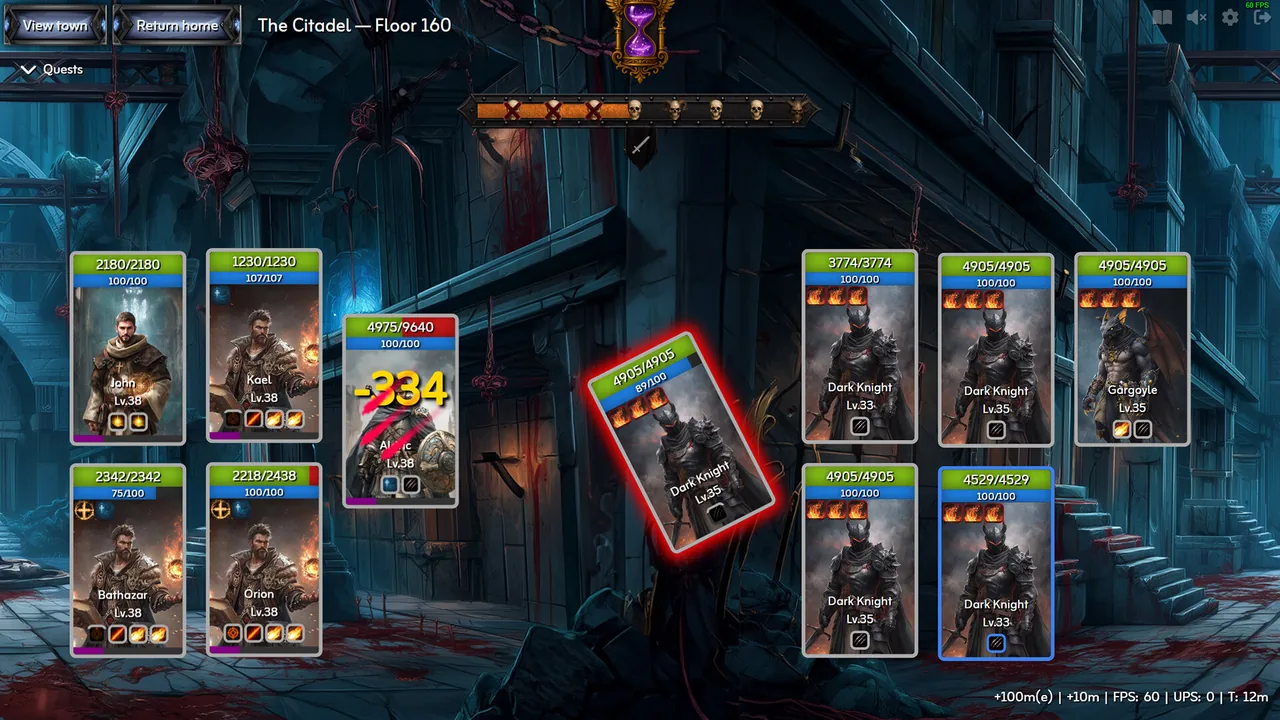
Nocturnal Quest: An Idle RPG AdventureImage: Lunarade OÜ via Steam -
Nocturnal Quest: An Idle RPG AdventureImage: Lunarade OÜ via Steam -
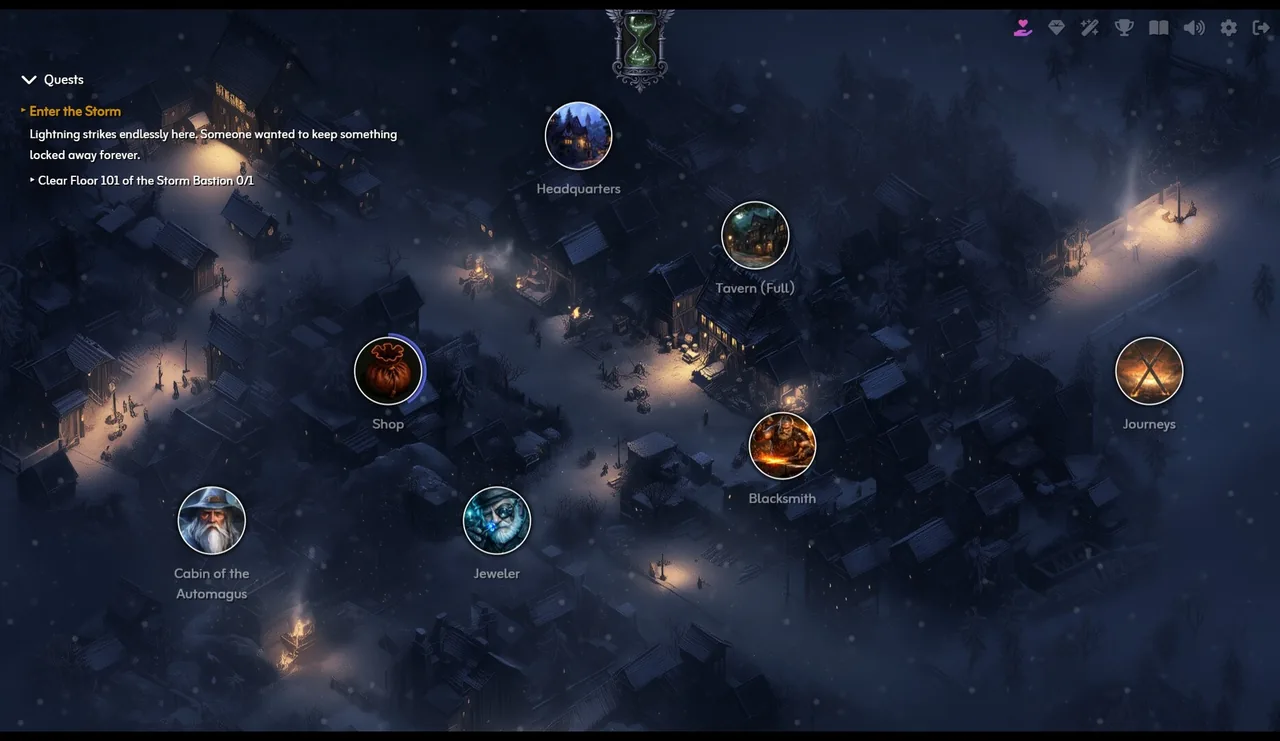
Nocturnal Quest: An Idle RPG AdventureImage: Lunarade OÜ via Steam -
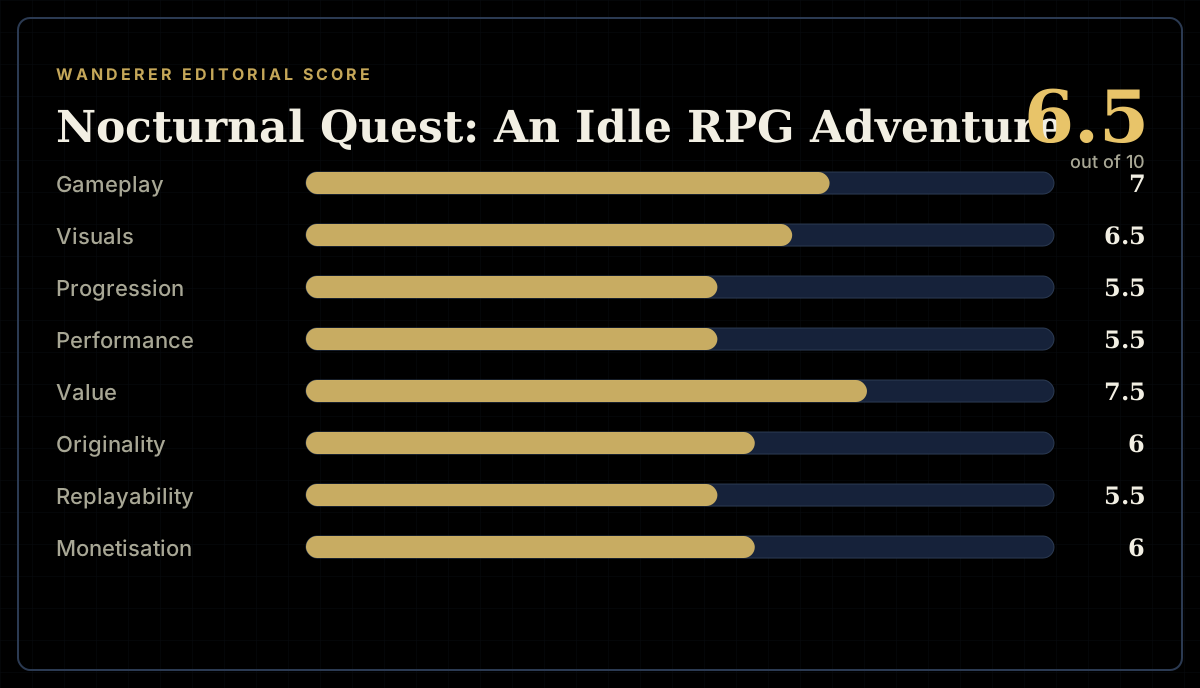
How the review scores each part of the gameWanderer Editorial -
The short versionWanderer Editorial