
Game review
Mors: Idle Reaper
5.7 / 10
- Developer
- Dopa Games
- Publisher
- Dopa Games
- Released
- 28 July 2026
- Platforms
- PC
- Genre
- Idle RPG
Bank it or lose it all
Mors: Idle Reaper builds its entire identity around one risk-and-reward decision, repeated constantly: keep hunting for a bigger reward multiplier, or cash out before a death wipes the bank. The store page frames this directly — defeat enemies to build a "Hunt streak" and a growing reward bank, then either claim it safely or push further toward the next boss for a shot at better loot. Die before claiming, and the accumulated bank is lost. It's a familiar gambling-style tension mechanic (push-your-luck systems show up across plenty of genres), but grafting it onto the core idle-combat loop rather than bolting it on as a side minigame is a reasonably sharp design choice for a budget-priced idle RPG.
That tension is visible directly in the main play screen, which the developer's own screenshot confirms: a banked reward total in the tens of millions, a hunt streak multiplier, and a prominent Claim button sitting next to a "Death Ante" toggle for players willing to raise the stakes further. Three difficulty tiers are on offer for boss fights specifically — Safe, Blood, and Death — trading risk for reward multipliers, which gives the core loop a real decision point beyond just "click to fight" progression.
A real gear and rebirth structure underneath
Beyond the hunt-and-bank hook, the underlying systems are more developed than the NZ$3.19 price tag might suggest. Seven separate automatically-generated resources (Wood, Stone, Iron, Obsidian, Bloodstone, Mana, and Soul, confirmed directly in the resource sidebar screenshot) feed passive production, Armory upgrades, and permanent bonuses. Gear drops across rarity tiers — the inventory screenshot shows Legendary, Mythic, and Epic pieces with real stat variance (attack, crit chance, life steal, defense trade-offs) and functioning matched-set bonuses, captured here as an active 4-piece "Soul Reaper" set adding stacking crit damage and boss damage. A permanent Rebirth system resets the run for skill points spent across a genuinely sizeable node web, split into Power, Resource, Zone, and Special categories — the captured skill tree alone shows more than a dozen visible nodes gated behind specific levels, well beyond a token prestige gesture.
The stated long-term goal is reaching Level 1000, where a final boss called Amo appears — "defeat it, or surrender your run," per the store page. Whether the moment-to-moment pacing actually holds together across that entire climb is not something documentation can settle, and this review isn't claiming to have made that climb.
Onboarding complaints, partially answered
Steam's review base for this one is thin and mixed — three total, one positive and two negative — and the specifics matter more than the raw tally here. One negative reviewer's complaint is pointed and detailed: "there is no explanation on how to progress except for 'see this button, click it.' Nothing about gearing, upgrades or anything else." That's a real, specific onboarding criticism worth taking seriously rather than waving off. It's worth noting, though, that the captured main-screen screenshot shows an explicit "Next Action" hint line at the bottom of the interface ("Next Action: Upgrade Sword in Armory | Goal: Lv 522"), which does read as at least a partial answer to exactly that complaint — whether that guidance was added after the negative review was posted, or whether the reviewer simply missed it, isn't something that can be confirmed from the outside.
The one positive-flagged review, meanwhile, reads less like a personal reaction and more like a pasted changelog — a long, detailed rundown of a hunt-and-farming system update, written in the structure of patch notes rather than a player's own impressions. It's treated here as low-value evidence of genuine reception either way, rather than counted as a real endorsement.
A modest look, a wider net
Visually this stays firmly in budget-pixel territory — the captured hunt screen shows a small, simply-drawn enemy sprite against a plain dark background, with almost all of the screen's real estate given over to text and numbers rather than art. That's consistent with the price point and not a knock in itself; plenty of successful idle games get by on minimal art and lean entirely on their numbers. What is worth noting is the breadth of language support for a game this size: the store page lists English, French, German, Simplified Chinese, and Russian, and that range shows up directly in the review sample itself — of the three reviews on record, one is written in Simplified Chinese and one in Russian, alongside the English negative review. For a solo or small-team budget release, shipping five languages rather than English-only is a genuine, checkable point in its favour, even setting aside how well each translation reads in practice.
The store page also lists a handful of smaller quality-of-life features worth flagging as documented rather than assumed: Steam Cloud saves, an achievements list, daily rewards and weekly challenges, and — notably — optional CRT and epilepsy-safe display modes. That last pairing suggests at least some deliberate accessibility consideration went into the release, which is a detail easy to overlook in a genre where "idle clicker" often implies minimal production care.
Where it lands
Mors: Idle Reaper commits to a push-your-luck hook that gives its idle loop a sharper edge than most genre entries bother with, and backs it up with a properly layered gear-rarity, set-bonus, and rebirth-skill-tree structure for a budget price. The interface is dense and, per at least one credible account, not always forthcoming about what to do next — though the newest build appears to include some on-screen guidance that may address that directly. With a review base this thin, treat any read on long-term balance, the climb to Level 1000, and how well the onboarding actually lands for a brand-new player as open questions rather than settled ones.
Screenshots
-
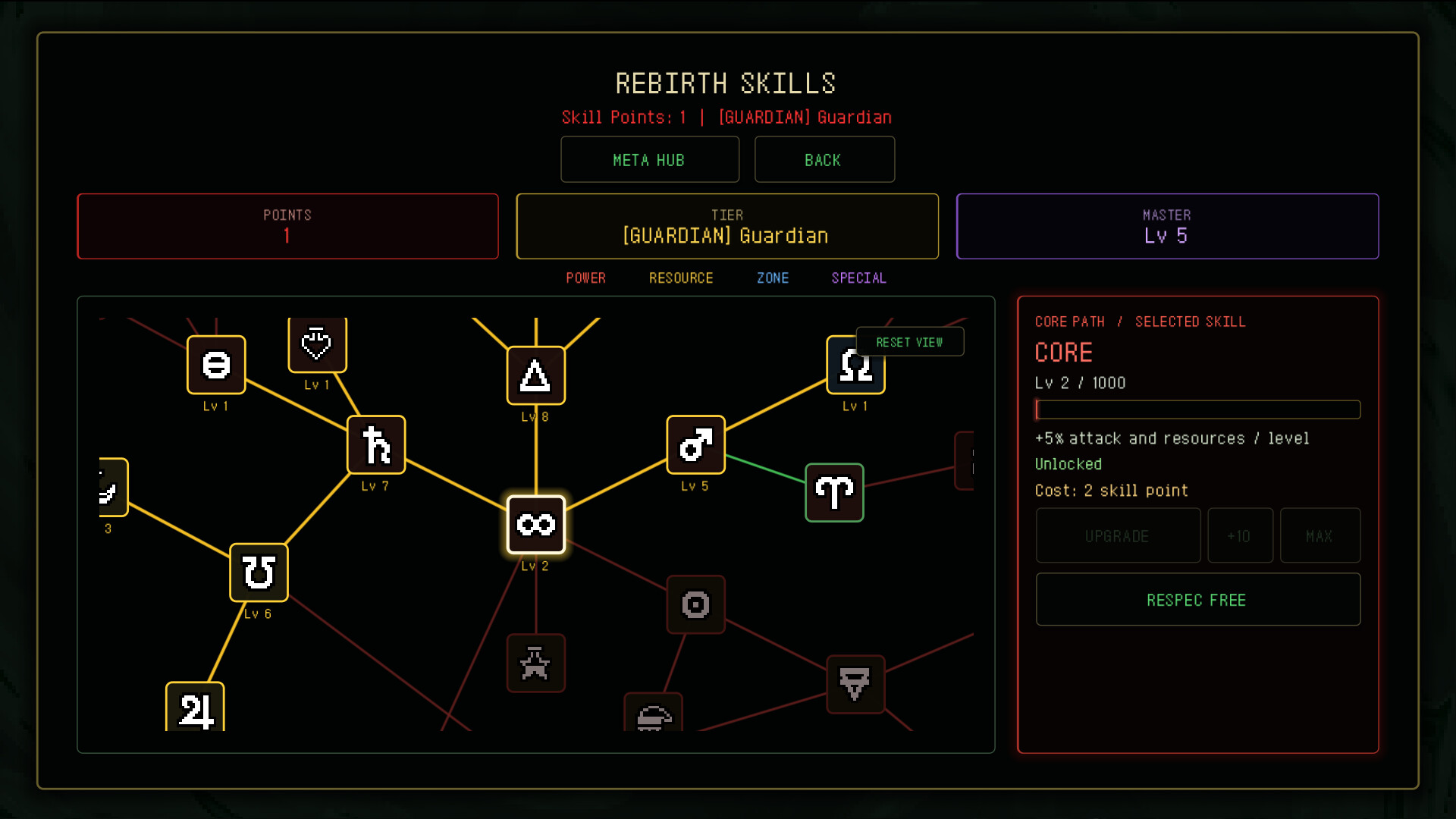
The permanent Rebirth tree spends skill points earned from resetting a run across four categories, with individual nodes upgradeable toward a stated cap.Steam store page -
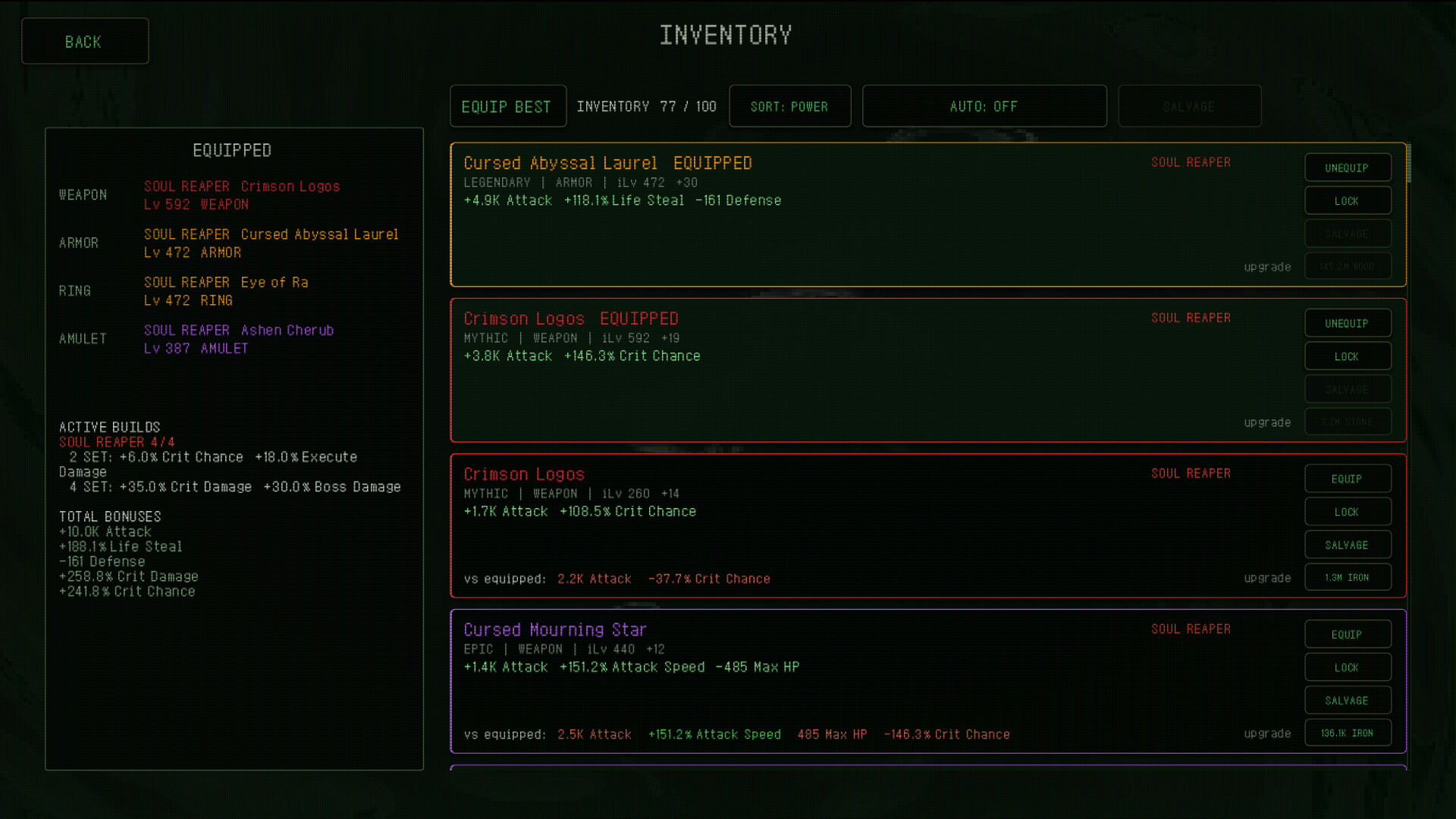
Equipment drops across the promised rarity tiers and grants matching-set bonuses, shown here as an active 4-piece Soul Reaper set adding crit damage and boss damage.Steam store page -
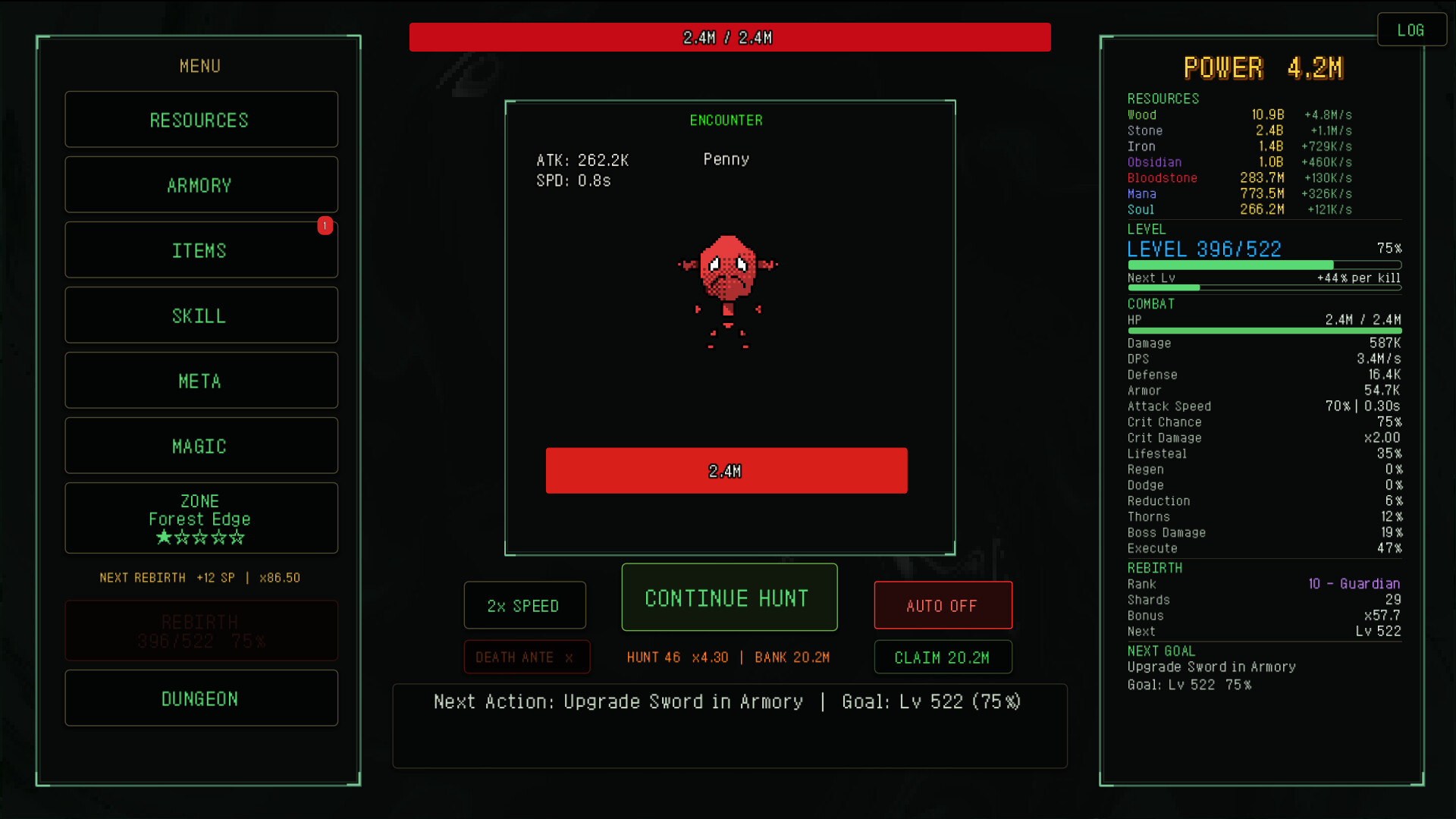
The core loop packs a hunt-streak bank, a Death Ante risk toggle, and seven separately tracked resources into one screen at once.Steam store page